
As dusk falls on the fifteenth day of the first lunar month, something extraordinary happens across Asia. Thousands of glowing lanterns rise into the darkened sky, rivers shimmer with floating lights, and ancient streets blaze in red and gold. The Lantern Festival, one of the most enchanting celebrations on Earth, marks the final chapter of the Lunar New Year season, and its beauty has captivated hearts for more than two thousand years.
Ancient Roots, Enduring Light
The Lantern Festival’s origins stretch back to the Han Dynasty in China, around 206 BC. Several legends surround its founding. One tells of the Jade Emperor, furious at a village for killing his favourite crane, who planned to destroy the settlement with fire. A kind fairy warned the villagers, who lit lanterns on the fateful night, convincing the Emperor from the heavens that the village was already ablaze. Another legend connects the festival to Emperor Ming of Han, who, in his promotion of Buddhism, ordered lanterns to be lit in the palace to honour the Buddha.
Over centuries, the festival evolved from a night of simple oil lamps into a grand spectacle of artistry, community, and wonder, and its traditions spread across much of Asia, carried by culture, trade, and the movements of people.
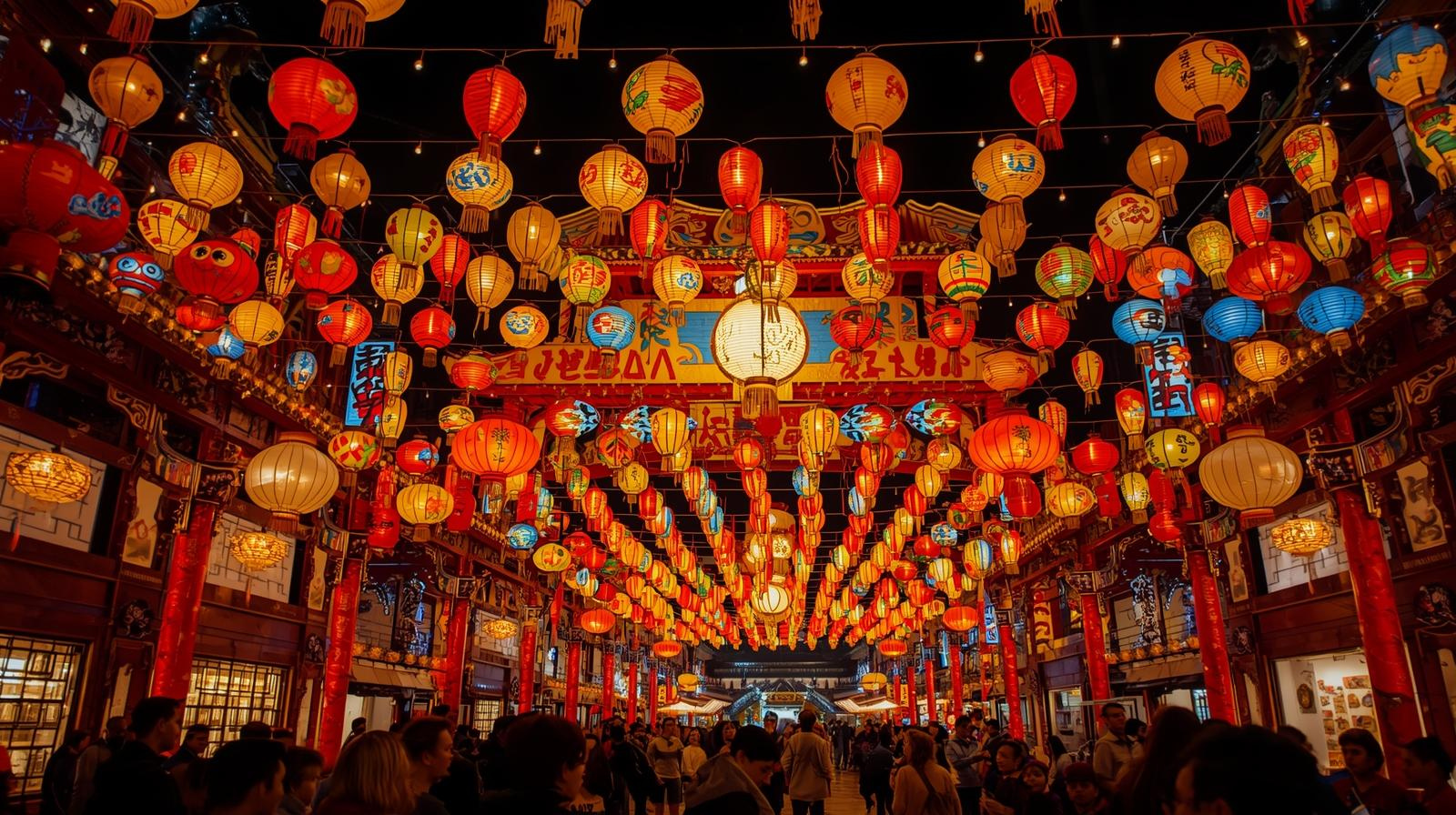
China: The Heart of the Festival
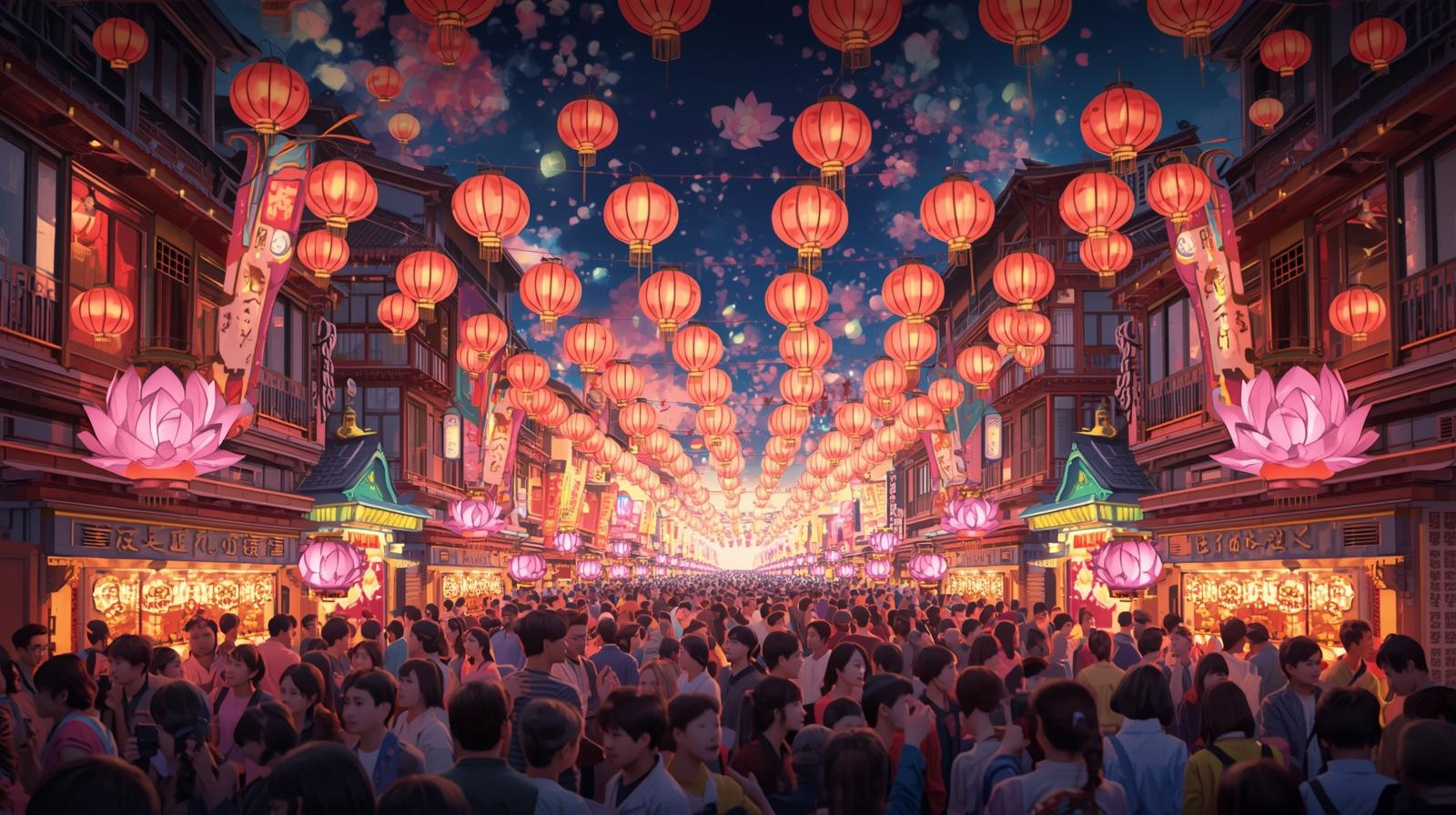
In China, the Lantern Festival, known as Yuánxiāo Jié (元宵节), is the grand finale of Spring Festival celebrations. Cities transform into glittering wonderlands, with elaborate lantern displays shaped like dragons, phoenixes, lotus flowers, and zodiac animals. The craftsmanship involved is extraordinary; some lanterns stand several stories tall and are engineered to move, breathe fire, and change colour.
Zigong, in Sichuan Province, is widely regarded as the lantern capital of the world. Its annual Zigong International Dinosaur Lantern Festival draws millions of visitors to witness breath taking installations that illuminate the night with mythological and prehistoric grandeur.
Traditional activities on this night include solving lantern riddles, puzzles written on paper and hung from lanterns, a custom that has been practised for centuries and is still beloved today. Families also share yuanxiao or tangyuan, sweet glutinous rice balls that symbolise reunion and togetherness.
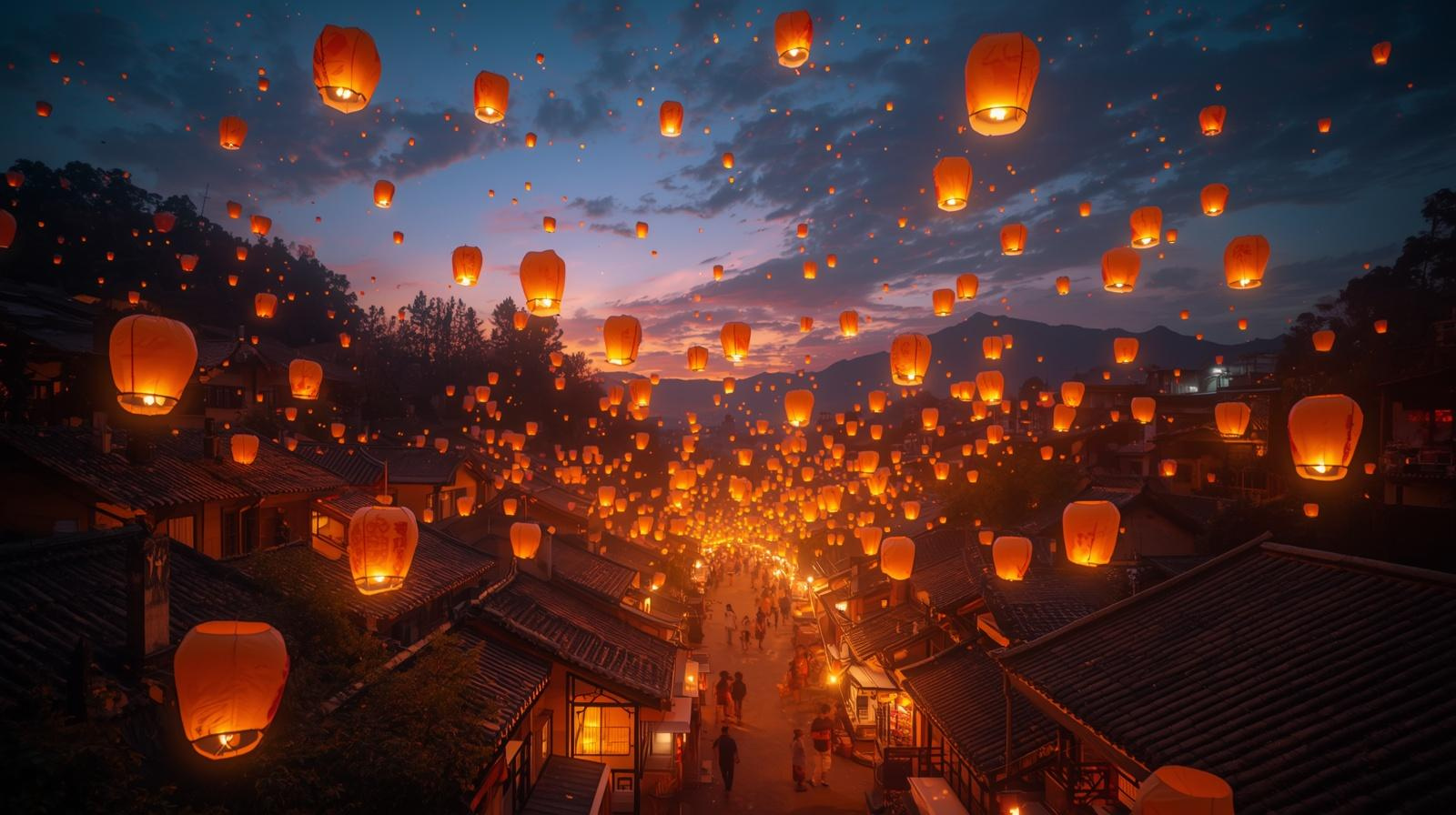
Taiwan: Pingxi and the Sky Lantern Tradition
Perhaps the most iconic image associated with the Lantern Festival is the sky lantern, a paper balloon lifted by a small flame, drifting silently upward into the night. Nowhere is this tradition more breath taking than in Pingxi, a small mountain district of New Taipei City in Taiwan.
Each year, tens of thousands of sky lanterns are released over Pingxi, each one inscribed with its sender’s wishes and dreams. The sight of these glowing vessels rising in clusters against the dark mountain sky is genuinely otherworldly, a river of stars flowing in reverse. The Pingxi Sky Lantern Festival has become one of Asia’s most photographed events and draws visitors from every corner of the globe.
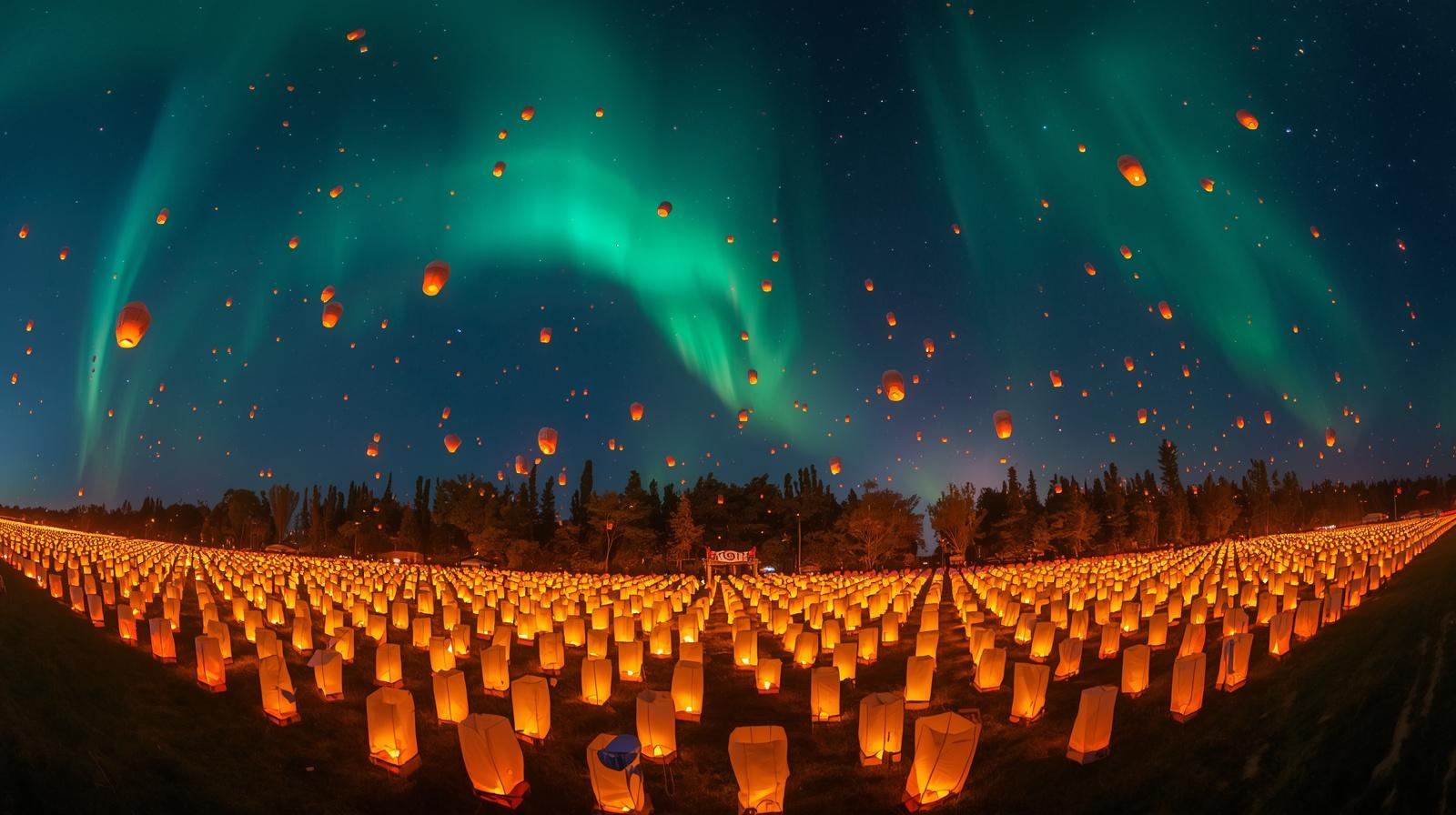
Thailand: Yi Peng and the Northern Lights
Thailand’s answer to the Lantern Festival is Yi Peng (ยี่เป็ง), celebrated primarily in the northern city of Chiang Mai, usually in November in alignment with the traditional Lanna lunar calendar. Though distinct in origin from the Chinese Lantern Festival, it shares the same luminous spirit.
Yi Peng is celebrated alongside Loi Krathong, the festival of floating offerings. On the same night that thousands of khom loi (sky lanterns) ascend above Chiang Mai, the rivers and canals below are carpeted with krathong, small lotus-shaped floats made from banana leaves, flowers, and candles, drifting gently on the current.
The sky above Chiang Mai during Yi Peng is an unforgettable sight: an ocean of warm golden lights rising in slow, silent procession toward the stars, each one carrying a prayer, a wish, or a letting go. Buddhist temples host ceremonies, monks chant by candlelight, and the entire city seems to exhale in collective peace.
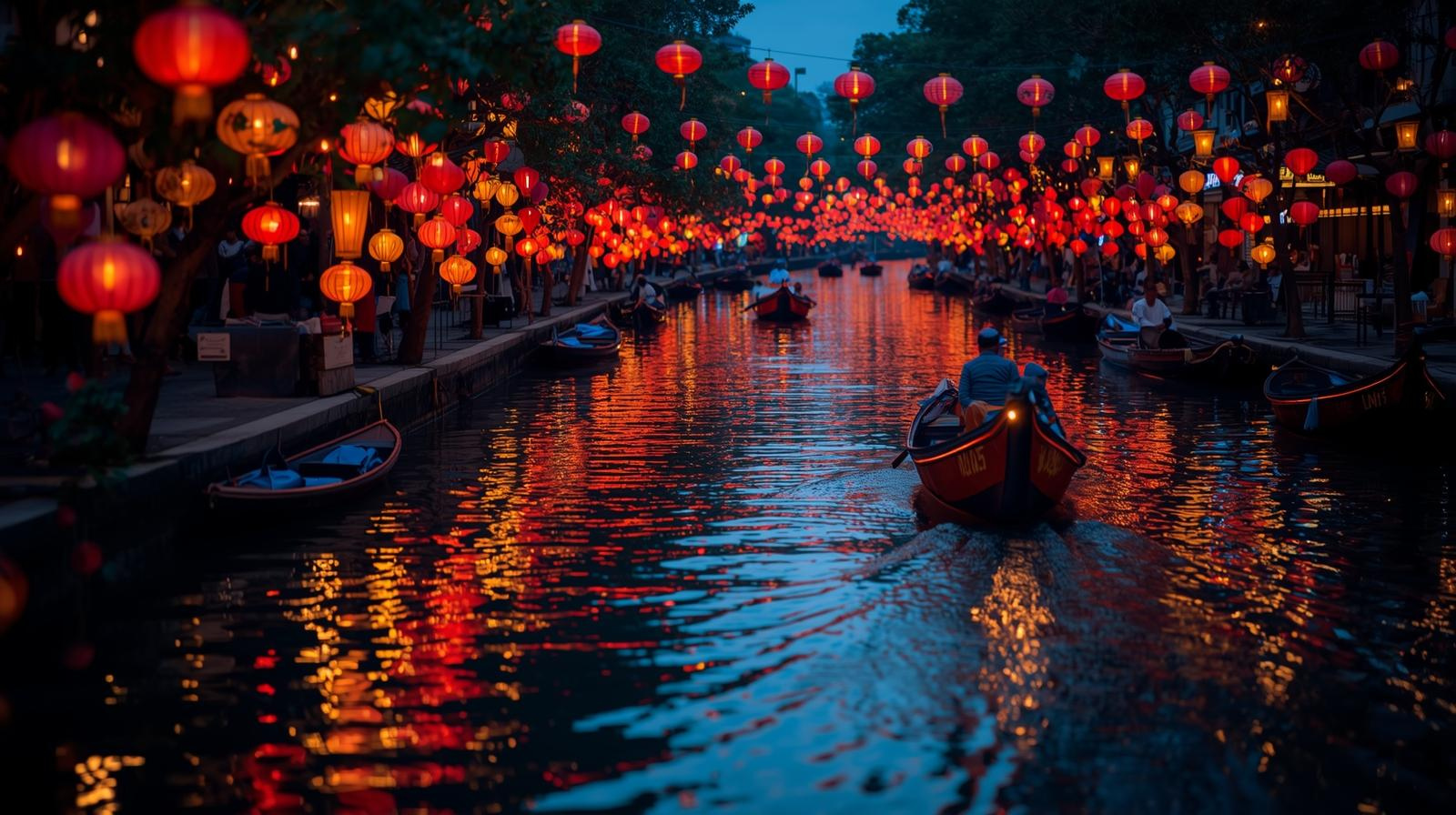
Vietnam: Hội An’s River of Lanterns
In the ancient town of Hội An on Vietnam’s central coast, the Lantern Festival takes on a uniquely intimate character. On the fourteenth day of each lunar month, and most spectacularly on the first month’s full moon, the town switches off its electric lights, and the streets and river come alive entirely by lantern glow.
Hundreds of silk lanterns in every colour hang from the eaves of the old merchant houses, their reflections shimmering on the Thu Bồn River below. Visitors release paper lanterns onto the water and watch them drift away, carrying their wishes downstream. Hội An’s lantern tradition is so central to its identity that the colourful silk lantern has become the symbol of the town itself, recognised across the world.
South Korea: Yeondeunghoe and the Lotus Lantern Festival
In South Korea, the Lantern Festival finds its expression in Yeondeunghoe (연등회), the Lotus Lantern Festival, held to celebrate the birthday of the Buddha on the fourth lunar month. Though it falls at a different time than the Chinese Lantern Festival, its spirit is deeply aligned.
The festival centres on Seoul’s Jogyesa Temple and culminates in a grand lantern parade through the heart of the city. Thousands of participants carry handcrafted lotus lanterns through the streets, creating a river of soft pink and white light. The Yeondeunghoe was inscribed on UNESCO’s Representative List of Intangible Cultural Heritage of Humanity in 2020, a recognition of its profound cultural and spiritual significance.
Japan: Tōrō Nagashi — Lanterns for the Departed
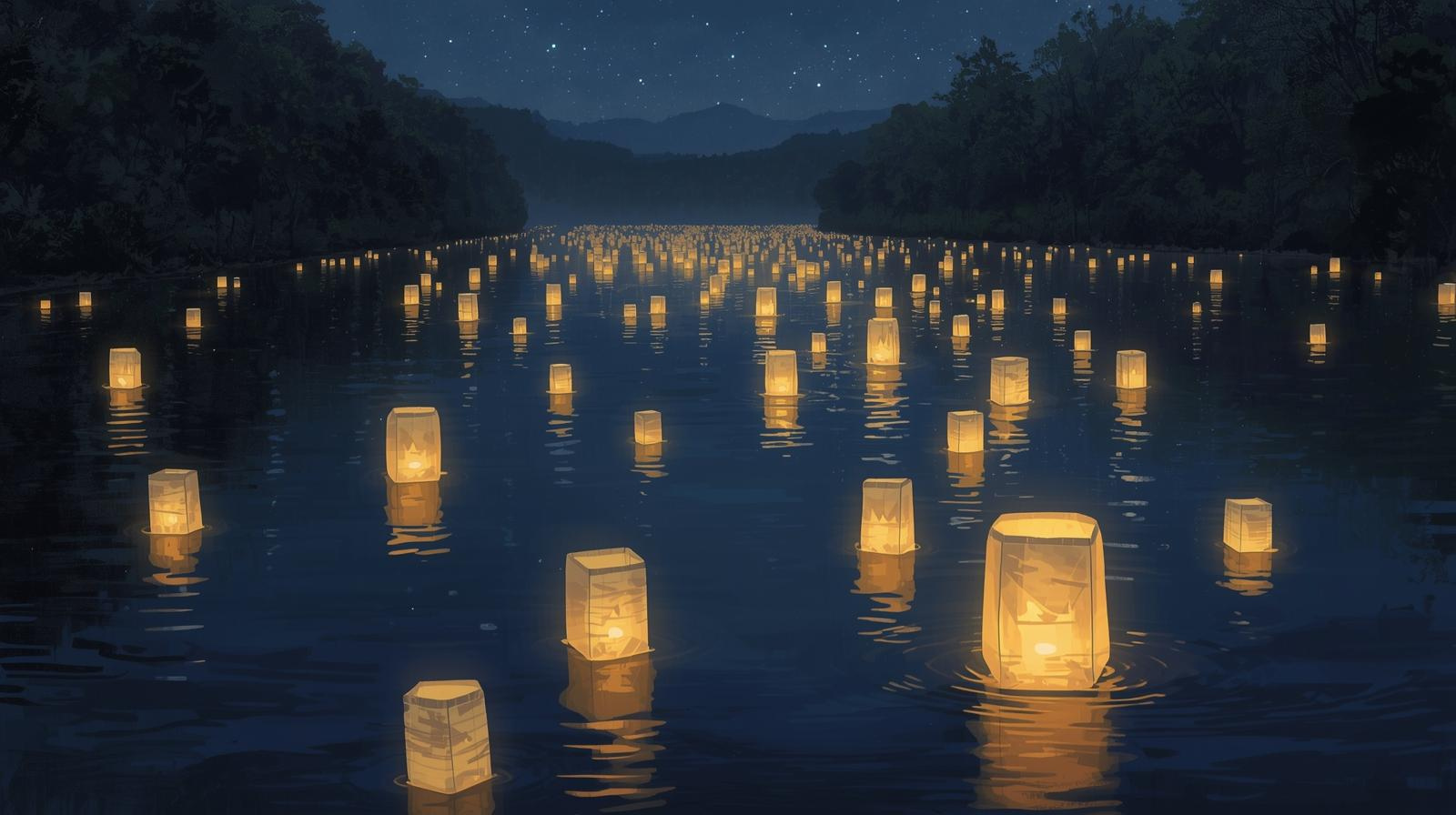
Japan’s lantern traditions are among the most moving on the continent. Tōrō Nagashi (灯籠流し), the floating of lanterns on rivers and seas, is practised* during the Obon Festival in August, when it is believed that the spirits of ancestors return to the world of the living. Families place lit paper lanterns on the water to guide their loved ones’ souls safely back to the spirit world.
The ceremony is one of quiet reverence and profound beauty. In cities like Hiroshima, Tōrō Nagashi carries an additional layer of meaning: lanterns are floated on the Motoyasu River near the Peace Memorial, honouring the victims of the atomic bombing. The sight of thousands of lanterns drifting in the dark water is both heart breaking and deeply hopeful.
The Universal Language of Light
What unites all of these traditions, from Pingxi to Chiang Mai, from Hội An to Hiroshima, is a shared human instinct. In the face of darkness, we make light. We send our wishes skyward on wings of fire and paper. We gather at riversides to watch our reflections shimmer. We look up together at the same night sky.
The Lantern Festival, in all its many forms across Asia, is ultimately a celebration of hope, the hope that light will always outlast darkness, that the new year will bring better things, and that somewhere above the rising lanterns, our wishes are heard.
From the rice ball offerings of China to the sky lanterns of Taiwan and the floating krathong of Thailand, Asia’s Lantern Festival season is a reminder that the most powerful thing humans have ever made is not a skyscraper or a satellite, it is a small flame, cupped gently in both hands, shared with the world.
Leave a Reply