
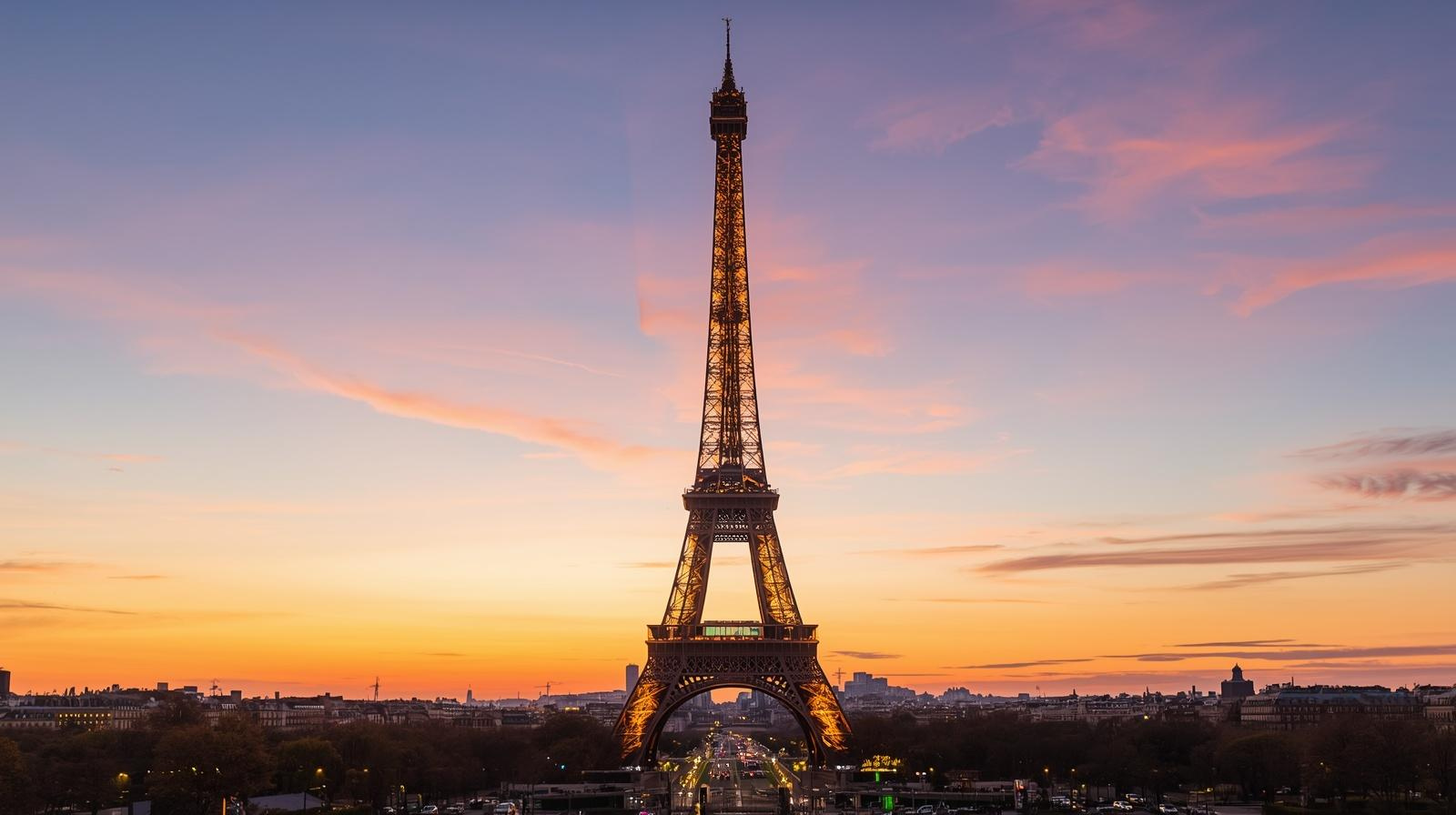
Every 31st March, the world looks toward Paris to celebrate Eiffel Tower Day. It was on this day in 1889 that Gustave Eiffel climbed the 1,710 steps of his newly completed masterpiece to unfurl the French tricolour flag at the summit. At the time, it was the tallest man-made structure in the world, standing at roughly 300 meters (984 feet).
A “Tragic Street Lamp”: The Tower’s Controversial Start
It’s hard to imagine Paris without its iconic silhouette, but in the late 1880s, many Parisians wanted it stopped. Built as the grand entrance for the 1889 Exposition Universelle (World’s Fair) to honour the centennial of the French Revolution, the tower was met with fierce “aesthetic” protests.
A group of prominent artists and writers, including Guy de Maupassant and Alexandre Dumas fils, signed a manifesto calling it a “gigantic black factory chimney” and a “tragic street lamp.” De Maupassant famously claimed he ate lunch at the tower’s restaurant every day because it was the only place in Paris where he didn’t have to look at it.
Engineering by the Numbers
Despite the critics, Gustave Eiffel and his lead engineers, Maurice Koechlin and Émile Nouguier, pushed forward. The construction was a feat of 19th-century industrial precision:
- Timeframe: Built in just 2 years, 2 months, and 5 days.
- Components: 18,038 individual iron parts held together by 2.5 million rivets.
- Workforce: Roughly 300 onsite workers (with zero on-site fatalities during construction, a rarity for the era).
- Thermal Expansion: In the summer heat, the iron expands so much that the tower actually grows by up to 15 centimetres (6 inches).
How it Escaped the Scrap Heap
The Eiffel Tower was never meant to be permanent. Its original permit allowed it to stand for only 20 years, after which it was scheduled to be dismantled.
Eiffel, desperate to save his creation, encouraged its use for scientific experiments. He installed a meteorology lab, a wind tunnel, and eventually, a wireless telegraphy antenna. When the tower proved vital for military communications during World War I, intercepting German radio messages that helped win the Battle of the Marne, its survival was finally guaranteed.
Celebrating Eiffel Tower Day Today
Today, the tower is the most-visited paid monument in the world, welcoming nearly 7 million people annually. On 31st March, enthusiasts celebrate by:
- Sharing Photography: Social media floods with the “Iron Lady” in her various lighting.
- Picnicking at Champ de Mars: Locals and tourists gather on the lawns at the tower’s feet.
- Learning the History: Museums and schools often highlight the 72 names of French scientists and engineers engraved on the first floor of the tower.
Whether you see it as a triumph of engineering or the ultimate symbol of romance, Eiffel Tower Day reminds us that even the most criticised ideas can eventually become the world’s most beloved treasures.
Leave a Reply