
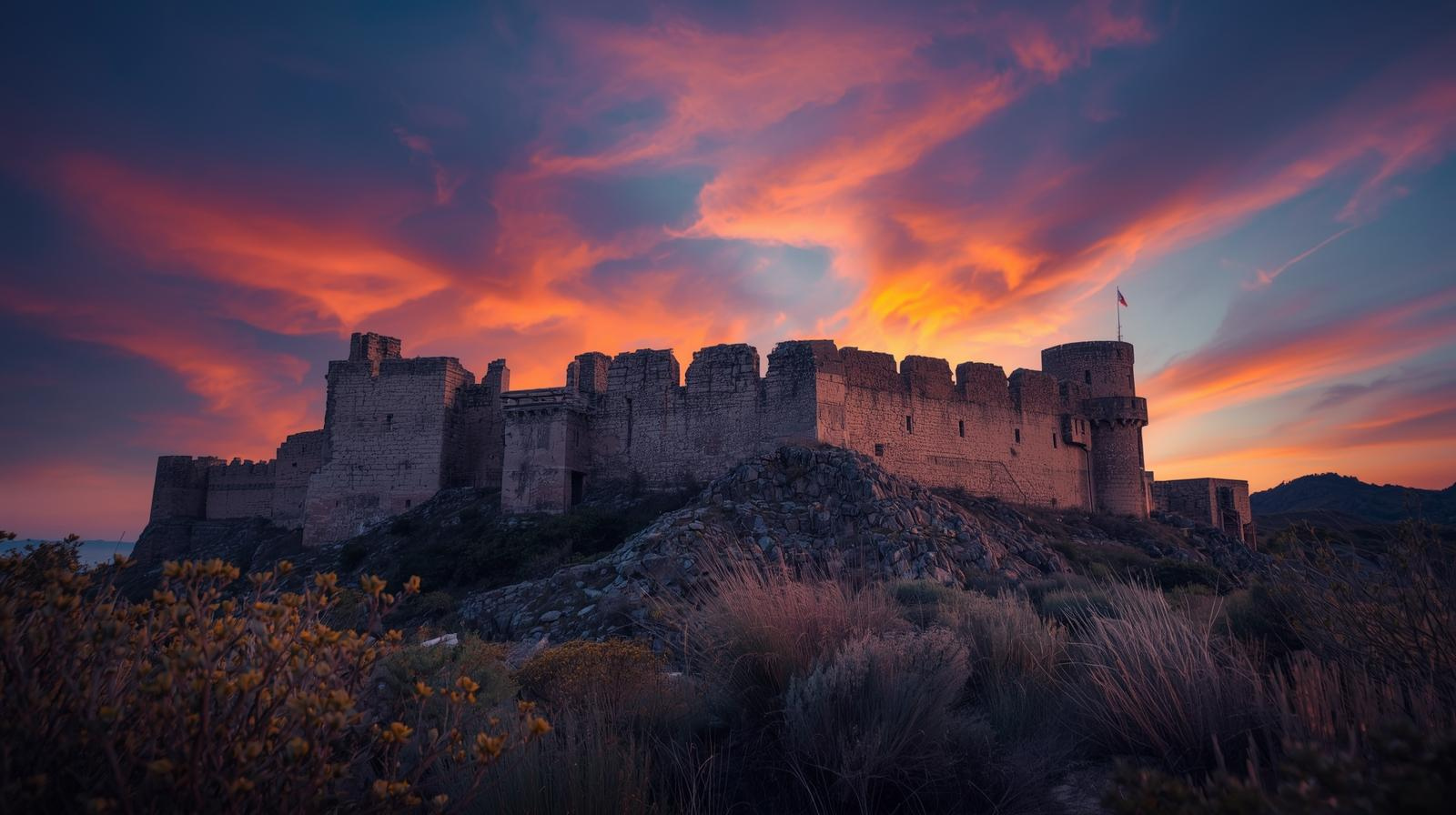
The town of Selçuk in western Turkey may appear modest today, but its history stretches back millennia, encompassing Greek, Roman, Byzantine, and Turkish civilisations. Dominated by the imposing fortress on Ayasuluk Hill, Selçuk has served as a strategic stronghold, a Christian pilgrimage centre, and a thriving Seljuk town, bearing witness to the great transformations that have shaped Anatolia.
Ancient Beginnings: Ephesus and Ayasuluk
Selçuk’s story is inseparable from that of ancient Ephesus, one of the greatest cities of the classical world. Located just two kilometres away, Ephesus flourished as a major Greek and Roman port city, home to the Temple of Artemis, one of the Seven Wonders of the Ancient World, and a population that may have reached 250,000 at its peak.
However, Ephesus faced a persistent problem: the harbour was gradually silting up as the Cayster River deposited sediment. By late antiquity, the city was also increasingly vulnerable to Arab raids. As Ephesus declined between the 7th and 10th centuries, the population gradually relocated to the more defensible Ayasuluk Hill, where a fortress and the Basilica of St. John provided protection and a new focus for settlement.
The name “Ayasuluk” itself derives from “Hagios Theologos,” the Greek term for “Holy Theologian,” a title given to St. John the Evangelist. This linguistic evolution reflects the site’s transformation from a Christian Byzantine stronghold into part of the Turkish-Islamic world.
The Byzantine Fortress: Defending Christendom
The fortress crowning Ayasuluk Hill has Byzantine origins, likely first constructed in the 6th or 7th century as the importance of defending the Christian shrines and local population grew. The Byzantines recognised the hill’s strategic value: it commanded views over the surrounding plain, controlled access routes, and provided a defensible refuge during the turbulent centuries of Arab-Byzantine warfare.
The fortress walls enclosed both the Basilica of St. John and residential areas, creating a fortified town. Byzantine engineers built thick stone walls punctuated by towers, using materials that included stones salvaged from ancient Ephesus. Archaeological evidence suggests the fortress was expanded and strengthened several times during the Byzantine period, particularly under Emperor Alexios I Komnenos in the late 11th century, as the Seljuk Turks advanced into Anatolia.
The Seljuk Conquest and Transformation
The town’s modern name commemorates the civilisation that changed its destiny: the Seljuks. These Turkic peoples, originally from Central Asia, swept into Anatolia following their decisive victory over Byzantine forces at the Battle of Manzikert in 1071. By the end of the 11th century, the Selçuk region came under Seljuk control, though Byzantine forces briefly recaptured it during the First Crusade.
The Seljuks recognised the fortress’s strategic importance and made significant modifications to its defences. They rebuilt sections of the walls, added new towers, and adapted the fortifications to their military needs. The fortress now protected a gradually Islamising population, and mosques began to appear within and around the fortified area.
The Seljuks gave the town its current name, which appears in various spellings in historical records: Ayasuluk, Ayasoluk, and eventually Selçuk. Under Seljuk rule, the town flourished as a regional trading centre, benefiting from its position on routes connecting the Aegean coast with the Anatolian interior.
The Aydinid Period and the Isa Bey Mosque
In the 14th century, the region fell under the control of the Aydinid Beylik, one of the Turkish principalities that emerged as Seljuk power fragmented. Under Aydinid rule, Selçuk experienced a cultural flowering. The most visible monument from this period is the magnificent Isa Bey Mosque, constructed in 1375 by the architect Ali ibn al-Dimashki for Isa Bey, son of the Aydinid ruler Mehmet Bey.
Built at the foot of Ayasuluk Hill, directly below the fortress and adjacent to the ruined Basilica of St. John, the Isa Bey Mosque represents a transition between Seljuk and Ottoman architectural styles. Its courtyard design, elegant proportions, and decorative details make it one of the finest examples of 14th-century Anatolian architecture. The mosque incorporated columns and materials from ancient Ephesus, creating a visual continuity with the region’s classical past.
The fortress itself was further modified during this period, with repairs to walls and towers ensuring its continued defensive role.
Ottoman Rule and Decline
The Ottoman Empire absorbed the region in the early 15th century, and Selçuk became part of this vast Islamic empire. However, as Ottoman power centralised and trade routes shifted, Selçuk’s importance diminished. The fortress, no longer needed as a frontline defense, fell into gradual disrepair. By the 19th century, it was partially ruined, though local populations still used sections of it.
The town itself became a quiet agricultural settlement, a shadow of its former importance. Travelers and archaeologists visiting the ruins of Ephesus would pass through Selçuk, often noting the impressive but crumbling fortress on the hill and the picturesque ruins of the St. John Basilica.
Modern Selçuk: Archaeology and Tourism
The 20th century brought renewed attention to Selçuk’s rich heritage. Systematic archaeological excavations at Ephesus, beginning in the 1860s and continuing to the present, revealed the spectacular remains of the ancient city. The Basilica of St. John was excavated starting in the 1920s, and restoration work has continued intermittently.
In 1957, the Turkish government officially renamed the town “Selçuk,” honouring its Seljuk heritage and distinguishing it from the ancient site of Ephesus. Today, Selçuk is a town of about 35,000 people, serving as the gateway to the Ephesus archaeological site, which draws well over a million visitors annually.
The Fortress Today
The Ayasuluk Fortress remains a prominent landmark, visible from throughout Selçuk. Its walls wind around the hilltop, enclosing the ruins of the St. John Basilica, the Isa Bey Mosque, and Byzantine and Turkish-era structures. Visitors can walk along restored sections of the walls and climb the towers for panoramic views over the town, the Ephesus ruins, and the surrounding agricultural plain.
The fortress walls reveal their complex history through different building styles and materials, Byzantine stonework, Seljuk additions, and later Ottoman repairs all visible to the careful observer. The structure stands as a physical record of the successive civilisations that recognised this hill’s strategic and spiritual importance.
The fortress is open to visitors as part of the St. John Basilica archaeological site, and walking its ramparts offers not just historical insight but also stunning vistas, particularly at sunset when the ancient stones glow golden against the Turkish landscape.
–
A Living Heritage
Modern Selçuk successfully balances its roles as a working Turkish town and a major tourist destination. Beyond the fortress, basilica, and Isa Bey Mosque, the town features the excellent Ephesus Archaeological Museum, housing artifacts from excavations throughout the region. The Temple of Artemis site, though reduced to a single reconstructed column, attracts visitors seeking one of the ancient world’s lost wonders.
The town also maintains its connection to Christian pilgrimage traditions. A small chapel marks the site where the Virgin Mary is believed to have spent her final years, drawing visitors from around the world. Every August, both Christian and Muslim pilgrims visit the site for the Feast of the Assumption.
Selçuk’s weekly market continues a tradition stretching back centuries, when merchants would gather to trade goods from across Anatolia. Traditional Turkish restaurants serve local specialties, and craftspeople sell carpets, ceramics, and jewellery, maintaining artisan traditions with ancient roots.
A Crossroads of Civilisations
The history of Selçuk and its fortress encapsulates the broader story of Anatolia: a land where East and West have met, clashed, and blended for millennia. From its beginnings as a refuge from declining Ephesus, through its role as a Byzantine stronghold and Christian pilgrimage centre, to its transformation into a Turkish-Islamic town and finally a modern tourist destination, Selçuk has continuously adapted while preserving layers of its remarkable past.
The fortress on Ayasuluk Hill stands watch over this history, its walls built and rebuilt by Byzantine emperors, Seljuk commanders, and Aydinid princes. Today, it serves as a reminder that the places we inhabit are never truly new, but rather the latest chapter in stories that stretch back through centuries of human ambition, faith, and endurance.
Leave a Reply