
A Symbol of Nationhood and Independence
State Flag Day in Azerbaijan is celebrated annually on 9th November and commemorates the adoption of the Azerbaijani national flag, one of the country’s most important symbols of sovereignty, national identity, and statehood. The observance honours the historic adoption of the tricolour flag by the Azerbaijan Democratic Republic (ADR) in 1918 and celebrates the enduring values it represents: modernisation, national unity, cultural heritage, and progress.
Today, State Flag Day is one of Azerbaijan’s most significant patriotic observances, reflecting both the nation’s turbulent history and its aspirations for the future.
Historical Background
The modern Azerbaijani flag traces its origins to the brief but influential Azerbaijan Democratic Republic, which existed from 1918 to 1920.
Following the collapse of the Russian Empire during the First World War and the Russian Revolution, Azerbaijan declared its independence on 28th May 1918, becoming the first democratic and secular republic in the Muslim world.
Initially, the young republic adopted a red national flag incorporating a white crescent and eight-pointed star. However, leaders sought a more distinctive national symbol that would express the republic’s political vision and cultural identity.
On 9th November 1918, the government officially adopted the tricolour design that remains the national flag of Azerbaijan today.
The Design of the Tricolour
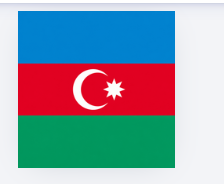
The Azerbaijani flag consists of three equal horizontal stripes:
- Blue on the top.
- Red in the centre.
- Green on the bottom.
In the middle of the red stripe are:
- A white crescent moon.
- An eight-pointed white star.
The design was created to represent the ideals championed by statesman, journalist, and nationalist thinker Ali bey Huseynzade, whose philosophy strongly influenced the national movement.
Meaning of the Colours
Each colour carries profound historical and cultural significance.
Blue: Turkic Heritage
The blue stripe symbolises the Turkic roots of the Azerbaijani people. It reflects their linguistic, cultural, and historical links with the wider Turkic world.
Blue was traditionally associated with the ancient Turkic peoples of Central Asia and has long featured in Turkic symbolism.
Red: Progress and Modernisation
The red stripe represents progress, enlightenment, democracy, and aspirations towards modern statehood.
The founders of the Azerbaijan Democratic Republic sought to create a modern parliamentary democracy based on education, civil liberties, and engagement with contemporary political ideas.
Green: Islamic Civilisation
The green stripe symbolises Azerbaijan’s connection to Islamic culture and civilisation.
Although the republic established a secular government, its leaders recognised the important role Islamic traditions had played in shaping the nation’s history and cultural identity.
The Crescent and Eight-Pointed Star
The white crescent is widely recognised as a symbol associated with the Islamic world.
The eight-pointed star has generated various interpretations. One commonly accepted explanation is that the points represent the eight letters in the Arabic-script spelling of “Azerbaijan.” Other interpretations suggest the star symbolises the principal branches of the Turkic peoples.
Together, the crescent and star reinforce the flag’s message of cultural continuity, independence, and national pride.
The Soviet Era
The life of the Azerbaijan Democratic Republic was short-lived.
In April 1920, Bolshevik forces entered Azerbaijan, and the republic was incorporated into the Soviet Union. The tricolour flag was replaced by a succession of Soviet flags featuring communist emblems, including the hammer and sickle.
For more than seventy years, the original tricolour survived primarily as a symbol of Azerbaijani nationalism among émigré communities and independence advocates.
Despite official suppression, the memory of the flag remained closely linked to the idea of national sovereignty.
Restoration of the National Flag
As the Soviet Union entered its final years, national movements emerged throughout the republics.
On 17th/ November 1990, the Supreme Assembly of the Nakhchivan Autonomous Republic, under the leadership of Heydar Aliyev, restored the historic tricolour as its official flag.
This decision proved highly significant. Within a year, Azerbaijan regained its independence as the Soviet Union collapsed.
On 5th February 1991, the Supreme Soviet of Azerbaijan formally reinstated the tricolour as the country’s national flag, restoring the symbol first adopted in 1918.
Establishment of State Flag Day
In 2009, President Ilham Aliyev signed a decree establishing State Flag Day as a national observance.
The date of 9th November was chosen to commemorate the original adoption of the tricolour by the Azerbaijan Democratic Republic in 1918.
Since then, the occasion has become an important annual celebration of Azerbaijani statehood and independence.
National Flag Square
One of the most prominent symbols associated with State Flag Day is National Flag Square in the capital city, Baku.
Opened in 2010, the site features a massive flagpole overlooking the Caspian Sea and serves as a focal point for national ceremonies and celebrations. The square underscores the central role the flag plays in modern Azerbaijani identity.
How State Flag Day Is Celebrated
Across Azerbaijan, State Flag Day is marked through a variety of patriotic and cultural activities:
- Official ceremonies conducted by government institutions.
- Flag-raising events.
- Educational programmes in schools and universities.
- Historical exhibitions.
- Military and civic commemorations.
- Concerts and cultural performances.
- Public displays of the national flag.
Many citizens display Azerbaijani flags on homes, public buildings, and vehicles as an expression of national pride.
The Flag in Modern Azerbaijan
The Azerbaijani flag occupies a highly visible place in public life. It flies over government buildings, educational institutions, diplomatic missions, and military facilities, serving as a constant reminder of the country’s sovereignty and independence.
For many Azerbaijanis, the tricolour not only recalls the achievements of the founders of the Azerbaijan Democratic Republic but also symbolises the resilience of a nation that regained its independence after decades of foreign rule.
Legacy and Significance
State Flag Day is more than a celebration of a national emblem. It is a commemoration of Azerbaijan’s political revival, its democratic aspirations, and its cultural heritage. The blue, red, and green stripes encapsulate the ideals that inspired the republic’s founders more than a century ago and continue to shape the country’s identity today.
As Azerbaijan marks State Flag Day each year on 9th November, the tricolour serves as a powerful reminder of the nation’s journey through empire, revolution, Soviet rule, and renewed independence. It stands as a symbol of unity, resilience, and the enduring spirit of the Azerbaijani people.
Leave a Reply