
Every year on 17th March, Ireland and the Irish diaspora around the world celebrate St Patrick’s Day, Lá Fhéile Pádraig in Irish, the feast day of Ireland’s patron saint. What began as a solemn religious observance in the early 17th century has grown into one of the world’s most widely celebrated national days, observed in over 160 countries. It is a day when Ireland’s culture, history, and spirit spill out into the streets, and when rivers, fountains, and landmarks across the globe turn green.
Who Was St Patrick?
St Patrick was a 5th-century Christian missionary and bishop, widely credited with bringing Christianity to Ireland. Born in Roman Britain around AD 385, he was kidnapped as a teenager by Irish pirates and spent six years as a slave in Ireland, tending livestock. During his captivity, he found deep religious faith. He eventually escaped, returned to Britain, and, following what he described as a divine calling, went back to Ireland as a missionary.
He spent the rest of his life travelling across Ireland, establishing churches, monasteries, and schools. He is said to have died on 17th March 461 AD, the date that became his feast day. Though many legends surround his life, including the famous story of driving the snakes out of Ireland (widely understood as a metaphor for banishing paganism) and using the three-leafed shamrock to explain the Christian Trinity, his historical significance as the architect of Irish Christianity is beyond dispute.
He was never formally canonised by Rome, but is venerated as a saint by the Catholic Church, the Church of Ireland, and several other Christian denominations.
The History of the Celebration
St Patrick’s feast day was placed on the universal Catholic liturgical calendar in the early 17th century. For centuries it was observed in Ireland primarily as a religious occasion, church services, prayer, and family gatherings. Pubs were, in fact, legally required to close on 17th March in Ireland until the 1970s, such was the day’s solemn character.
It was the Irish diaspora, particularly in America, that transformed St Patrick’s Day into the exuberant public celebration the world knows today. The first recorded St Patrick’s Day parade was not in Dublin but in St Augustine, Florida, in 1601. The famous New York City parade, one of the world’s oldest and largest civilian parades, has been held continuously since 1762, predating American independence.
As millions of Irish emigrants carried their culture to the United States, Canada, Australia, and beyond, St Patrick’s Day became a powerful expression of Irish identity abroad, a way of saying we are here, and we are proud. The celebration eventually reflected onto Ireland itself, and today Dublin hosts one of the grandest parades in the world, drawing hundreds of thousands of visitors each March.
How Ireland Celebrates
In Ireland, St Patrick’s Day is a public holiday. The celebrations typically span several days, with the main events on 17th March itself.
The Dublin parade is the centrepiece, a spectacular procession of floats, marching bands, dancers, street performers, and community groups winding through the city centre. The festival has evolved into a multi-day arts event called the St Patrick’s Festival, featuring outdoor concerts, céilí dancing, theatrical performances, and fireworks.
Across the country, towns and villages hold their own parades. Pubs fill with music, traditional Irish trad sessions fill the air with fiddles, uilleann pipes, tin whistles, and bodhráns. Families gather, wearing green, pinning shamrocks to their lapels, and celebrating what it means to be Irish.
The shamrock holds a place of particular importance. The tradition of “wearing of the green”, pinning a fresh shamrock to one’s clothing, dates back centuries, and on this day it is observed by people of Irish descent the world over.
The Global “Greening”
One of the most visually striking traditions of modern St Patrick’s Day is the Global Greening initiative, coordinated by Tourism Ireland, in which famous landmarks around the world are illuminated in green light on 17th March.
Since the initiative began in 2010, the list of participating landmarks has grown dramatically. The greening of global landmarks has become a powerful symbol of Irish soft power and cultural reach, a testament to the fact that the Irish diaspora is not just a historical fact but a living, breathing community spread across every continent.
The Flags of St Patrick’s Day
One of the most visually rich aspects of St Patrick’s Day is the array of flags flown and displayed. Each flag carries its own history and meaning, and together they tell the complex story of Irish identity.
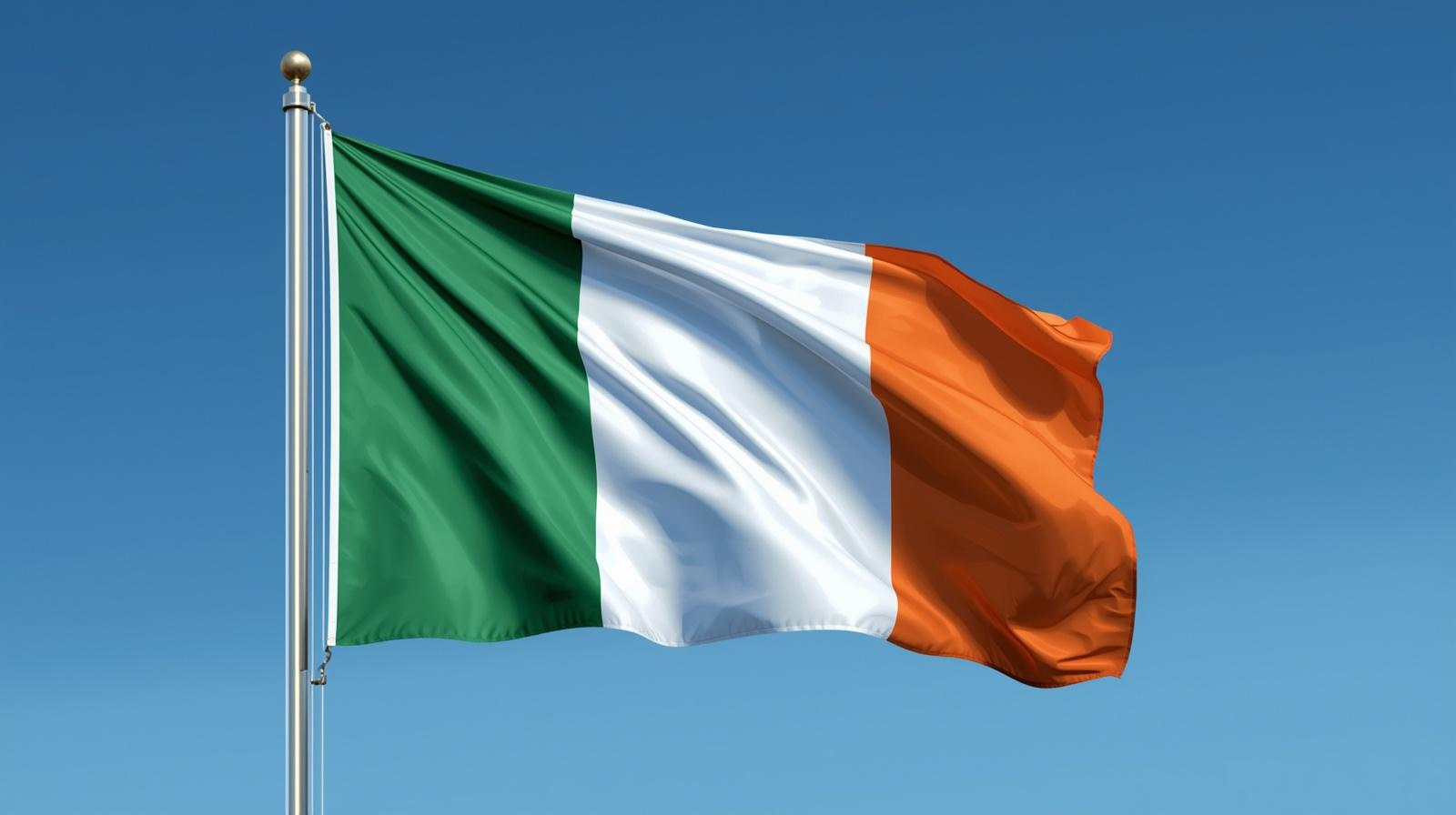
The Irish Tricolour — An Trídhathach
The 6national flag of the Republic of Ireland is the most prominently flown flag on St Patrick’s Day. Its three vertical bands of green, white, and orange carry a deliberate symbolism. Green represents the Gaelic and Catholic tradition of Ireland; orange represents the Protestant and Unionist tradition associated with William of Orange; and white at the centre represents the hope for peace and unity between the two traditions. The flag was first flown in 1848 during the Young Ireland movement and was officially adopted as the national flag in 1922 following Irish independence.
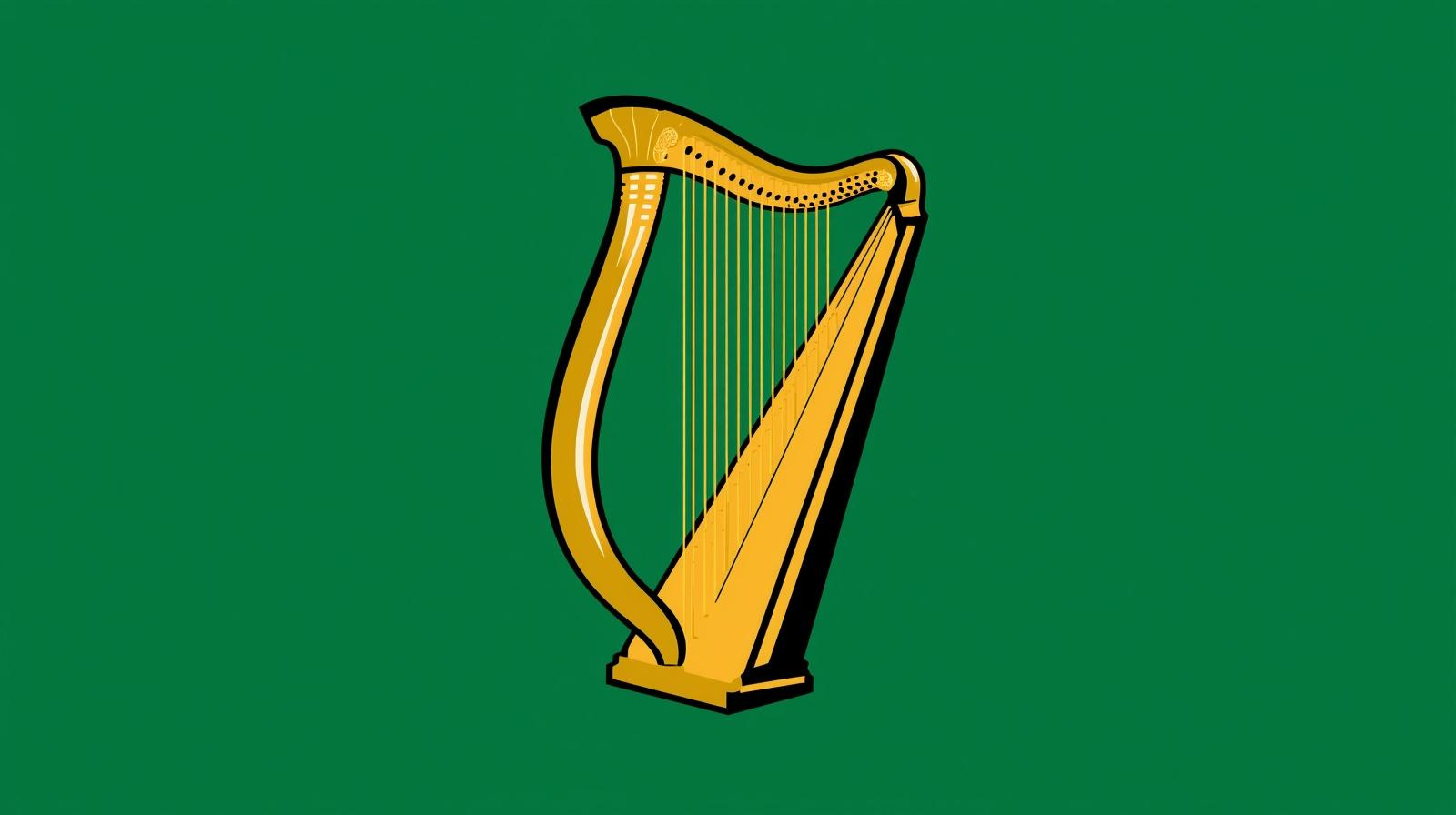 The Harp Flag
The golden harp on a green field is one of Ireland’s oldest and most enduring symbols. The harp has been associated with Ireland since the medieval era and appears on Irish coinage, government seals, and the presidential standard. On St Patrick’s Day, harp flags are flown by community organisations, GAA clubs, and Irish cultural societies around the world as a powerful expression of Gaelic identity that predates the modern state.
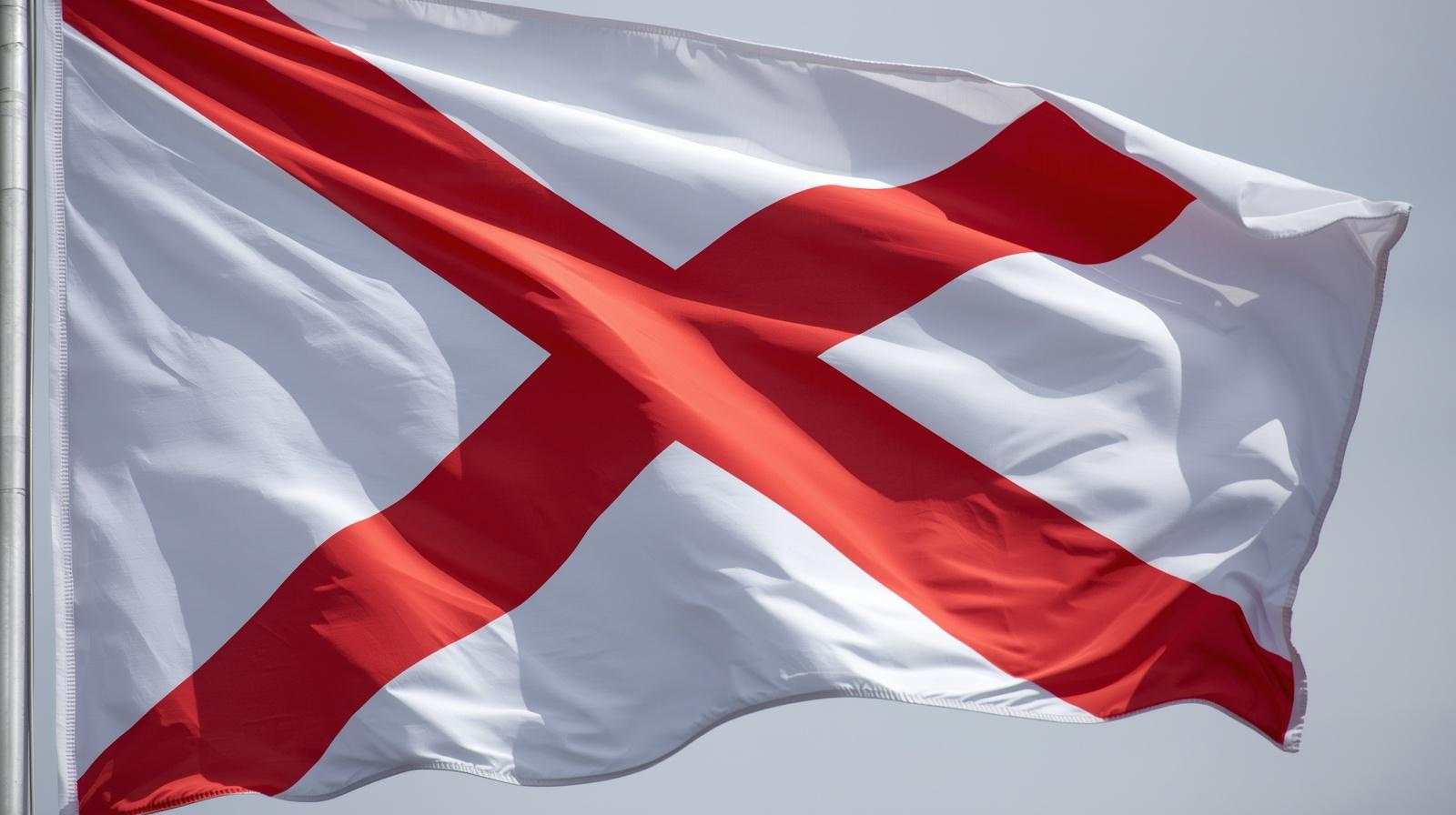
St Patrick’s Cross
The red saltire (diagonal cross) on a white background is the heraldic Cross of St Patrick. It represents Ireland within the Union Jack of the United Kingdom, incorporated when Ireland joined the Act of Union in 1800. On St Patrick’s Day, it is flown in some parts of Northern Ireland and by Irish communities in Britain, though its associations with unionism mean it is less commonly seen in the Republic or among nationalist communities.
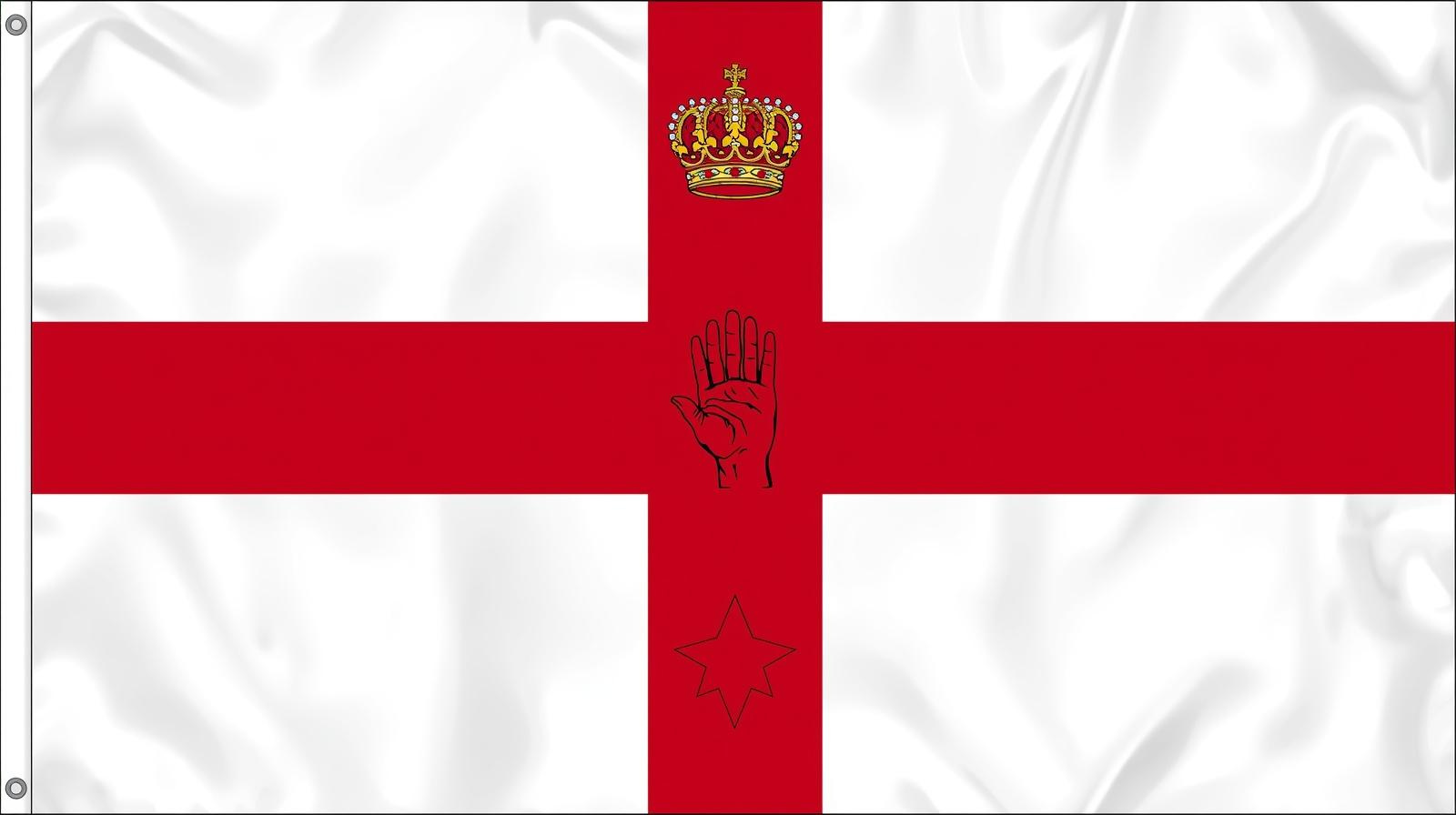
The Ulster Banner
The Ulster Banner, a red cross with a red hand, crown, and star on white, was used as the de facto flag of Northern Ireland from 1953 until the dissolution of the Stormont Parliament in 1972. Though no longer an official flag, it is still flown informally in Northern Ireland and appears on St Patrick’s Day alongside the Union Jack in unionist areas. Its status remains politically sensitive.
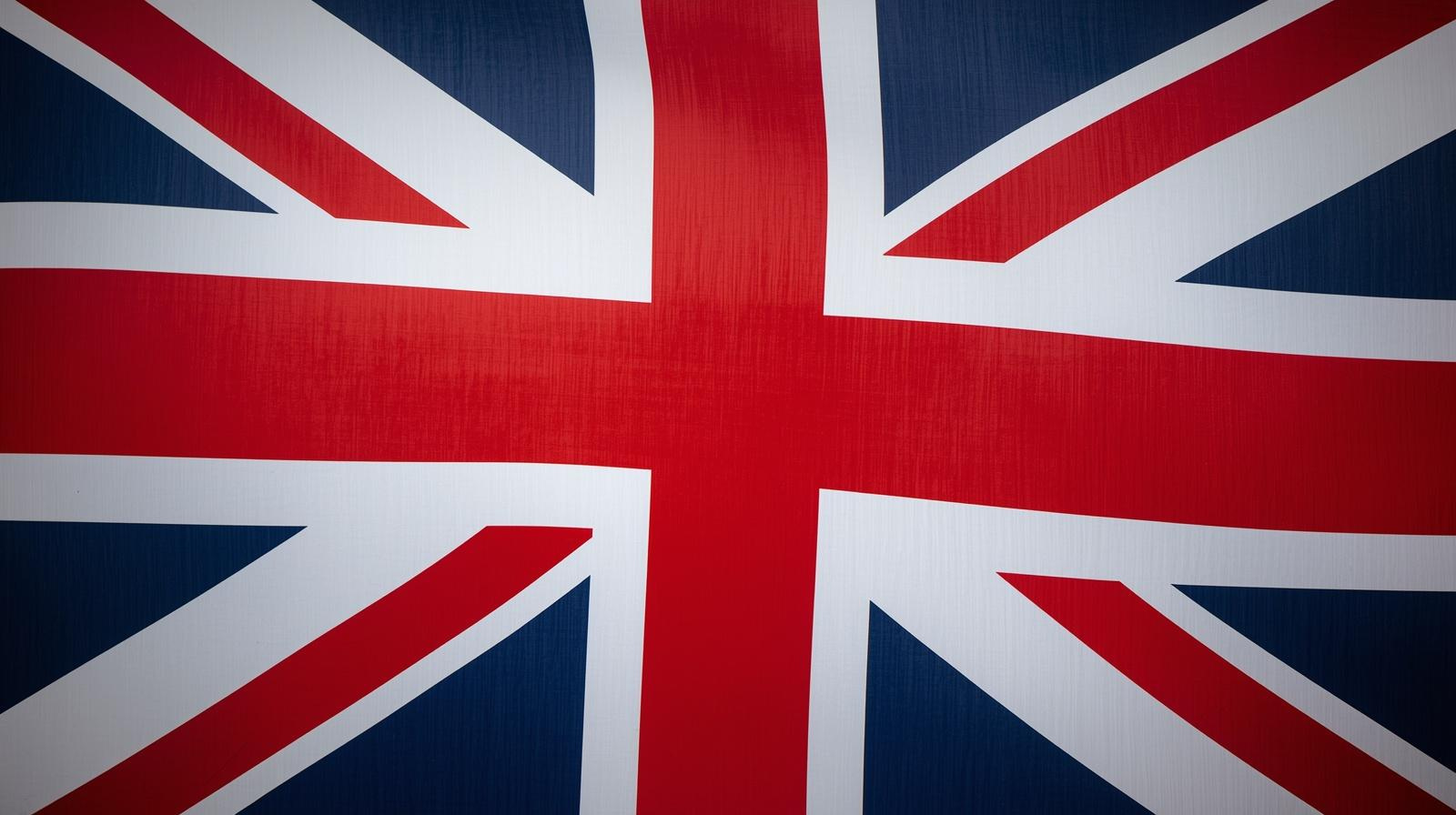
The Union Jack
In Northern Ireland, St Patrick’s Day is observed against a backdrop of two distinct flag cultures. In nationalist and republican areas, the Irish Tricolour flies prominently. In unionist and loyalist areas, the Union Jack is more commonly displayed. Northern Ireland has no official devolved flag of its own, making flag-flying on occasions like St Patrick’s Day a pointed expression of political as well as cultural identity.
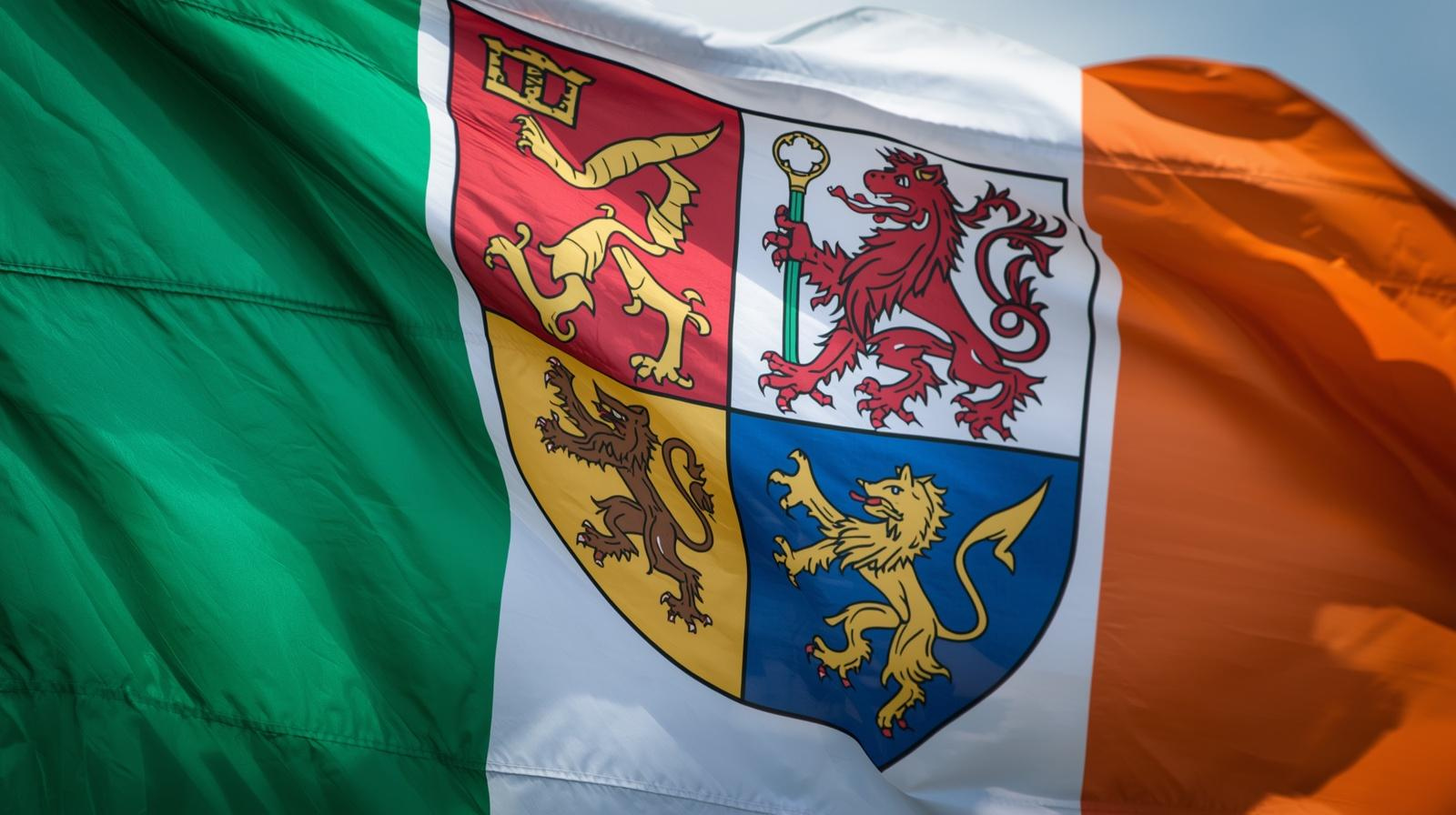
The Four Provinces Flag
A distinctive flag combining the heraldic arms of all four Irish provinces, Leinster, Munster, Ulster, and Connacht, is widely flown at GAA (Gaelic Athletic Association) events and by diaspora communities who wish to represent the entirety of the island of Ireland. It sidesteps the political sensitivities of the Tricolour or Ulster Banner by encompassing all traditions under one banner.
Provincial and County Flags
Many Irish counties and provinces have their own distinct flags and crests. On St Patrick’s Day, county flags are flown with great pride, particularly in areas with large Irish diaspora communities where identifying one’s county of ancestral origin is a cherished tradition. You might see the Kerry flag in Boston, the Cork flag in London, or the Galway flag in Sydney.
St Patrick’s Day Around the World
The global scale of St Patrick’s Day is extraordinary. In the United States, an estimated 34 million people claim Irish ancestry, more than seven times the population of Ireland itself. Cities like New York, Boston, Chicago, and Savannah hold parades that draw hundreds of thousands of spectators. Chicago famously dyes the Chicago River green each year, a tradition that began in 1962 when a local plumber used dye to trace illegal sewage discharges and discovered that the green-tinted river was a spectacular sight.
In Australia, Sydney and Melbourne host major parades. In Argentina, home to a significant Irish diaspora, particularly in Buenos Aires, the celebrations are among the most enthusiastic in the southern hemisphere. In Japan, Tokyo holds a parade in the Omotesando district. Even in Russia and South Korea, Irish pubs and cultural societies mark the day with live music and festivities.
The Meaning Behind the Green
The association of Ireland with the colour green runs deep. Ireland’s nickname, the Emerald Isle, reflects its lush, rain-fed landscape. Green has been linked to Irish nationalism since the 1798 rebellion, when the United Irishmen adopted green as their colour. Wearing green on St Patrick’s Day is both a celebration of that heritage and, according to Irish folklore, a way of making yourself visible to mischievous leprechauns, who, legend has it, will pinch anyone they can see who isn’t wearing green.
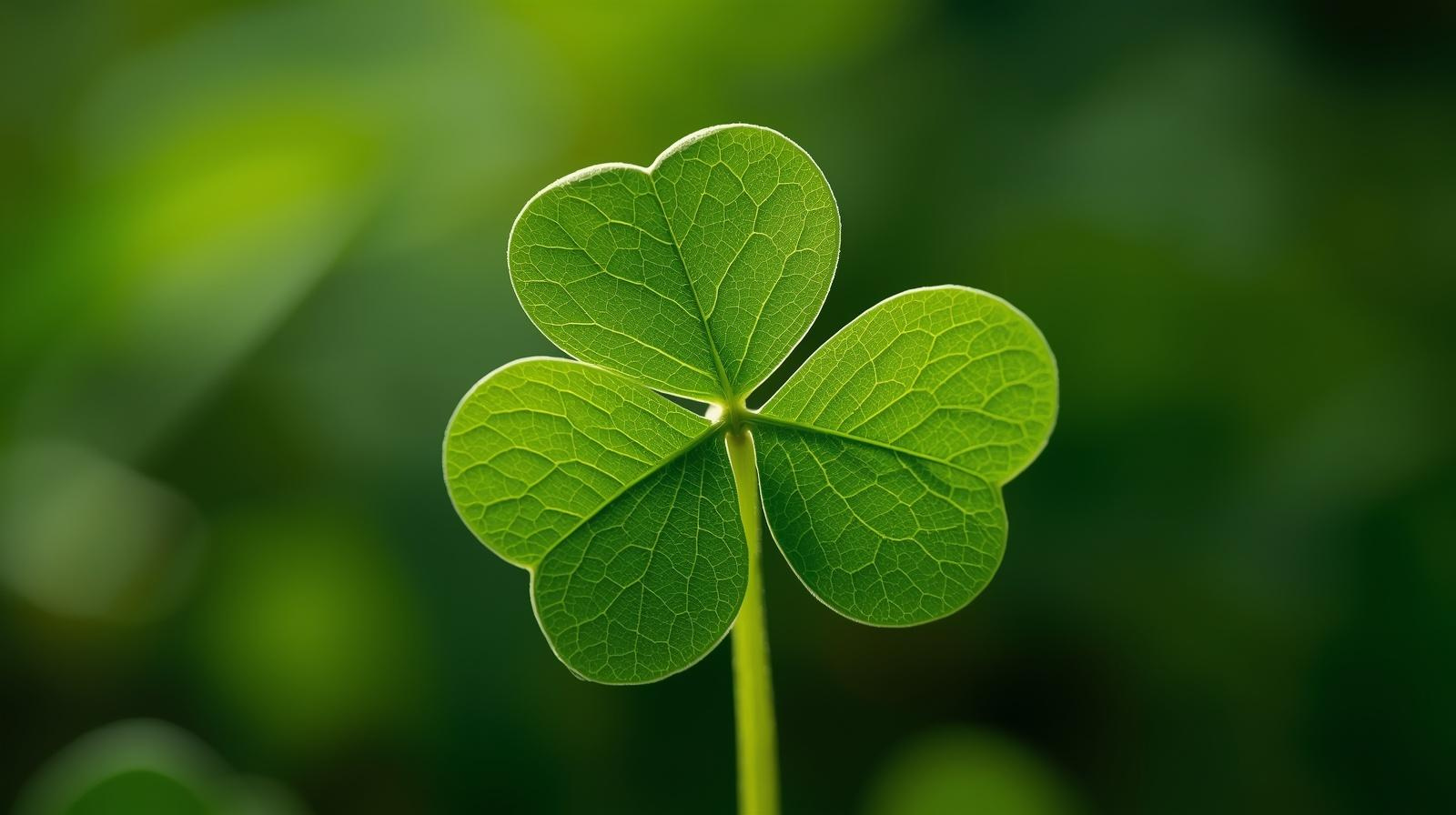
The shamrock completes the picture. St Patrick reportedly used the three-leafed plant as a visual aid when explaining the doctrine of the Holy Trinity. Today, the Irish government presents a bowl of fresh shamrocks to the US President each year in a formal ceremony at the White House, a diplomatic tradition that has taken place since the 1950s and remains one of the most distinctive gestures in Irish-American relations.
A Note on “Plastic Paddy” vs Authentic Celebration
Not everyone in Ireland greets the global enthusiasm for St Patrick’s Day with uncomplicated joy. Some Irish people gently note that the holiday as celebrated abroad, with green beer, leprechaun hats, and exaggerated stage-Irish stereotypes, bears little resemblance to Irish culture. The term “Plastic Paddy” is sometimes used to describe those who claim Irish identity for one day a year without deeper engagement with the culture.
In recent decades, Ireland has worked to reclaim and reframe the day, emphasising Irish arts, language, sport, and contemporary culture rather than kitsch. The Dublin festival in particular has evolved into a sophisticated celebration of Irish creativity in all its forms.
Conclusion
St Patrick’s Day is, at its heart, a celebration of survival and identity. The Irish people endured centuries of colonisation, famine, and emigration, and yet their culture not only survived but spread across the entire world. On 17th March, whether in a village in County Clare, a pub in Manhattan, or a parade in Buenos Aires, that survival is celebrated with music, colour, pride, and the distinctive warmth that the Irish call craic.
The flags that fly on this day, green, white, and orange; ancient harps on green fields; saltires and provincial quarterings, each tell a part of that story. Together, they speak of a nation that has never been simple, never been without complexity, and never stopped being proud.
Lá Fhéile Pádraig Sona Duit — Happy St Patrick’s Day.
Leave a Reply