
(Feast Day: 13th June)
St. Anthony of Padua’s feast day on 13th June is one of the most beloved Catholic celebrations worldwide, honouring a saint known for his brilliant preaching, deep compassion, and the countless stories of lost things found through his intercession.
Overview
St. Anthony of Padua (1195–1231), born Fernando Martins de Bulhões in Lisbon, is one of the most widely venerated saints in Christianity. A Franciscan friar, gifted preacher, and defender of the poor, he became known as the patron saint of lost items, a devotion rooted in a famous legend about a stolen book returned through his prayer. His feast day on 13th June commemorates his death in 1231 and celebrates his enduring spiritual legacy.
Early Life and Spiritual Calling
Born into a noble Portuguese family, Anthony entered the Canons Regular of St. Augustine at age 15, studying theology and Latin in Coimbra. His life changed dramatically in 1220 when the relics of Franciscan martyrs arrived from Morocco. Inspired by their sacrifice, he left the Augustinians and joined the Franciscan Order, taking the name Anthony.
His attempt to travel to Morocco as a missionary was thwarted by illness, and a storm eventually brought him to Sicily. In 1221, he met St. Francis of Assisi, who recognized his gifts and encouraged his teaching and preaching.
A Brilliant Preacher and Teacher
Anthony’s preaching career began almost accidentally. At a gathering in Forlì in 1222, he was asked to speak, revealing extraordinary eloquence, deep biblical knowledge, and a gift for communicating complex theology with clarity. His sermons drew enormous crowds across northern Italy and southern France.
He later became responsible for training new friars in theology, a role personally approved by St. Francis. Anthony’s writings and teachings eventually earned him the title Doctor of the Church.
Miracles and Legends
St. Anthony’s life is surrounded by stories of miracles, including:
- The Miracle of the Fishes — When people refused to listen to him preach, fish gathered at the water’s surface to hear his sermon.
- The Lost Psalter — A novice stole Anthony’s psalter and fled; Anthony prayed, and the novice returned with the book. This story became the foundation of his patronage of lost items.
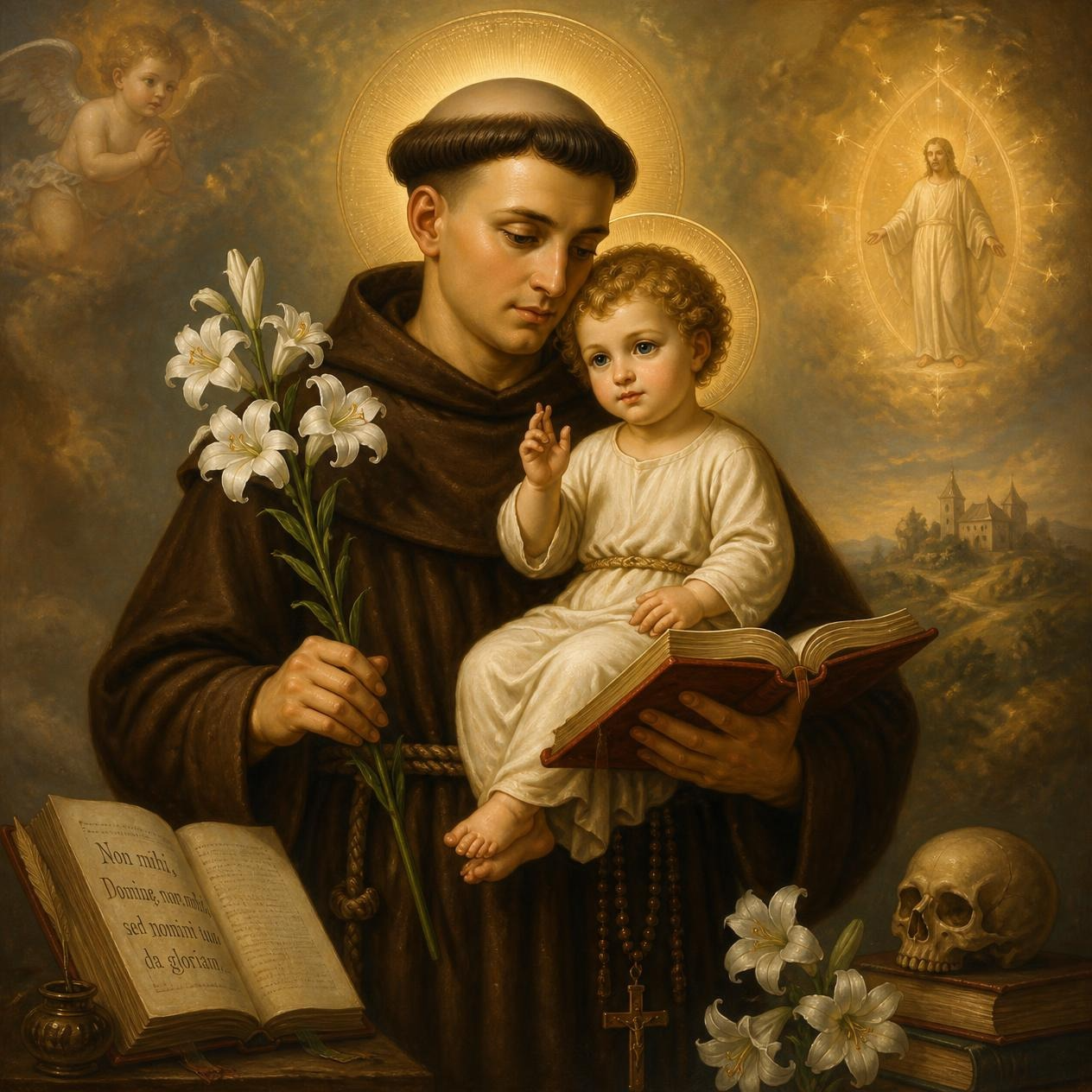
In art, Anthony is often depicted holding the Infant Jesus, a lily, or a book, symbols of purity, wisdom, and his mystical experiences.
Feast Day: 13th June
St. Anthony died on 13th June, 1231, in Padua, where he is buried in the magnificent Basilica of Saint Anthony. He was canonised less than a year later, one of the fastest canonizations in Church history.
How the Feast Is Celebrated
Celebrations vary across the world, but the most famous take place in Lisbon, his birthplace:
- Fado music and dancing
- Grilled sardines and street festivals
- Flowered garlands and homemade altars
- Matchmaking traditions and mass weddings
- Religious processions and parades
In many Catholic communities globally, the day includes:
- Special Masses and novenas
- Blessing and distribution of St. Anthony’s Bread for the poor
- Acts of charity inspired by his compassion
Patronage
St. Anthony’s patronages are extensive, reflecting his popularity and the breadth of traditions connected to him. He is patron of:
- Lost items and lost people
- The poor and oppressed
- Sailors, fishermen, travellers
- Expectant mothers and those seeking a spouse
- Lisbon, Padua, Portugal, Brazil, and many cities worldwide
Legacy
St. Anthony remains one of the most invoked saints in daily Catholic life. His prayers are recited by millions seeking help with lost objects, guidance, or comfort. His feast day in June is both a joyful cultural celebration and a moment of deep spiritual reflection.
Leave a Reply