
The Triumphal Entry and Its Meaning Across Christianity
A Survey of Traditions, Theology, and Observance
Introduction
Palm Sunday marks the beginning of Holy Week, the most sacred period in the Christian calendar, and commemorates the triumphal entry of Jesus Christ into Jerusalem. Observed on the Sunday before Easter, it is a day that blends exuberant celebration with the shadow of the crucifixion to come, making it one of the most theologically rich and emotionally complex days in Christian worship.
The name derives from the palm branches that, according to the Gospels, were strewn along the road as Jesus rode into the city on a donkey. Crowds lined the way, crying out “Hosanna”, a Hebrew word meaning “save us”, and hailing him as the long-awaited Messiah. Yet within the same week, those shouts of praise would give way to calls for his execution. It is this dramatic tension between triumph and tragedy that gives Palm Sunday its profound spiritual depth.
Across the many branches of Christianity, Catholic, Eastern Orthodox, Protestant, Anglican, and beyond, Palm Sunday is observed with remarkable diversity. While the core narrative is shared, the theological emphases, liturgical practices, and cultural expressions vary significantly. This article explores what Palm Sunday means to different Christian traditions, revealing both a common faith and a rich tapestry of worship.
The Biblical Narrative
The account of the triumphal entry appears in all four Gospels, making it one of the best-attested events of Jesus’s final week. In Matthew 21:1–11, Mark 11:1–11, Luke 19:28–44, and John 12:12–19, Jesus deliberately arranges to ride into Jerusalem on a young donkey, a detail the Gospels link to the prophecy of Zechariah 9:9: “See, your king comes to you, gentle and riding on a donkey.”
The crowds’ use of palm branches carried significant political and religious symbolism. In Jewish tradition, palms were associated with victory, prosperity, and the Festival of Tabernacles. More recently in Jewish memory, palm branches had featured prominently in the Maccabean revolt, a symbol of national liberation. By waving palms, the crowd was making a politically charged statement, hailing Jesus as a liberating king.
Yet Jesus’s choice of a donkey rather than a war horse subtly reframed that expectation. He came not as a military conqueror, but as a humble, peaceful king. The crowd celebrated; Jesus wept. Luke’s Gospel records that as Jesus approached the city, he lamented over Jerusalem, foreseeing its destruction. The joy of the crowds and the sorrow of Jesus exist side by side, a duality that reverberates through every tradition’s observance of the day.
The Roman Catholic Tradition
Liturgy of the Palms
In the Roman Catholic Church, Palm Sunday is formally known as “Palm Sunday of the Passion of the Lord”, a title that deliberately holds together both the triumphal entry and the coming suffering. The day’s liturgy is among the most elaborate of the entire year and follows a distinctive two-part structure.
The Mass begins not at the altar but, ideally, outside or at the back of the church. The congregation gathers for the blessing of palms and a procession, reenacting the crowd’s welcome of Jesus into Jerusalem. The priest or deacon reads or chants one of the Gospel accounts of the entry, and the congregation responds with Hosannas. The procession then moves into the church, often accompanied by the hymn “All Glory, Laud and Honour.”
The Passion Narrative
What makes the Roman Catholic Palm Sunday especially distinctive is the reading of the Passion narrative, the full account of Jesus’s suffering, trial, and crucifixion, during the Liturgy of the Word. This is a lengthy text, often chanted in parts with different voices taking the roles of narrator, Jesus, Pilate, and the crowd. The congregation itself participates, speaking the words of the crowd, including the chilling cry “Crucify him!”
This juxtaposition is intentional: the Church places the celebration and the suffering together so that worshippers feel the full arc of the week without waiting for Good Friday. The palm branches distributed to the faithful are often taken home, dried, and returned the following year to be burned, providing the ash used on Ash Wednesday, beautifully connecting the liturgical cycle.
For Catholics, Palm Sunday is also the beginning of intense preparation for the Easter Vigil, considered the most important liturgy of the year. The Triduum, Holy Thursday, Good Friday, and Holy Saturday, leads directly from it.
The Eastern Orthodox Tradition
The Feast of the Entry into Jerusalem
In Eastern Orthodoxy, Palm Sunday is called the “Entry of the Lord into Jerusalem” and is counted as one of the Twelve Great Feasts, the most significant celebrations of the liturgical year after Pascha (Easter). It marks the conclusion of Great Lent and the beginning of Holy Week, known as Bright Week or Passion Week.
The Orthodox liturgical celebration is deeply rooted in ancient Byzantine tradition and is characterised by its solemn grandeur. The night before, a Saturday Vigil is held that includes the reading of the story of the raising of Lazarus (celebrated on the preceding Saturday), linking the two miracles as signs of Christ’s divine authority. This connection between Lazarus Saturday and Palm Sunday is unique to the Orthodox tradition.
Willow Branches and Pussywillows
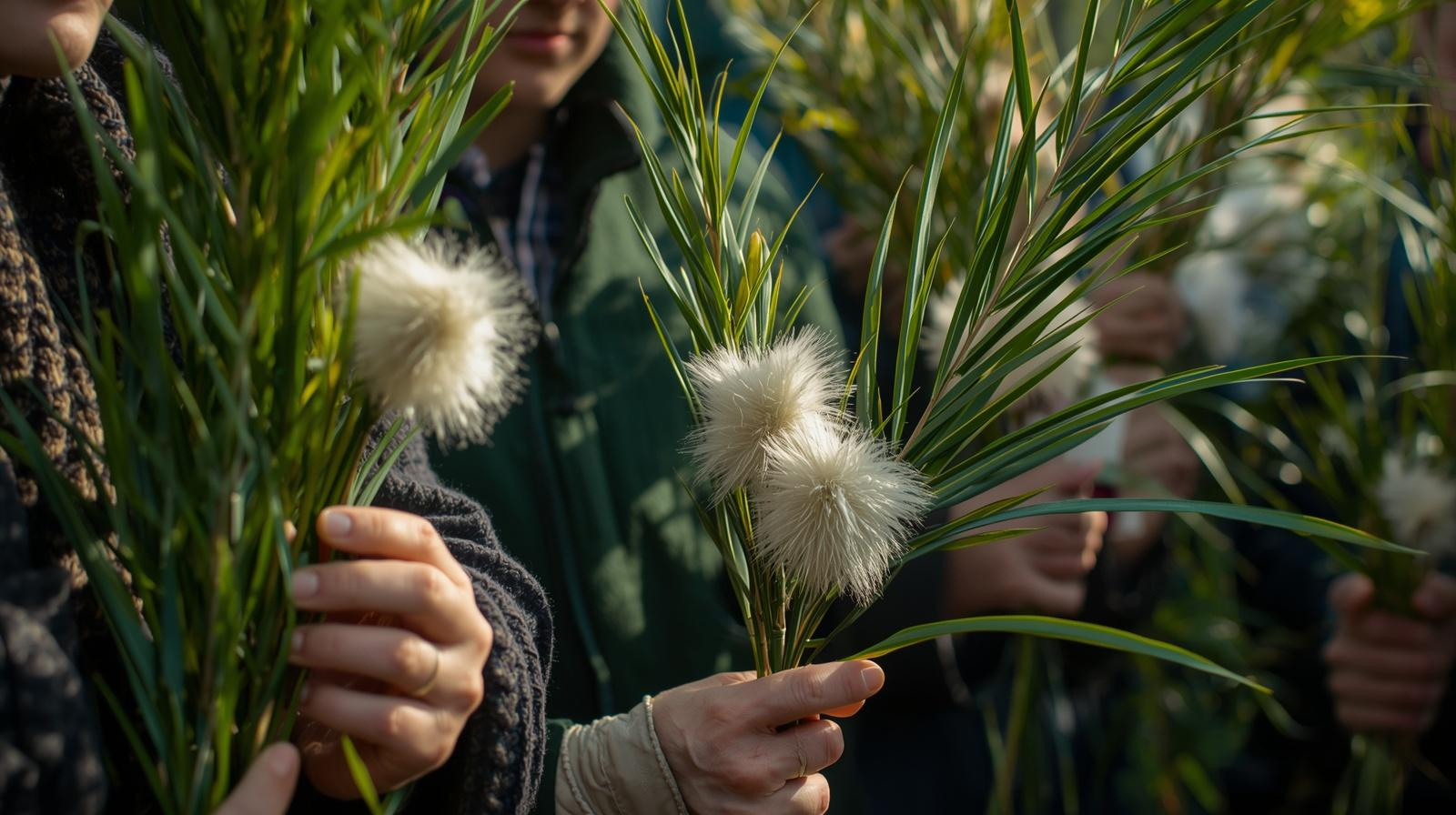
A charming cultural variation occurs in Slavic Orthodox countries, Russia, Ukraine, Serbia, and others, where palm branches are either unavailable or not traditional. Instead, willow branches or pussywillows are blessed and distributed to the faithful. These “palms of the north” serve the same liturgical purpose and are taken home and placed behind icons, where they remain throughout the year as a blessing on the household.
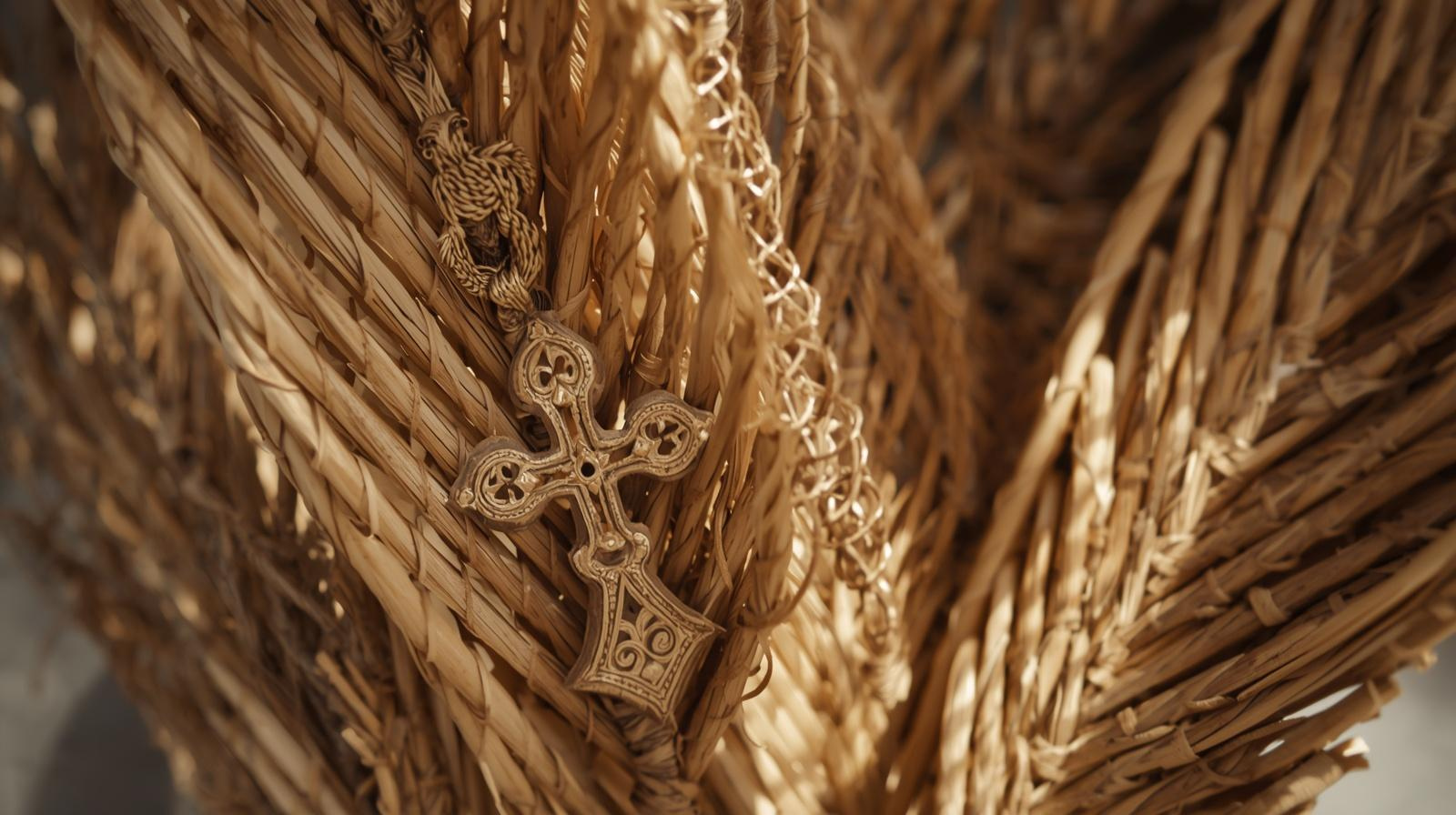
In Greek Orthodox practice, genuine palm branches are used and often woven into elaborate decorative form, crosses, animals, and intricate patterns, by skilled artisans. The art of palm weaving is itself considered a form of devotion and is particularly associated with the island of Corfu, where the tradition has been elevated to a local art form.
Theological Emphasis
Orthodox theology reads the triumphal entry primarily as a revelation of Christ’s divine kingship, a kingship that transcends earthly categories. The liturgical hymns of the day, drawn from the rich Byzantine hymnographic tradition, reflect on the paradox of the King of Kings entering on a humble donkey, and of children and crowds recognising what Israel’s leaders refused to see. The day is joyful, but the joy is already tinged with the anticipation of the Passion.
The Anglican and Episcopalian Tradition
A Via Media Approach
The Anglican tradition, as with much of its theology, occupies a middle ground between Catholic liturgical richness and Reformed theological emphasis. Palm Sunday in Anglican churches typically follows the structure found in the Book of Common Prayer and its revisions, with the blessing of palms and a procession being observed in churches across the spectrum from Anglo-Catholic to evangelical Anglican.
The Church of England’s Common Worship and the Episcopal Church’s Book of Common Prayer (1979) both provide full liturgies for Palm Sunday that include the outdoor gathering, blessing of palms, procession, and the reading of the Passion. The extent to which individual parishes observe all these elements varies considerably according to their theological tradition within Anglicanism.
Diversity Within the Tradition
In more Anglo-Catholic or “high church” parishes, the Palm Sunday observance closely resembles the Roman Catholic rite in its ceremonial detail and emphasis on the sacramental dimensions of the liturgy. In more evangelical Anglican settings, the focus may shift toward the preaching of the Passion narrative and personal reflection on the meaning of Christ’s sacrifice, with less emphasis on ceremonial procession.
What unites Anglicans across this spectrum is the scriptural narrative itself and the season of Holy Week that Palm Sunday inaugurates. The week is seen as an invitation to accompany Jesus through his final days, a journey of deepening contemplation that culminates in the resurrection.
Lutheran and Reformed Traditions
Word-Centred Observance
Lutheran churches, rooted in the theology of the Reformation, place the proclamation of the Word at the centre of all worship. Palm Sunday in Lutheran congregations is therefore characterised by a strong focus on the preaching of the Passion narrative rather than elaborate ceremonial. Martin Luther himself observed Palm Sunday and valued it as an occasion to proclaim the Gospel of salvation through Christ’s suffering and death.
Many Lutheran churches distribute palm branches, and some include a processional element, but the theological weight lies firmly in the sermon and the reading of the Passion. The liturgy typically follows the shape of the historic Western rite, and many Lutheran churches today, particularly in the Evangelical Lutheran Church in America and Lutheran Church–Missouri Synod, have recovered more of the traditional Holy Week observances than was sometimes the case in previous generations.
Reformed and Presbyterian Churches
In the Reformed and Presbyterian traditions, informed by Calvin’s theology of worship (the “regulative principle,” which holds that worship should include only what Scripture commands), Palm Sunday has historically received less liturgical elaboration. The concern was to avoid anything that might be seen as mere tradition or human invention rather than scriptural warrant.
Nevertheless, most contemporary Reformed and Presbyterian congregations observe Palm Sunday as a significant day in the Christian calendar, reading the Gospel accounts of the triumphal entry and preaching on its theological significance. Children’s participation, often including a procession of children waving palm branches, is common and valued as a way of connecting the next generation with the story. The day is seen as an opportunity to reflect on Christ’s kingship and the nature of his kingdom.
Baptist and Evangelical Traditions
Varying Levels of Observance
Evangelical and Baptist traditions span a wide range of practices with respect to the liturgical calendar. Many Baptist and nondenominational evangelical churches historically have been wary of following a set calendar, preferring instead the freedom to preach from Scripture as the Spirit leads without being bound to seasons or days. For some in this tradition, Palm Sunday might pass without formal observance.
However, there has been a significant shift in many evangelical congregations over recent decades. Influenced by a broader movement toward liturgical renewal and a deeper engagement with the Church’s historic practices, many evangelical churches now observe Palm Sunday with some ceremony, distributing palm branches, reading the triumphal entry narrative, and using the day as the launch of a week-long focus on the Passion and resurrection.
Children and Participation
One distinctive feature of Palm Sunday in many evangelical and Baptist churches is the prominent role given to children. Children’s processions, in which children wave palm branches and sing Hosanna song, are a beloved feature of many congregations and serve both a liturgical function (recalling that it was children who cried Hosanna in the temple, according to Matthew 21:15) and a pedagogical one, helping young people enter imaginatively into the biblical narrative.
For evangelicals, the theological emphasis on Palm Sunday tends to fall on the declaration of Jesus as Messiah and King, and the contrast between the crowd’s misunderstanding of his kingship and the true nature of the salvation he came to bring. The week is seen primarily as the occasion for proclaiming the Gospel of atonement and resurrection.
Pentecostal and Charismatic Traditions
Pentecostal and charismatic churches bring a characteristic energy to Palm Sunday observance. The exuberant shouts of “Hosanna,” the waving of palms, and the celebratory atmosphere of the crowd’s welcome resonate naturally with traditions that emphasise joy, praise, and the active work of the Holy Spirit in worship.
Palm Sunday services in many Pentecostal congregations feature extended times of praise and worship, with the congregation actively waving palm branches, banners, and flags as an act of worship. The entry of Jesus into Jerusalem is celebrated as a prophetic act that anticipates his ultimate reign, and the day often includes corporate prayer for revival and spiritual renewal.
The theological emphasis in charismatic traditions tends to focus on the present kingship of Christ, not only his historical entry into Jerusalem but his living reign over the church and the world today. The Hosannas of Palm Sunday are not merely a historical memory but a present cry for salvation, healing, and the coming of God’s kingdom.
Global and Cultural Expressions
Christianity’s global spread means that Palm Sunday is observed in an astonishing variety of cultural contexts, each bringing its own distinctive character to the shared narrative.
In the Philippines, one of the most Catholic countries in Asia, Palm Sunday (Domingo de Ramos) begins a week of intense popular devotion. Palm weavers produce elaborate decorative palms, and the week culminates in the Bisita Iglesia, a tradition of visiting seven churches on Maundy Thursday to pray the Stations of the Cross.
In Latin American countries, Palm Sunday processions are often elaborate community events featuring statues of Christ on a donkey being carried through the streets, with participation from the whole neighbourhood. The distinction between liturgy and popular devotion blurs beautifully in these celebrations.
In Ethiopia, the Ethiopian Orthodox Tewahedo Church, one of the oldest Christian communities in the world, celebrates Palm Sunday (Hosanna) with great solemnity. Worshippers carry branches of olive and other trees and participate in lengthy liturgical services that reflect the Church’s ancient Ge’ez tradition.
In Western Africa, particularly in countries with large Anglican and Catholic populations such as Nigeria and Ghana, Palm Sunday processions fill the streets, often combining traditional music and dance with Christian liturgy in a vivid expression of inculturation, the process by which the Gospel takes on the forms of local culture.
Shared Themes Across Traditions
Despite the remarkable diversity of Palm Sunday observance across Christianity, several themes recur with remarkable consistency, suggesting a common intuition about what the day means.
First, there is the theme of the unexpected king. Every tradition grapples with the paradox of a Messiah who enters in humility rather than conquest, on a donkey rather than a warhorse. This challenges human assumptions about power, success, and salvation, and invites worshippers to examine their own expectations of God.
Second, there is the theme of misunderstood devotion. The crowd that shouts Hosanna does not fully understand what they are welcoming. Most traditions use this to invite self-examination: in what ways might we, too, praise Christ while misunderstanding his purposes? This honest and sometimes uncomfortable question gives Palm Sunday its peculiar moral seriousness.
Third, there is the theme of the journey toward suffering. Palm Sunday is not an end but a beginning, the start of Holy Week. Every tradition understands that the celebration of the entry is inseparable from the cross that lies at the end of the week. The palms and the passion belong together.
Finally, there is the theme of participation. Palm Sunday is uniquely a day for the people, for waving branches, for shouting, for processing together. It is communal, embodied, and active in a way that distinguishes it from the quieter contemplation of Good Friday. It invites the whole congregation, adults and children alike, to enter the story, not merely observe it.
Conclusion
Palm Sunday occupies a unique place in the Christian year, a hinge day that connects the joyful anticipation of salvation with the solemn reality of suffering, and the festive praise of the crowd with the deeper, costlier discipleship of Holy Week. It is a day that invites Christians not simply to remember a historical event but to place themselves within it, to wave their own branches and ask what it truly means to welcome a king who comes in humility to die.
Across Catholic, Orthodox, Anglican, Lutheran, Reformed, Baptist, evangelical, Pentecostal, and many other expressions of the Christian faith worldwide, Palm Sunday is observed with conviction and creativity. The forms differ, from incense-filled cathedrals to open-air processions in tropical heat, from Byzantine chant to charismatic praise, but the story is the same: the King has come. The question Palm Sunday poses to every generation is simple and inexhaustible: what will we do with him when he arrives?
✦ ✦ ✦
Leave a Reply