
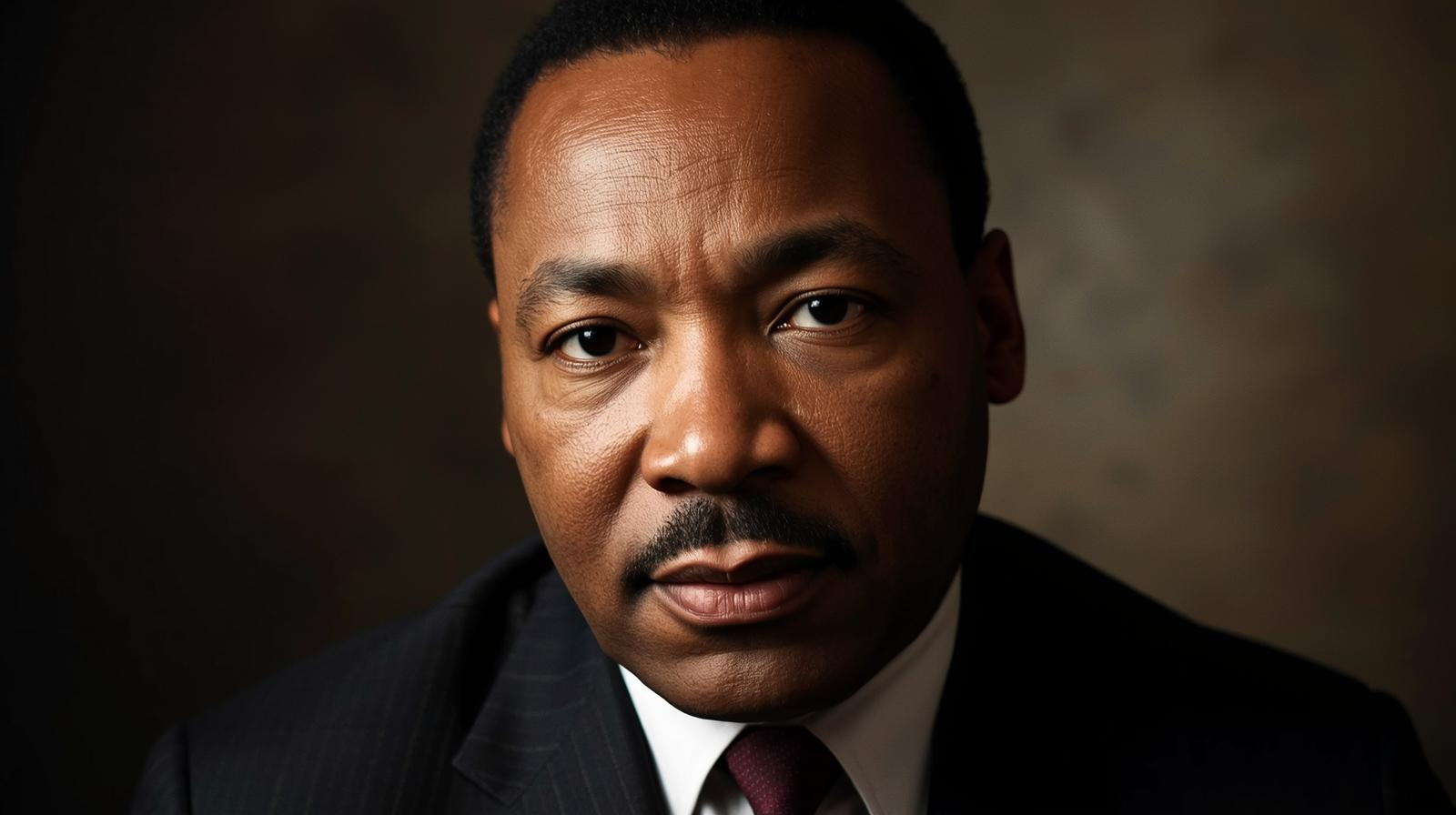
Every third Monday in January, Americans pause to honour one of the most influential figures in the nation’s history: Dr. Martin Luther King Jr. This federal holiday celebrates the life and achievements of the Baptist minister who became the most visible leader of the Civil Rights Movement and a global symbol of peaceful resistance to injustice.
Who Was Martin Luther King Junior?
Born on 15th January 1929, in Atlanta, Georgia, Martin Luther King Jr. grew up in a time when racial segregation was legally enforced across the American South. Despite these obstacles, he excelled academically, earning a doctorate in theology from Boston University and becoming a pastor at Dexter Avenue Baptist Church in Montgomery, Alabama.

King’s leadership emerged during the Montgomery Bus Boycott of 1955-1956, sparked by Rosa Parks’ refusal to give up her seat to a white passenger. His eloquence, commitment to nonviolent protest, and moral clarity propelled him to national prominence. Over the following years, he organised and led marches for voting rights, desegregation, labour rights, and other basic civil rights. His philosophy was deeply influenced by Mahatma Gandhi’s principles of nonviolent resistance and by his Christian faith.
The pinnacle of King’s public life came on 28th August 1963, when he delivered his iconic “I Have a Dream” speech to over 250,000 people at the March on Washington. In this historic address, he eloquently articulated his vision of an America where people would “not be judged by the colour of their skin but by the content of their character.”
King’s efforts contributed significantly to the passage of landmark legislation including the Civil Rights Act of 1964 and the Voting Rights Act of 1965. In recognition of his work, he was awarded the Nobel Peace Prize in 1964 at the age of 35, making him the youngest person at that time to receive the honour. Tragically, his life was cut short when he was assassinated on 4th April 1968, in Memphis, Tennessee, where he had gone to support striking sanitation workers.
Why Is Martin Luther King Jr. Day Celebrated?
Martin Luther King Jr. Day serves multiple important purposes in American society. First and foremost, it honours King’s personal sacrifices and achievements in advancing civil rights and social justice. His courage in the face of threats, arrests, and violence inspired millions and fundamentally changed American society.
The holiday also commemorates the broader Civil Rights Movement and acknowledges the ongoing struggle for equality and justice. It serves as a reminder that the rights many take for granted today were hard-won through the dedication and sacrifice of countless individuals who stood against systemic racism and discrimination.
Significantly, this is the only federal holiday designated as a national day of service, reflecting King’s belief that everyone can be great because everyone can serve. The holiday encourages Americans to improve their communities and work toward King’s vision of a “beloved community” where justice and equality prevail.
The Path to a Federal Holiday
The journey to establish Martin Luther King Jr. Day as a federal holiday was itself a significant civil rights achievement. Shortly after King’s assassination, Representative John Conyers introduced legislation to create the holiday, but it faced years of opposition. Stevie Wonder’s 1980 song “Happy Birthday” helped galvanise public support, and activists collected six million signatures in support of the holiday.
Finally, in 1983, President Ronald Reagan signed the bill into law, and the first observance took place on 20th January 1986. However, it wasn’t until 2000 that all 50 states officially recognised the day. The holiday is observed on the third Monday in January, close to King’s actual birthday of 16th January.
How the Day Is Observed
Martin Luther King Jr. Day has become a day of reflection, education, and action across the United States. Many Americans participate in community service projects, honouring King’s legacy through volunteer work at food banks, homeless shelters, schools, and community centres. The Corporation for National and Community Service promotes the motto “Make it a day ON, not a day off,” encouraging active participation rather than passive commemoration.
Educational institutions, museums, and community organisations host workshops, lectures, and exhibitions exploring King’s life, the Civil Rights Movement, and contemporary social justice issues. Many watch or listen to King’s famous speeches and participate in discussions about racial equality and social progress.
Commemorative marches and parades take place in cities nationwide, with participants retracing routes from historic civil rights marches. Religious services featuring King’s message of love, justice, and nonviolence are held in churches across the country, while political leaders deliver speeches reflecting on King’s legacy and calling for continued work toward equality.
Cultural institutions present special programs including films, theatrical performances, and musical tributes celebrating African American culture and the Civil Rights Movement. Many individuals and organisations also use the day to engage in dialogue about contemporary challenges related to racial justice, economic inequality, and civil rights.
The Continuing Relevance of King’s Message
More than five decades after his death, Martin Luther King Jr.’s message remains powerfully relevant. His emphasis on nonviolent resistance continues to inspire social justice movements worldwide. His calls for economic justice, including fair wages and the elimination of poverty, resonate amid ongoing debates about income inequality. His vision of a society where people are judged by character rather than race remains an aspirational goal as America continues to grapple with racial disparities in education, criminal justice, healthcare, and economic opportunity.
King’s commitment to coalition-building and his understanding that justice issues are interconnected offer lessons for contemporary activists working across various causes. His moral courage and willingness to take principled stands at great personal cost provide a model for ethical leadership in challenging times.
Conclusion
Martin Luther King Jr. Day is more than a celebration of one remarkable individual. It is a national commitment to the principles of equality, justice, and nonviolent social change that King championed. By observing this day through service, education, and reflection, Americans honour not just King’s memory but the ongoing work required to fulfil his dream of a just and equitable society. As King himself said, “Life’s most persistent and urgent question is, ‘What are you doing for others?’” This holiday challenges each person to answer that question with meaningful action.
Leave a Reply