
Branding the Underground
How a circle, a bar, and a single typeface gave millions of Londoners a shared language
Before the roundel, London’s underground railways were a visual cacophony. Each line spoke its own dialect of signage, competing typefaces, mismatched colours, handwritten notices jostling against printed bills. The experience of navigating the network was, for the uninitiated, bewildering.
The origins of the device that would change all of this are deceptively modest. In 1908, the Underground Electric Railways Company introduced a solid red disc behind station names on enamel signs. It was a practical solution to a practical problem: making names legible against cluttered platform environments.
What followed over the next decade was a process of refinement guided by one of the great unsung partnerships in design history. Frank Pick, the Underground’s commercial manager, and later managing director, possessed an extraordinary conviction that good design was not merely an aesthetic luxury but a civic and commercial necessity. The public deserved clarity. The network deserved coherence.
Edward Johnston and the letterform
The commissioning of a typeface, 1916
In 1916, Frank Pick made what would prove to be one of the most consequential commissions in the history of typography. He approached Edward Johnston, calligrapher, teacher, and quiet revolutionary of the letterform, with a brief that was at once simple and profound: design a typeface for the Underground that was unmistakably of its era, yet would not age.
Johnston approached the brief through the lens of his deep scholarship in historical lettering. He had spent years studying manuscripts, absorbing the logic of how letters had evolved through centuries of the human hand meeting vellum and ink. His sans-serif would carry that humanist inheritance forward, not as nostalgia, but as structural honesty.
The result, Johnston Sans, was radical in its restraint. Strokes tapered where the pen would naturally lift. The lowercase ‘l’ bore a gentle foot, distinguishing it from the figure ‘1’. The diamond-shaped dot over the ‘i’ and ‘j’, now iconic, was not a decoration but a logical consequence of the tool’s angle. Every choice was reasoned, every detail earned.
“It must be in the character of the times, simple, direct, legible, but it must also be able to speak at a distance.”
Frank Pick, on the brief to Johnston
A unified visual language
Coherence as civic act
The roundel and the Johnston typeface did not exist as isolated achievements. Their true significance lay in how they anchored a broader system, a unified visual language that Pick and his collaborators extended across every surface the network touched. Maps, posters, station architecture, rolling stock livery, signage: all were brought into conversation with one another.
This integration was not accidental. Pick believed, with almost missionary intensity, that the experience of using public infrastructure should be dignified and clear. The design of the network was, in his view, an argument about the relationship between institutions and the people they serve. When a traveller could locate herself instantly on a platform, when the name of her destination resolved legibly at thirty feet, when the map in her hand spoke the same visual grammar as the tile work on the wall, something civic had been achieved.
Timeline
1908 The solid red disc first appears on station enamel signage under the Underground Electric Railways Company.
1913 The disc is refined into the ring-and-bar configuration, the roundel as we now recognise it, and standardised across stations.
1916 Edward Johnston delivers his typeface. It is adopted network-wide, displacing the inconsistent lettering that had accumulated over decades.
1933 The formation of London Passenger Transport Board consolidates the network, and the visual system becomes the inheritance of the unified organisation.
1979 Eiichi Kono of Banks & Miles redraws Johnston’s typeface as New Johnston, adapting it for phototypesetting without altering its essential character.
2016 Johnston100, a digital revival by Monotype, is released to mark the centenary of the original commission, restoring detail that had been lost.
Influences and legacies
The currents that shaped the work, and the currents it set in motion
| Modernist typography
Johnston predates and anticipates the geometric sans-serifs of the Bauhaus and Swiss International Style. His influence on Paul Renner’s Futura and Adrian Frutiger’s later work is widely acknowledged. |
Clarity over decoration
The network’s visual system was an explicit rejection of Victorian ornamental excess. Every element had to justify its presence by function. This doctrine of purposeful restraint became a defining strand of twentieth-century design thinking. |
Public information design
The Underground established that mass public systems require their own design discipline — one distinct from commercial advertising, closer to architecture in its obligations to the collective user. |
The line between the 1916 commission and the field of information design as it exists today is not straight, but it is traceable. When wayfinding systems are designed for airports, hospitals, or transit networks anywhere in the world, they are working in a tradition that Pick and Johnston helped to define, that clarity is a form of care, and that a symbol, patiently refined, can become a form of speech.
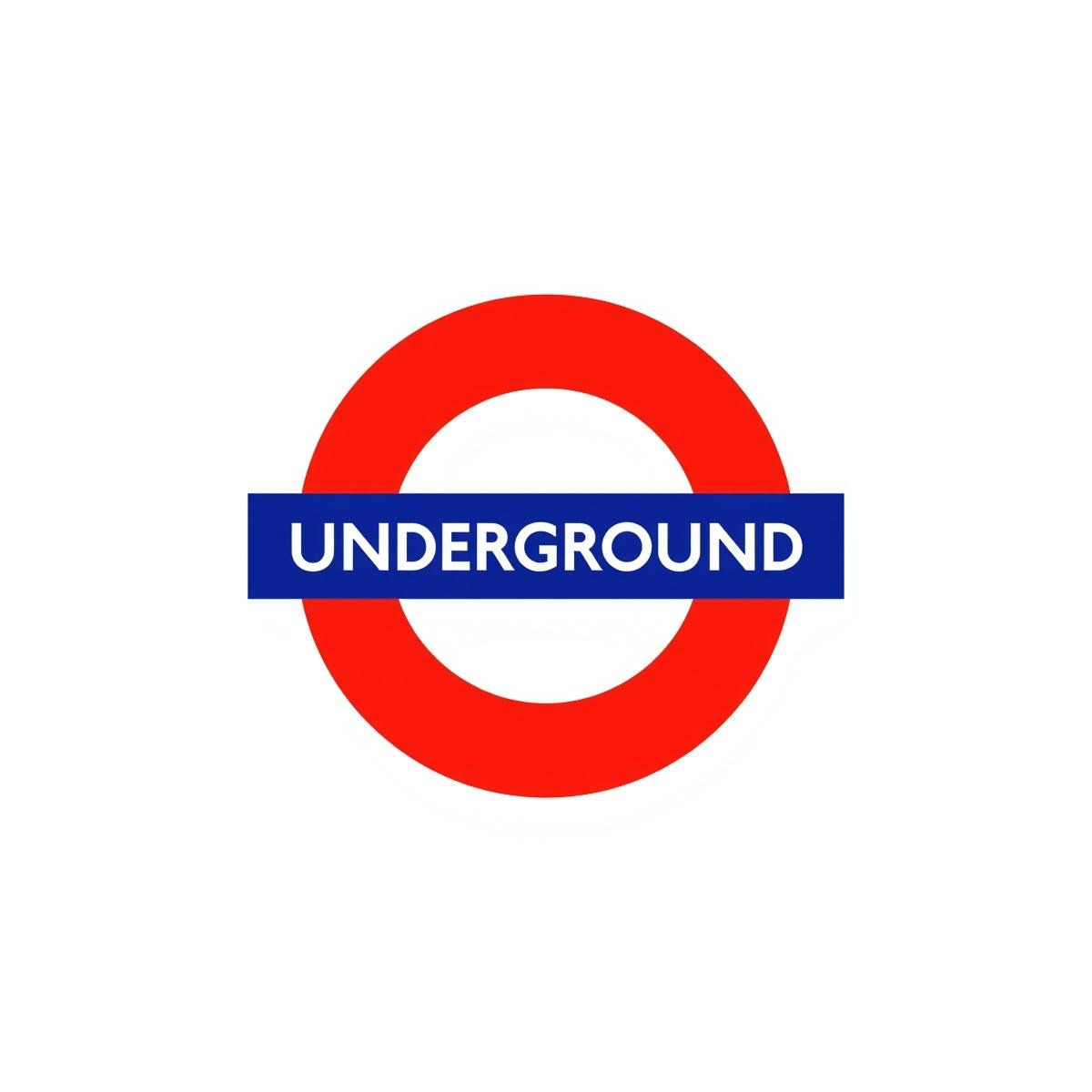
The roundel is now over a century old. It appears on tote bags and ceramics and the covers of design monographs. But its staying power is not merely cultural affection. It endures because it was, from the beginning, grounded in a genuine problem, and solved with genuine intelligence.
Leave a Reply