
La Tomatina is Spain’s world‑famous tomato‑throwing festival held every year on the last Wednesday of August in the small Valencian town of Buñol. What began as a spontaneous scuffle in 1945 has grown into the world’s largest annual food fight, drawing more than 20,000 participants from around the globe.
What Happens at the Festival
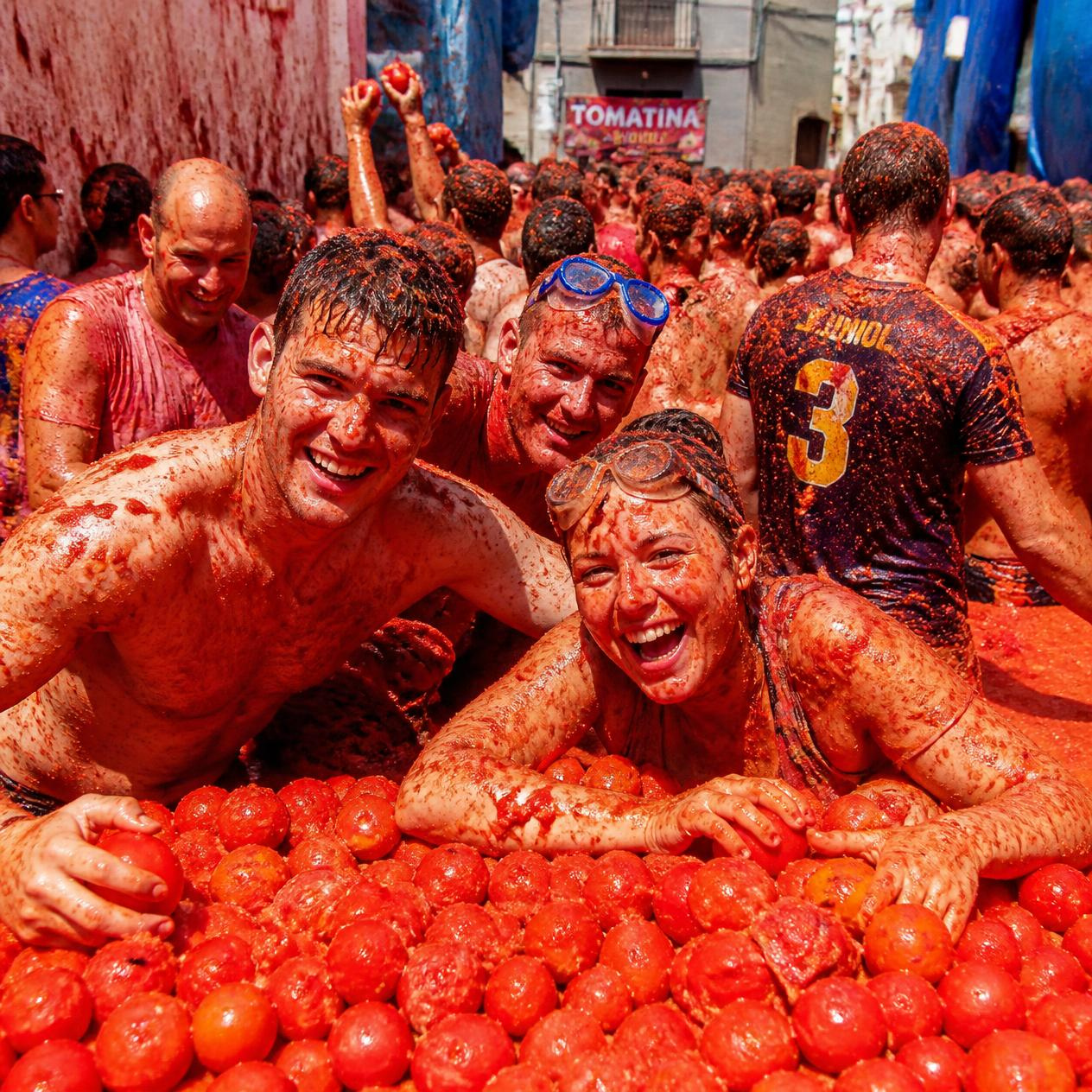
For one hour, the streets of Buñol transform into a red, pulpy arena where trucks unload tons of overripe tomatoes and participants hurl them at one another. Buildings are covered with tarps, music blasts through the streets, and the atmosphere resembles a lively rave. The only major rule: squish the tomato before throwing to avoid injury.
When It Takes Place
La Tomatina is held annually on the last Wednesday of August. Recent dates include:
- 2025: 27 August
- 2026: 26 August
- 2027: 25 August
- 2028: 30 August
Origins & History
A Spontaneous Food Fight (1945)
Most accounts trace the festival to August 1945, when a parade of “giants and big heads” was disrupted by local boys. A tomato from a nearby stall was thrown, sparking a chaotic food fight that locals repeated the following year, this time intentionally.
Bans & Revival
- 1950s: Dictator Francisco Franco banned the festival for lacking religious significance.
- Locals protested, even staging a symbolic “tomato funeral” in 1957.
- The festival was reinstated and later grew into a national and international attraction.
Modern Popularity
Television coverage in the 1980s boosted its fame, and by 2012 attendance reached 40,000, prompting Buñol to introduce a ticket limit of 20,000 in 2013 to protect the small town’s infrastructure.
Global Appeal
La Tomatina attracts visitors from across the world, about 40% of participants in recent years have been international tourists. Interest surged in India after the Bollywood film Zindagi Na Milegi Dobara (2011) featured the festival.
After the Battle
A cannon blast signals the end of the hour‑long fight. Participants head to communal showers, and the town begins its massive clean‑up operation. The acidity of tomatoes actually helps wash the streets clean.
Cultural Significance
La Tomatina is not tied to religion or harvest traditions. Instead, it celebrates:
*
- Joyful chaos
- Community spirit
- Rebellion against repression (historically)
- International cultural exchange
It has become a symbol of Spain’s playful, festive identity, an event where thousands gather simply for the thrill of shared, messy fun.
Leave a Reply