
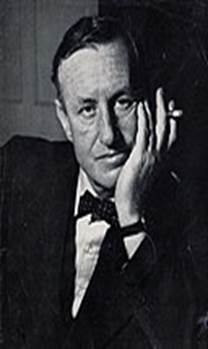
On a February evening in 1952, Ian Fleming sat down at his typewriter in his Jamaican estate, Goldeneye, and began writing the words that would change popular culture forever: “The scent and smoke and sweat of a casino are nauseating at three in the morning.” With that opening to “Casino Royale,” Fleming created James Bond, Agent 007 of Britain’s Secret Intelligence Service, a character who would become one of the most enduring and profitable franchises in entertainment history.
Ian Fleming: The Man Behind Bond
Ian Lancaster Fleming was born in 1908 into a wealthy and privileged British family. His life before writing combined adventure, intelligence work, and high society in ways that would directly inform his creation. During World War II, Fleming served as a personal assistant to the Director of Naval Intelligence, where he participated in planning operations and intelligence schemes. Though he did not see combat as a field agent, his insider knowledge of the intelligence world provided authentic details that gave his fiction credibility.
Fleming’s experiences in Naval Intelligence introduced him to the world of espionage, code-breaking, and covert operations. He witnessed the mundane reality of intelligence work alongside occasional moments of genuine danger and high stakes. This combination of the bureaucratic and the thrilling would characterise his Bond novels, where paperwork and meetings punctuate moments of violence and seduction.
After the war, Fleming became foreign manager of the Kemsley newspaper group, a position that allowed him to travel extensively. He built Goldeneye in Jamaica, where he would spend two months each winter writing. The estate’s name came from a wartime operation Fleming had been involved with, reflecting how deeply his military intelligence experience shaped his imagination.
Fleming married Anne Rothermere in 1952, shortly before beginning “Casino Royale.” By most accounts, their marriage was turbulent, marked by affairs on both sides. This complicated romantic life may have influenced Bond’s attitudes toward women and relationships, though Fleming’s views were also simply reflective of the era’s upper-class British masculine culture.

The Bond Novels: Cold War Thrillers-
Between 1953 and 1966, Fleming wrote twelve Bond novels and two short story collections. The books appeared at least once a year, becoming a publishing phenomenon that captured Cold War anxieties and post-war British identity.
“Casino Royale” (1953) introduced James Bond in a grounded story about bankrupting a Soviet agent at the baccarat tables. The novel established key elements: Bond’s license to kill, his taste for luxury, his romantic entanglements, and his willingness to use violence. It also showed his vulnerabilities, as he falls genuinely in love with Vesper Lynd, only to be betrayed.
“Live and Let Die” (1954) sent Bond to Harlem and Jamaica to investigate a Soviet-financed criminal operation. “Moonraker” (1955) kept Bond in England, dealing with a megalomaniac industrialist planning to destroy London. “Diamonds Are Forever” (1956) involved diamond smuggling from Africa to America, while “From Russia, with Love” (1957) became one of Fleming’s most acclaimed novels, featuring an elaborate Soviet plot to kill Bond and embarrass British Intelligence.
“Dr. No” (1958) introduced one of Bond’s most memorable villains, a reclusive criminal genius with metal hands operating from a Jamaican island. “Goldfinger” (1959) gave readers the most iconic Bond villain, Auric Goldfinger, with his plan to raid Fort Knox. The novel featured the memorable character of Pussy Galore and showed Fleming at the height of his storytelling powers.
“For Your Eyes Only” (1960) was a collection of short stories, followed by “Thunderball” (1961), which involved stolen nuclear weapons and SPECTRE, the criminal organisation Fleming created as a non-Soviet threat as Cold War tensions evolved. “The Spy Who Loved Me” (1962) was an experimental novel told from a woman’s perspective, which Fleming later disliked. “On Her Majesty’s Secret Service” (1963) showed Bond at his most vulnerable, marrying Tracy di Vicenzo only to see her murdered on their wedding day.
Fleming’s final novels reflected his declining health. “You Only Live Twice” (1964) sent a grief-stricken Bond to Japan seeking the villain Blofeld. “The Man with the Golden Gun” (1965) featured Bond brainwashed by the Soviets and sent to kill M, before recovering and pursuing the assassin Scaramanga. Fleming died in 1964, and the final book was published posthumously.
The Books’ Cultural Impact
Fleming’s novels captured something essential about 1950s and 1960s Britain. As the Empire declined and Britain’s global power diminished, Bond represented a fantasy of continued British relevance and superiority. He operated independently, succeeding where governments and armies could not, embodying a very British combination of amateurism and professionalism, of gentleman and killer.
The books were controversial from the start. Critics noted their violence, their attitudes toward women, and their sometimes crude xenophobia and racism. Bond’s world was one of clear moral lines, where British and American interests aligned against Soviet tyranny and various exotic threats. The novels reflected Fleming’s own prejudices, which were typical of his class and generation but became increasingly dated.
Yet the books were also thrilling, well-paced, and filled with fascinating details about food, drink, gambling, cars, and exotic locations. Fleming’s research gave his work verisimilitude. He knew about guns, about intelligence tradecraft, about luxury brands and fine living. This diligence, combined with propulsive plotting, made the books compulsively readable despite their flaws.
The novels achieved significant literary respectability when President John F. Kennedy named “From Russia, with Love” among his ten favourite books in 1961. This endorsement boosted Bond’s popularity in America and worldwide, transforming Fleming from a successful thriller writer into a cultural phenomenon.
From Page to Screen: The Early Films
The transformation of Fleming’s novels into cinema began with a television adaptation of “Casino Royale” in 1954, featuring American actor Barry Nelson as “Jimmy” Bond. This obscure production is a footnote in Bond history, but it showed Hollywood’s early interest in the character.
The true birth of cinematic Bond came when producers Harry Saltzman and Albert R. “Cubby” Broccoli secured the film rights to the novels (except “Casino Royale,” which had been sold separately). They convinced United Artists to back their first production, “Dr. No,” released in 1962.
The choice of which novel to adapt first was crucial. “Dr. No” offered exotic locations, a memorable villain, action, and the introduction of key characters like M, Miss Moneypenny, and Q. Director Terence Young collaborated with screenwriters Richard Maibaum, Johanna Harwood, and Berkely Mather to create a template for Bond films that balanced Fleming’s darkness with entertainment value.
The casting of Bond was equally crucial. After considering various actors, the producers chose an unknown Scottish actor named Sean Connery. Fleming initially had doubts, calling Connery “that fucking truck driver,” but Connery brought something unexpected to the role. He combined physical danger with sophistication, rough edges with charm, creating a Bond who was both believable as a killer and as a gentleman.
“Dr. No” was a commercial success, but it was “From Russia with Love” (1963) that proved Bond could be more than a one-off success. The film followed Fleming’s plot closely, creating a tense Cold War thriller with memorable set pieces, particularly the fight scene on the Orient Express between Bond and assassin Red Grant.
“Goldfinger” (1964) crystallised the Bond formula. The film introduced the Aston Martin DB5 with its gadgets, featured cinema’s most iconic villain, included the memorable Shirley Bassey theme song, and gave audiences unforgettable lines like “No, Mr. Bond, I expect you to die!” The image of Jill Masterson painted in gold became one of cinema’s most famous images. The film was a massive hit, transforming Bond into a global phenomenon.
“Thunderball” (1965) was the most financially successful film of the 1960s, featuring underwater battles and a globe-trotting plot involving stolen nuclear weapons. “You Only Live Twice” (1967) sent Bond to Japan, featuring elaborate sets designed by Ken Adam, including the famous volcano lair. The film introduced the trope of Bond faking his death and revealed the face of SPECTRE leader Ernst Stavro Blofeld, played by Donald Pleasence.
The Connery Era: Defining the Character
Sean Connery appeared in six official Bond films (plus the unofficial “Never Say Never Again” in 1983). His portrayal set the standard against which all subsequent Bonds would be measured. Connery’s Bond was dangerous, sexually confident, occasionally cruel, but also charming and witty. He made violence look elegant and seduction look effortless.
The Connery films established the Bond formula: a pre-title action sequence, the gun barrel opening, an elaborate title sequence with stylised graphics, a theme song that often became a hit, exotic locations, outrageous villain plots, gadget-laden cars, beautiful women who either helped or hindered Bond, and spectacular action sequences. This formula proved remarkably durable.
The films also began diverging significantly from Fleming’s novels. While early films followed the books closely, by “You Only Live Twice,” screenwriter Roald Dahl essentially used only Fleming’s title and Japanese setting, creating an entirely new plot. This would become standard practice, with Bond films often bearing little resemblance to their source novels beyond basic concepts.
The Moore Years: Bond as Entertainment
After Connery left the role (though he would return for one more official film), George Lazenby starred in “On Her Majesty’s Secret Service” (1969). The film followed Fleming’s novel closely, showing Bond’s emotional vulnerability as he fell in love with Tracy, only to lose her. It has now considered one of the best Bond films, but at the time, Lazenby’s inexperience and the film’s emotional tone made it less successful than Connery’s entries. Lazenby left after one film.
Roger Moore became the third cinematic Bond with “Live and Let Die” (1973). Moore brought a lighter touch to the role, emphasising wit over menace, raised eyebrows over raised fists. His Bond was suave, unflappable, and perpetually amused by the absurdity around him.
Moore’s seven films from 1973 to 1985 took Bond in increasingly fantastical directions. “The Spy Who Loved Me” (1977), which featured the giant henchman Jaws and a villain’s submarine-swallowing tanker, represented Moore at his peak, balancing spectacle with genuine thrills. “Moonraker” (1979) sent Bond to space, capitalising on the “Star Wars” phenomenon but evaluating the franchise’s credibility.
The Moore era reflected the 1970s and early 1980s, with disco-influenced scores, contemporary fashions, and increasingly outlandish plots. Critics often dismissed these films as silly, yet they were hugely popular worldwide. Moore’s Bond brought the franchise to audiences in Asia, Latin America, and beyond, proving the character’s international appeal.
The Dalton Interlude: Back to Fleming
Timothy Dalton took over with “The Living Daylights” (1987) and “Licence to Kill” (1989), deliberately returning to Fleming’s darker, more literary Bond. Dalton’s Bond was intense, conflicted, sometimes melancholy, closer to the damaged character of the novels. His films featured more realistic action and genuine stakes.
“Licence to Kill” was notably violent and personal, with Bond going rogue to avenge an attack on his friend Felix Leiter. The film was perhaps too dark for audiences accustomed to Moore’s lighter touch, and it underperformed at the box office. Yet Dalton’s interpretation influenced later approaches to the character, showing that Fleming’s original conception still had power.
The Brosnan Era: Cold War’s End
After a six-year gap due to legal disputes, Pierce Brosnan revitalised the franchise with “GoldenEye” (1995). The film explicitly addressed the end of the Cold War, with M (now played by Judi Dench in a gender-swapped casting that proved inspired) calling Bond “a sexist, misogynist dinosaur, a relic of the Cold War.” Brosnan’s Bond had to prove his relevance in a changed world.
Brosnan combined elements of previous Bonds: Connery’s danger, Moore’s charm, and hints of Dalton’s depth. His four films from 1995 to 2002 were commercially successful, though they varied in quality. “GoldenEye” remains highly regarded, while “Die Another Day” (2002), despite its commercial success, was criticised for excessive CGI and implausible plot elements.
The Craig Revolution: Rebooting the Legend
Daniel Craig’s casting as Bond in 2005 was controversial. Critics questioned whether the blonde, rugged actor could play the sophisticated spy. “Casino Royale” (2006) answered those doubts emphatically, returning to Fleming’s first novel and rebooting the franchise entirely.
Craig’s Bond was physical, brutal, emotionally damaged, and learning the job. The film stripped away gadgets and fantasy, grounding Bond in a more realistic world of parkour chases, Texas Hold’em poker, and torture. The love story between Bond and Vesper Lynd gave the character genuine emotional depth. Craig proved that Bond could be reinvented for contemporary audiences while honouring Fleming’s original vision.
“Quantum of Solace” (2008) continued immediately after “Casino Royale,” showing Bond seeking revenge while MI6 dealt with a shadowy organisation. The film was darker and more fragmented than its predecessor, reflecting both Bond’s mental state and the influence of the “Bourne” films on action cinema.
“Skyfall” (2012), directed by Sam Mendes, became the highest-grossing Bond film to date and received critical acclaim, matching its commercial success. The film explored Bond’s relationship with M, delved into his orphaned childhood, and featured one of the franchise’s best villains in Raoul Silva, played by Javier Bardem. The film’s themes of aging, relevance, and resurrection resonated deeply, while its cinematography by Roger Deakins gave Bond unprecedented visual beauty.
“Spectre” (2015) attempted to tie Craig’s films together into a single narrative arc, revealing the shadowy organisation behind his previous adversaries and introducing Christoph Waltz as Ernst Stavro Blofeld. While visually stunning and commercially successful, the film received mixed reviews for its convoluted plot.
“No Time to Die” (2021), delayed by the COVID-19 pandemic, concluded Craig’s tenure with genuine finality. The film featured Bond retired, returning for one last mission, falling in love with Dr. Madeleine Swann, discovering he had a daughter, and ultimately sacrificing himself to save his family and the world. For the first time in the franchise’s history, James Bond died on screen.
Craig’s era transformed Bond for the 21st century. His films formed a connected narrative arc, showed genuine character development, featured more complex female characters, and treated Bond’s violence and emotional damage as genuine issues rather than fantasies. The films acknowledged the franchise’s problematic elements while trying to move beyond them.
The Bond Formula: Elements of Success
What makes Bond films work across decades and cultural changes? Several elements have remained constant while evolving with the times.
The pre-title sequence has become an art form, delivering spectacular action before the story proper begins. From skiing off cliffs to parkour chases through construction sites, these sequences set the tone and highlight the films’ ambitions.
The title sequences, created by designers like Maurice Binder and Daniel Kleinman, combine visual artistry with memorable theme songs. Singers from Shirley Bassey to Adele have contributed to Bond’s musical legacy, with songs like “Goldfinger,” “Nobody Does It Better,” “A View to a Kill,” and “Skyfall” becoming classics independent of the films.
The exotic locations have been crucial to Bond’s appeal. The films have highlighted destinations from Jamaica to Japan, Egypt to Austria, Thailand to Scotland, serving as travelogues as much as spy thrillers. These locations ground Bond’s world in reality while providing visual spectacle.
The villains have become iconic. From Goldfinger’s gold obsession to Blofeld’s cat-stroking menace, from Jaws’s metal teeth to Silva’s damaged face, Bond villains are memorable and often more interesting than heroes in other franchises. Their elaborate schemes for world domination or destruction reflect the fears of their eras, from nuclear annihilation to media manipulation to biological warfare.
The Bond women have evolved significantly over the decades. Early films featured women who were often merely decorative or required rescue. Over time, characters became more complex and capable. Tracy Bond, Anya Amasova, Wai Lin, Natalya Simonova, Vesper Lynd, and Madeleine Swann demonstrated intelligence, skill, and agency. Female characters like M and Moneypenny were recast to show professional competence rather than flirtation.
The gadgets, provided by Q Branch, have ranged from the plausible to the absurd. The Aston Martin DB5, with its ejector seat and machine guns became as iconic as Bond himself. Watches with lasers, pens that are grenades, cars that turn invisible—these gadgets represent wish fulfilment and technological optimism, even when they stretch credibility.
Cultural Impact: Bond Around the World
The Bond franchise’s global impact is difficult to overstate. The 25 official films have grossed over seven billion dollars worldwide, making it one of the most successful franchises in cinema history. The films have been released in virtually every country, adapted into dozens of languages, and influenced countless other films, television shows, and books.
In Britain, Bond represents a complicated national fantasy. As British global power declined, Bond maintained the fiction of British relevance and superiority. He works for British intelligence but operates globally, often saving America and the world. He embodies British style, reserve, and supposedly superior taste, yet he is also ruthlessly effective and violent. For many Britons, Bond is an embarrassing but beloved relic; for others, he is a genuine source of pride.
In America, Bond has been embraced as an action hero and cultural icon. American audiences have made the films hugely successful, and American actors have played Bond allies, villains, and Bond women. The franchise influenced American action cinema, with films from Indiana Jones to Mission: Impossible showing Bond’s impact.
In Asia, Bond films have been consistently popular. The franchise has featured Asian locations extensively, Japan, Hong Kong, Thailand, Macau, and Asian actors in significant roles, from Akiko Wakabayashi in “You Only Live Twice” to Michelle Yeoh in “Tomorrow Never Dies.” The films’ combination of action, style, and international adventure appeals across cultural boundaries.
In Latin America, Bond’s sophistication and adventure have made the films popular, with locations like Mexico City featuring prominently in recent entries. The franchise’s global reach means that Bond is recognised from Buenos Aires to Moscow, from Mumbai to Sydney.
Bond has influenced fashion significantly. Connery’s suits, Moore’s safari jackets, Craig’s swim trunks, all have sparked trends. The franchise has partnerships with luxury brands from Omega watches to Aston Martin cars to Bollinger champagne, representing aspiration and style.
The phrase “Bond, James Bond” has become one of cinema’s most famous lines. “Shaken, not stirred” is universally recognised. The gun barrel sequence is iconic. The James Bond theme, composed by Monty Norman and arranged by John Barry, is instantly recognisable worldwide.
Legacy and Influence
Bond’s influence on popular culture extends far beyond the films themselves. The spy genre as we know it was largely created by Fleming and defined by the Bond films. Every spy story since has been in conversation with Bond, either emulating it or reacting against it.
Television series from “The Man from U.N.C.L.E.” to “Mission: Impossible” to “24” owe debts to Bond. Films from the “Bourne” series to “Kingsman” to the “Mission: Impossible” films exist in Bond’s shadow. The spoof “Austin Powers” films lovingly mocked Bond’s conventions while demonstrating their cultural penetration.
Video games have featured Bond extensively, with “GoldenEye 007” for Nintendo 64 becoming one of the most influential and beloved games ever made. The game introduced first-person shooters to console audiences and demonstrated that licensed games could be genuinely excellent.
The franchise has adapted to changing times while maintaining core elements. It survived the end of the Cold War by finding new threats. It addressed criticism about its treatment of women by creating more complex female characters, though debates continue about whether these changes go far enough. It confronted its own relevance in films like “GoldenEye” and “Skyfall,” acknowledging that Bond might be a “relic” while arguing for his continued necessity.
Fleming’s Literary Legacy
While the films have overshadowed Fleming’s novels, the books remain in print and continue to find readers. They offer a time capsule of mid-20th-century attitudes, fears, and fantasies, alongside genuinely thrilling storytelling.
Fleming’s influence on thriller writing is substantial. Authors from John le Carré to Robert Ludlum to Lee Child have been influenced by Bond, either emulating Fleming’s formula or deliberately subverting it. Le Carré’s George Smiley, overweight, middle-aged, cuckolded, bureaucratic, is in many ways an anti-Bond, yet he exists because Bond defined what a spy hero could be.
The literary Bond has been continued by other authors since Fleming’s death. Kingsley Amis, writing as Rober Markham, penned “Colonel Sun” in 1968. After a gap, John Gardner wrote fourteen Bond novels and novelisations from 1981 to 1996. Raymond Benson contributed six novels from 1997 to 2002. More recently, authors like Sebastian Faulks, Jeffery Deaver, William Boyd, Anthony Horowitz, and Kim Sherwood have written Bond novels, often returning to the 1950s and 1960s to tell period stories about Fleming’s original character.
These continuation novels have had mixed success, but they demonstrate that Fleming’s creation remains viable in literary form. They also allow exploration of Bond that the films cannot, delving deeper into his psychology, his past, and his methods.
Controversies and Criticisms
The Bond franchise has faced sustained criticism throughout its existence. Fleming’s novels contained racism, sexism, and xenophobia that were typical of their time but are now rightly considered offensive. The films, particularly the early ones, feature attitudes toward women that range from condescending to actively misogynistic. Bond’s sexual conquests are sometimes coercive, his violence is glamorised, and his enemies are often caricatures based on nationality or appearance.
The franchise has attempted to address these issues with varying success. Recent films feature more complex female characters, greater ethnic diversity, and acknowledgment of Bond’s problematic nature. Yet debates continue about whether Bond can be reformed or whether the character is inherently problematic.
The question of whether a woman or a person of colour should play Bond has sparked fierce debates. Defenders of traditional casting argue that Bond is Fleming’s character and should remain as written. Others argue that the character can evolve, noting that the films have already diverged significantly from Fleming’s books. These debates reflect broader cultural conversations about representation, tradition, and change.
The Future of Bond
With Daniel Craig’s departure and the character’s death in “No Time to Die,” the franchise faces both challenge and opportunity. The producers have indicated that Bond will return but have not announced casting. Speculation about the next Bond dominates entertainment coverage, with names from Idris Elba to Tom Hardy to Henry Cavill to Richard Madden mentioned as possibilities.
The franchise’s future will likely involve balancing tradition with evolution. Bond must feel like Bond, sophisticated, capable, British, while being relevant to contemporary audiences. The character must acknowledge his problematic past while moving beyond it. The films must deliver spectacular entertainment while having something meaningful to say.
The enduring appeal of Bond suggests the franchise will continue. For over sixty years, through changing actors, directors, political climates, and cultural attitudes, Bond has survived and thrived. The character represents fantasies of competence, of adventure, of style, of relevance, that remain powerful even as specific expressions of those fantasies evolve.
Conclusion: The Immortal Spy
Ian Fleming created James Bond as entertainment, to 3make money and perhaps exorcise his own demons. He could not have imagined that his creation would become a global phenomenon lasting decades beyond his death, generating billions in revenue, and influencing popular culture worldwide.
Bond’s longevity comes from adaptability. Different actors, directors, and writers have reinterpreted the character, each bringing their own emphasis while maintaining core elements. Bond is both constant and changing, familiar yet new, traditional yet contemporary.
The franchise has documented changing attitudes toward heroism, masculinity, patriotism, and morality. It has shown British decline and American ascendance, the Cold War’s beginning and end, the rise of terrorism, and the digital age’s arrival. Through all these changes, Bond has remained a tuxedo-clad figure with a license to kill and an unshakeable confidence.
Fleming’s novels remain readable despite their age and problematic elements because they tell exciting stories with vivid details and genuine craftsmanship. The films remain popular because they deliver spectacle, adventure, and wish fulfilment with consistent quality and ambition.
James Bond will return, as the films always promise. The character’s next iteration will reflect contemporary concerns and values while drawing on over seventy years of tradition. Whether driving an Aston Martin or a different vehicle, drinking martinis or something else, fighting SPECTRE or new threats, Bond will continue to navigate a dangerous world with style, skill, and determination.
The spy who came in from the Cold War has proven immortal, outliving his creator, outlasting his original context, and remaining relevant across generations. That is Fleming’s ultimate legacy: not just the books he wrote or the films they inspired, but a character so fundamentally appealing that he transcends any single interpretation, belonging now not to Fleming but to the world.
Leave a Reply