
The Most Beautiful Station in the World
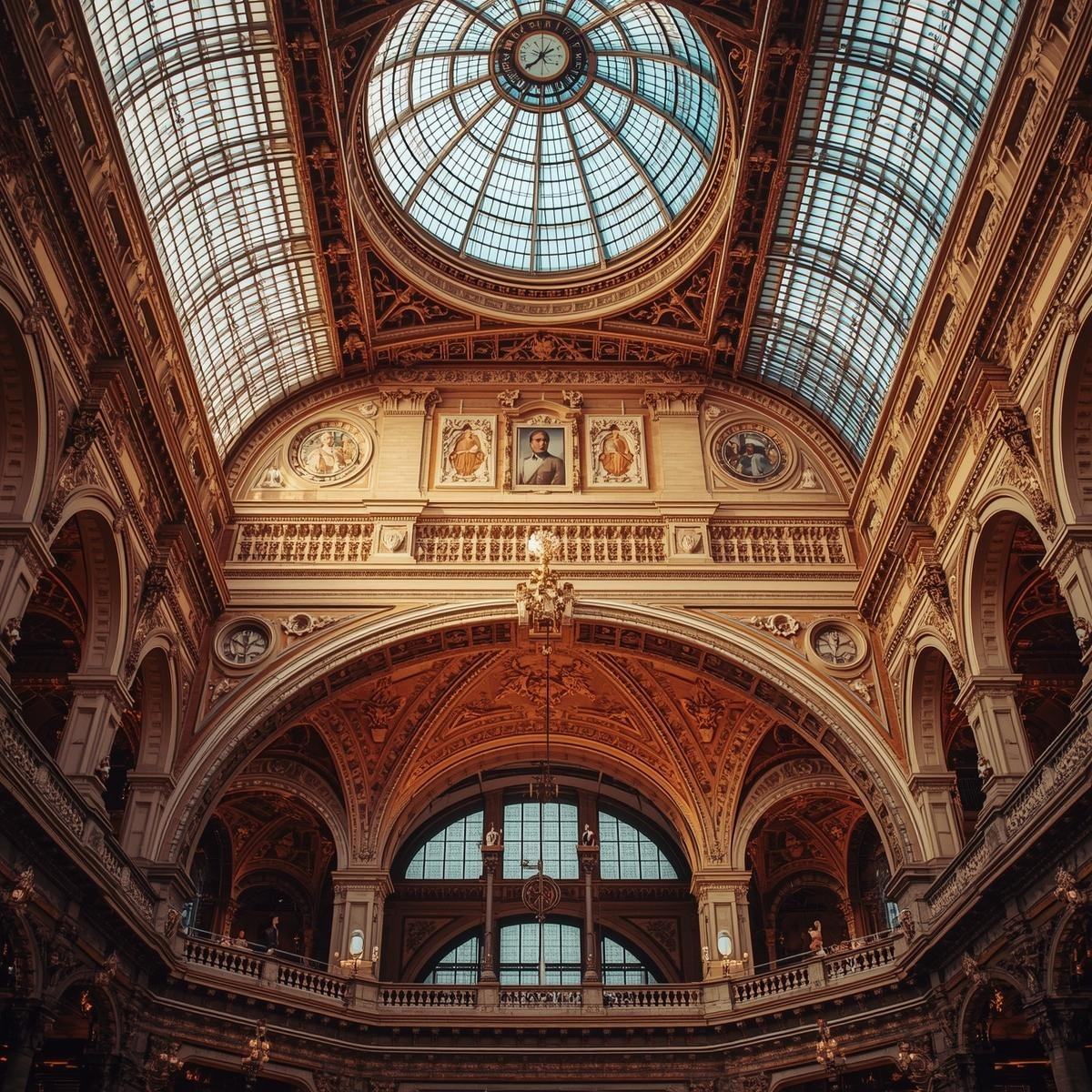
There are train stations, and then there is Antwerp Central. Known locally as the Spoorwegkathedraal, the Railway Cathedral, this extraordinary building has been stopping travellers in their tracks since it opened in 1905. In 2014, the British-American magazine Mashable ranked it the most beautiful railway station in the world. Newsweek had placed it fourth globally just five years earlier. Architects, novelists, and ordinary commuters have all struggled to do it justice in words. The German novelist W.G. Sebald, whose final book Austerlitz opens in its great hall, described the sensation of stepping inside as being seized by a feeling of the sacred, as if entering a cathedral consecrated not to God, but to international traffic and trade.
That description is not mere hyperbole. Antwerp Central is a building of genuine, overwhelming grandeur, a product of royal ambition, civic pride, eclectic genius, and extraordinary craftsmanship. To understand it, you need to understand the city that built it, the king who commissioned it, and the architect who, against all odds, gave form to one of the most remarkable public buildings in Europe.
Third Time Lucky: The Station’s Early History
Antwerp’s first railway station was a wooden terminus built outside the city walls in 1835, receiving the first train from Brussels the following year. Belgium had been the first country in continental Europe to build a national railway network, and Antwerp, its great port, its trading capital, was naturally one of the first cities to be connected. But the original structure was precisely as modest as its origins suggest: a temporary building of timber and canvas, never intended to last.
In 1854, the municipal authorities decided to enlarge the existing building, then called Antwerp East. This second station served the city for several decades, but it was increasingly inadequate for a port city that was growing rapidly in population and commercial importance. By the latter half of the nineteenth century, Antwerp was one of the busiest ports in the world, handling trade from across the British Empire, the Americas, and the Far East. Its station was an embarrassment.
The decisive moment came with King Leopold II, who ascended to the Belgian throne in 1865. Leopold was a monarch of colossal ambition and equally colossal ego, a man who would, infamously, claim the Congo as his personal property and exploit it with savage brutality. But he was also a builder of extraordinary energy, and Belgium’s public architecture bears his stamp to this day. Eleven years after parliament approved the location for the new station, between the diamond district and the zoo, on what is now Koningin Astridplein, plans were entrusted to Belgian architect Louis Delacenserie.
Louis Delacenserie and the Architecture of Imperial Ambition
Louis Delacenserie (1838–1909) was the Bruges city architect and one of the most celebrated practitioners of the Belgian Gothic Revival, a movement that looked to the medieval past for its vocabulary of decorated stonework, soaring towers, and elaborate ornamental detail. He had made his name restoring and recreating the medieval streetscapes of Bruges, giving that city the fairy-tale quality it still possesses today. He was, in other words, a man who understood how architecture could construct an identity, how stone and marble could tell a story about who a city was and where it had come from.
The main station building was Delacenserie’s work, while the immense steel-and-glass shed attached to it was engineered by Clement Van Bogaert, and the viaduct on which trains enter the station was designed by Jan Van Asperen. It was a collaboration between three very different kinds of architectural intelligence, the historicist, the engineer, and the civic planner, and the result is a building that holds these different traditions in creative tension.
At Leopold II’s request, Delacenserie drew inspiration from the railway station in Lucerne, Switzerland, particularly its use of a dramatic dome rising far above the usual modest height of railway buildings. But Delacenserie did not simply copy Lucerne. He absorbed the idea and transformed it into something altogether more ambitious, more eclectic, and more expressive of Antwerp’s particular sense of itself.
Delacenserie borrowed the main structural elements from the palaces of the Italian Renaissance, but he also wove in Byzantine and Moorish notes, as well as round granite turrets whose sole purpose was to evoke medieval associations in the minds of railway passengers. The result was a building that defied easy categorisation. Art historians have described it variously as Neo-Renaissance, Eclectic, Baroque-Medieval, and simply as an expression of what one scholar called the “Léopold II style”, the overblown, self-confident grandeur that characterised so much official Belgian architecture of the period.
The structure’s grandeur is most visible in its ribbed copper roof over the dome and the gilded cupola above it, while a decorative glass and iron fanlight allows natural light to flood the historic entrance hall. The overall effect is one of barely contained excess, a building that seems always to be on the verge of becoming too much, and yet somehow never quite tips over into mere vulgarity.
Inside the Cathedral: Marble, Columns, and the Gods of Commerce
Step inside Antwerp Central and the full force of Delacenserie’s vision becomes clear. The majestic hall is topped by a dome rising 75 metres above the floor and incorporates over twenty different types of marble, alongside Doric, Tuscan, Ionic, and Corinthian columns, all four orders of classical architecture present in a single space. The floor is laid in rich patterned marble. Grand staircases sweep upward to upper galleries. The light, filtered through the glass lantern in the dome, falls in shifting, golden pools across the stone.
The decorative programme of the hall was carefully conceived. Rather than the saints and apostles of a genuine cathedral, the niches and upper galleries of the entrance hall are filled with the symbols and allegories of nineteenth-century capitalism: mining, industry, transport, trade, and capital. As Sebald’s narrator in Austerlitz observes, where a Roman emperor’s image would occupy the apex of the Pantheon, here there is a monumental clock, the supreme deity of the railway age, governing every departure and arrival, binding the travelling public to an entirely new relationship with time.
The station was clearly intended to overwhelm visitors with a feeling of holiness, but holiness dedicated not to spiritual transcendence, but to world trade and traffic. It is one of the most candid expressions in stone of what the nineteenth century actually worshipped, and it remains one of the most thought-provoking.
The Train Shed: Engineering as Art
While Delacenserie’s hall rightly commands most of the attention, the structure behind it, the great train shed engineered by Clement Van Bogaert, is a masterpiece in its own right. Van Bogaert’s iron and glass roof stands 43 metres high, runs 186 metres in length, and spans 66 metres in width, a vast barrel vault of cast iron and glass that, when first built, covered ten platforms and represented the leading edge of structural engineering.
The relationship between the stone building and the iron shed is one of the building’s great architectural achievements. From the street, the stone façade gives no hint of what lies beyond. Passing through the ticket hall and emerging onto the platforms, the visitor encounters the shed as a revelation, a soaring, light-flooded space that seems entirely at odds with the ornate historicism of the building they have just left, and yet sits in perfect relationship to it. The shed is pure industrial modernity; the hall is self-conscious antiquity. Together they represent the double nature of the railway age itself.
War and Neglect
World War II bombs wreaked havoc on the iron and glass train shed, warping the construction so extensively that even after restoration, a certain bend in the roof remains discernible. The post-war renovation was also when the steel beams acquired their signature burgundy colour.
The decades following the war were not kind to the station. Like many grand Victorian and Edwardian public buildings across Europe, Antwerp Central fell into a kind of institutional neglect, still functioning, still serving its purpose, but without the investment and attention its fabric required. The passenger numbers that had justified its grandeur were diminished by competition from road transport and, later, air travel. The building looked increasingly like a relic of a vanished confidence, its marble floors cracked, its gilded details tarnished, its vast halls emptied of the crowds that had once given them life.
The Remarkable Restoration
The story of how Antwerp Central was saved and transformed is one of the great heritage achievements of recent European history. In 1993, the Belgian railway authority NMBS embarked on a large-scale reconstruction of the station, beginning to drive tunnels designed to allow Amsterdam-to-Brussels express trains to avoid the need to reverse at Antwerp, a time-consuming and operationally inefficient arrangement that had persisted since the station’s opening.
The project that emerged from this requirement was breath taking in its ambition. Rather than simply boring tunnels and leaving the existing station alone, the engineers and architects devised a scheme that would add two entirely new underground levels to the station while preserving and restoring every element of the historic building above. More platforms were opened on two additional underground levels, an additional entrance with a station hall was built at Kievitplein, and space was created for shops and restaurants, while the unique metal platform roof was separately restored.
After a thorough nine-year renovation and expansion that lasted until 2009, Antwerp Central Station now counts four levels, including two underground. The team behind the updated design was praised for creating a spacious feel and preserving original features, even highlighting historic elements that are now more visible than ever.
On 23rd March 2007, the tunnel with through tracks was opened, allowing high-speed trains to travel through the station without reversing for the first time. The overall works, including the connecting tunnels, cost €765 million. In 2011, the station was awarded a Grand Prix at the European Union Prize for Cultural Heritage / Europa Nostra Awards, the highest recognition available for heritage conservation in Europe.
Today, trains operate from 14 platforms on three levels, and the station includes extensive retail facilities, among them more than 30 merchants offering diamonds for sale, a fitting tribute to the city’s historic position at the heart of the global diamond trade.
In Literature and Culture
Antwerp Central has attracted the attention of artists and writers since its opening. Its most celebrated literary presence is in Austerlitz, the final novel of the German writer W.G. Sebald, published in 2001. The book opens with a lengthy, rapturous description of the station, delivered through the voice of a character who is an architectural historian, and Sebald uses the building to explore some of his deepest themes: the relationship between architecture and power, between public grandeur and private memory, between the confident ambitions of the nineteenth century and the catastrophes that followed.
That a novelist of Sebald’s stature chose to open his last book in this station says something important about the building’s imaginative as well as physical presence. It is not merely beautiful; it is resonant. It contains, in its accumulated marble and ironwork and gilded allegory, the whole story of a civilization’s self-confidence, and, implicitly, the story of what followed when that confidence proved unfounded.
The station has also entered popular culture through a rather different route. In early 2009, a staged flash mob involving 200 dancers performing the song “Do Re Mi” from The Sound of Music in the main hall became one of the first great viral videos of the internet age, attracting tens of millions of views and introducing the station to an entirely new global audience.
A Living Monument
What makes Antwerp Central exceptional, beyond the obvious grandeur of its architecture, is the way it continues to function as a genuine, busy railway station while simultaneously serving as a monument, a heritage destination, and a living piece of the city’s identity. Hundreds of thousands of passengers pass through it daily. High-speed trains from Paris and Amsterdam arrive at its underground platforms. Diamond merchants trade in its concourses.
The restoration has achieved something genuinely rare: it has made the past and present coexist without either diminishing the other. The historic hall, with its dome and marble and allegorical sculpture, rises above a twenty-first century transport hub that is efficient, accessible, and capable of handling the demands of modern high-speed rail. The Spoorwegkathedraal is not a museum piece but a working cathedral, one that, as Sebald’s narrator understood, still has the power to stop you in your tracks and make you feel, however briefly, that you are somewhere beyond the merely ordinary.
Antwerp Central Station (Antwerpen-Centraal) is located on Koningin Astridplein, Antwerp, and is open to the public as an active railway station. Guided architectural tours are available through Visit Antwerp.
Leave a Reply