
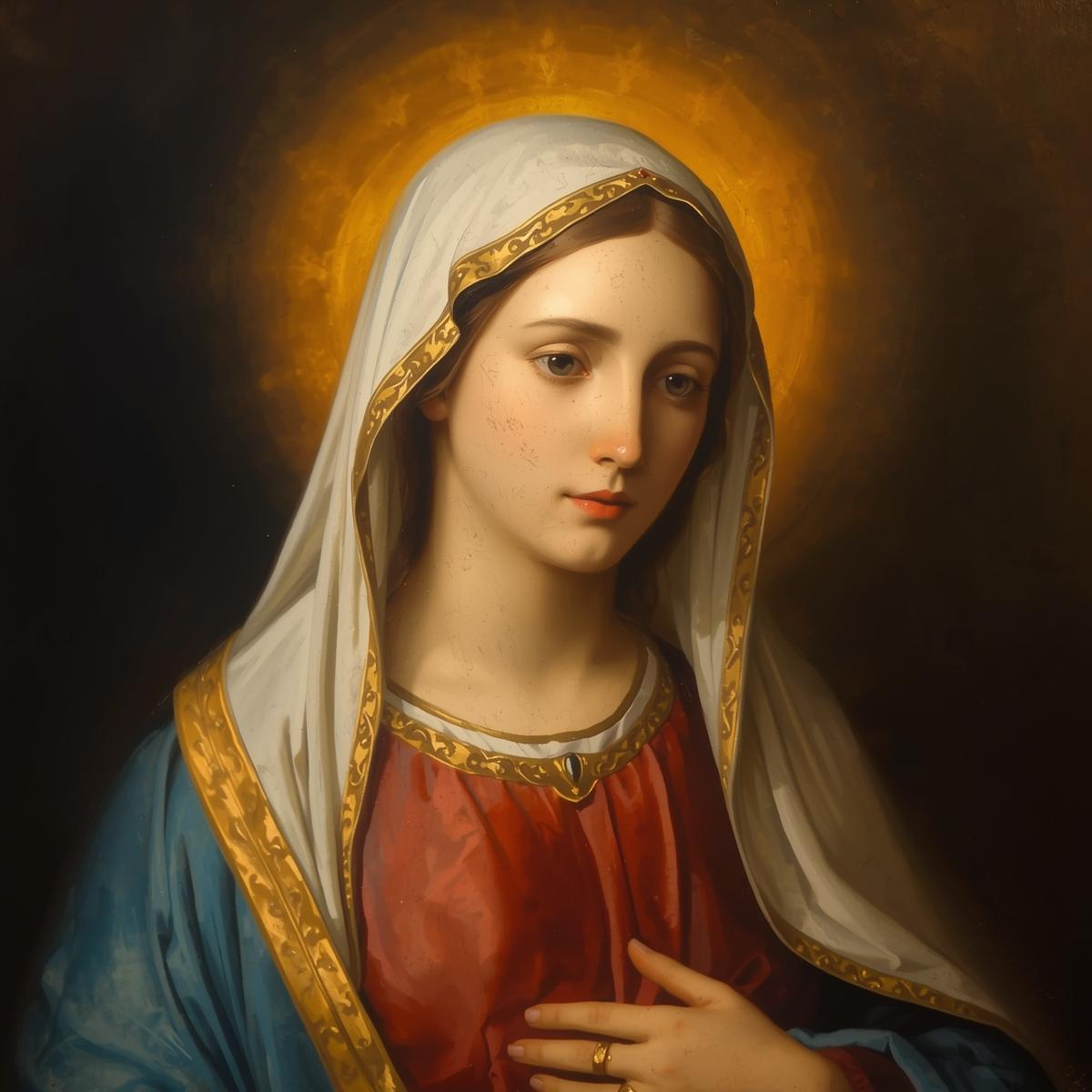
On 1st January, while much of the world celebrates the secular New Year, Catholics around the globe observe one of the Church’s most significant Marian feasts: the Solemnity of Mary, the Holy Mother of God. This holy day of obligation, one of only a handful in the Catholic liturgical calendar, marks not only the octave (eighth day) of Christmas but also commemorates a profound theological truth that shaped Christianity’s understanding of both Mary and Jesus Christ himself.
The Theological Foundation: Theotokos
At the heart of this solemnity lies a Greek word that sparked one of early Christianity’s most consequential debates: Theotokos, meaning “God-bearer” or “Mother of God.” While this title might seem like a straightforward honour bestowed upon Mary, its adoption represented a crucial clarification of Christian doctrine about the nature of Jesus Christ.
The controversy erupted in the 5th century when Nestorius, Patriarch of Constantinople, objected to calling Mary Theotokos, preferring instead Christotokos (“Christ-bearer”). To modern ears, this might sound like a minor semantic distinction, but the implications were profound. Nestorius’s position suggested that Mary gave birth only to Christ’s human nature, not to God, implying a separation between Jesus’s divine and human natures, as if two distinct persons coexisted in one body.
The Council of Ephesus in 431 AD definitively rejected this view, affirming that Mary is indeed Theotokos, the Mother of God. The council declared that Jesus Christ is one person with two natures (divine and human) united inseparably. Since a mother gives birth to a person, not to nature, and since that person is God incarnate, Mary must be called the Mother of God. This wasn’t primarily about elevating Mary (though it did honour her unique role) but about protecting the doctrine of the Incarnation: that in Jesus Christ, God truly became human, taking on our complete humanity while remaining fully divine.
The Council of Ephesus’s decision was met with jubilation. According to tradition, the people of Ephesus, where Mary was believed to have lived her final years under the care of St. John, filled the streets with torchlight processions, singing praises to the Mother of God. This moment marked a turning point in Christian devotion to Mary, establishing theological grounds for the veneration that would flourish in subsequent centuries.
Historical Development of the Feast
The celebration of Mary as Mother of God has ancient roots in Christian liturgy. Evidence suggests that a feast honouring Mary existed in Rome as early as the 6th or 7th century, celebrated on 1st January. This date’s significance extends beyond its proximity to Christmas; 1st January also marked the octave of Christmas, the completion of the eight-day celebration of Christ’s Nativity.
However, the feast’s history is complex, with its observance waxing and waning over the centuries. In the medieval period, January 1st in the Roman liturgical calendar was primarily dedicated to the Circumcision of Jesus (celebrated eight days after his birth, according to Jewish law). Mary’s role was acknowledged but not emphasised.
The modern Solemnity of Mary, Mother of God, in its current form was established in 1969 as part of the liturgical reforms following the Second Vatican Council. Pope Paul VI restructured the Church’s calendar to give greater prominence to Marian feasts while also emphasising their Christological significance, that is, honouring Mary specifically for her role in salvation history and her relationship to Christ. The solemnity was placed on 1st January, restoring and elevating the ancient Roman tradition while creating a Marian bookend to the Christmas octave.
A Multifaceted Celebration
The Solemnity of Mary, Mother of God, is remarkable for encompassing several interconnected themes within a single celebration:
The Octave of Christmas: First and foremost, 1st January completes the eight-day celebration of Jesus’s birth. In biblical tradition, the eighth day carried special significance; it was the day of circumcision and naming for Jewish males, symbolising entry into the covenant. The octave structure emphasises that Christmas isn’t merely a single day but an extended celebration of the Incarnation.
The Naming of Jesus: While no longer the primary focus as it was in pre-Vatican II liturgy, the feast still commemorates Jesus receiving his name on the eighth day after his birth. The Gospel reading for the Mass (Luke 2:16-21) specifically mentions that “when eight days were completed for his circumcision, he was named Jesus, the name given him by the angel before he was conceived in the womb.” This name, meaning “God saves” in Hebrew, encapsulates Christ’s mission and identity.
Mary’s Divine Motherhood: The central focus remains on Mary’s unique role as Mother of God. The liturgy invites the faithful to contemplate the mystery of the Incarnation, that the Creator of the universe entered his own creation through the womb of a young Jewish woman. Mary’s “yes” to God’s invitation, her fiat (“let it be done”), made the Incarnation possible. The solemnity honours both her obedience and the extraordinary dignity conferred upon her by this unrepeatable role in salvation history.
World Day of Peace: Since 1968, Pope Paul VI designated 1st January as the World Day of Peace, adding a contemporary dimension to the ancient feast. This connection between Mary and peace is theologically fitting, Mary is often invoked as the Queen of Peace, and her Son is called the Prince of Peace. The Church uses this day to issue messages about justice, reconciliation, and peace in the world, connecting ancient devotion with urgent contemporary concerns.
Liturgical Celebration
As a solemnity, the highest rank of feast day in the Catholic calendar, this celebration carries special weight. It is a holy day of obligation in most countries, meaning Catholics are required to attend Mass just as they would on Sunday. The liturgy is rich with Marian imagery and prayers.
The Mass readings emphasise God’s blessing and Mary’s contemplative heart. The first reading typically comes from the Book of Numbers (6:22-27), containing the ancient Aaronic blessing: “The Lord bless you and keep you! The Lord let his face shine upon you and be gracious to you! The Lord looks upon you kindly and gives you peace!” This blessing, pronounced over the Israelites, takes on new meaning in the context of the Incarnation, God’s face has shone upon humanity in the person of Jesus Christ, born of Mary.
The Gospel reading from Luke recounts the shepherds’ visit to the newborn Jesus and emphasises that “Mary kept all these things, reflecting on them in her heart.” This image of Mary as the contemplative disciple, pondering the mysteries of God’s work in her life, offers a model for all believers. She does not fully understand everything happening around her. How could anyone comprehend the Incarnation? but she treasures these experiences, meditating on their meaning.
The liturgy’s preface and prayers emphasise the paradox of the Incarnation: that Mary’s virginity was preserved while giving birth to the Saviour, that she nursed at her breast the one who feeds all creation, that she held in her arms the one who holds the universe in being. These paradoxes remind the faithful of the extraordinary mystery being celebrated.
Cultural Observances and Traditions
While the Solemnity of Mary, Mother of God, is a universal celebration in the Catholic Church, various cultures have developed their own customs and emphases:
Latin America: In many Latin American countries, where Marian devotion runs particularly deep, 1st January is celebrated with special Masses, processions, and family gatherings. The feast often blends with New Year’s celebrations, with families attending midnight or early morning Mass before or after their New Year’s festivities. In some regions, special hymns to Mary are sung, and churches are decorated with flowers and candles.
Philippines: The Philippines, with its strong Catholic heritage, often features elaborate celebrations including novenas (nine days of prayer) leading up to the feast, special Masses, and processions carrying statues of Mary and the infant Jesus. Many Filipinos see the feast as an opportunity to begin the new year under Mary’s protection and intercession.
Europe: In traditionally Catholic regions of Europe, the day maintains its character as both a Marian feast and the beginning of the civil year. Some communities hold special blessing services where religious articles, homes, or the year ahead are blessed through Mary’s intercession. In some areas, the tradition of giving New Year’s gifts is connected to the feast, with gifts exchanged under the patronage of Mary.
United States: In the increasingly secular American context, Catholics must often balance the feast’s sacred character with the cultural dominance of New Year celebrations. Many parishes offer special Mass times to accommodate those recovering from late-night New Year festivities, while also emphasising the feast’s significance as more than just a liturgical coincidence with the calendar change.
Mary’s Role in Catholic Theology and Devotion
The Solemnity of Mary, Mother of God, provides an opportunity to understand Catholic teaching about Mary more broadly, a topic that often confuses or concerns non-Catholics. Catholic Mariology rests on several key principles:
Mary’s role is always in relation to Christ: Catholic devotion to Mary is not parallel to worship of God but is a form of veneration (dulia) that recognises her unique cooperation in salvation history. The technical term for the special honour given to Mary is hyperdulia, meaning “super veneration”, more than ordinary saints receive but infinitely less than the worship (latria) due to God alone. Mary always points toward her Son; she is honoured because of what God has done through her.
The Marian dogmas: The Catholic Church has defined four dogmas concerning Mary: her Divine Motherhood (proclaimed at Ephesus), her Perpetual Virginity (that she remained a virgin before, during, and after Jesus’s birth), the Immaculate Conception (that she was conceived without original sin), and the Assumption (that at the end of her earthly life, she was assumed body and soul into heaven). These dogmas are seen not as additions to Scripture but as developments of understanding implicit in biblical teaching about Mary’s role.
Mary as model disciple: Beyond dogmatic definitions, Catholic theology sees Mary as the perfect disciple, the one who heard God’s word and kept it most faithfully. Her journey of faith, from the Annunciation through the Crucifixion, exemplifies complete trust in God even amid confusion and suffering. The Second Vatican Council’s document Lumen Gentium emphasises this dimension, presenting Mary not as removed from the Church but as its preeminent member and model.
Mary’s intercessory role: Catholics believe that Mary, like all saints, intercedes for believers before God. The ancient prayer “We fly to your protection, O Holy Mother of God” dates to the 3rd century, demonstrating the early Christian practice of asking Mary’s prayers. This intercession is not seen as necessary (Christ is the one mediator between God and humanity) but as beneficial, like asking a friend to pray for you, but asking one whose prayers have special efficacy due to her closeness to Christ.
Contemporary Relevance
In the 21st century, the Solemnity of Mary, Mother of God, speaks to several contemporary spiritual needs:
Beginning the year with sacred purpose: In a culture where New Year’s Day often emphasises self-focused resolutions and recovery from excess, the solemnity offers an alternative vision, beginning the year by contemplating mystery, honouring motherhood, and seeking divine blessing. It provides a sacred framework for the transition into a new year, grounding temporal change in eternal realities.
Honouring motherhood and women: At a time when discussions about women’s roles, motherhood, and human dignity fill public discourse, Mary’s example offers a complex and challenging model. She is both a virgin and mother, both submissive to God’s will and strong in her commitment, both humble and bearing incomparable dignity. Catholic feminists and traditionalists alike find in Mary different emphases, but all recognise in her a woman whose choices and faithfulness changed human history.
World peace: The connection with the World Day of Peace makes the solemnity relevant to global concerns. Pope Francis and his predecessors have used this day to address issues like nuclear proliferation, environmental degradation, economic injustice, migration, and armed conflict. Mary, who sang of God bringing down the mighty and lifting the lowly (in the Magnificat), represents hope for a transformed world order based on justice and peace.
Contemplative spirituality: The image of Mary pondering things in her heart offers a counterpoint to contemporary life’s frenetic pace and information overload. The solemnity invites believers to adopt Mary’s contemplative approach, to treasure experiences, reflect on their meaning, and allow understanding to deepen over time rather than rushing to immediate judgment or quick consumption of every experience.
A Feast of Integration
The Solemnity of Mary, Mother of God, is a feast of integration, bringing together the incarnational joy of Christmas with the hope of the new year, ancient theological definitions with contemporary peace concerns, Marian devotion with Christological focus, and doctrinal precision with pastoral accessibility. It stands at the hinge point between Christmas and Ordinary Time, between the old year and the new, inviting believers to carry forward the wonder of the Incarnation into everyday life.
For Catholics, beginning the year on `1st January by honouring Mary, Mother of God, establishes a pattern and priority: to see all of life through the lens of the Incarnation, to approach the unknown future with Mary’s trust in God’s providence, and to remember that the God who entered the world as a helpless infant continues to work through ordinary human cooperation, including our own. The solemnity proclaims that the extraordinary intersects the ordinary, that divinity can dwell in humanity, and that a young woman’s faithful “yes” two millennia ago continues to echo through time, inviting each generation to its own response to God’s invitation.
In honouring Mary as Mother of God, Catholics honour the God who chose to need a mother, who entered human history not through power and majesty but through vulnerability and dependence, and who continues to invite humanity into intimate participation in the divine life. The solemnity celebrates not just what God did in Mary long ago, but what God continues to do in and through those who, like her, say “yes” to grace.
Leave a Reply