
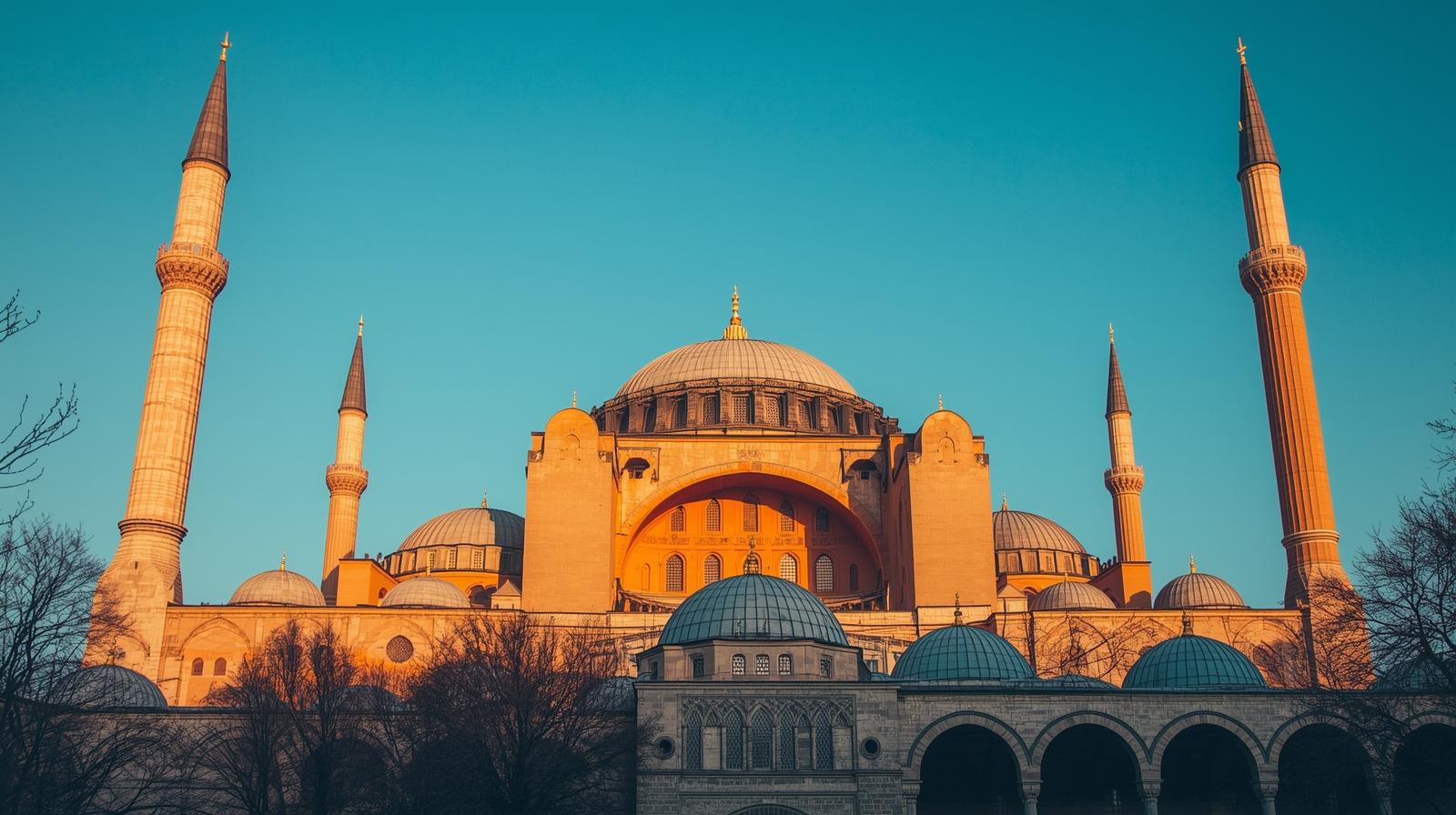
Few buildings in human history can match the Hagia Sophia for historical significance, architectural innovation, and spiritual power. Standing in Istanbul’s historic peninsula, this extraordinary structure has served as an Orthodox cathedral, a Catholic cathedral, an Ottoman mosque, a secular museum, and once again as a mosque. Its massive dome has witnessed the rise and fall of empires, the schism between Eastern and Western Christianity, the fall of Constantinople, and the birth of modern Turkey. To understand the Hagia Sophia is to understand fifteen centuries of religious and political history crystallised in stone, marble, and gold.
The Sacred Ground: A Site of Imperial Significance
The location of the Hagia Sophia was significant long before Justinian’s architects’ broke ground in 532 AD. The building stands on the first hill of Constantinople’s seven hills, at the heart of what was the Byzantine imperial complex. Directly adjacent to the Great Palace of Constantinople, the site placed the church at the symbolic and literal centre of Byzantine power, embodying the fusion of sacred and imperial authority that characterised Byzantine civilisation.
This was not the first church on this ground. Emperor Constantine the Great, who founded Constantinople as the new Rome in 330 AD, built the first church here, dedicating it in 360 AD under his son Constantius II. This original church was called the Megálē Ekklēsíā (Great Church) and served as the patriarchal cathedral of Constantinople.
That first church burned during riots in 404 AD. Emperor Theodosius II rebuilt it in 415 AD, creating a basilica with a wooden roof. This second church stood for over a century until it too was destroyed, this time during the catastrophic Nika Riots of 532 AD, when Constantinople’s population rose against Emperor Justinian I. Much of the city centre burned, including the church that stood at its heart.
The Name: Holy Wisdom
The church’s name, Hagia Sophia, is often mistranslated as “Saint Sophia,” leading to the misconception that it honours a saint named Sophia. In fact, “Hagia Sophia” means “Holy Wisdom” in Greek, referring not to a person but to the divine wisdom of God, the Logos, the second person of the Trinity as understood in Christian theology.
This dedication to an abstract divine quality rather than a specific saint reflected sophisticated Byzantine theological thought. The church celebrated Christ as the embodiment of God’s wisdom, drawing on biblical passages that personified wisdom. The name positioned the building as a temple to divine understanding itself, appropriate for the cathedral of an empire that saw itself as the earthly reflection of heavenly order.
Justinian’s Vision: Building the Impossible
When the Nika Riots ended with much of Constantinople in ruins, Justinian saw an opportunity. Rather than simply rebuilding what had existed, he would create something unprecedented, a church that would surpass all others and stand as a monument to his reign and Christian faith.
He selected two men of genius: Anthemius of Tralles, a mathematician and geometer, and Isidore of Miletus, a physicist and engineer. These were not traditional architects but scientists who brought mathematical precision and theoretical innovation to architectural design. Justinian gave them unlimited resources and an ambitious timeline.
Construction began on 23rd February 532 AD, mere weeks after the riots ended. Ten thousand workers laboured on the project. Materials came from across the empire and beyond: marble from quarries throughout the Mediterranean, porphyry columns from Egypt, green marble from Thessaly, black stone from the Bosphorus, and yellow stone from Syria. Eight massive porphyry columns that had once graced the Temple of Artemis in Ephesus, one of the Seven Wonders of the Ancient World, were transported to Constantinople for incorporation into the new church.
The Revolutionary Design
The architectural challenge Anthemius and Isidore faced was immense: how to place an enormous dome over a square base while creating a sense of openness and light. Previous Roman architecture, like the Pantheon, had placed domes on circular bases. The Hagia Sophia’s revolutionary solution would influence architecture for over a millennium.
The architects created a central dome approximately 31 metres in diameter, rising about 55 meters above the floor at its apex. The dome rests on four massive pillars connected by four arches. Between the circular base of the dome and the square formed by the arches, the architects inserted pendentives, curved triangular sections that smoothly transition between the shapes. This was one of the first major uses of pendentives in architecture, and the technique allowed for the creation of vast domed spaces over rectangular bases.
To create the illusion that the dome floats weightlessly, forty windows pierce its base, flooding the interior with light. The Byzantine historian Procopius described the effect: “It seems not to rest upon solid masonry, but to cover the space with its golden dome suspended from heaven.”
Semi-domes on the east and west sides buttress the main dome while extending the interior space, creating a vast central nave that draws the eye upward. Galleries above the ground floor aisles provided space for women worshippers, following Byzantine practice. Marble of many colours covers the walls and floors, and originally, vast expanses of gold mosaic covered the upper walls and vaults.
The construction was completed in an astonishing five years and ten months. On 27th December 537 AD, Justinian presided over the church’s consecration. According to tradition, upon entering the completed building, he exclaimed, “Solomon, I have surpassed thee!” comparing his achievement to Solomon’s Temple in Jerusalem.
Life as a Byzantine Cathedral
For 900 years, the Hagia Sophia served as the cathedral of Constantinople, the patriarchal seat of Eastern Orthodox Christianity. It was the site of imperial coronations, where Byzantine emperors received their crowns from the Patriarch. The building witnessed the great ceremonies that marked the Byzantine liturgical year, with elaborate processions, incense, chanting, and the play of light through windows and off golden mosaics, creating an overwhelming sensory experience designed to offer worshippers a glimpse of heaven.
The church became the model for Byzantine architecture. Its dome, its proportions, its use of light, all were copied and adapted throughout the Byzantine world, from Russia to the Balkans to Greece. The Hagia Sophia represented the architectural ideal that Byzantine builders strove to achieve.
The building suffered damage from earthquakes several times. In 558, just twenty years after completion, the eastern part of the main dome collapsed following earthquakes. Isidore the Younger, nephew of the original architect, rebuilt the dome slightly higher (to its current height) and with a steeper curve to reduce lateral stress. This rebuilt dome was completed in 562 and has largely survived to the present day.
The Iconography: Windows into Heaven
The interior decoration of the Hagia Sophia evolved over its Byzantine centuries, but certain principles remained constant. Byzantine theology held that icons, sacred images, served as windows between the earthly and heavenly realms. The Hagia Sophia’s decoration reflected this understanding.
The dome’s apex originally featured a cross, and later a mosaic of Christ Pantokrator (Christ Almighty), looking down on worshippers as the ruler of the cosmos. Though this central image no longer survives, several magnificent mosaics from various periods remain visible today.
The apse (the semi-circular area behind the altar) features a magnificent mosaic of the Virgin Mary seated on a jewelled throne, holding the Christ child. This mosaic, created in the 860s after the iconoclastic controversy ended, shows Mary as the Theotokos (God-bearer), emphasising Christ’s incarnation, the moment when divine wisdom took human form.
The imperial door mosaic, above the main entrance from the narthex, depicts an emperor (likely Leo VI, who ruled from 886-912) prostrating himself before Christ enthroned, with medallions of the Virgin Mary and the Archangel Gabriel on either side. This image encapsulates Byzantine political theology: even the emperor, God’s representative on earth, prostrates himself before Christ.
The south gallery contains particularly important mosaics. The Deësis mosaic (from the 13th century) shows Christ flanked by the Virgin Mary and John the Baptist interceding for humanity, a powerful image of divine mercy. Though damaged, it represents one of the finest examples of late Byzantine art, with extraordinarily subtle modelling of the faces.
Imperial portraits appear in the south gallery as well. One mosaic shows Constantine IX Monomachos and Empress Zoe flanking Christ, while another depicts Emperor John II Komnenos, Empress Eirene, and their son Alexios offering gifts to the Virgin and Child. These images served both devotional and political purposes, asserting the emperor’s divine sanction while demonstrating imperial piety.
The narthex mosaics include a lunette showing Constantine the Great offering a model of Constantinople and Justinian offering a model of the Hagia Sophia to the Virgin Mary and Christ child, visually linking the city’s foundation with its greatest building.
Beyond mosaics, the entire decorative program used marble panels with intricate veining patterns, carved capitals with delicate acanthus leaves and imperial monograms, and geometric designs that created an overwhelming aesthetic experience. The effect was intentionally otherworldly, designed to lift worshippers’ minds from the earthly to the divine.
The Great Schism and the Fourth Crusade
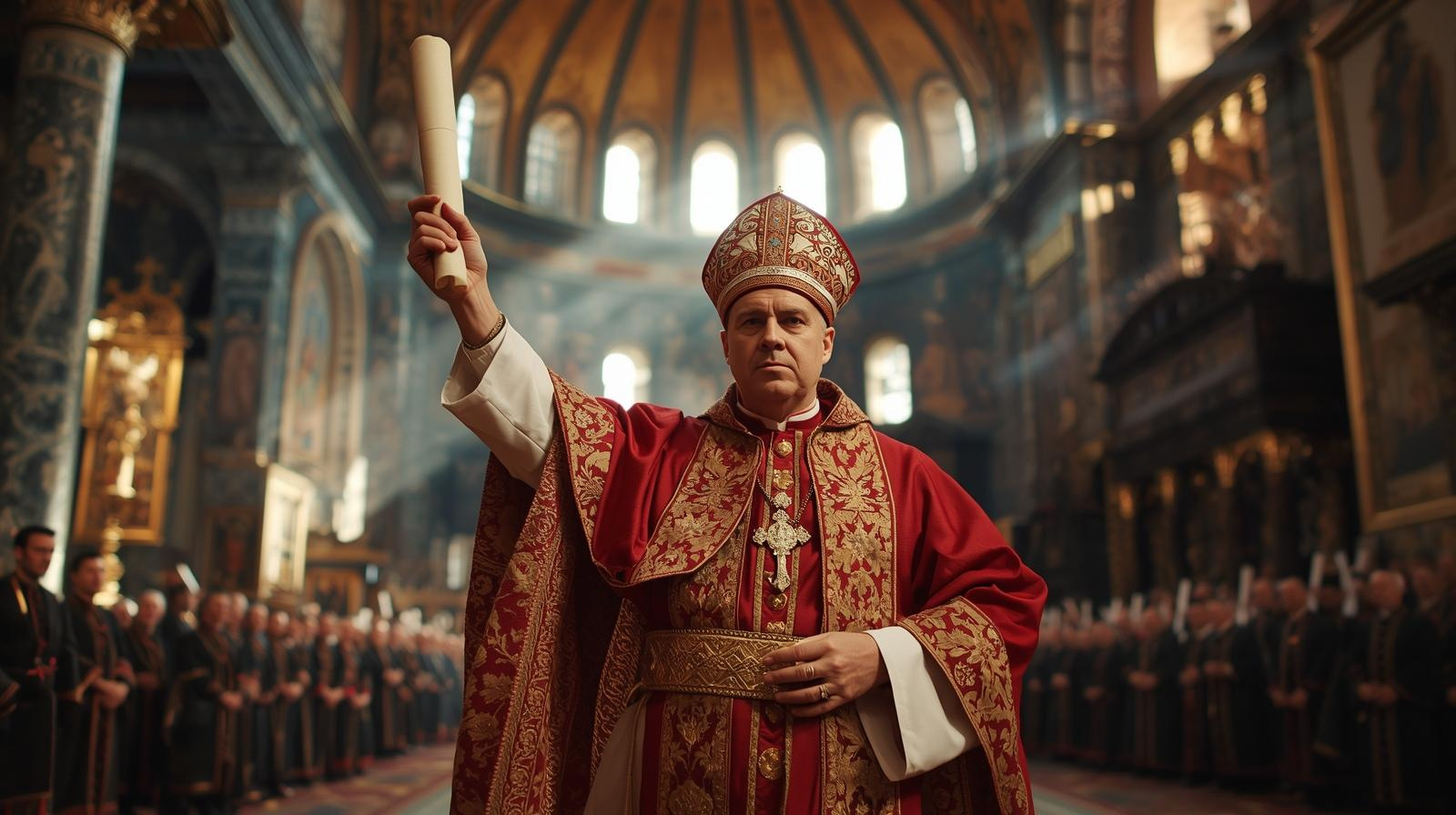
The Hagia Sophia witnessed one of Christianity’s most significant moments. Tensions between the Eastern Orthodox Church, centred in Constantinople, and the Roman Catholic Church had been building for centuries over theological, linguistic, and political differences. On 16th July 1054, Cardinal Humbert, representing Pope Leo IX, entered the Hagia Sophia and placed a bull of excommunication on the altar, excommunicating the Patriarch of Constantinople. The Patriarch responded by excommunicating the papal legates. This mutual excommunication, though later lifted, symbolised the Great Schism that divided Christianity into Eastern and Western branches, a division that persists today.
In 1204, the Hagia Sophia suffered a different violation. The Fourth Crusade, originally intended to recapture Jerusalem from Muslim control, was diverted to Constantinople. The Crusaders, Catholic Christians from Western Europe, sacked the city, plundering its wealth and desecrating its churches. The Hagia Sophia was stripped of precious metals, relics, and treasures. For 57 years, until 1261, it served as a Roman Catholic cathedral while Constantinople remained under Latin rule.
When Byzantine forces recaptured the city in 1261, the Hagia Sophia returned to Orthodox use, though the empire never fully recovered from the Crusader devastation. The church continued to serve as the patriarchal cathedral for two more centuries, even as the Byzantine Empire shrank, besieged by Ottoman Turks on all sides.
The Fall of Constantinople: 29th May 1453
On 29th May 1453, after a fifty-three-day siege, Ottoman Sultan Mehmed II, just 21 years old but already called “the Conqueror”, breached Constantinople’s ancient walls. As Ottoman forces poured into the city, thousands of Christians fled to the Hagia Sophia, believing the ancient prophecy that angels would defend the church and drive back the invaders when they reached its walls.
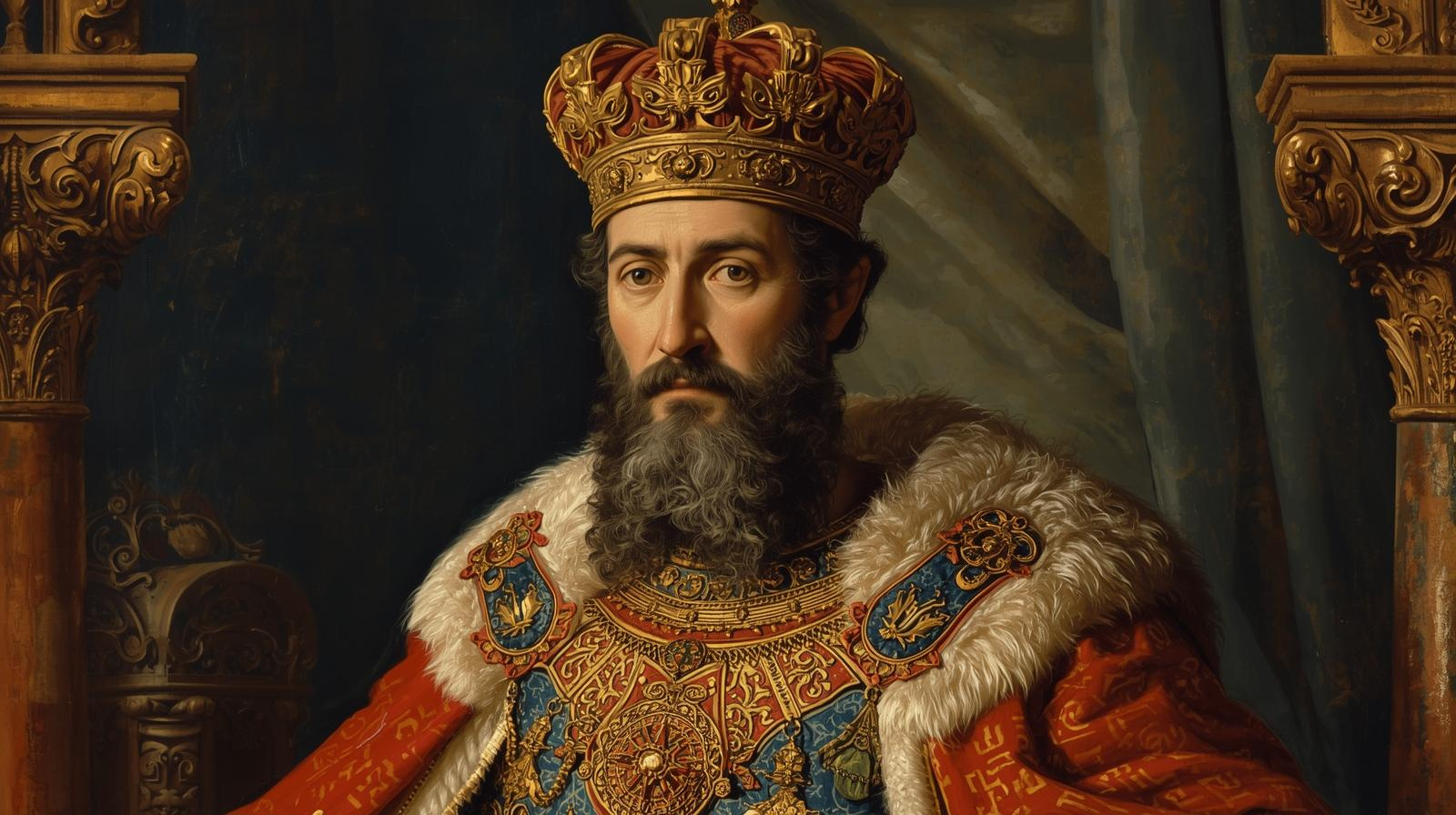
No deliverance came. Ottoman soldiers broke through the doors. According to various accounts, the last Byzantine liturgy was interrupted mid-service. Emperor Constantine XI died fighting on the walls, and with him died the Roman Empire that had endured in one form or another for over 1,400 years.
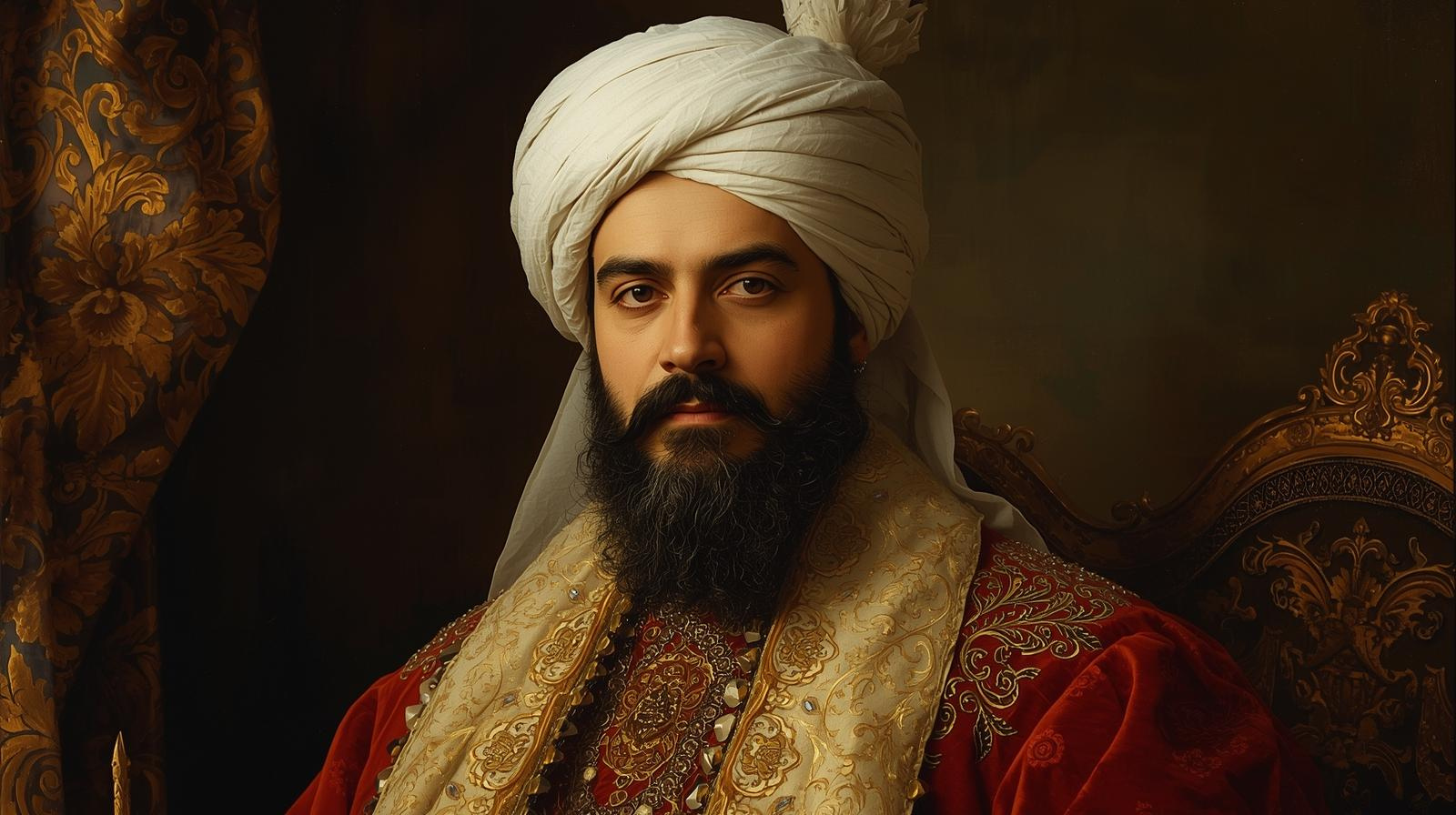
Sultan Mehmed entered the conquered city that afternoon. When he reached the Hagia Sophia, he was reportedly moved by its magnificence. According to tradition, he found a soldier breaking up marble floor tiles and struck him, declaring that the building itself belonged to him and should not be damaged; only the people and their movable possessions were lawful plunder.
Transformation into a Mosque
Mehmed II immediately decided to convert the Hagia Sophia into a mosque. This was not merely a practical decision but a deeply symbolic one. By converting Christianity’s greatest cathedral into a mosque, Mehmed announced that Constantinople was now an Islamic city and would serve as the capital of the Ottoman Empire. He renamed the city Istanbul (though Constantinople continued in official use for centuries).
The conversion required several modifications while preserving the building’s essential structure, which the Ottomans recognised as an architectural masterpiece. A wooden minbar (pulpit) was installed for the imam to deliver Friday sermons. A mihrab, indicating the direction of Mecca for prayer, was placed in the apse, slightly off the building’s axis because the church had been oriented toward Jerusalem, not Mecca. Four minarets were eventually added to the building’s exterior, the first wooden minarets were built during Mehmed’s lifetime, and later replaced with stone minarets in the 16th century under different sultans.
Islamic tradition prohibits representational images in places of worship. However, rather than destroying the Christian mosaics, the Ottomans covered them with plaster and paint. This decision, whether motivated by respect for the building’s artistry or pragmatic concerns about damaging the structure, preserved the mosaics for future generations. Large circular panels inscribed with the names of Allah, Muhammad, and the early caliphs were hung on the walls, and Arabic calligraphy adorned various parts of the building.
The Ottoman sultans maintained and enhanced the structure. Sinan, the great Ottoman architect, added buttresses to support the aging walls and dome. Sultan Murad III added two massive marble urns from Pergamon. A sultan’s loge was built, allowing the sultan to pray in seclusion. The building was refurbished multiple times, with Ottoman decorative elements added to the Byzantine structure.
A Living Mosque: Five Centuries of Islamic Worship
For 481 years, from 1453 to 1934, the Hagia Sophia functioned as one of the most important mosques in the Islamic world. Five times daily, the call to prayer echoed from its minarets. Thousands gathered for Friday prayers. During Ramadan, the mosque is +-filled with worshippers breaking their fast.
The building influenced Ottoman architecture profoundly. Sinan, the greatest Ottoman architect, studied the Hagia Sophia intensively and explicitly tried to surpass it when designing the Süleymaniye Mosque and the Selimiye Mosque. Ottoman architects adapted the Hagia Sophia’s dome-and-semi-dome system, creating the distinctive Ottoman mosque style that defines Istanbul’s skyline.
The Hagia Sophia became a complex of buildings. A madrasa (Islamic school), an imaret (soup kitchen), a library, and tombs of sultans and their families were built in the surrounding courtyard. The building was not just a mosque but a centre of Islamic learning and charity.
Despite its Islamic function, the building’s Byzantine past remained visible in its architecture and in the Christian mosaics that occasionally appeared when plaster flaked away. Western travellers visiting Istanbul often commented on the building’s dual heritage, and there was always awareness that this mosque had once been Christianity’s greatest cathedral.
The Palimpsest: Two Faiths in One Space
The Hagia Sophia became a unique palimpsest, a manuscript where one text is written over another, with both remaining partially visible. Islamic and Christian elements coexisted in the same space: Byzantine mosaics of Christ, the Virgin Mary, and saints alongside Ottoman calligraphy praising Allah and Muhammad; marble columns from pagan temples supporting a building that served first Christian then Muslim worship; a mihrab pointing to Mecca installed in an apse designed to face Jerusalem.
This layering created neither pure Christian nor pure Islamic space but something unique, a building that embodied both traditions and the historical reality of Constantinople/Istanbul as a city conquered and transformed but never completely remade. The building testified to continuity as well as rupture, to appropriation as well as destruction, to respect for the past alongside the assertion of a new order.
Some elements actively merged the traditions. The Islamic calligraphy panels, while covering Christian imagery, were positioned to work with rather than against the building’s visual logic. Ottoman additions like the sultan’s loge respected the building’s spatial organisation. Even the minarets, while clearly Islamic additions, were carefully positioned to balance the building’s composition rather than clash with it.
Secularisation: The Museum Years
In the early 20th century, the Ottoman Empire collapsed following World War I. Mustafa Kemal Atatürk established the Republic of Turkey in 1923 and embarked on an ambitious program of secularisation, attempting to create a modern, Western-oriented state. Religious institutions were brought under state control, Islamic law was replaced with secular legal codes, and Turkey officially became a secular state.
In this context, Atatürk made a momentous decision about the Hagia Sophia. In 1934, he secularised the building, transforming it into a museum. This moves symbolised Turkey’s commitment to secularism and positioned the Hagia Sophia as a shared heritage site belonging to all humanity rather than exclusively to either Christian or Muslim tradition.
As a museum, restoration work revealed many of the Byzantine mosaics that had been hidden under plaster for centuries. The Christian and Islamic elements were displayed side by side, creating a unique space where visitors could see both traditions simultaneously. The building became one of Turkey’s most visited tourist attractions, drawing millions of visitors annually who came to marvel at its architecture and its layered history.
Conservation efforts during the museum period helped preserve the building. Scholars studied its architecture and decoration. International attention focused on the Hagia Sophia as a UNESCO World Heritage Site and a monument of universal cultural significance.
The Return to Mosque: 2020 and Contemporary Debates
On 24th July 2020, Turkish President Recep Tayyip Erdoğan signed a decree converting the Hagia Sophia back into a mosque, revoking its museum status. The first Muslim prayers in 86 years were held on 24th July 2020. This decision proved intensely controversial both within Turkey and internationally.
Supporters of the reconversion argued that the building should serve its intended purpose as a place of worship, that it represented the right of the majority-Muslim population to use an iconic building for Islamic worship, and that Atatürk’s 1934 decision had been an overreach of secularist ideology. They noted that entry would remain free (unlike most museums) and that Christian mosaics would not be destroyed but merely covered during prayer times.
Critics argued that the reconversion represented a retreat from secularism, threatened the building’s preservation, risked damage to priceless Byzantine mosaics, and represented a nationalist political gesture rather than a genuinely religious decision. UNESCO, which designates the historic areas of Istanbul (including the Hagia Sophia) as a World Heritage Site, expressed regret. Christian leaders worldwide, including Pope Francis and Orthodox patriarchs, criticised the decision. Some secular Turks saw it as part of a broader erosion of Turkey’s secular heritage.
The Hagia Sophia Today
Today, the Hagia Sophia functions as a mosque while remaining open to non-Muslim visitors outside prayer times, free of charge. During the five daily prayers, curtains cover the Christian mosaics, and the building is used for Islamic worship. At other times, visitors can enter to view the architecture and the blend of Christian and Islamic elements.
The building continues to embody its complex history. Carpets cover the marble floors. The mihrab points to Mecca while Byzantine mosaics of Christ look down from the walls. Islamic calligraphy and Christian iconography share the same space. Tourists, Muslim worshippers, and visitors from around the world move through the same halls, each seeing something different: a mosque, a church, a museum, a symbol of conquest, a testament to artistic achievement, a reminder of empire.
The practical challenges of this dual function remain significant. Conservation experts worry about the impact of increased humidity from prayers, the wear from foot traffic on ancient floors, and the potential damage to mosaics from being repeatedly covered and uncovered. The debate continues about whether a building of such universal historical and cultural significance should serve a single religious community or remain accessible to all as a museum.
A Mirror of History
The Hagia Sophia’s story reflects the broader history of Istanbul and of the Eastern Mediterranean world. It embodies the Byzantine Empire’s religious devotion and architectural genius. It witnesses the Great Schism between Eastern and Western Christianity. It marks the end of the Roman Empire and the rise of the Ottoman Empire. It reflects Atatürk’s secular vision for modern Turkey and contemporary debates about the role of religion in public life.
More than any other building, the Hagia Sophia demonstrates how architecture carries memory, how spaces can belong to multiple traditions, and how the past remains present in stone and mosaic. Standing beneath its great dome, surrounded by both Christian mosaics and Islamic calligraphy, visitors encounter not one history but many histories, layered, contested, and yet somehow coexisting in a single extraordinary space.
Whether one sees the building primarily as a church, a mosque, a museum, or simply as an architectural wonder, the Hagia Sophia remains what it has always been: a place where the human desire to reach toward the divine finds expression in one of the most magnificent buildings ever constructed. Its dome still appears to float, suspended between earth and heaven, just as Procopius described nearly 1,500 years ago. In that sense, whatever its official function, the Hagia Sophia continues to fulfil its original purpose, to inspire awe, to lift the spirit, and to stand as a monument to human aspiration across the centuries.
Leave a Reply