
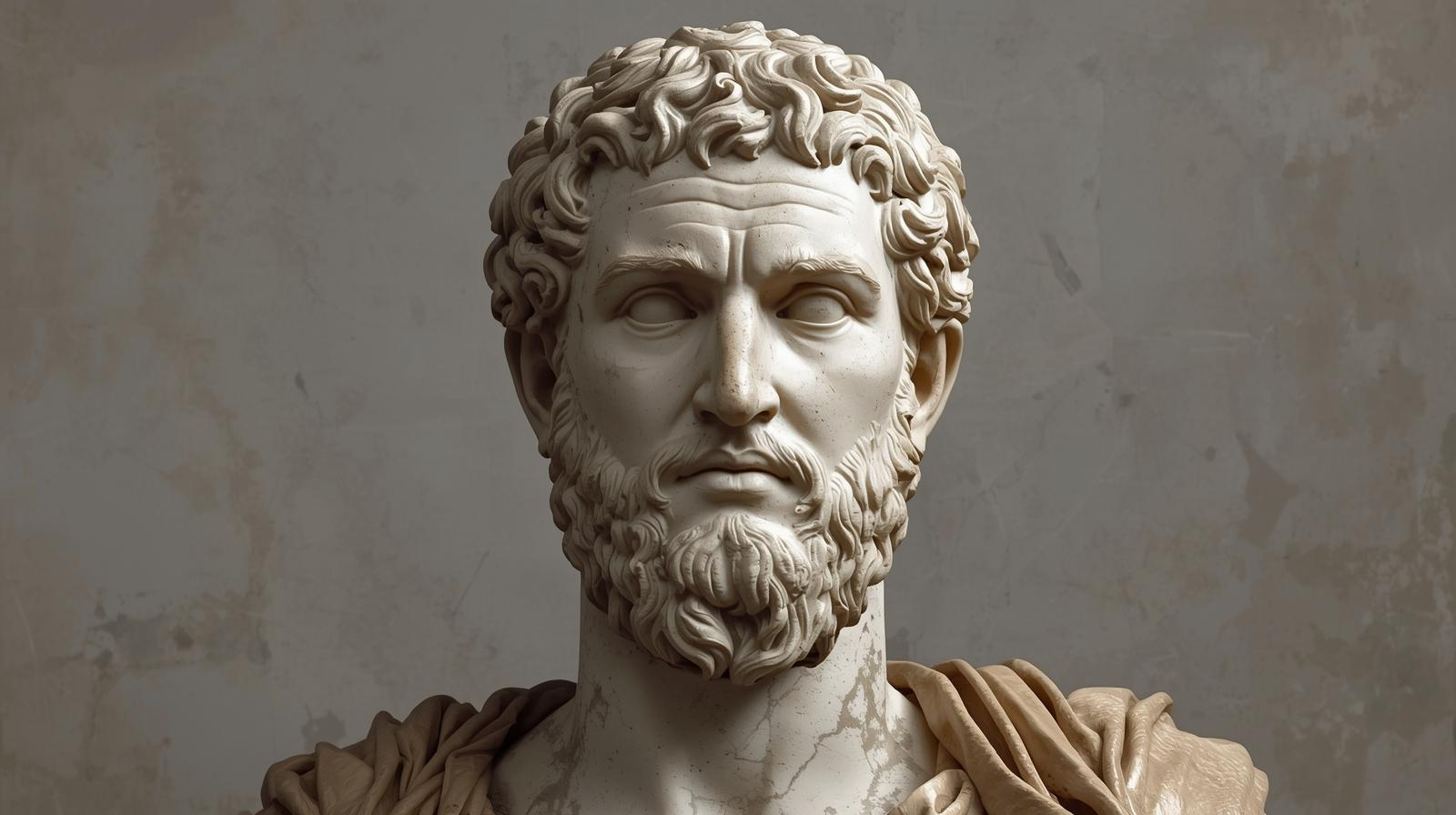
In the annals of medical history, few figures from antiquity stand as prominently as Soranus of Ephesus, a Greek physician whose groundbreaking work in gynaecology and obstetrics shaped medical practice for over fifteen centuries. Active during the reigns of Trajan and Hadrian (98-138 AD), Soranus emerged as the leading representative of the Methodist school of medicine and an uncommonly compassionate voice in the treatment of women and the mentally ill.-
Life and Training
Born in Ephesus to his father Menander and mother Phoebe, Soranus followed the well-trodden path of ambitious Greek physicians of his era. Like many aspiring medical practitioners, he travelled to Alexandria for his training, then the world’s preeminent centre for scientific learning and medical education. Alexandria had maintained its reputation as the pinnacle of medical instruction since its founding, and it was said that “enough to commend a physician’s skills if he can say that he learned medicine in Alexandria.”
From Alexandria, Soranus made his way to Rome, where he established his practice during a period historians have characterised as a transitional moment in human history, a relatively peaceful era between the tumultuous time of Christ and Caesar and the approaching Dark Ages. Despite the Romans’ ambivalent attitude toward Greek physicians, who were sometimes viewed with suspicion, Soranus’s exceptional skills and scholarly reputation earned him considerable respect and a thriving practice in the imperial capital.
The Methodist School of Medicine
Soranus belonged to the Methodist school of medicine, one of three major medical schools that developed in the ancient world following Hippocratic tradition. The Methodists distinguished themselves by emphasizing practical treatment over theoretical speculation about disease causes. They believed diseases could be understood through observable symptoms rather than complex theories about bodily humours or hidden causes.
The Methodist approach classified ailments according to whether they involved stricture (excessive constriction) or laxity (excessive looseness) in the body’s internal pores, and advocated for straightforward, gentle treatments based on these observable conditions. This emphasis on simplicity and symptom-based diagnosis made Methodist medicine accessible and practical, though critics argued it sometimes oversimplified complex medical problems.
However, Soranus proved himself to be no rigid doctrinaire. While he shared the theoretical standpoint of the Methodists, his version of Methodism was less schematic in its classification of diseases, giving more space for individual variation between patients. He freely incorporated valuable insights from other medical schools, particularly drawing on the anatomical and obstetrical teachings of Herophilus when it served his patients’ welfare. This intellectual flexibility and willingness to synthesize knowledge from multiple traditions marked him as a physician of unusual sophistication and judgment.
Masterwork: Gynaecology
Soranus’s four-volume treatise on gynaecology stands as his most significant surviving work and one of the most important medical texts to emerge from antiquity. The work, which has survived nearly complete in both Greek and Latin translations, provided comprehensive guidance on women’s health, pregnancy, childbirth, and infant care. His writings set medical opinion concerning women’s diseases, pregnancy, and infant care for nearly 1,500 years.
The treatise was systematically organized into four books covering the qualifications and training of midwives, female anatomy and conception, childbirth and newborn care, pathology and diet, and surgical procedures and pharmaceutical treatments. What distinguished Soranus’s gynaecological work from that of his contemporaries and predecessors was not merely its comprehensive scope but its remarkably progressive attitude toward women as patients.
In an era when women were often viewed through the lens of reproductive function alone and when medical theories frequently blamed women’s ailments on their supposedly wandering wombs or defective constitutions, Soranus took a more rational and respectful approach. He challenged Hippocratic assumptions about female physiology and argued for understanding women’s health on its own terms rather than simply as a deviation from male anatomy.
The gynaecological treatise included remarkably detailed and practical information. Soranus described the obstetric chair and podalic version (delivery of the fetus feet first), techniques hailed as new discoveries during the 15th century, demonstrating how much ancient knowledge had been lost during the medieval period. He provided what appears to be the first recognizable medical description of rickets and offered detailed guidance on contraceptive measures, information that would later inspire scientific research in the mid-twentieth century on chemical birth control.
—
Particularly notable was Soranus’s emphasis on the education and qualifications of midwives. In an age when midwifery was crucial to women’s healthcare, he outlined specific criteria for selecting and training competent practitioners, insisting they should be literate, intelligent, physically capable, and emotionally steady. His respect for midwives as essential medical professionals contrasted with attitudes that dismissed them as merely attendants.
Other Medical Contributions
While his gynaecological work brought him lasting fame, Soranus’s medical expertise ranged far more broadly. He authored approximately twenty books covering diverse medical subjects, including hygiene, pharmacology, medical terminology, surgery, and even medical biography. Most significantly, he wrote extensively on acute and chronic diseases, a work that survived through the Latin translation and paraphrase by the 5th-century physician Caelius Aurelianus.
His work on acute and chronic diseases contains an excellent chapter on nervous disorders, with suggested treatments resembling aspects of modern psychotherapy. In this domain, Soranus demonstrated unusual compassion and progressive thinking. At a time when the mentally ill were often subjected to brutal restraints and harsh treatments, Soranus advocated for gentle care. He criticised the harsh treatments used by his fellow countrymen and argued that if restraints are needed, they should be bands that are “soft and delicate in texture.”
Soranus’s approach to mental illness combined the humoral theories of his time with more sophisticated observations. He accounted for conditions like melancholia, hysteria, and delirium through various mechanisms, including imbalances in bodily fluids and disturbances in the flow of corpuscles through the body’s channels. More importantly, he emphasized humane treatment and careful observation rather than punitive measures, an enlightened stance that would not become standard practice for many centuries.
His surgical writings, though largely lost, left traces in surviving fragments on fractures and bandaging. These sections reveal a physician who emphasised careful diagnosis, conservative treatment when possible, and techniques designed to promote natural healing. Soranus authored one of the earliest medical biographies, writing about Hippocrates and other famous physicians, thereby helping to preserve medical history and create models of ethical practice for future generations.
Contemporary Reputation and Influence
Soranus’s reputation among his contemporaries and immediate successors was exceptional. Even Galen, the towering figure of ancient medicine who lived shortly after Soranus and who was notoriously critical of Methodist physicians, treated Soranus with respect. Galen regarded Soranus as an exception among Methodists, valuing his emphasis on observation and logical treatment over dogmatic speculation. Galen quoted favourably from Soranus’s pharmaceutical works and recommended some of his treatments, remarkable praise given his general contempt for the Methodist school.
The Christian theologian Tertullian, who was generally hostile toward physicians, referred to Soranus as medicine’s most learned authority. The physician’s work proved influential not only in antiquity but throughout the Middle Ages, when his translated texts continued to serve as authoritative references. Byzantine medical compilations incorporated substantial portions of his writings, ensuring their transmission through centuries when many ancient texts were lost.
Legacy and Modern Appreciation
The loss of most of Soranus’s writings represents one of the tragedies of the destruction and neglect that claimed so much ancient learning. Of his twenty or more books, only his gynecological treatise survives nearly complete, along with fragments of his surgical texts and his work on diseases preserved in translation. Yet even these remnants reveal a physician of extraordinary capability and vision.
Modern scholars recognize Soranus as a pioneering figure who combined rigorous empirical observation with genuine compassion for his patients. His willingness to question established medical dogma, his integration of knowledge from different medical schools, and his insistence on humane treatment marked him as a physician ahead of his time. His detailed guidance on childbirth, infant care, and women’s health preserved practices and knowledge that would otherwise have been lost, providing historians with invaluable insights into ancient medicine and women’s lives.
The comparison between Soranus’s progressive approaches and the often harsh or dismissive attitudes of other ancient physicians highlights his exceptional character. In matters of mental health, women’s medicine, and general patient care, he demonstrated a respect for human dignity that transcended the limitations of his era. His influence on medical practice continued long after his death, shaping how physicians understood and treated their patients well into the Renaissance.
Today, Soranos of Ephesus stands as a reminder that medical progress has not followed a simple linear path. This ancient physician, working nearly two thousand years ago, advocated for approaches to patient care, emphasis on gentle treatment, respect for individual variation, integration of multiple knowledge systems, and attention to the patient’s experience that remain fundamental to good medical practice. His work reminds us that wisdom and compassion in medicine are timeless virtues, and that even in ages we might consider less enlightened, exceptional individuals could see clearly and act humanely in the service of healing.
Leave a Reply