
In Japan, the New Year holiday period known as Shōgatsu (お正月) represents far more than simply flipping the calendar to 1st January. This sacred time, particularly the first three days from 1st to 3rd January (called Sanganichi, 三が日), stands as the most significant holiday in Japanese culture, a period when the entire nation pauses to honour tradition, welcome fresh beginnings, and gather with family in observances that blend Shinto spirituality, Buddhist philosophy, and centuries of cultural practice.
The Meaning of Shōgatsu
Shōgatsu literally translates to “正月” where “正” (shō) means “correct” or “proper” and “月” (gatsu) means “month,” suggesting this is the proper or first month of the year. However, the holiday encompasses much deeper spiritual and cultural significance than its literal translation suggests.
At its core, Shōgatsu marks a complete renewal. The Japanese concept holds that the New Year is not merely a continuation of time but a fresh start, a clean slate where the previous year’s troubles, debts, and mistakes are symbolically wiped away. It is a time when toshigami, the deity or spirit of the incoming year, descends from the mountains to visit homes and bring blessings, good fortune, and a bountiful harvest for the year ahead.
This period represents a sacred threshold between the old and new, when families come together to honour ancestors, express gratitude for the past year, and set intentions for the year to come. The emphasis on family, purification, and renewal reflects the deep influence of both Shinto beliefs in kami (spirits or deities) and Buddhist concepts of impermanence and new beginnings.
Historical Origins and Evolution
The celebration of Shōgatsu has roots stretching back over a thousand years, though the holiday has evolved considerably over time. Originally, Japan followed the Chinese lunar calendar, and New Year was celebrated at a different time than it is today. In 1873, during the Meiji Restoration’s modernisation efforts, Japan adopted the Gregorian calendar, shifting Shōgatsu to 1st January where it remains today.
In ancient times, Shōgatsu was closely tied to agricultural cycles. The arrival of toshigami was believed to ensure fertile fields and abundant harvests. Families would prepare special decorations and offerings to welcome this deity into their homes, practices that continue in modified form today. The holiday incorporated elements of Chinese New Year traditions while developing distinctly Japanese characteristics over the centuries.
During the Edo period (1603-1868), many of the Shōgatsu traditions we recognise today became standardised among the merchant and samurai classes before spreading throughout society. The emphasis on settling debts before the New Year, thorough house cleaning, and specific foods all became firmly established during this era.
Preparation: Ōsōji and Year-End Traditions
The preparation for Shōgatsu begins well before 1st January arrives. In late December, Japanese households engage in ōsōji (大掃除), or “big cleaning,” a thorough top-to-bottom purification of the home. This is not ordinary housekeeping but a ritual cleansing meant to sweep away the old year’s dust, misfortunes, and negative energy, creating a purified space worthy of welcoming toshigami.
Businesses and individuals work to settle all outstanding debts and finish pending projects before the year ends, embodying the concept of starting fresh. The Japanese saying “toshi no se ni” (年の瀬に) refers to this year-end rush when people hurry to tie up loose ends.
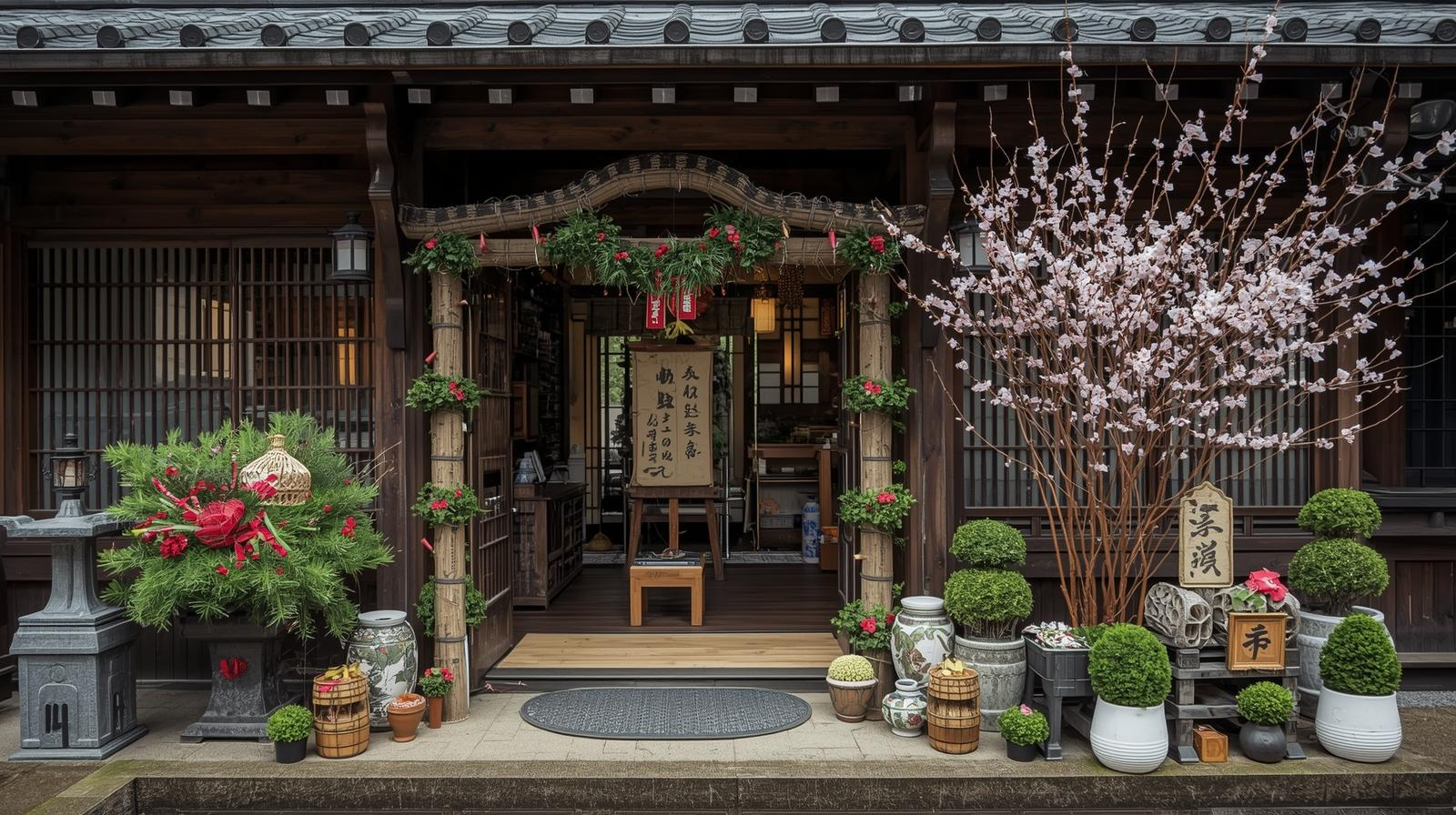
Homes are decorated with special New Year ornaments, each carrying symbolic meaning. Kadomatsu (門松), arrangements of pine, bamboo, and sometimes plum branches, are placed at entrances to welcome ancestral spirits and toshigami. The pine represents longevity and steadfastness, bamboo symbolises strength and flexibility, and plum blossoms suggest perseverance and renewal.
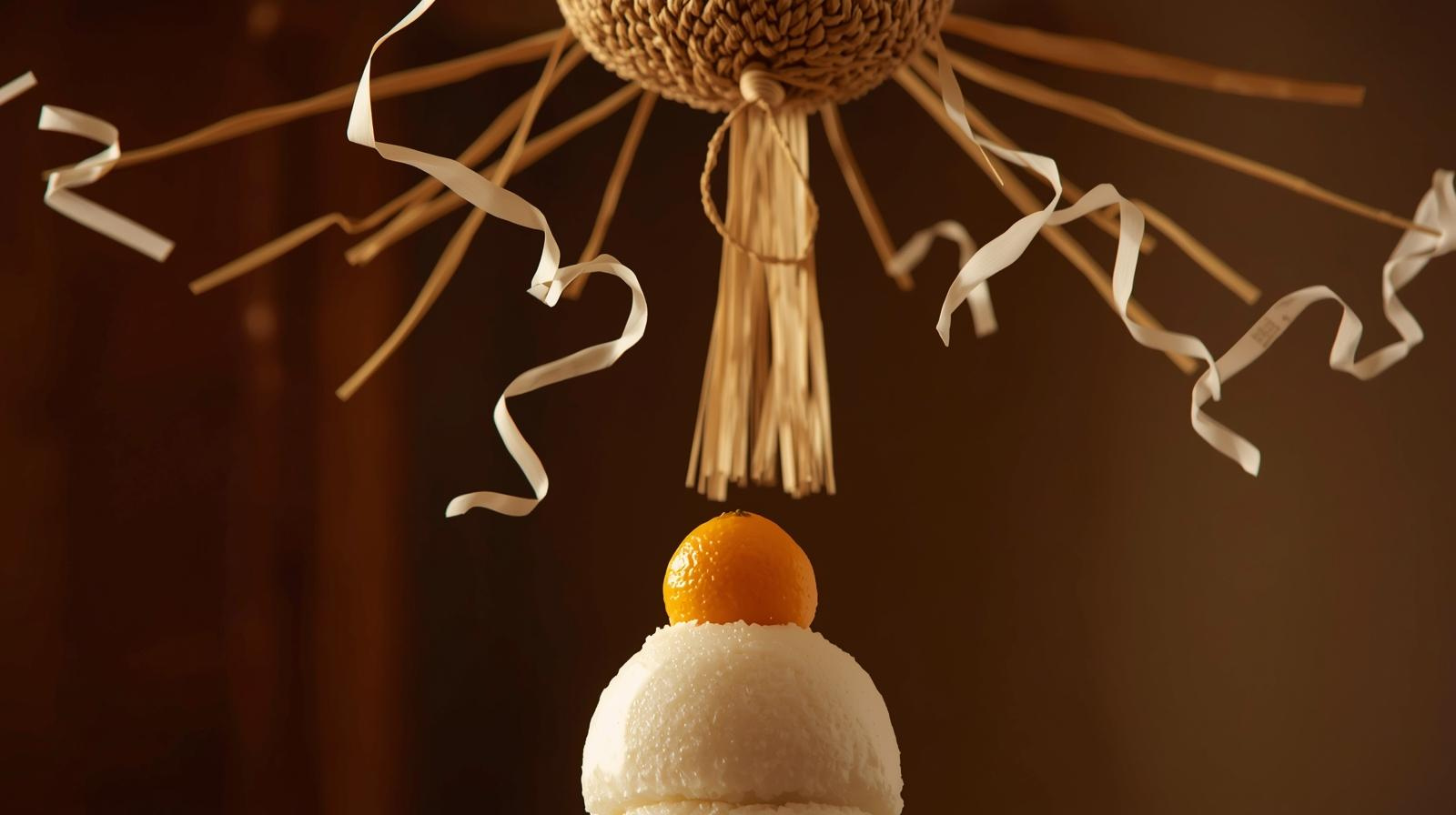
Shimenawa (しめ縄), sacred Shinto ropes made of twisted rice straw, are hung above doorways to demarcate sacred space and ward off evil spirits. These often incorporate shide (zigzagging paper strips) and other auspicious decorations. Kagami mochi (鏡餅), two stacked rice cakes topped with a bitter orange called daidai, are displayed on home altars. This offering to toshigami symbolises harmony and the continuity between years, the round shape represents mirrors used in Shinto rituals, and the bitter orange represents the family lineage continuing through generations.
New Year’s Eve: Ōmisoka
The transition into Shōgatsu begins on New Year’s Eve, called Ōmisoka (大晦日). Many families gather for a special meal featuring toshikoshi soba (年越しそば), or “year-crossing noodles.” These long buckwheat noodles symbolise longevity and the severing of the previous year’s hardships, their length represents a long life, while their tendency to break easily represents letting go of the old year’s regrets.
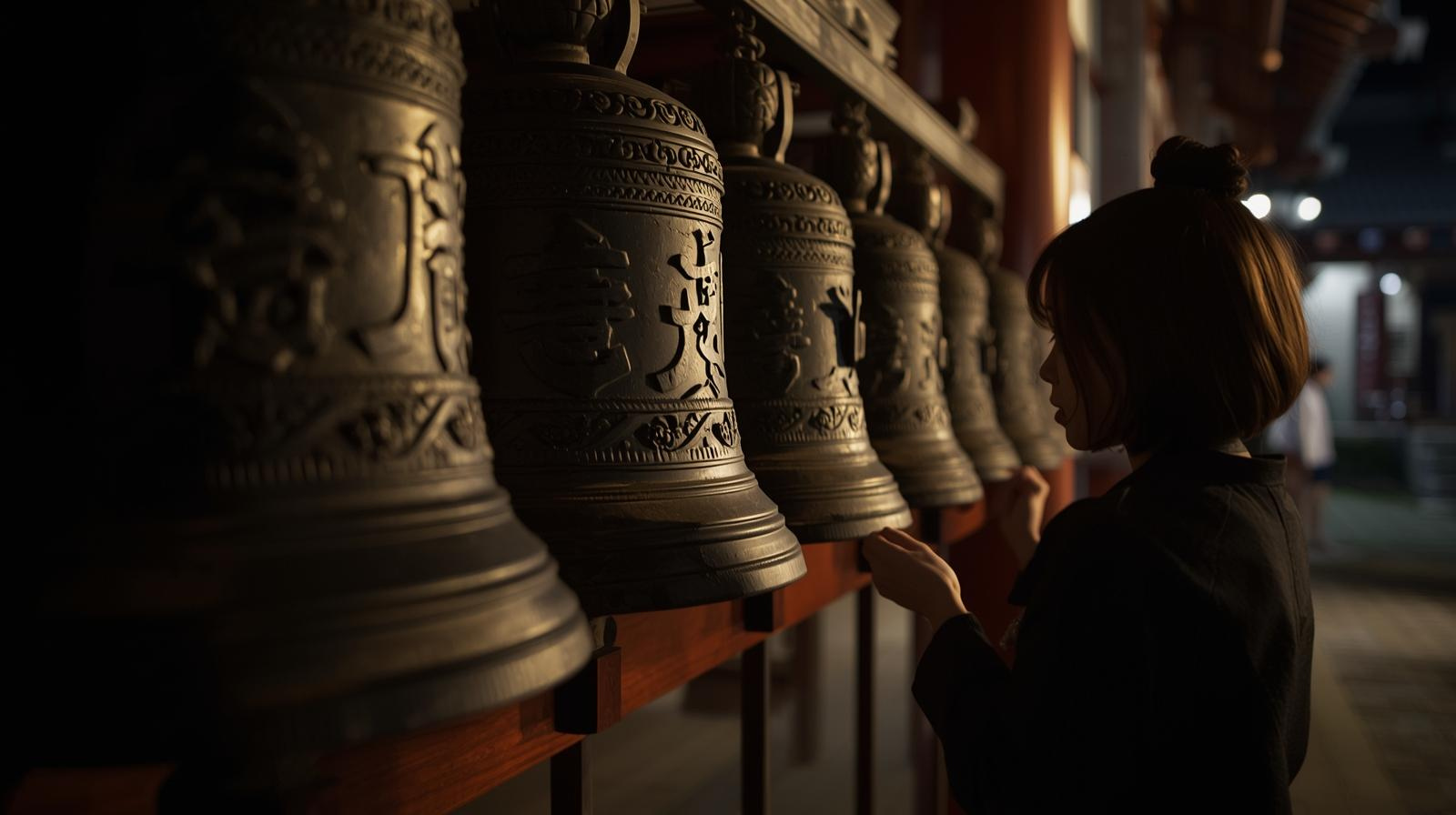
As midnight approaches, Buddhist temples throughout Japan begin ringing their bells in a ceremony called joya no kane (除夜の鐘). The bells are struck 108 times, once for each of the 108 worldly desires or earthly temptations recognised in Buddhist teaching. This ritual purification of these bonnō (煩悩) helps people enter the New Year with a cleansed spirit. Many Japanese people visit temples to hear these bells and participate in this symbolic cleansing, or they watch the ceremony broadcast on television.
1st January: Ganjitsu
The first day of the year, Ganjitsu (元日), is considered the most auspicious. Many Japanese people wake before dawn to witness hatsuhinode (初日の出), the first sunrise of the year, which is believed to be especially beautiful and meaningful. Popular viewing spots on mountains, beaches, and tall buildings fill with people eager to greet the new year’s first light.
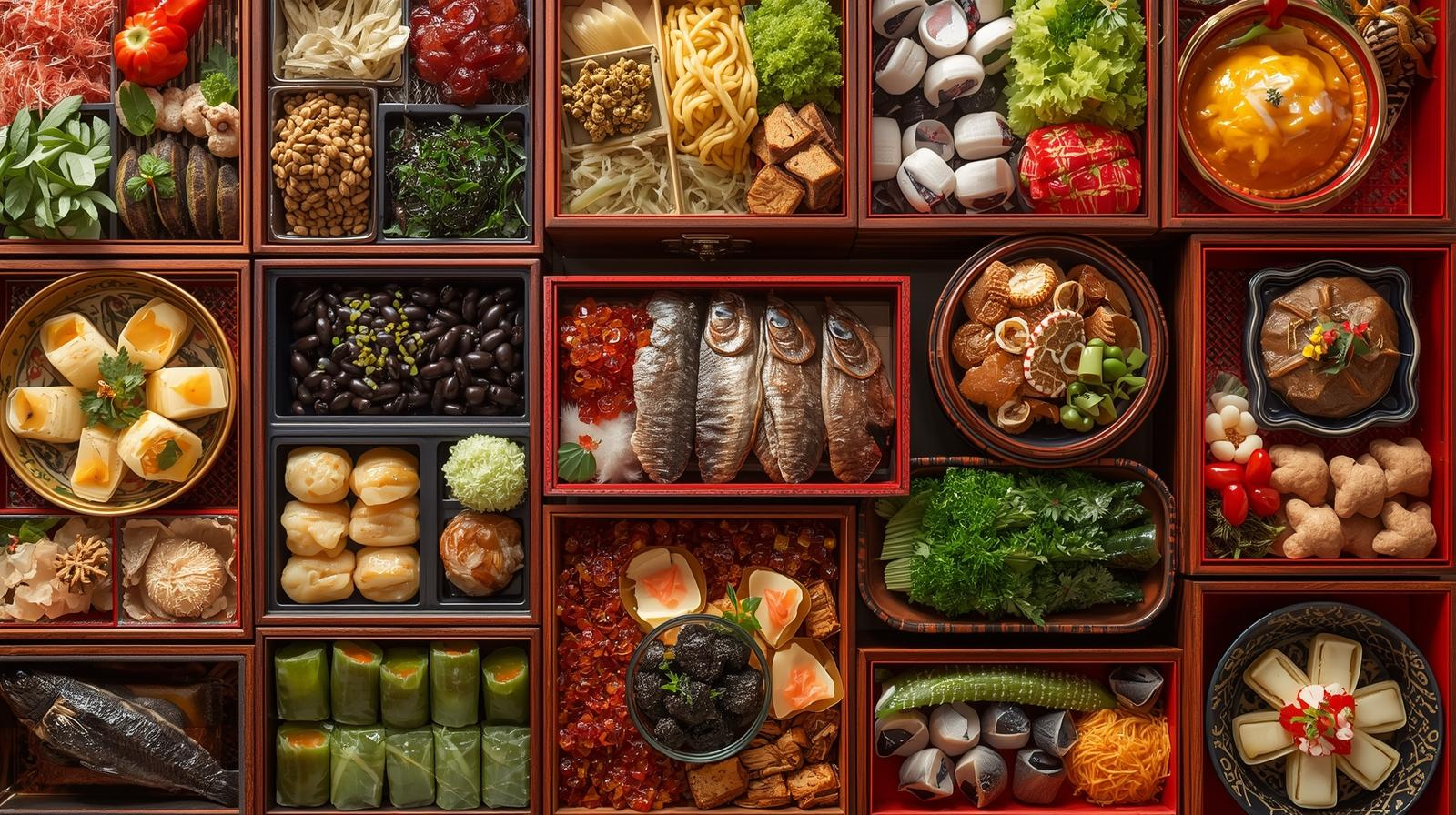
The day typically begins with a special breakfast called osechi-ryōri (おせち料理), an elaborate spread of symbolic foods traditionally packed in layered lacquered boxes called jūbako. Each dish carries specific meaning and wishes for the coming year. Kuromame (black beans) represent health and hard work, kazunoko (herring roe) symbolises fertility and prosperity, tazukuri (candied sardines) ensure a bountiful harvest, and kobumaki (kelp rolls) represent happiness, the word kobu sounds similar to yorokobu (喜ぶ), meaning joy.
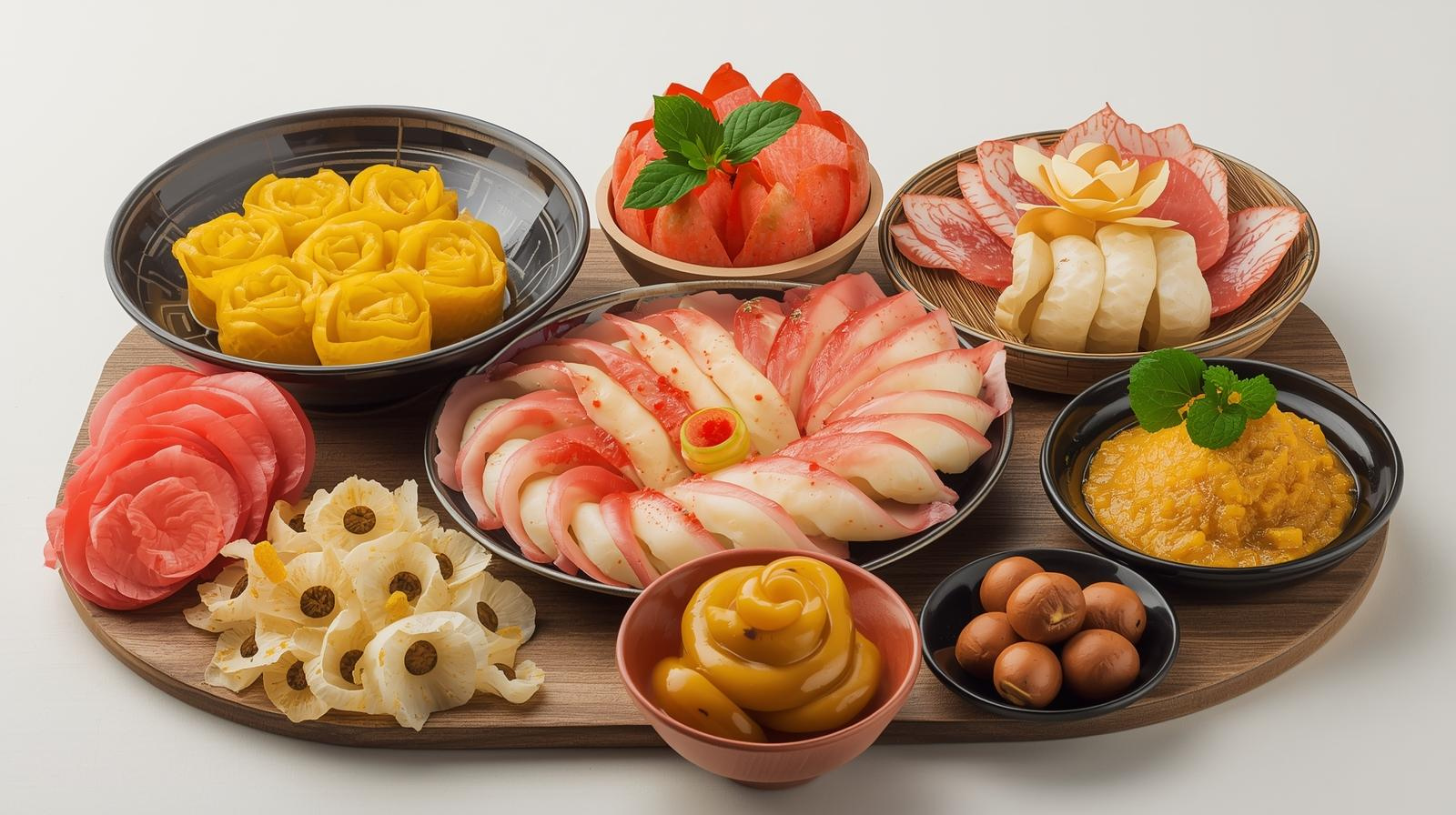
Other common osechi items include datemaki (sweet rolled omelette symbolising scholarship), kamaboko (fish cakes in red and white representing celebration), renkon (lotus root representing a clear view of the future through its holes), and kinton (mashed sweet potato with chestnuts representing wealth due to its golden colour). These dishes are prepared in advance so that families can rest and avoid cooking during the sacred first three days, and also so that the kitchen god can rest.
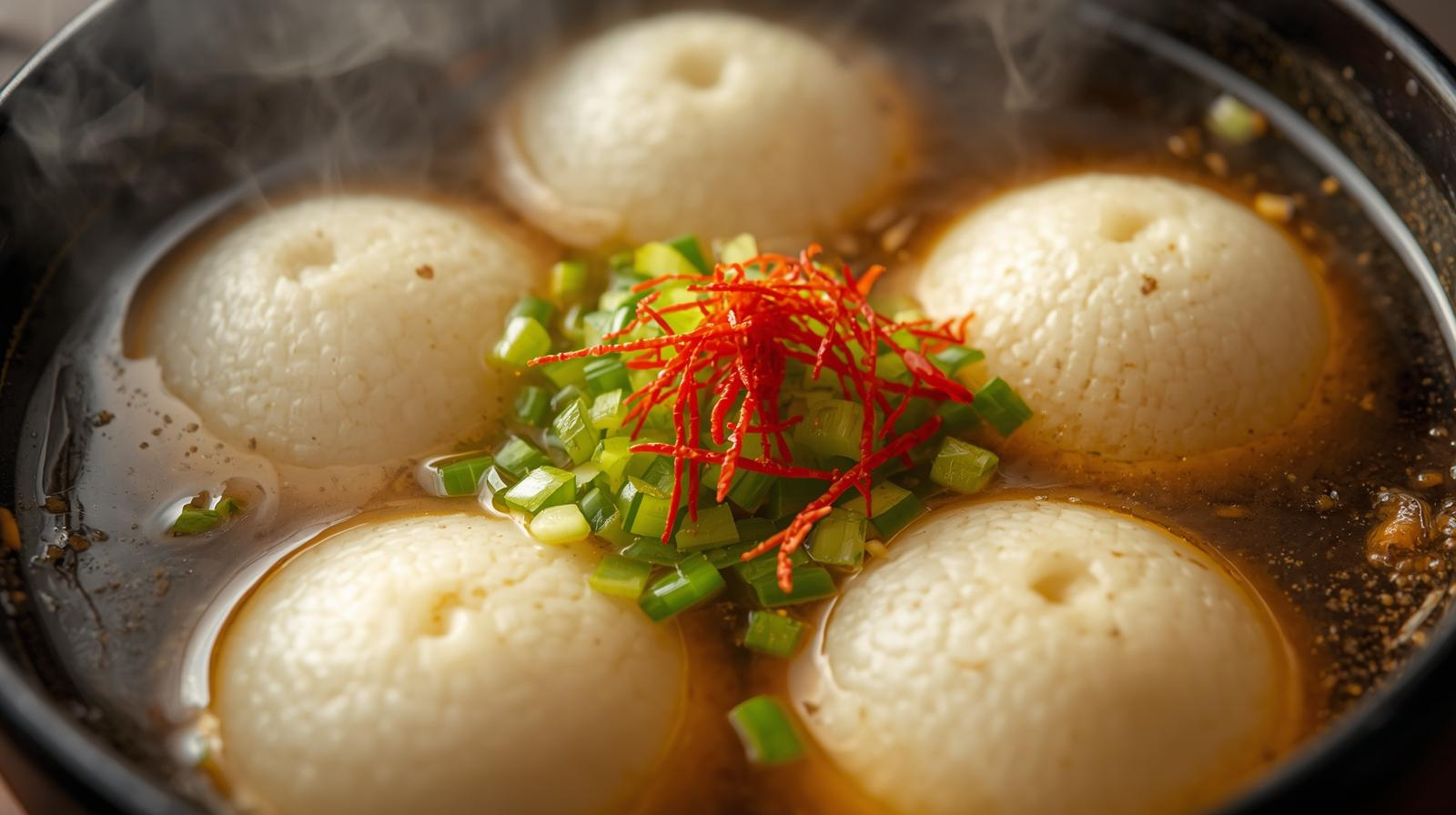
Another important New Year’s food is ozōni (お雑煮), a soup containing mochi (rice cakes) and various ingredients that vary by region. In eastern Japan, the soup typically has a clear broth with square-cut mochi, while western Japan favours a miso-based broth with round mochi. The sticky mochi is believed to help toshigami remain in the home longer.
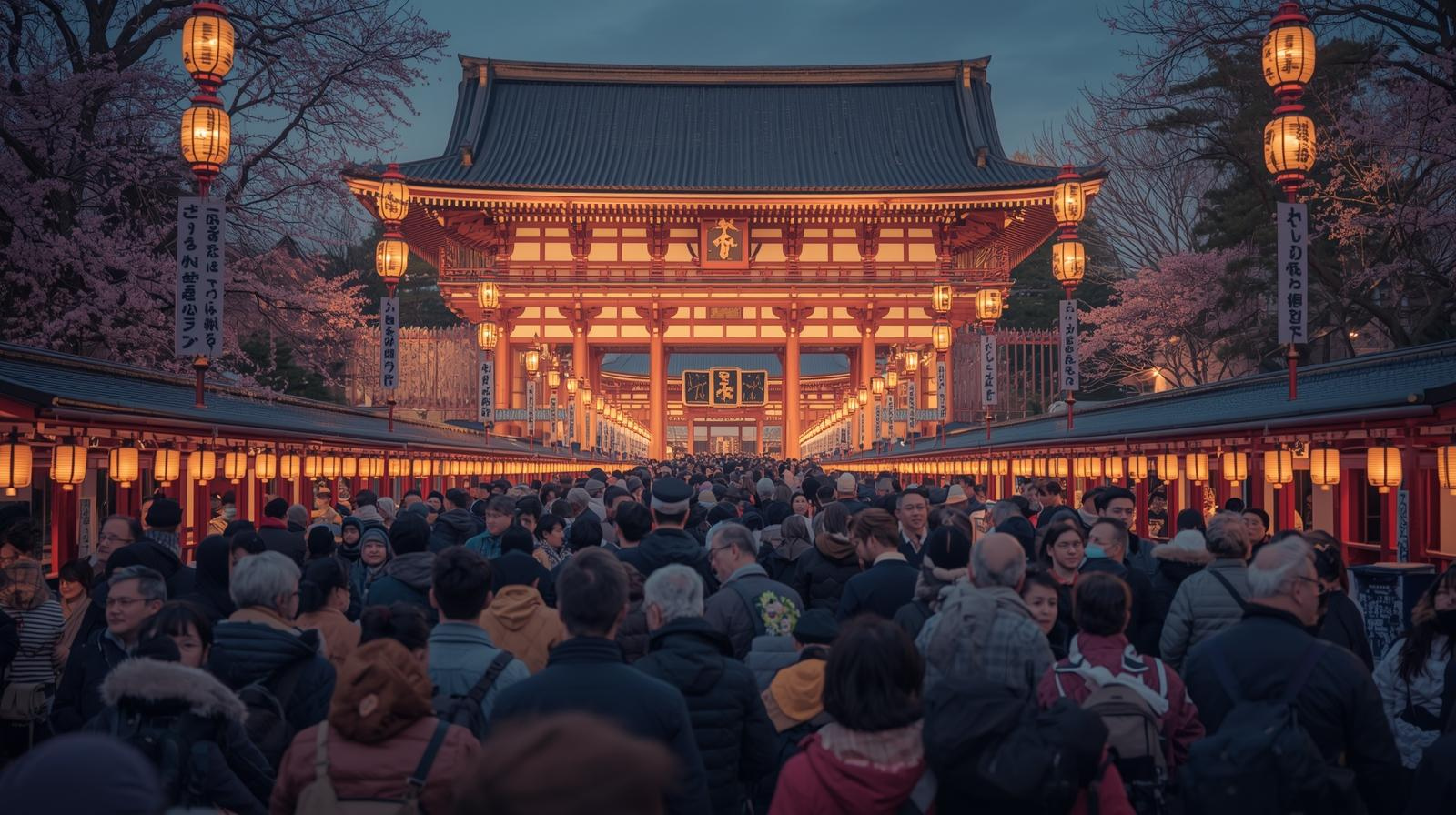
The first shrine or temple visit of the year, called hatsumōde (初詣), is a central Shōgatsu tradition. Millions of Japanese people visit shrines and temples during the first three days, with major sites like Meiji Shrine in Tokyo receiving over three million visitors during this period alone. Worshippers pray for health, happiness, and prosperity, purchase protective amulets called omamori (お守り), and draw fortune-telling papers called omikuji (おみくじ) to discover what the year may hold.
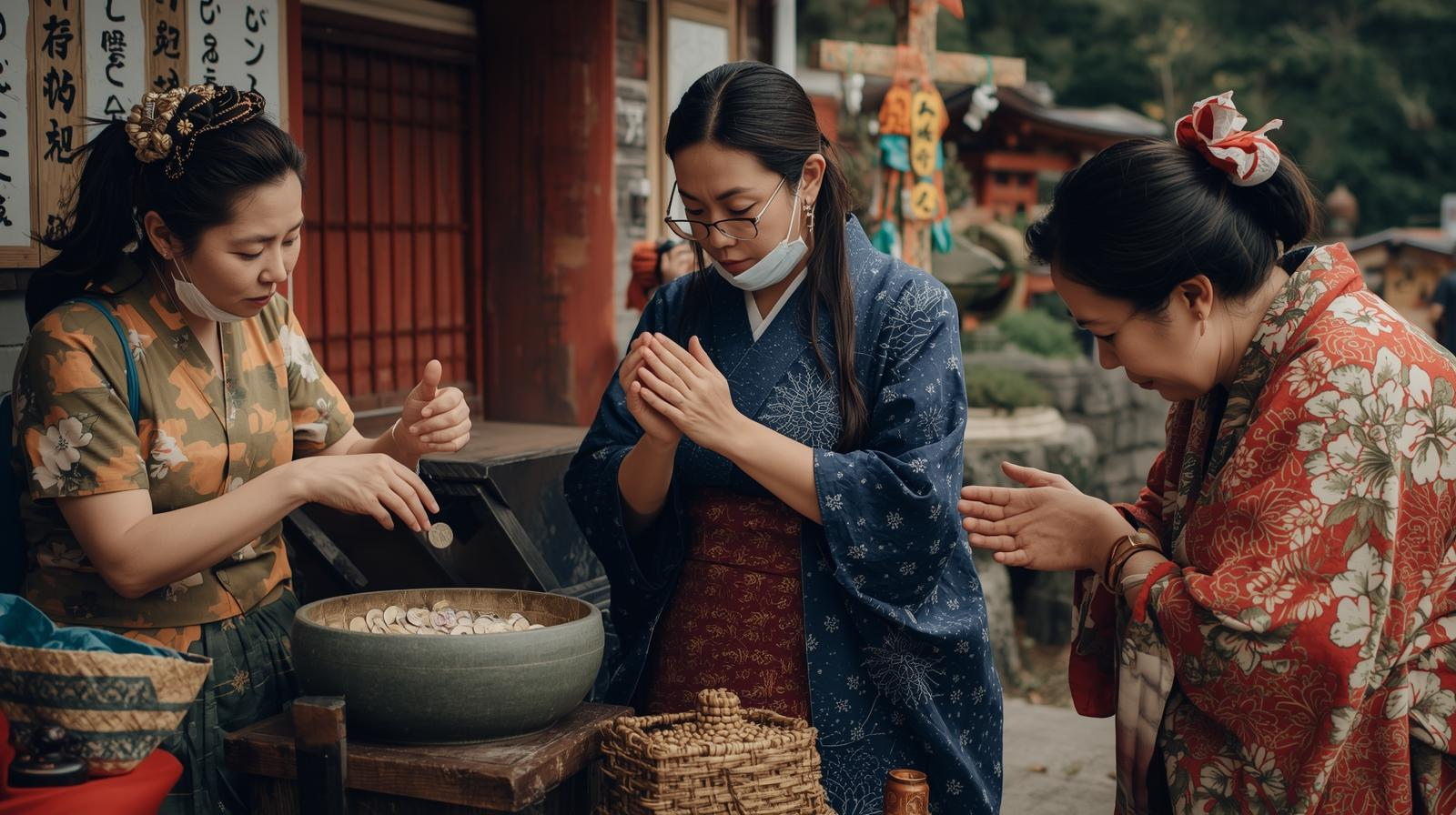
At shrines, people follow specific rituals: they purify their hands and mouth at the temizuya (water pavilion), toss coins into the offering box, bow twice, clap twice, pray, and bow once more. Many also purchase new omamori for the year while returning last year’s amulets to be ritually burned.
The First Three Days: Sanganichi
The period from 1st to 3rd January, known as Sanganichi (三が日), is when Shōgatsu traditions are most intensely observed. These three days are national holidays when most businesses close, creating a rare extended break in Japan’s typically work-intensive culture. Families use this time to gather, often traveling significant distances to return to their ancestral homes.
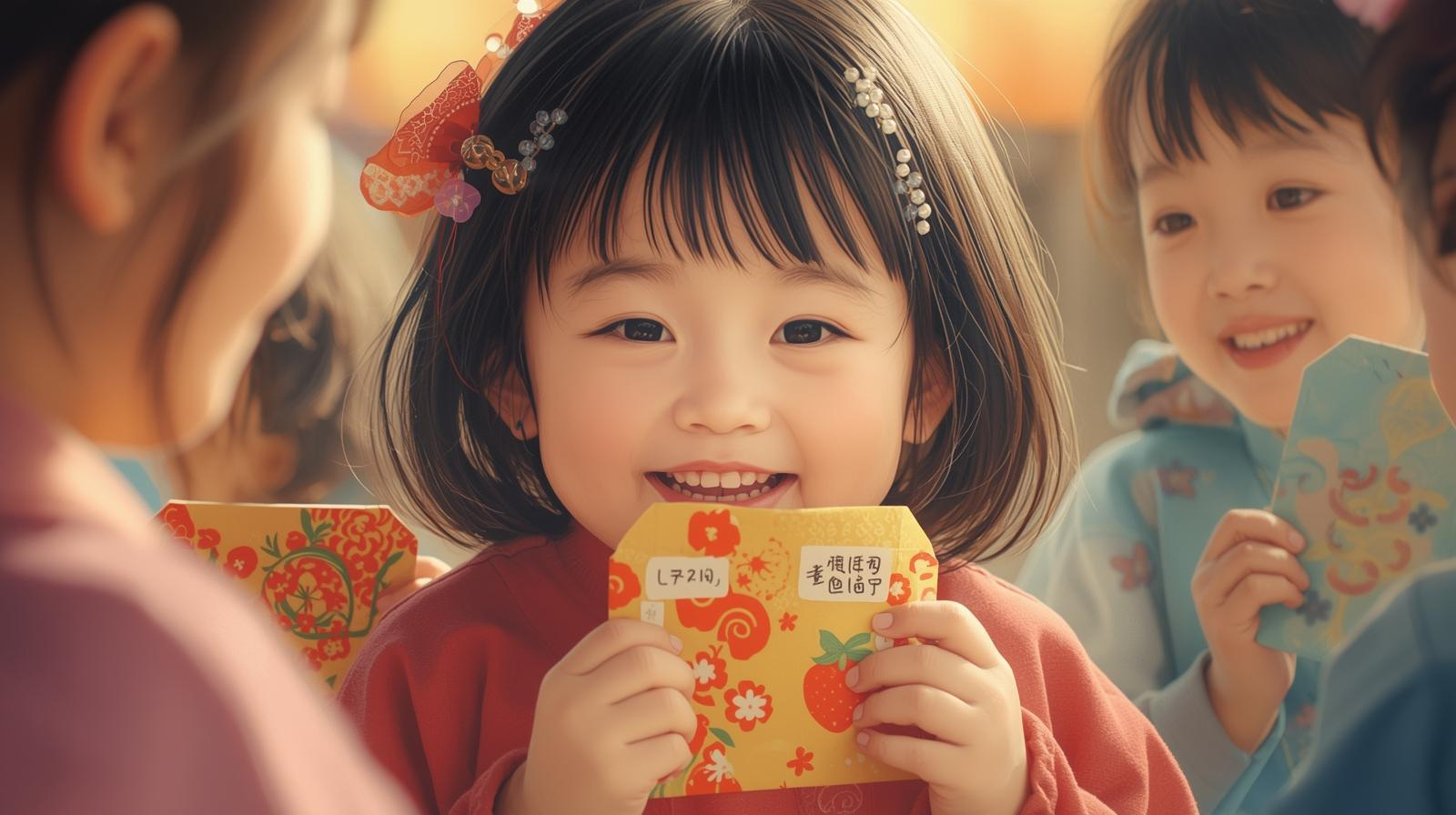
Children receive otoshidama (お年玉), monetary gifts given in special decorative envelopes. This tradition brings great excitement to young people and represents the elders’ blessings and hopes for the children’s growth in the coming year. The amounts vary by age, with older children typically receiving more.
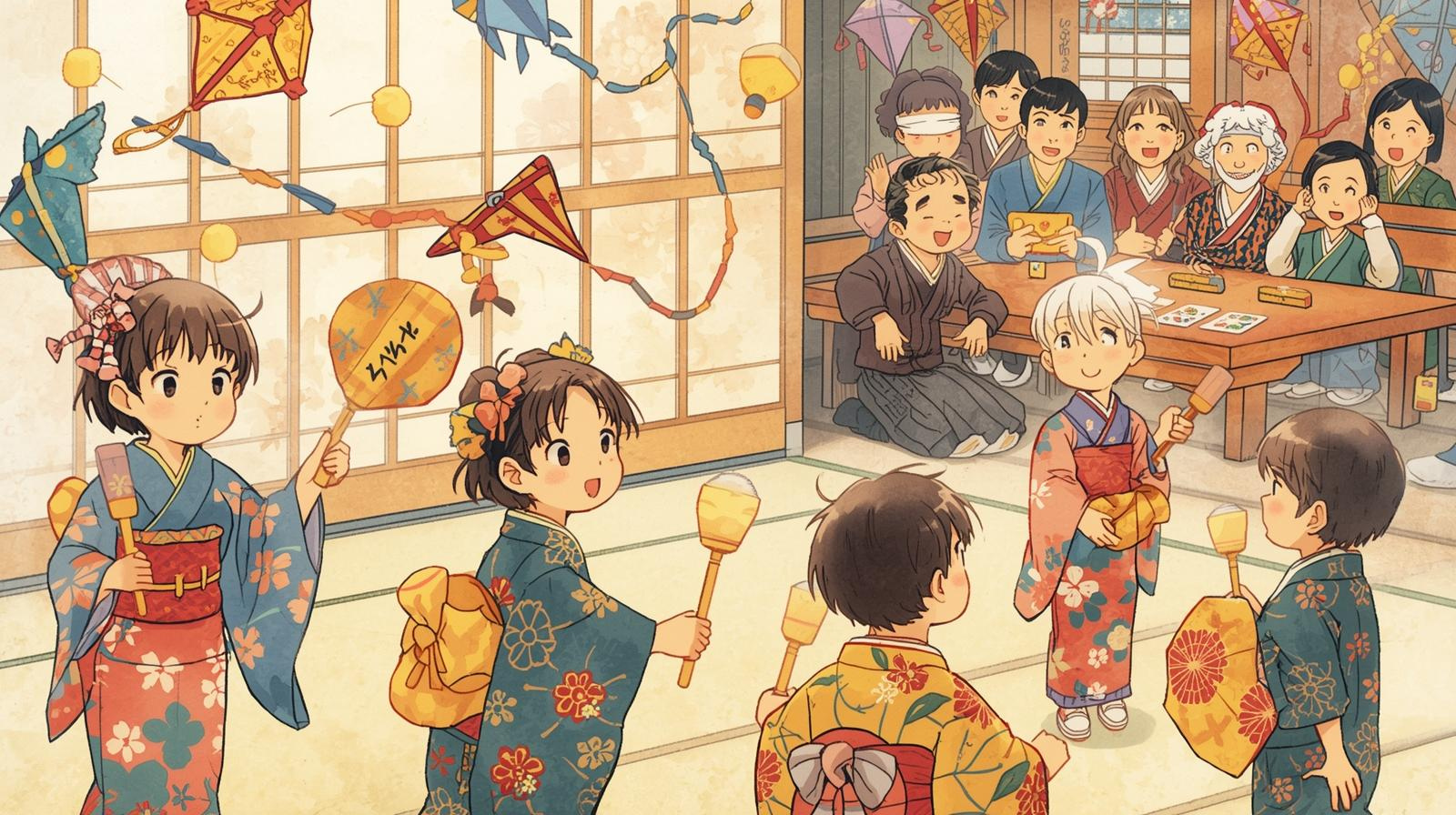
Many families spend these days playing traditional games. Hanetsuki, similar to badminton but played with wooden paddles and a shuttlecock, is popular among girls, it’s said that the shuttlecock’s flight drives away evil spirits. Takoage (kite flying) is enjoyed by boys, with the kite’s ascent symbolising sending prayers to heaven. Card games like karuta (かるた), particularly the poetry-based Hyakunin Isshu, are popular family activities that combine entertainment with cultural education. Fukuwarai, a game similar to pin-the-tail-on-the-donkey where players place facial features on a blank face while blindfolded, brings laughter and joy.
Television plays a significant role in modern Shōgatsu celebrations. Special New Year’s programs, particularly the Kōhaku Uta Gassen (紅白歌合戦) music competition on New Year’s Eve, attract massive audiences. On New Year’s Day, comedy specials and special programming provide entertainment for families gathered at home.
Regional and Personal Variations
While certain Shōgatsu traditions are observed nationwide, regional variations add local flavour to celebrations. In Okinawa, traditional Ryukyuan customs blend with mainland practices. Some regions have specific local dishes that are essential to their New Year celebrations. Northern areas might emphasise foods that preserve well in cold climates, while southern regions incorporate more seafood.
Individual families also develop their own traditions, perhaps a special family recipe passed down through generations, a particular shrine they always visit, or unique games they play together. These personal touches make each family’s Shōgatsu observance special and help pass cultural identity from one generation to the next.
Modern Shōgatsu: Continuity and Change
Contemporary Shōgatsu celebrations maintain remarkable continuity with historical traditions while adapting to modern life. Most Japanese people still observe the core customs of house cleaning, special foods, shrine visits, and family gatherings. However, certain aspects have evolved. Fewer young people know how to prepare traditional osechi-ryōri from scratch, with many families now purchasing pre-made versions from department stores or restaurants. Some modern families incorporate Western New Year traditions, such as countdown celebrations or champagne toasts, alongside Japanese customs.
The extended national holiday allows for domestic tourism, with many families traveling to resort areas or visiting multiple shrines in different regions. International travel during Shōgatsu has also become popular among younger generations, though the pull of tradition still brings most Japanese people home for at least part of the holiday.
Despite these changes, Shōgatsu remains a time when even the most modernised, globally-oriented Japanese people reconnect with traditional culture. The holiday serves as an anchor point for cultural identity, a time when the pace of contemporary life slows and timeless values of family, gratitude, purification, and renewal take centre stage.
The Spirit of Shōgatsu
Ultimately, Shōgatsu embodies the Japanese cultural values of harmony, respect for tradition, attention to symbolism and ritual, and the importance of marking transitions. The elaborate preparations demonstrate the belief that how one begins the year influences how the entire year will unfold. The emphasis on family reflects the foundational importance of these relationships in Japanese society. The religious elements from both Shinto and Buddhism show how these traditions have intertwined to create a distinctly Japanese spiritual landscape.
For visitors to Japan during this period, the atmosphere is palpable, the streets are quieter than usual as families gather at home, shrine grounds buzz with festive energy, and a sense of collective renewal fills the air. Traditional kimono appear more frequently, and even in bustling Tokyo, ancient customs assert themselves amid the modern metropolis.
Shōgatsu reminds us that some human needs transcend time and culture: the need to mark important transitions, to gather with loved ones, to reflect on the past while looking hopefully toward the future, and to participate in rituals that connect us to something larger than ourselves. In these first three days of January, Japan collectively presses pause on its famously efficient modern society to honour traditions that have guided and comforted generations, ensuring that in a rapidly changing world, the wisdom and beauty of the past remain vibrantly alive in the present.
Leave a Reply