
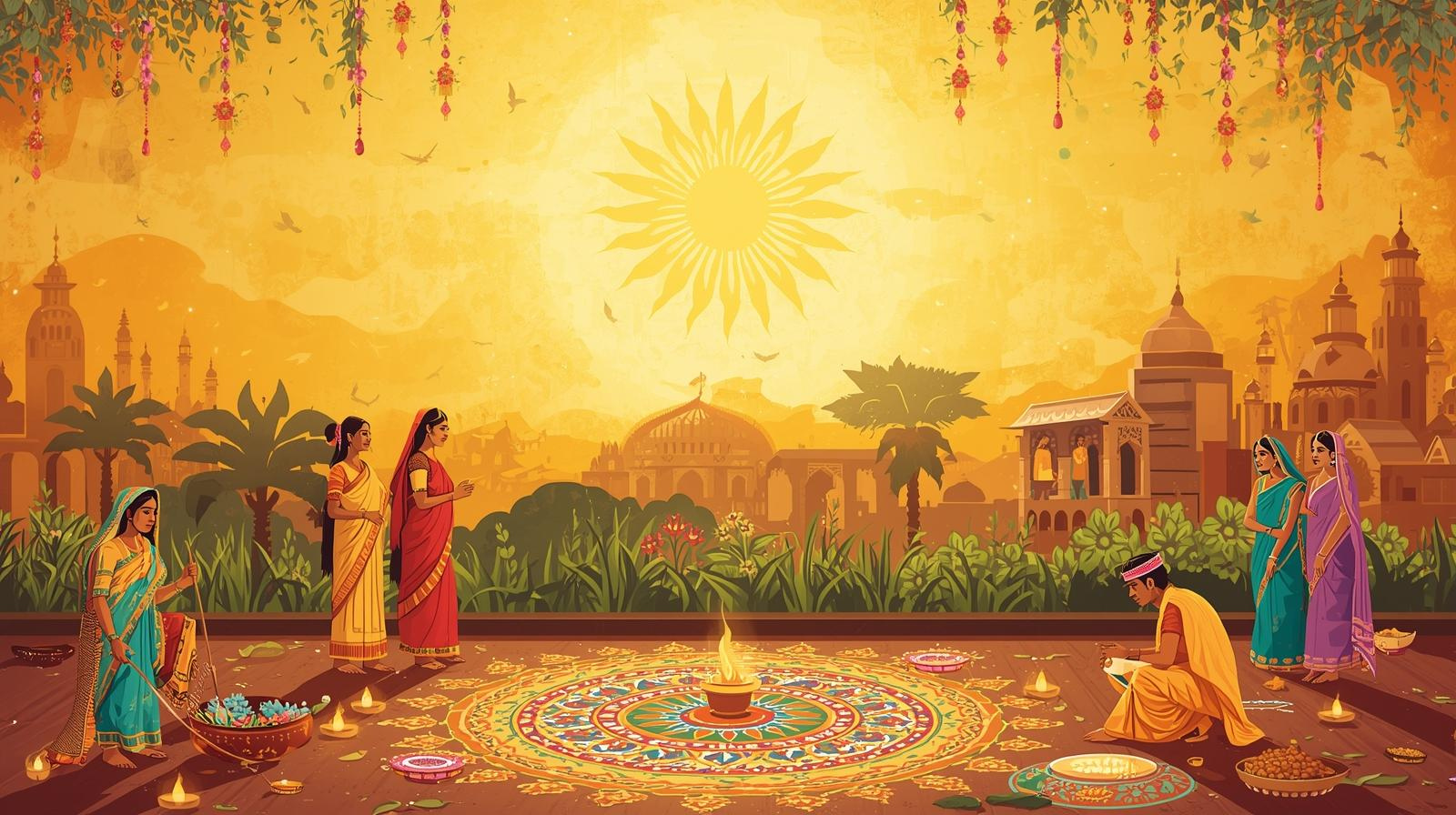
Makar Sankranti and Pongal are important harvest festivals celebrated across India, marking the transition of the Sun into the zodiac sign Makara (Capricorn). These festivals symbolise the end of winter, the beginning of longer days, and a period of prosperity and renewal. Though known by different names and customs in various regions, the essence of both celebrations is gratitude toward nature and the farming community.
When Are Makar Sankranti and Pongal Celebrated?
Makar Sankranti is celebrated annually on 14th January (occasionally 15th January), making it one of the few Indian festivals observed on a fixed date. Pongal, the Tamil harvest festival, is celebrated over four days, from 14th to 17th January. Both festivals coincide with the harvest of major crops such as rice, sugarcane, and sesame.
What Are Makar Sankranti and Pongal?
Makar Sankranti marks the sun’s northward journey (Uttarayan), which is considered an auspicious period in Indian tradition. It signifies growth, positivity, and new beginnings. The festival is dedicated to the Sun God (Surya), who is thanked for providing energy, warmth, and life.
Pongal, meaning “to boil over” in Tamil, celebrates abundance and prosperity. It honours the harvest, cattle, and nature, highlighting the close relationship between humans and the environment.
Cultural and Regional Heritage
Makar Sankranti is known by different names across India:
- Pongal in Tamil Nadu
- Magh Bihu in Assam
- Uttarayan in Gujarat
- Lohri in Punjab (a day earlier)
- Khichdi in Uttar Pradesh and Bihar
Despite regional differences, all these celebrations share themes of thanksgiving, renewal, and community bonding.
How Makar Sankranti Is Celebrated
Celebrations of Makar Sankranti vary by region but are united by joy and festivity. In Gujarat, people fly colourful kites that fill the sky, symbolising freedom and the rise of the sun. In Maharashtra, families exchange sweets made of sesame seeds and jaggery, wishing each other harmony and warmth with the saying, “Til-gul ghya, god god bola” (Accept these sweets and speak sweetly).
In many parts of India, people take holy dips in rivers such as the Ganga, Yamuna, and Godavari, believing it purifies the soul. Traditional foods made from newly harvested grains are prepared and shared.
How Pongal Is Celebrated
Pongal is a four-day festival celebrated with devotion and joy in Tamil Nadu:
- Bhogi Pongal – Old belongings are discarded, and homes are cleaned to welcome new beginnings.
- Thai Pongal – The main day of celebration, when freshly harvested rice is boiled with milk and jaggery until it overflows, symbolising abundance.
- Mattu Pongal – Cattle are honoured for their role in agriculture, decorated with garlands and bells.
- Kaanum Pongal – A day for family gatherings, social visits, and outdoor celebrations.
Homes are decorated with beautiful kolam (rangoli) designs made from rice flour, and prayers are offered to the Sun God.
Significance in Modern Times
Today, Makar Sankranti and Pongal continue to unite communities across generations. While modern lifestyles have changed how the festivals are observed, their core values, gratitude, respect for nature, and celebration of hard work, remain strong.
These festivals remind people of India’s agricultural roots and encourage sustainable living and social harmony.
A Celebration of Light and Life
Makar Sankranti and Pongal are more than seasonal festivals, they are celebrations of life, light, and abundance. By honouring the Sun, the Earth, and those who work the land, these festivals reflect India’s deep cultural connection to nature and its enduring spirit of thankfulness and joy.
.
Leave a Reply