
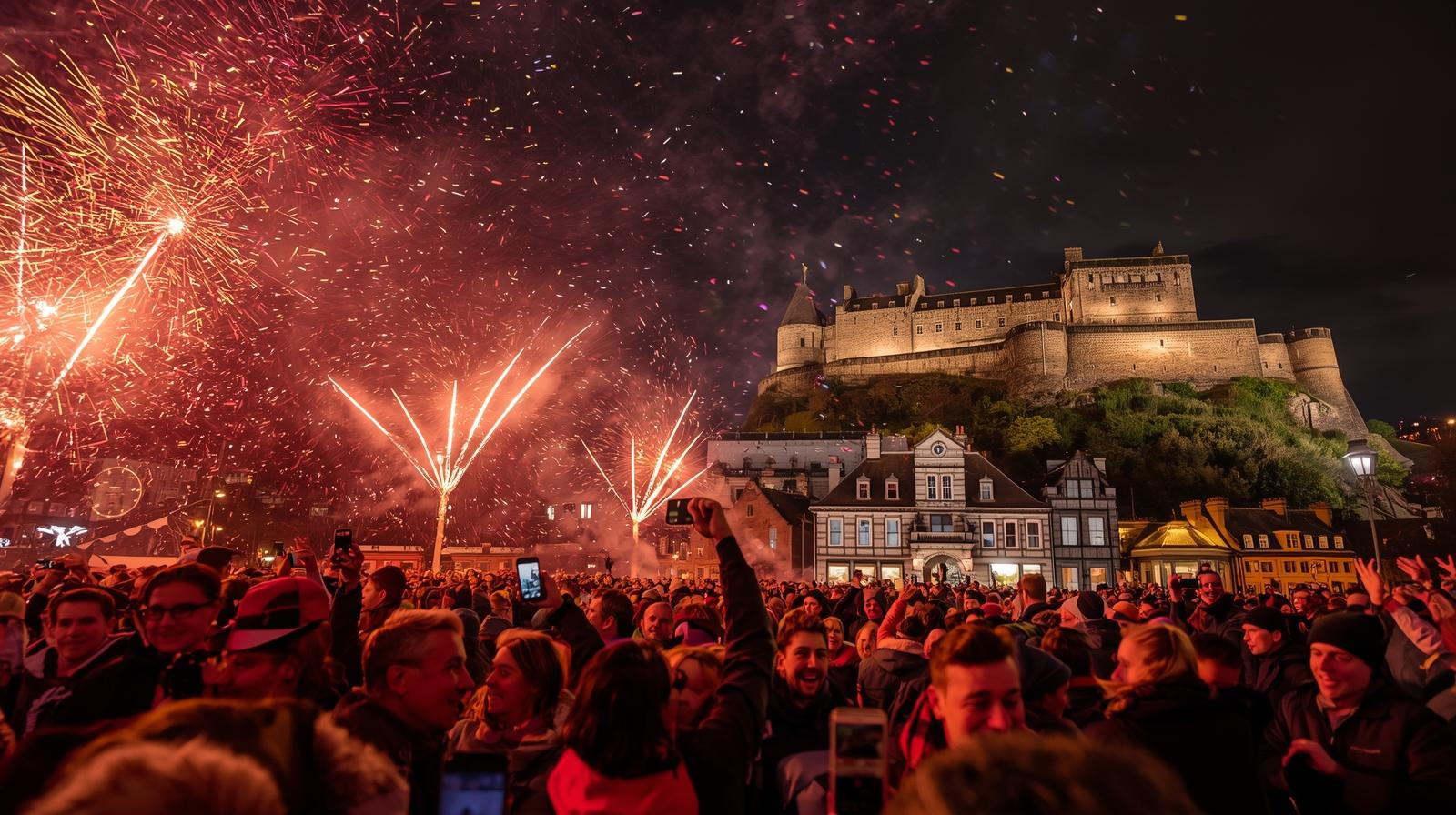
While much of the world marks the arrival of the new year with quiet reflection or modest gatherings, Scotland erupts into one of the most spirited celebrations on earth. Hogmanay, as the Scots call New Year’s Eve, is far more than just another holiday; it’s a cultural institution that transforms the nation into a beacon of warmth and revelry during the darkest depths of winter.
The origins of Hogmanay stretch back centuries, though historians continue to debate the precise roots of both the celebration and its curious name. Some scholars trace the word to the French “hoguinané,” a cry used by children seeking gifts at New Year. Others point to Norse influences, suggesting connections to the winter solstice celebrations that Vikings brought to Scottish shores. What remains certain is that by the 17th century, Hogmanay had become deeply embedded in Scottish culture, partly because the Protestant Reformation had suppressed Christmas celebrations, leaving New Year as the primary winter festival.
The celebration holds particular significance in Scottish history. During the centuries when Christmas was effectively banned in Scotland, a prohibition that persisted in some form until the 1950s, Hogmanay became the focal point for winter festivities, family gatherings, and the exchange of gifts. This historical accident transformed what might have been a simple New Year’s observance into a multi-day celebration that captures the Scottish spirit of community, generosity, and endurance.
At the heart of Hogmanay lies “first footing,” perhaps the tradition’s most distinctive custom. As the clock strikes midnight, the first person to cross a threshold after the new year begins, the “first foot”, carries symbolic importance for the household’s fortune in the coming year. Tradition holds that the ideal first footer should be a dark-haired male, possibly a vestige of the days when a blonde stranger at the door might have signalled a Norse raider. The first footer arrives bearing gifts of symbolic importance: coal for warmth, shortbread for sustenance, salt for flavour, and most importantly, whisky for good cheer. This practice of visiting neighbours’ homes continues through the night and often into the next day, creating a cascading wave of hospitality across communities.
Modern Hogmanay celebrations vary dramatically in scale. In Edinburgh, the festivities have evolved into one of the world’s largest New Year celebrations, drawing hundreds of thousands of visitors for a three-day festival. The city’s streets fill with torchlight processions, concerts, and the famous Loony Dook, where brave souls plunge into the frigid waters of the Firth of Forth on New Year’s Day. The stroke of midnight brings the singing of “Auld Lang Syne,” Robert Burns’s beloved poem set to music, which has become the anthem of New Year celebrations worldwide but holds special resonance in its homeland.
In smaller towns and villages, Hogmanay retains a more intimate character. Communities gather for ceilidhs, traditional Scottish dances, where generations mix in celebration. The “redding of the house” precedes the festivities, a thorough cleaning meant to clear out the old year’s troubles and make space for new blessings. Some coastal communities maintain ancient fire festivals, where blazing barrels or torches are paraded through streets in ceremonies that blend Christian and pagan traditions.
Food plays its essential role, with traditional dishes like steak pie, haggis, and black bun (a rich fruit cake encased in pastry) gracing tables. The emphasis falls on abundance and sharing, reflecting values of community and mutual support that have sustained Scottish culture through centuries of hardship.
What distinguishes Hogmanay from New Year celebrations elsewhere is its duration and intensity. While other cultures might celebrate for a single evening, Scots traditionally treated the entire period from New Year’s Eve through January 2nd as a holiday. Though modern work demands have compressed the celebration somewhat, the spirit of extended festivity persists. The emphasis remains not on individual renewal or private resolution-making, but on collective joy and the strengthening of community bonds.
In recent decades, Hogmanay has attracted increasing international attention, with visitors travelling from across the globe to experience Scotland’s unique approach to welcoming the new year. Yet for all its growth and evolution, the celebration retains its essential character: a defiant assertion of warmth, generosity, and human connection in the face of winter’s darkness. In Hogmanay, Scots have created not just a party, but a cultural statement about what matters most, the ties that bind us to one another and the hope that each new year might bring better days ahead.
Leave a Reply