
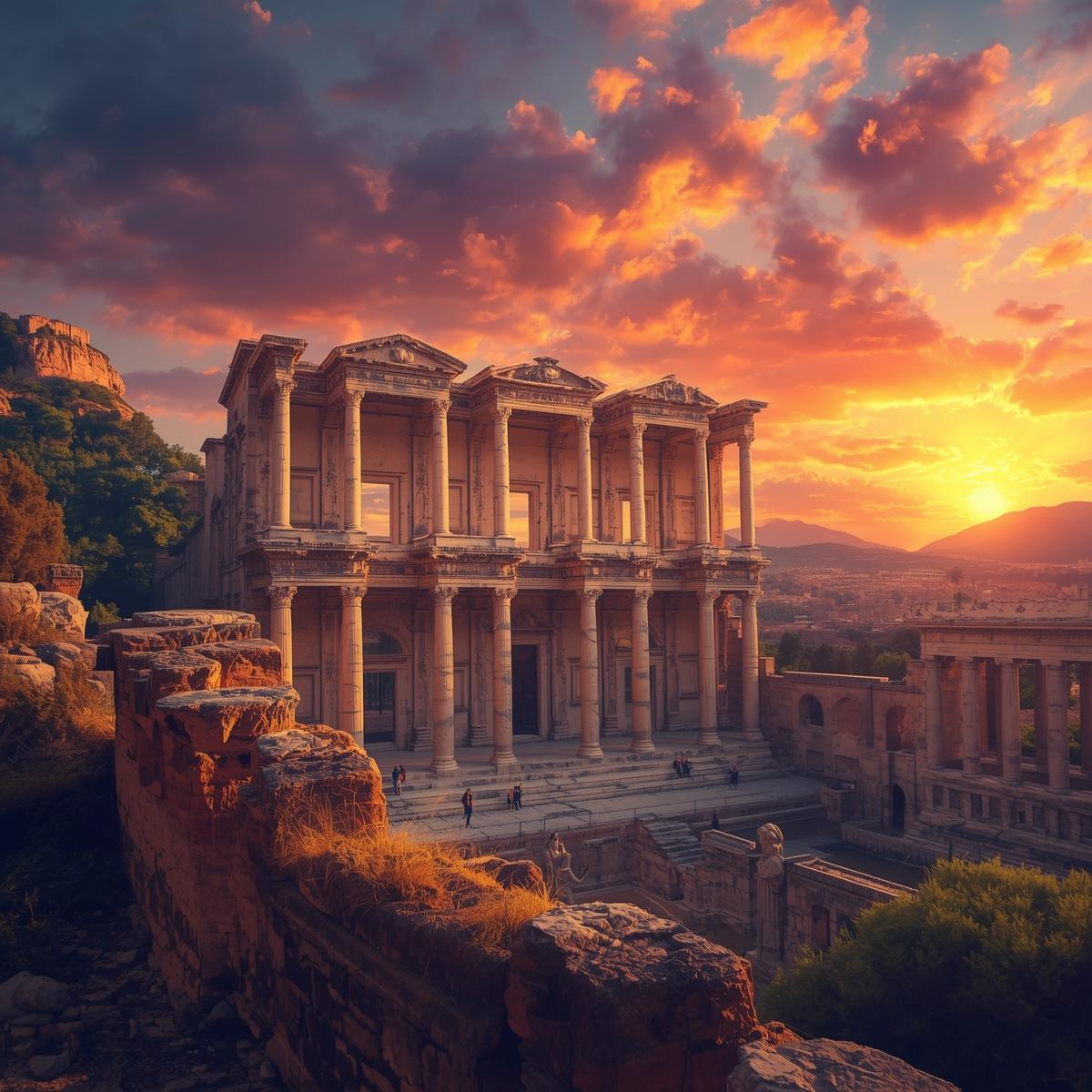
Nestled on the western coast of modern-day Turkey, the ancient city of Ephesus stands as one of the most remarkably preserved archaeological sites in the Mediterranean world. Once a bustling metropolis of the Roman Empire, this UNESCO World Heritage Site draws millions of visitors annually, attracted by its stunning ruins and profound religious significance.
Location and Geography
Ephesus sits near the Aegean coast in what is now the Selçuk district of İzmir Province, Turkey, approximately 80 kilometres south of İzmir. In antiquity, the city occupied a strategic position at the mouth of the Cayster River (modern Küçük Menderes), which provided access to the interior of Anatolia. Though the harbour has long since silted up, leaving the ruins several kilometres from the sea, this prime location made Ephesus a crucial hub for trade and cultural exchange between East and West.
A Rich Historical Tapestry
Ephesus boasts a history spanning nearly three millennia. According to tradition, the city was founded in the 10th century AD by Attic and Ionian Greek colonists, led by Androclos, son of the Athenian king Codrus. The settlers found an existing shrine to the Anatolian mother goddess Cybele, which they syncretised with their own worship of Artemis.
The city flourished under various rulers throughout antiquity. It fell under Lydian control in the 6th century BC and then came under Persian rule following Cyrus the Great’s conquests. Alexander the Great liberated the city in 334 BC, marking the beginning of the Hellenistic period. After passing through the hands of Alexander’s successors, Ephesus was bequeathed to Rome in 133 BC and became the capital of the Roman province of Asia.
Under Roman rule, Ephesus reached its zenith, becoming one of the empire’s largest cities, with a population estimated to be between 250,000 and 500,000 at its peak in the 1st and 2nd centuries AD. The city served as a major centre of early Christianity and played a pivotal role in the spread of the new faith. However, the gradual silting of its harbour, combined with repeated earthquakes and Gothic raids in the 3rd century, initiated a slow decline. The city remained significant through the Byzantine period but was eventually abandoned after Arab raids in the 7th and 8th centuries.
The People of Ephesus
Ephesus was renowned for its cosmopolitan character. The city’s population included Greeks, Romans, Jews, Anatolians, and people from across the Mediterranean and Near East. This diversity created a vibrant cultural and commercial atmosphere that attracted philosophers, artists, merchants, and religious seekers.
The city was organised according to the typical Greek polis structure, with citizens divided into tribes and enjoying various degrees of political participation. Wealthy citizens served as benefactors, funding public buildings and festivals to earn prestige and honour. The city also had a substantial slave population that performed much of the manual labour.
Ephesian society was deeply religious, centred on the worship of Artemis, whose magnificent temple was considered one of the Seven Wonders of the Ancient World. -later became an important centre for Christianity.
Famous Residents and Visitors
Ephesus attracted some of antiquity’s most notable figures. The pre-Socratic philosopher Heraclitus (c. 535-475 BC) was born in Ephesus and developed his famous doctrine of flux and the unity of opposites here. His cryptic pronouncements earned him the nickname “the Obscure.”
In the Roman period, wealthy benefactors like Tiberius Julius Celsus Polemaeanus, the Roman senator and governor for whom the famous library was built, brought glory to the city. The physician Soranus of Ephesus (1st-2nd century AD) became one of antiquity’s most important medical writers.
For Christians, Ephesus holds unparalleled significance. According to tradition and early Church sources, the Apostle John spent his final years in Ephesus, where he wrote his Gospel and three epistles. The Virgin Mary is also believed to have accompanied John to Ephesus and lived her final days in a house on nearby Bülbül Mountain (now known as the House of the Virgin Mary). The Apostle Paul spent approximately three years in Ephesus during his missionary journeys (around 52-55 AD), establishing a strong Christian community and writing his First Epistle to the Corinthians from the city.
Trade and Commerce
Ephesus’s prosperity rested on its role as a major commercial centre. The city’s harbour facilitated trade between the Aegean world and the wealthy kingdoms of Asia Minor. Goods from as far as India, Arabia, and Egypt flowed through Ephesian markets, while local products, including wine, olive oil, and textiles, were exported throughout the Mediterranean.
The city was particularly famous for producing written works and scrolls, supported by a thriving community of scribes and copyists. Silversmiths and artisans produced religious artifacts, particularly miniature temples and statues of Artemis, creating a lucrative industry around pilgrimage trade. The biblical Book of Acts mentions the riot of the Ephesian silversmiths who opposed Paul’s preaching because it threatened their business of making silver shrines of Artemis.
Banking and finance also flourished in Ephesus, with the Temple of Artemis serving as a repository for deposits and operating something akin to an ancient bank.
St. John: Apostle, Evangelist, and Pilgrimage
The connection between St. John the Apostle and Ephesus has drawn Christian pilgrims to the city for nearly two millennia. According to Church tradition preserved by early fathers like Irenaeus and Eusebius, John came to Ephesus after the fall of Jerusalem in 70 AD, possibly bringing Mary, the mother of Jesus, with him.
John is said to have lived to an advanced age in Ephesus, continuing to lead and strengthen the Christian community there. He wrote his Gospel, three epistles, and possibly the Book of Revelation during this period. According to tradition, John was the only apostle to die a natural death, and he was buried on Ayasuluk Hill overlooking the ancient city.
In the 4th century, a small church was built over John’s supposed tomb. The Byzantine Emperor Justinian 1st replaced this with a magnificent basilica in the 6th century, creating one of the largest church buildings of its time. The Basilica of St. John became a major pilgrimage destination, rivalling Jerusalem and Rome in importance for medieval Christians.
Today, the ruins of the basilica stand as a powerful reminder of this sacred history. Pilgrims continue to visit the site, seeking spiritual connection with the beloved apostle who, according to tradition, emphasised the message of divine love in his final years, repeatedly telling his followers, “Little children, love one another.”
Feast Days and Special Times for Pilgrimage
For those wishing to visit Ephesus as Christian pilgrims, several dates hold particular significance. The Feast of St. John the Apostle is celebrated on 27th December in the Western Church and 26th September in the Eastern Orthodox tradition. These dates see special services and gatherings at the Basilica of St. John.
The Feast of the Assumption of Mary (15th August) is another important date, given Mary’s connection to Ephesus. Many pilgrims visit both the House of the Virgin Mary and St. John’s Basilica on this day.
May 15th is celebrated as the commemoration of St. John the Theologian in some Orthodox traditions, and pilgrims sometimes visit during this time as well. However, Ephesus welcomes pilgrims year-round, and any visit can be a profound spiritual experience. Many find that visiting outside peak tourist seasons allows for more contemplative reflection at these sacred sites.
What to See: Essential Sites in Ephesus
The Library of Celsus
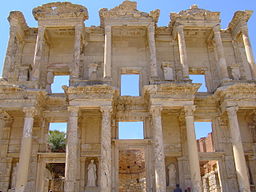
Perhaps the most iconic structure in Ephesus, the Library of Celsus stands as a masterpiece of Roman architecture. Built between 110 and 135 AD by Gaius Julius Aquila as a memorial to his father, Tiberius Julius Celsus Polemaeanus, the library once housed approximately 12,000 scrolls, making it the third-largest library in the ancient world after Alexandria and Pergamum.
The two-story façade, impressively reconstructed in the 1970s, features Corinthian columns and four statues representing the virtues of Wisdom (Sophia), Knowledge (Episteme), Intelligence (Ennoia), and Valor (Arete). The building cleverly incorporated architectural tricks to make it appear larger than its actual size. Celsus himself was buried in a sarcophagus beneath the library, an unusual honour within the city limits.
The library reading room faced east to capture morning light, and the building featured double walls to protect the precious scrolls from humidity. Though destroyed by fire and earthquake in the 3rd century, the partially restored façade remains one of the most photographed ancient structures in the world.
The Basilica of St. John
Located on Ayasuluk Hill above the main Ephesus ruins, the Basilica of St. John is essential for Christian pilgrims. The massive structure built by Emperor Justinian features six large domes and was constructed in the shape of a cross. Though largely in ruins, enough remains to convey the basilica’s original grandeur.
At the crossing of the transepts, a marble slab marks the traditional site of St. John’s tomb. For centuries, pilgrims reported that a fine dust that emerged from the tomb had miraculous healing properties. The site includes a baptistery and the remains of a treasury, chapel, and administrative buildings that once served the pilgrimage complex.
The House of the Virgin Mary (Meryemana)
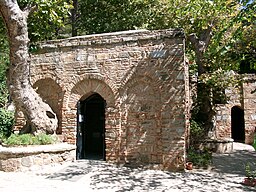
About nine kilometres from Ephesus proper, on Mount Koressos (Bülbül Dağı), sits a small stone house venerated as Mary’s final residence. Though this identification dates only to the 19th century, based on the visions of Blessed Anne Catherine Emmerich, archaeological evidence suggests the house dates to the 1st century AD.
The site has been visited by several popes and is revered by both Christians and Muslims (Mary is also honoured in Islam). A spring near the house is believed to have healing properties, and visitors often tie prayer ribbons to a nearby wishing wall.
The Great Theatre
This massive amphitheatre, carved into the slopes of Mount Pion, could seat approximately 25,000 spectators, making it one of the largest theatres in the ancient world. This is where, according to Acts 19, the silversmiths of Ephesus rioted against the Apostle Paul, shouting, “Great is Artemis of the Ephesians!” The theatre was used for dramatic performances, gladiatorial contests, and public assemblies.
The Temple of Artemis
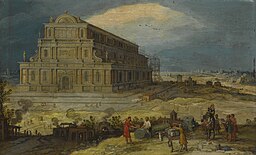
Though only a single column and scattered foundations remain, the Temple of Artemis (Artemision) was once the largest building in the ancient world and one of the Seven Wonders. The temple took 120 years to build and featured 127 columns, each 60 feet high. It was both a religious sanctuary and a major treasury and asylum. The temple was destroyed and rebuilt several times before finally being dismantled for building materials in the Byzantine period.
Other Notable Sites
The Terrace Houses offer a glimpse into the luxurious lives of Ephesus’s wealthy citizens, with elaborate mosaics, frescoes, and heating systems. The Odeon, a smaller theatre for concerts and council meetings, seated about 1,500 people. The Temple of Hadrian features beautiful reliefs depicting mythological scenes. The marble street, the agora, the fountain of Trajan, and the brothel all contribute to a comprehensive picture of daily life in this ancient metropolis.
Practical Information for Visitors
Modern visitors can explore Ephesus through several entrances, with the main archaeological site typically taking 2-3 hours to tour thoroughly. The Ephesus Museum in nearby Selçuk houses many artifacts from the site, including statues of Artemis and items from the Terrace Houses.
The area can be extremely hot in summer, so spring (April-May) and fall (September-October) offer the most comfortable visiting conditions. For pilgrims, combining visits to the main Ephesus site, the Basilica of St. John, and the House of the Virgin Mary creates a comprehensive spiritual journey, typically requiring a full day.
Ephesus remains one of the world’s most extraordinary archaeological sites, where ancient grandeur and spiritual significance converge. Whether approached as a historian, an architecture enthusiast, or a pilgrim seeking to walk where apostles walked, Ephesus offers an unforgettable journey into the ancient world and the foundations of Christian faith. The silent columns and weathered stones speak eloquently of human ambition, divine inspiration, and the enduring power of faith across the centuries.
Leave a Reply