
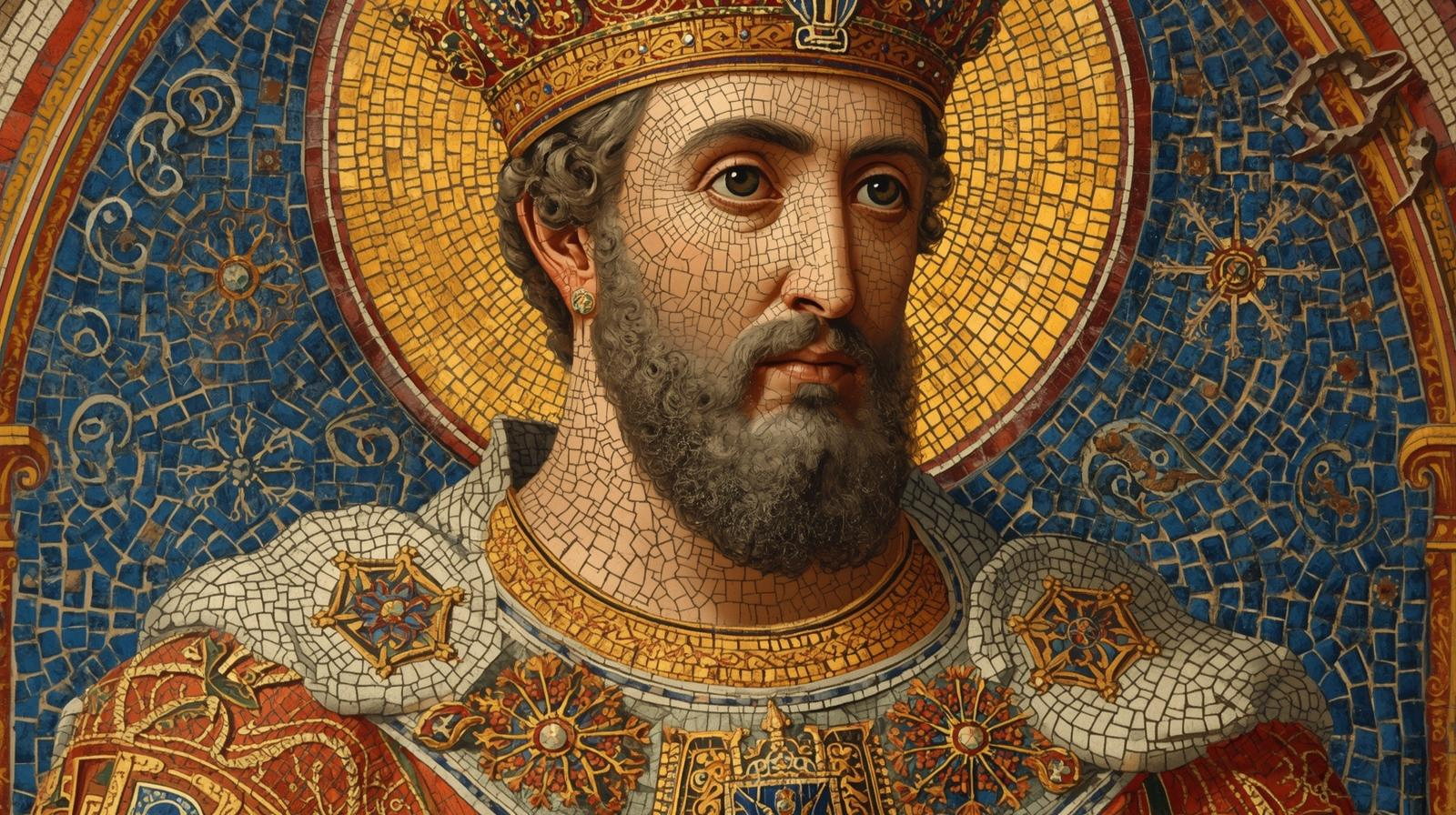
In the pantheon of great rulers, few cast as long a shadow as Justinian I, the Byzantine emperor who reigned from 527 to 565 AD. Known to history as “Justinian the Great,” he presided over what many consider the final flowering of the Roman Empire, attempting to restore its former glory through military conquest, legal reform, and an unprecedented building program that transformed the architectural landscape of the Mediterranean world. His reign represents a pivotal moment when the classical Roman world was giving way to the medieval Byzantine civilisation, yet Justinian himself looked backward, dreaming of reuniting the fragmented empire under one Christian ruler.
Early Life and Rise to Power
Born around 482 AD in Tauresium, a small village in Illyricum (near modern-day Skopje in North Macedonia), Justinian came from humble Thracian peasant stock. His birth name was Petrus Sabbatius, but his life changed dramatically when his uncle Justin, a soldier who had risen through the ranks of the Byzantine army, brought him to Constantinople.
Justin, despite his military success, was illiterate and recognised the value of education. He ensured his nephew received an excellent education in theology, Roman law, and administration, training that would prove invaluable. When Justin unexpectedly became emperor in 518 AD at the age of 68, Justinian became his closest advisor and heir apparent.
Justinian effectively ruled alongside his aging uncle, gaining experience in statecraft and administration. When Justin died in August 527, Justinian’s succession was smooth and uncontested. He was approximately 45 years old and would rule for nearly four decades.
Theodora: Empress and Partner
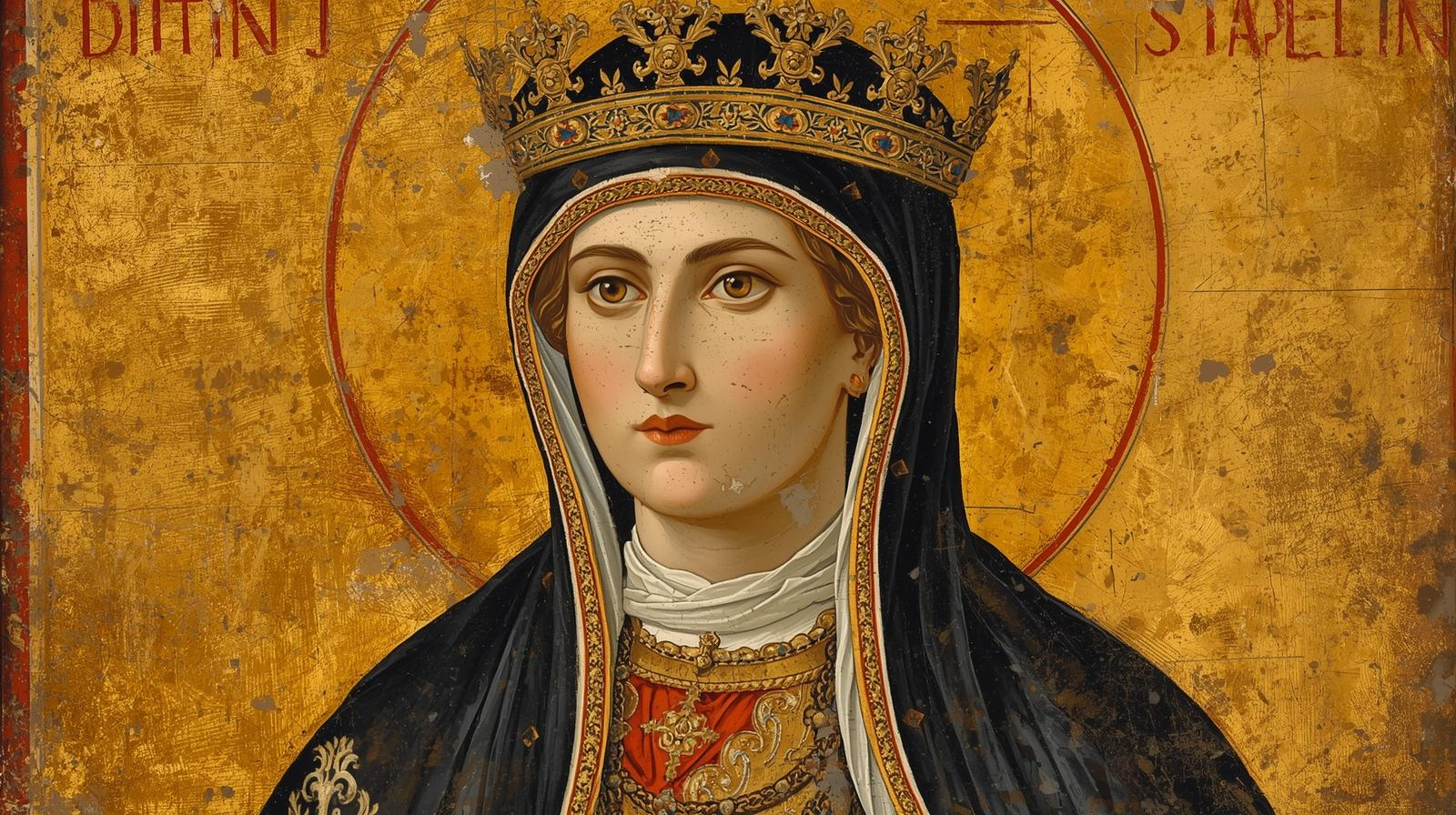
Any account of Justinian must include Theodora, his wife and co-ruler, whose influence on his reign was profound. Theodora’s background was as humble as Justinian’s, she had been an actress and dancer, professions associated with prostitution in Byzantine society. Their marriage before Justinian became emperor was scandalous, requiring Justin to change laws that forbade senators from marrying actresses.
Despite contemporary prejudices, Theodora proved to be an exceptional empress. She was intelligent, politically astute, and possessed remarkable courage. During the Nika Riots of 532, when much of Constantinople was burning, and advisors urged Justinian to flee, Theodora reportedly declared she would rather die as an empress than live as an exile. Her resolve stiffened Justinian’s spine, and he stayed to crush the rebellion. Throughout their marriage, Justinian treated her as a full partner in government, and her influence extended to legislation protecting women’s rights and prostitutes.
The Dream of Restoration
Justinian’s central ambition was nothing less than the restoration of the Roman Empire to its former territorial extent. When he took the throne, the Western Roman Empire had fallen to Germanic kingdoms: Vandals controlled North Africa, Ostrogoths ruled Italy, and Visigoths held Spain. Justinian saw himself as the rightful ruler of all these territories and launched military campaigns to reclaim them.
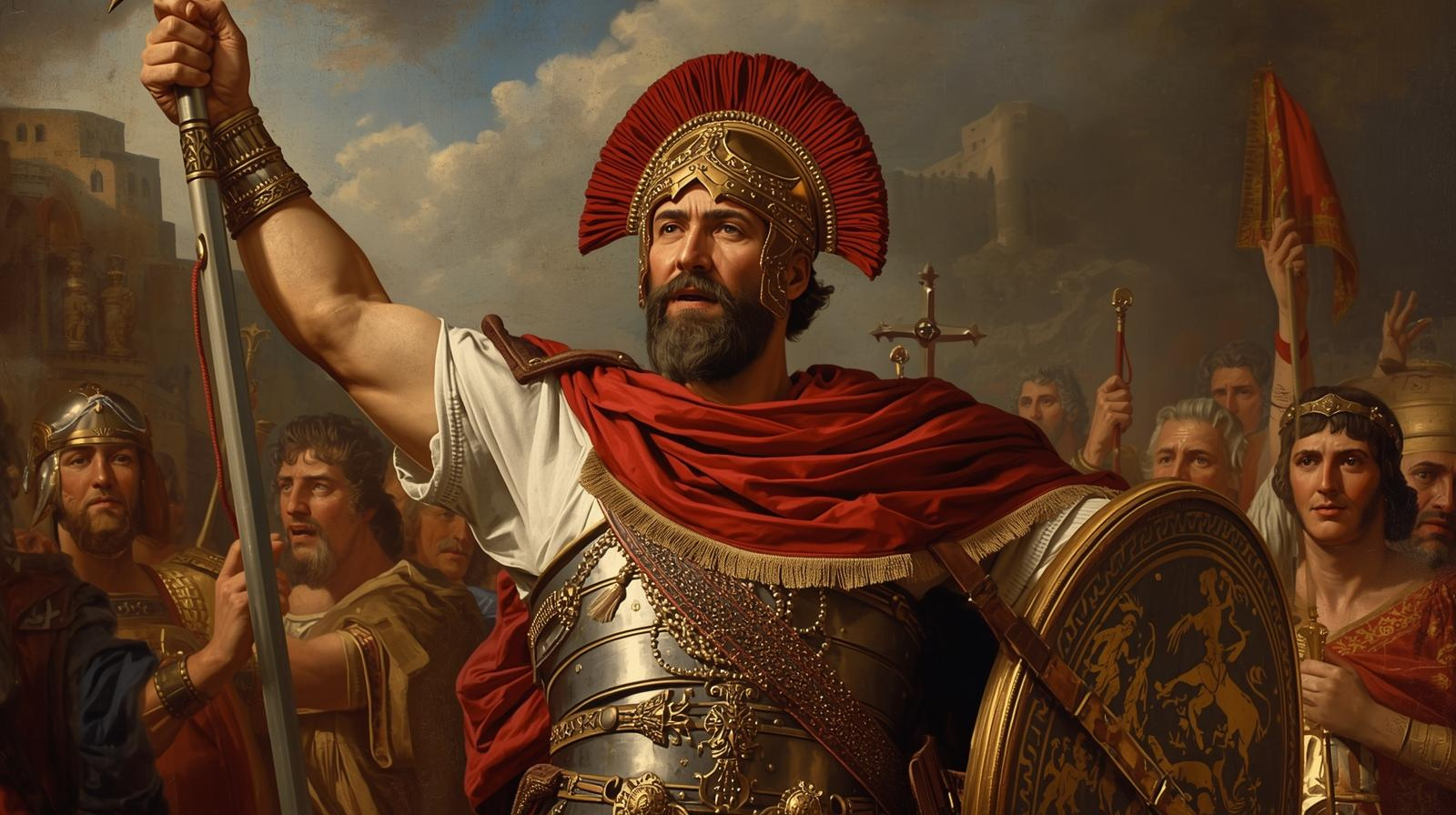
His brilliant general Belisarius reconquered North Africa from the Vandals in 533-534, destroyed the Ostrogothic kingdom in Italy (though this campaign lasted from 535 to 554 and devastated the peninsula), and recovered part of southern Spain from the Visigoths. At its greatest extent, Justinian’s empire encircled the Mediterranean, briefly resembling the old Roman world.
However, these conquests came at enormous cost. The wars drained the treasury, depopulated regions through warfare and plague, and the territories proved difficult to hold. Within decades of Justinian’s death, much of Italy and Spain would be lost again. Yet the dream of Roman restoration would inspire Byzantine emperors for centuries.
The Corpus Juris Civilis: Codifying Roman Law
Perhaps Justinian’s most enduring legacy is legal rather than military. Early in his reign, he commissioned a comprehensive codification of Roman law, a project led by the jurist Tribonian. The result was the Corpus Juris Civilis (Body of Civil Law), completed between 529 and 534.
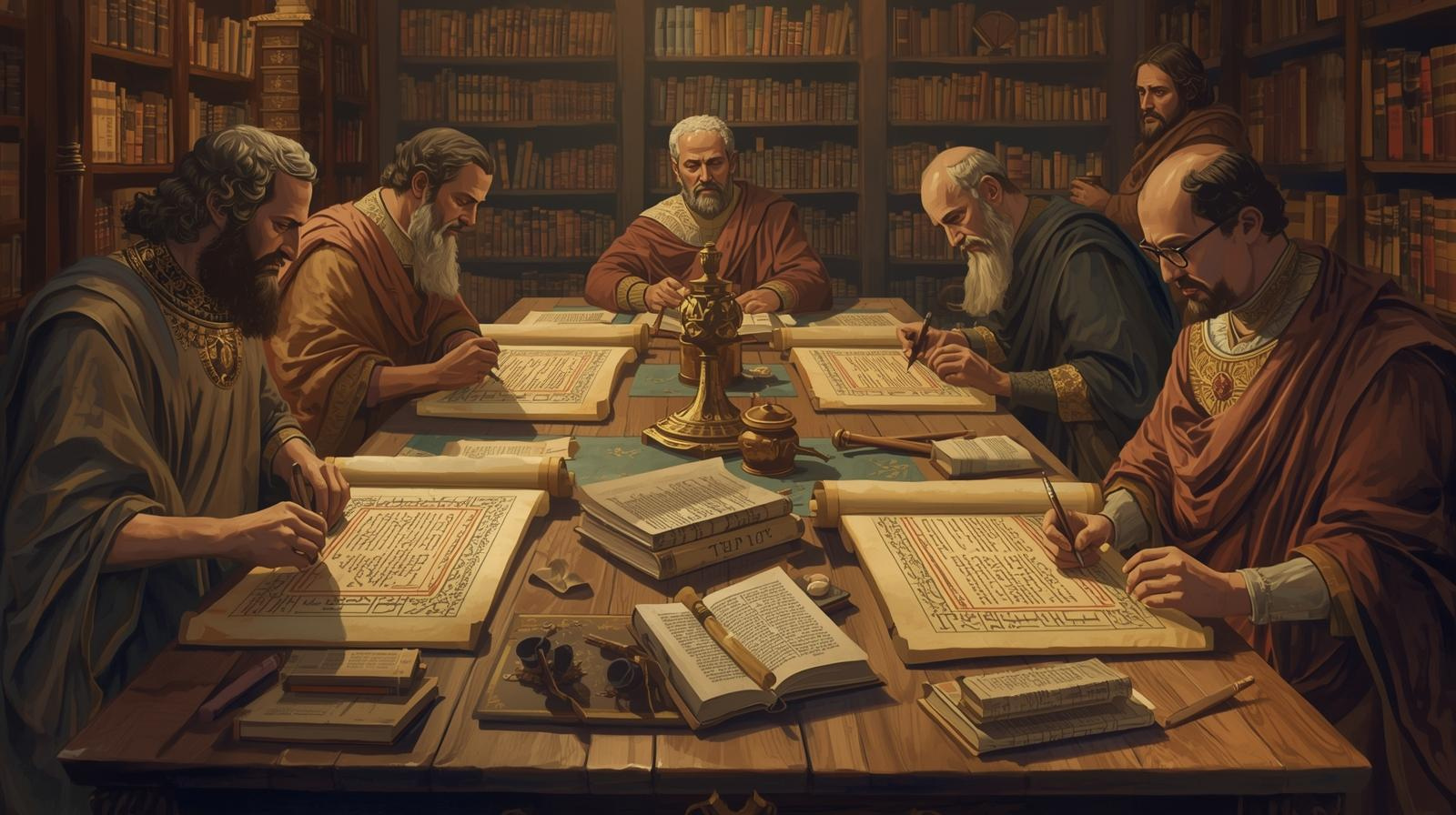
This monumental work consisted of four parts: the Codex Justinianus (a collection of imperial laws), the Digest or Pandects (excerpts from Roman legal writings), the Institutes (a legal textbook for students), and the Novellae (new laws issued by Justinian himself).
The Corpus Juris Civilis preserved a thousand years of Roman legal thought and became the foundation for legal systems across Europe. When it was rediscovered in Western Europe during the 11th century, it profoundly influenced the development of civil law traditions that continue to shape legal systems worldwide. This achievement alone would secure Justinian’s place in history.
The Builder Emperor: An Architectural Revolution
Justinian’s building program was staggering in scope and ambition. The Byzantine historian Procopius, in his work “Buildings,” documented Justinian’s construction projects throughout the empire, churches, fortresses, monasteries, bridges, aqueducts, and entire cities. Justinian himself reportedly declared, “Solomon, I have surpassed thee,” comparing his achievements to the biblical king who built the First Temple in Jerusalem.
The Hagia Sophia: Crown Jewel of Byzantine Architecture
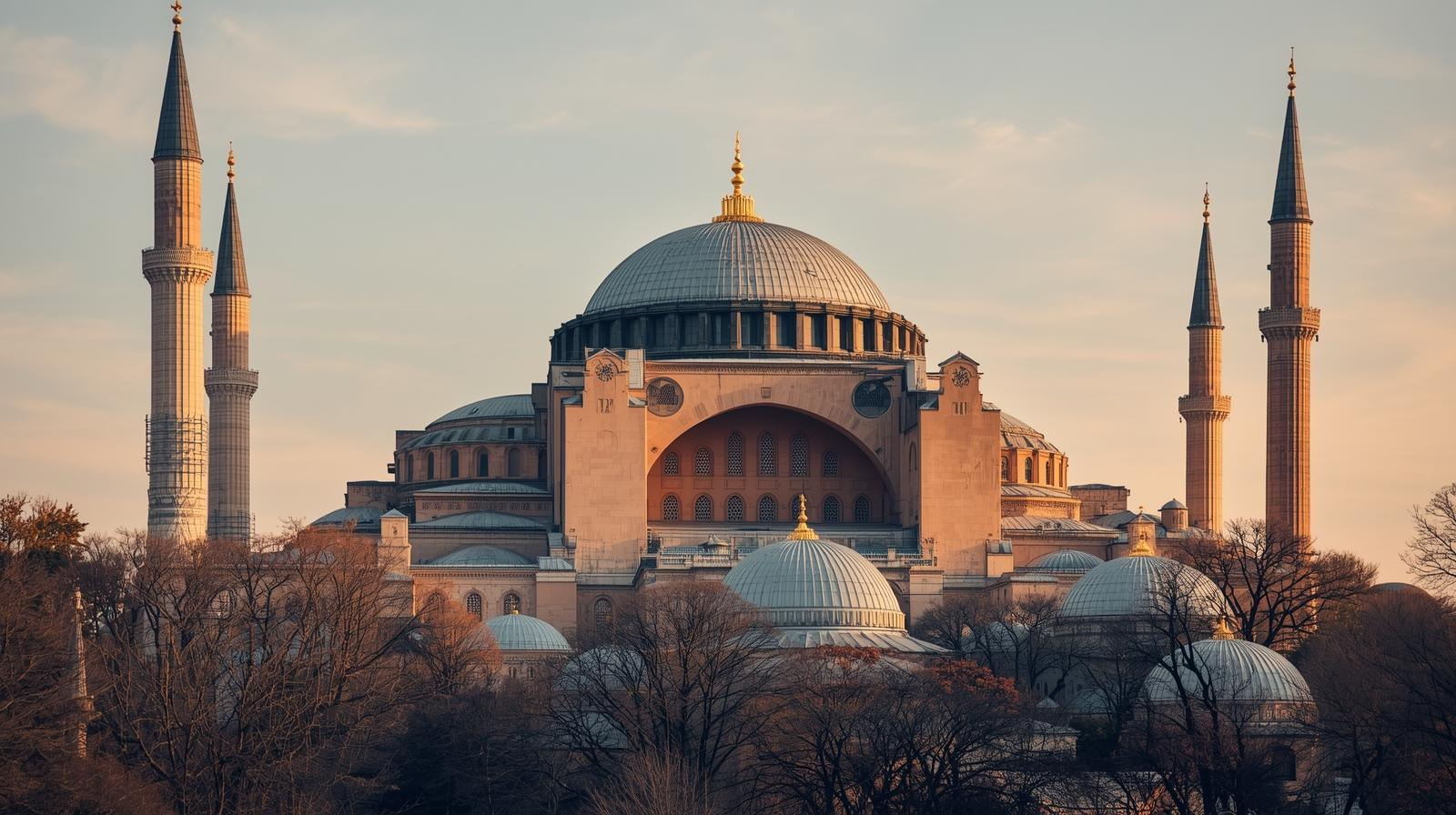
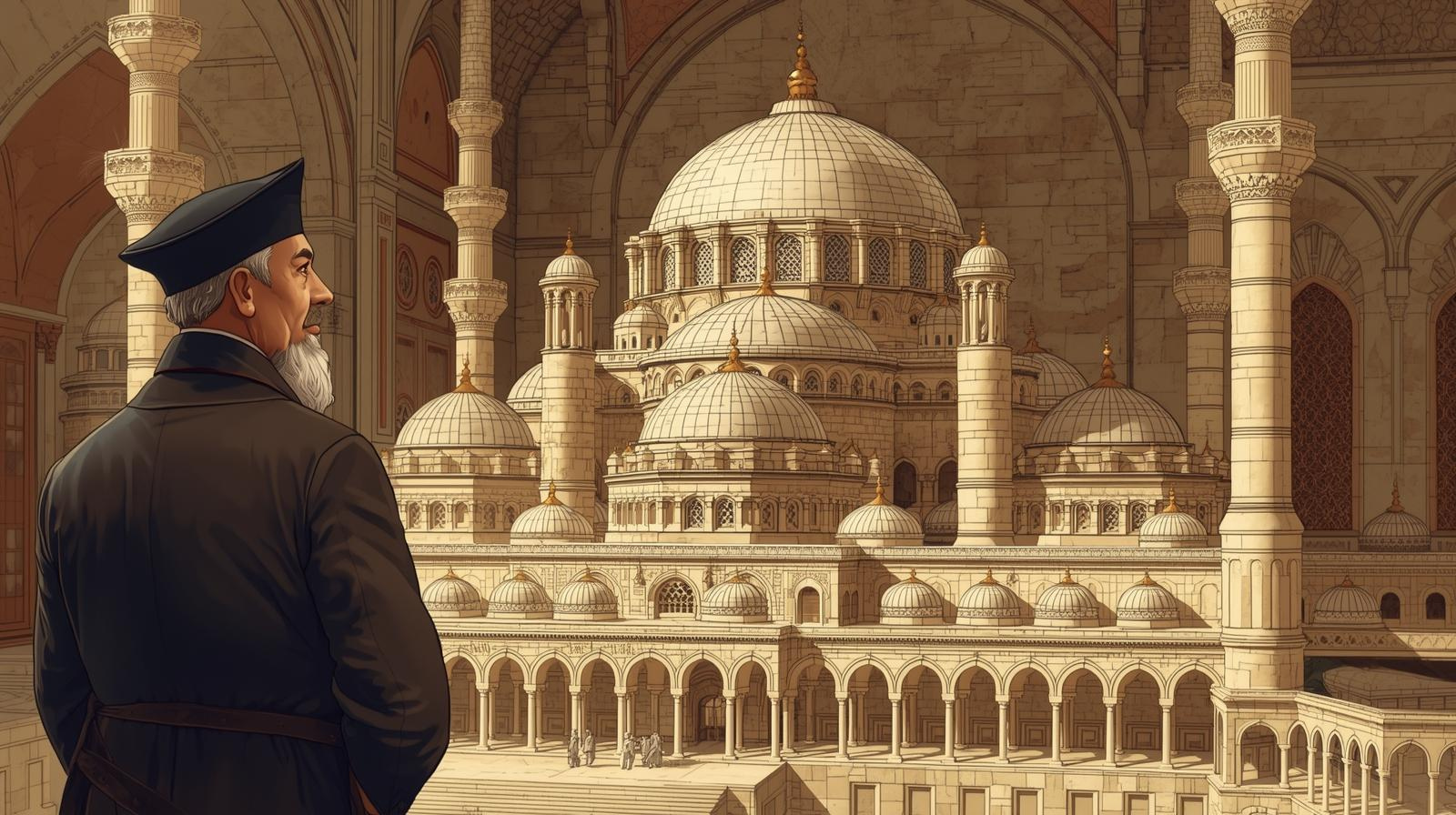
The supreme achievement of Justinian’s architectural legacy is the Hagia Sophia (Church of Holy Wisdom) in Constantinople. After the Nika Riots destroyed the previous church on the site, Justinian saw an opportunity to create something unprecedented.
He commissioned two brilliant architects: Anthemius of Tralles, a mathematician and geometer, and Isidore of Miletus, an engineer and physicist. Their design was revolutionary. Completed in just five years (532-537 AD), the Hagia Sophia featured an enormous central dome, approximately 31 metres in diameter and rising 55 metres above the floor, that appeared to float weightlessly above the nave.
The architects achieved this illusion through an ingenious system of pendentives (curved triangular sections) that transferred the dome’s weight to four massive pillars. Forty windows ringed the dome’s base, flooding the interior with light and enhancing the sensation that the dome was suspended from heaven. The interior was adorned with marble, gold mosaics, and precious stones brought from across the empire.
When Justinian first entered the completed church, he is said to have exclaimed, “Solomon, I have surpassed thee!” For nearly a thousand years, the Hagia Sophia remained the largest cathedral in Christendom and still stands today as one of the world’s architectural wonders, though it now serves as a mosque following centuries as both church and museum.
The Basilica of St. John in Ephesus
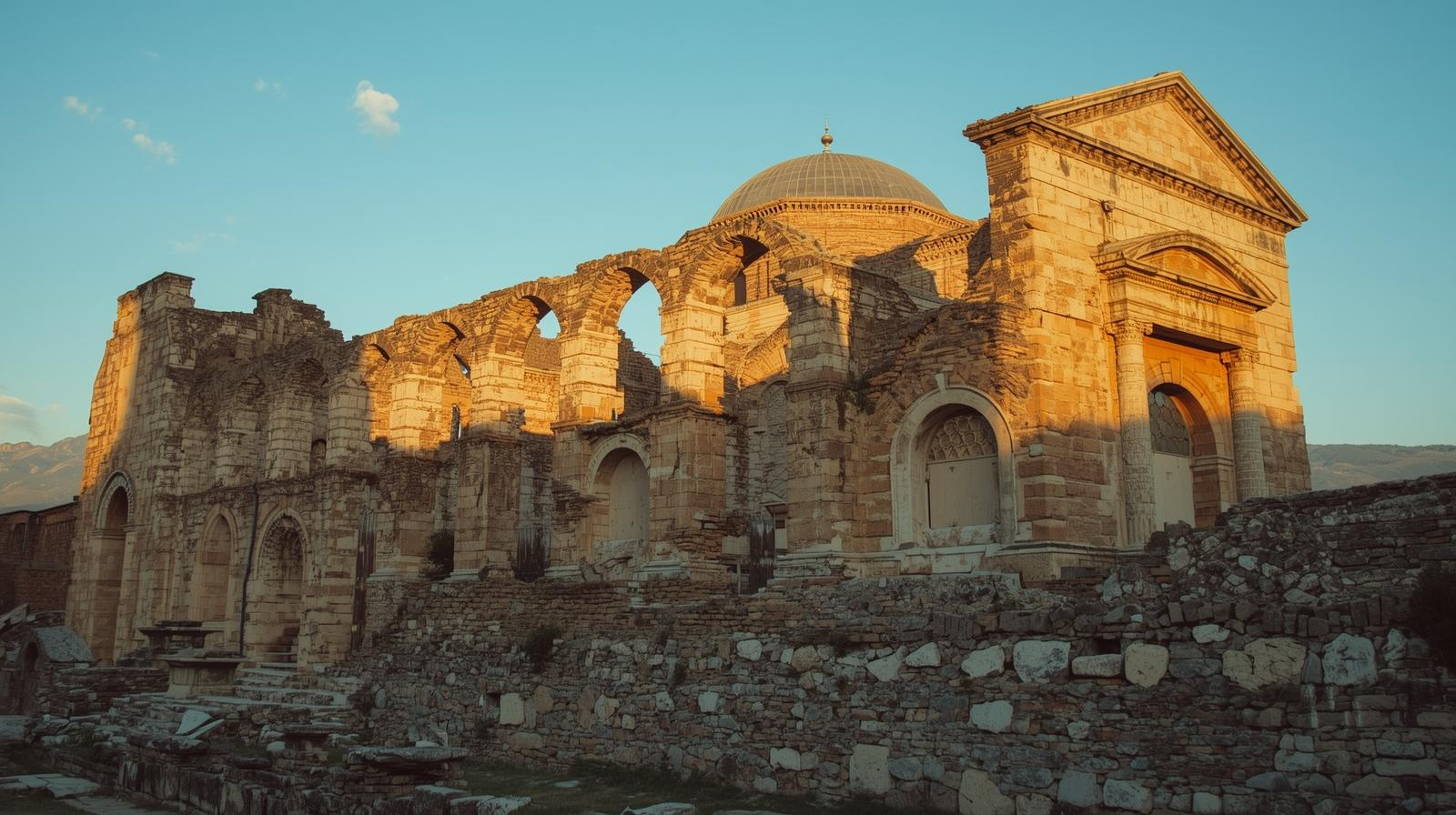
As discussed earlier, Justinian commissioned the massive Basilica of St. John the Evangelist in Ephesus (modern Selçuk) around 548 AD. This cruciform church, approximately 130 metres long and topped with six domes, was among the largest churches of its era. Built over the traditional burial site of the apostle John, it became a major pilgrimage destination and demonstrated Justinian’s commitment to honouring Christian saints while asserting imperial presence throughout his domains.
The Church of Saints Sergius and Bacchus
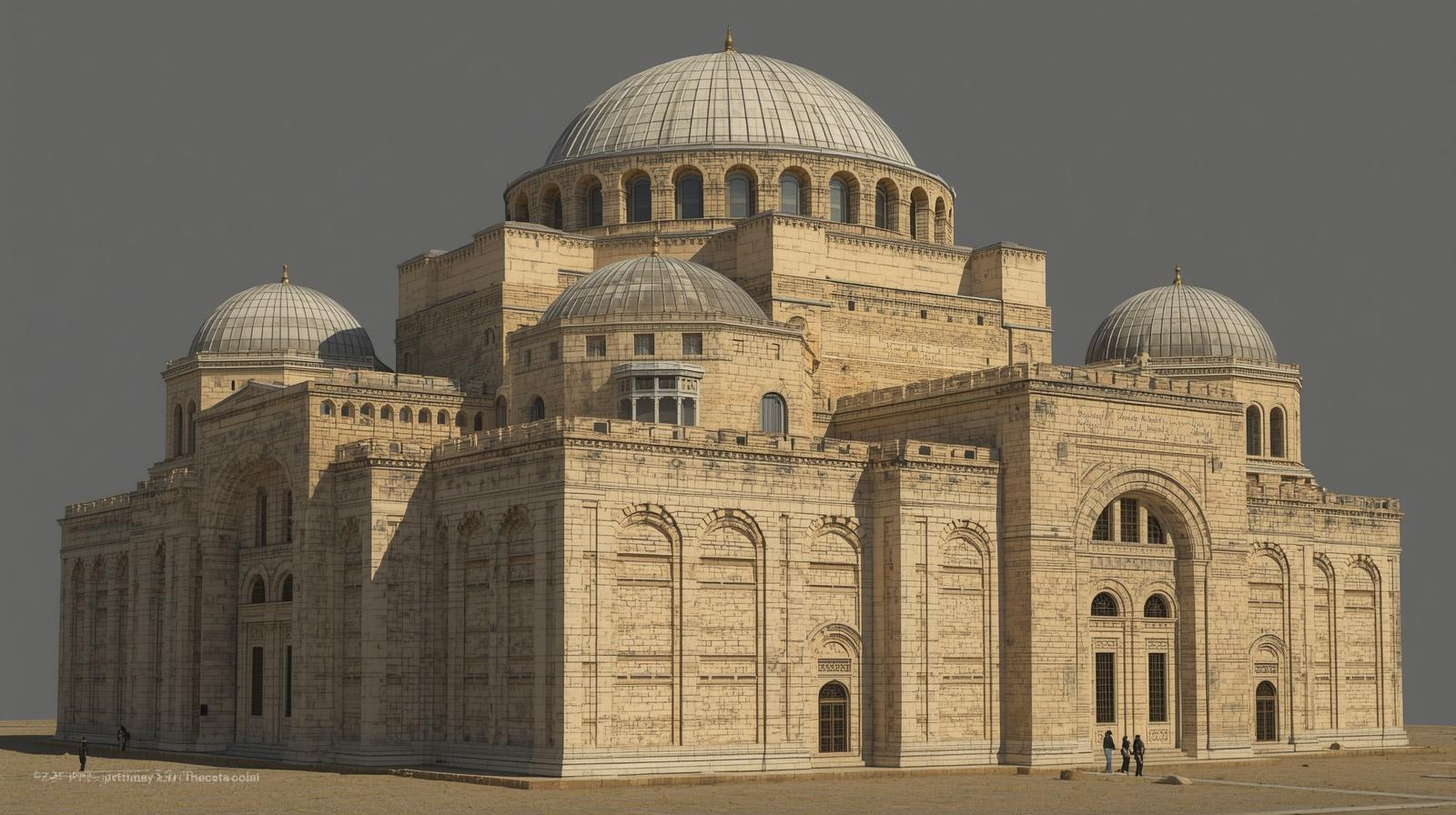
Before the Hagia Sophia, Justinian and Theodora built the Church of Saints Sergius and Bacchus in Constantinople (527-536 AD). This smaller but exquisitely designed church featured an octagonal plan with a dome and served as something of an architectural experiment that informed the later design of the Hagia Sophia. An inscription in the church honoured both Justinian and Theodora, reflecting her status as co-ruler.
The Basilica of San Vitale in Ravenna
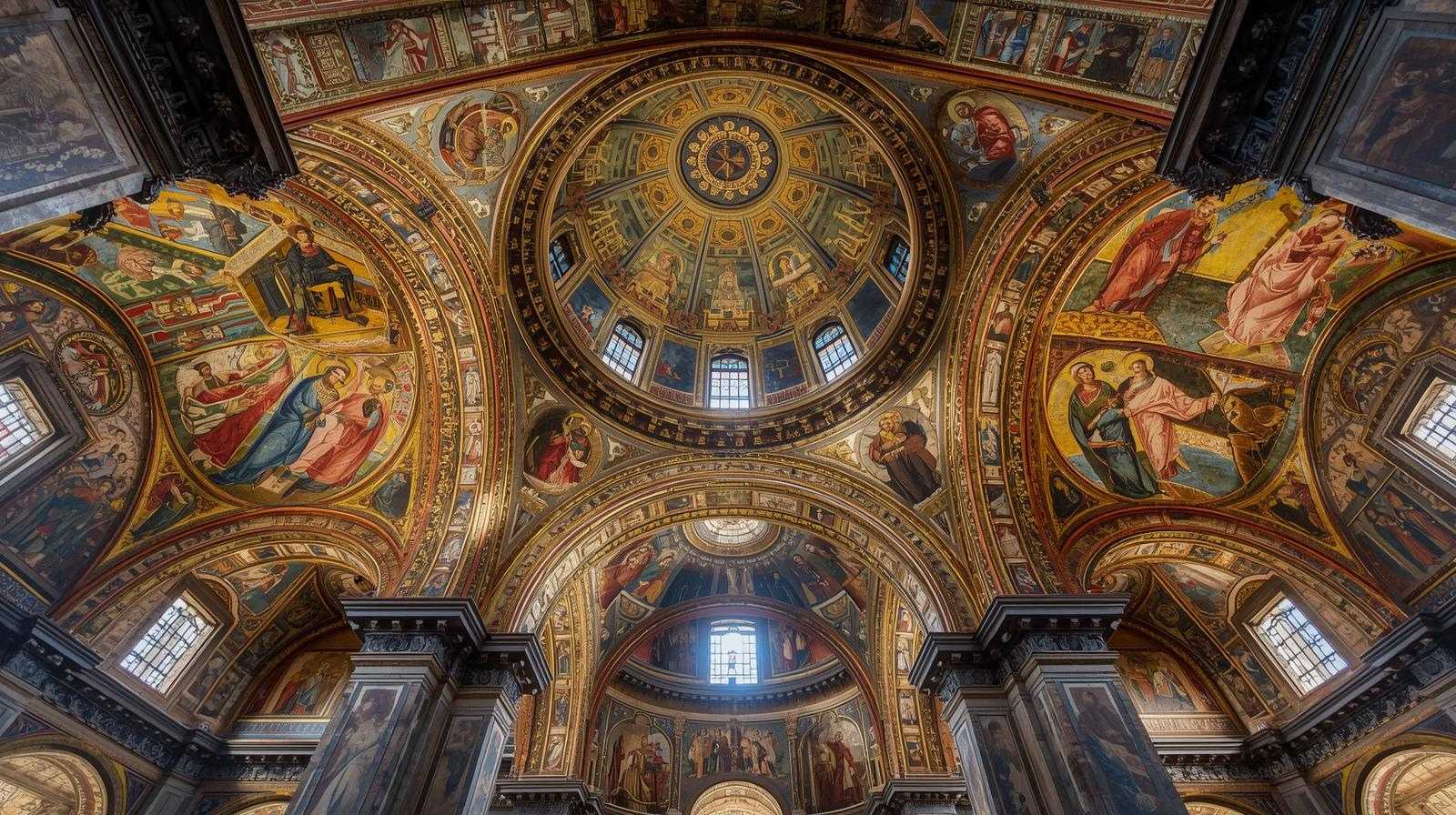
In Ravenna, Italy, the western capital of the Byzantine Empire, Justinian funded the completion of the Basilica of San Vitale (consecrated 547 AD). This octagonal church is famous for its stunning mosaics, including images of Justinian and Theodora in imperial regalia, accompanied by their courts. These mosaics provide invaluable portraits of the imperial couple and demonstrate the integration of religious devotion with political propaganda.
The Monastery of Saint Catherine at Mount Sinai
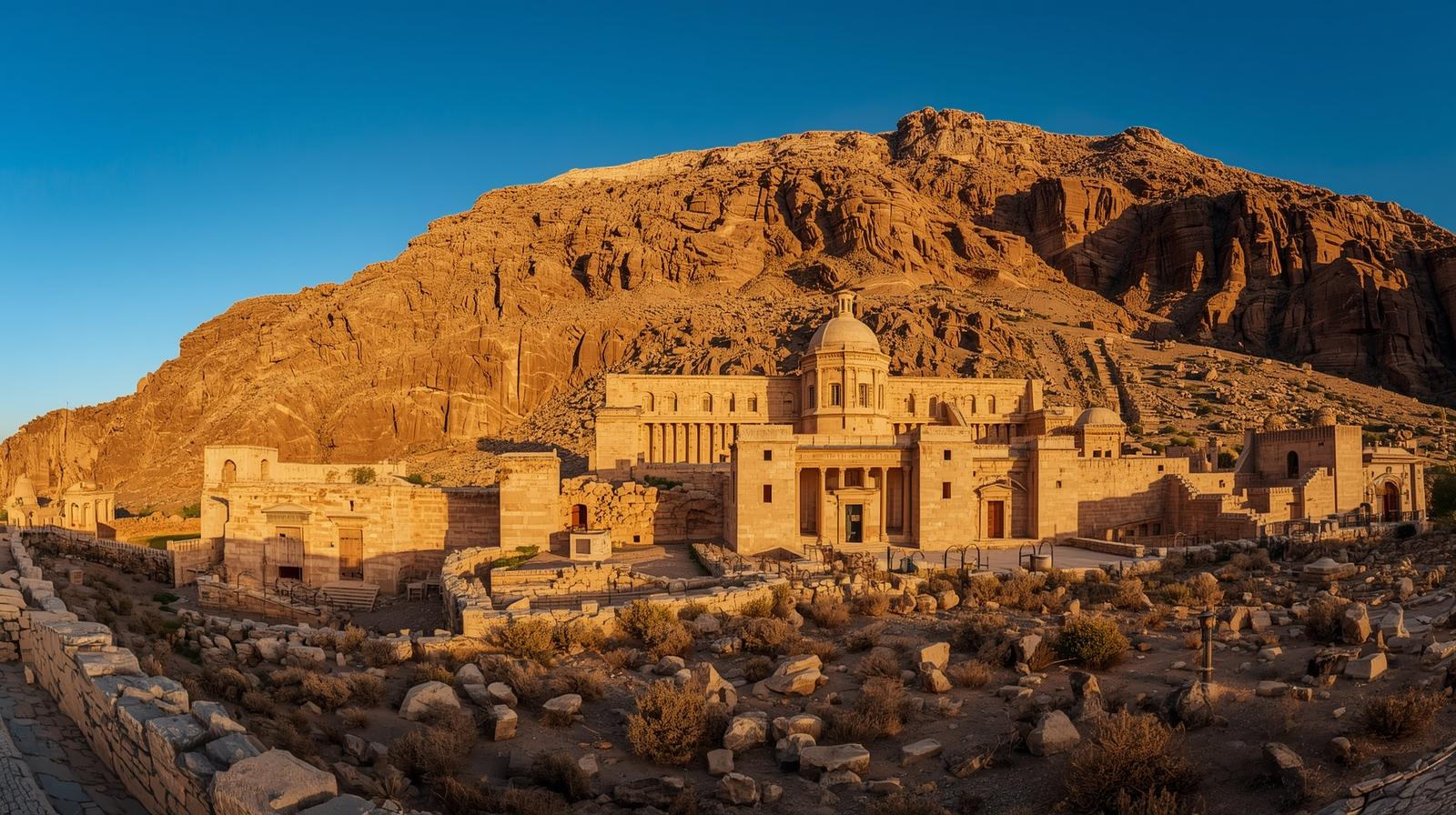
Between 548 and 565 AD, Justinian built the fortified Monastery of Saint Catherine at the foot of Mount Sinai in Egypt, where Moses was believed to have received the Ten Commandments. The monastery, still active today, houses an incredible collection of icons and manuscripts. Its massive walls and church represent Justinian’s concern for protecting Christian holy sites and supporting monastic communities.
Churches of the Holy Apostles
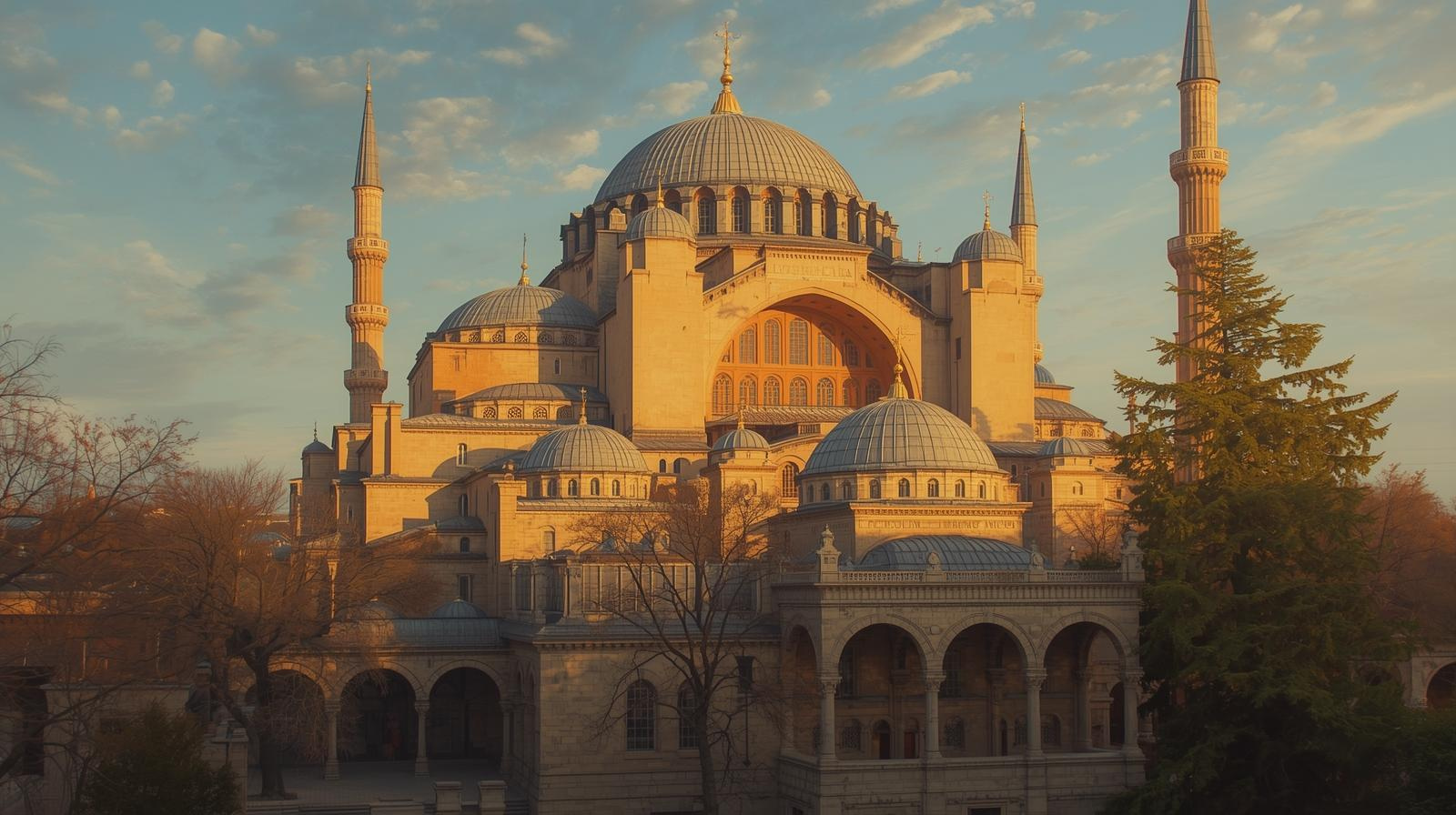
Justinian rebuilt the Church of the Holy Apostles in Constantinople, which served as the burial place for Byzantine emperors. While this church no longer exists (it was destroyed after the Ottoman conquest), its cruciform design influenced later Byzantine architecture and inspired the Ottoman architect Sinan when designing the Şehzade Mosque.
Infrastructure and Fortifications
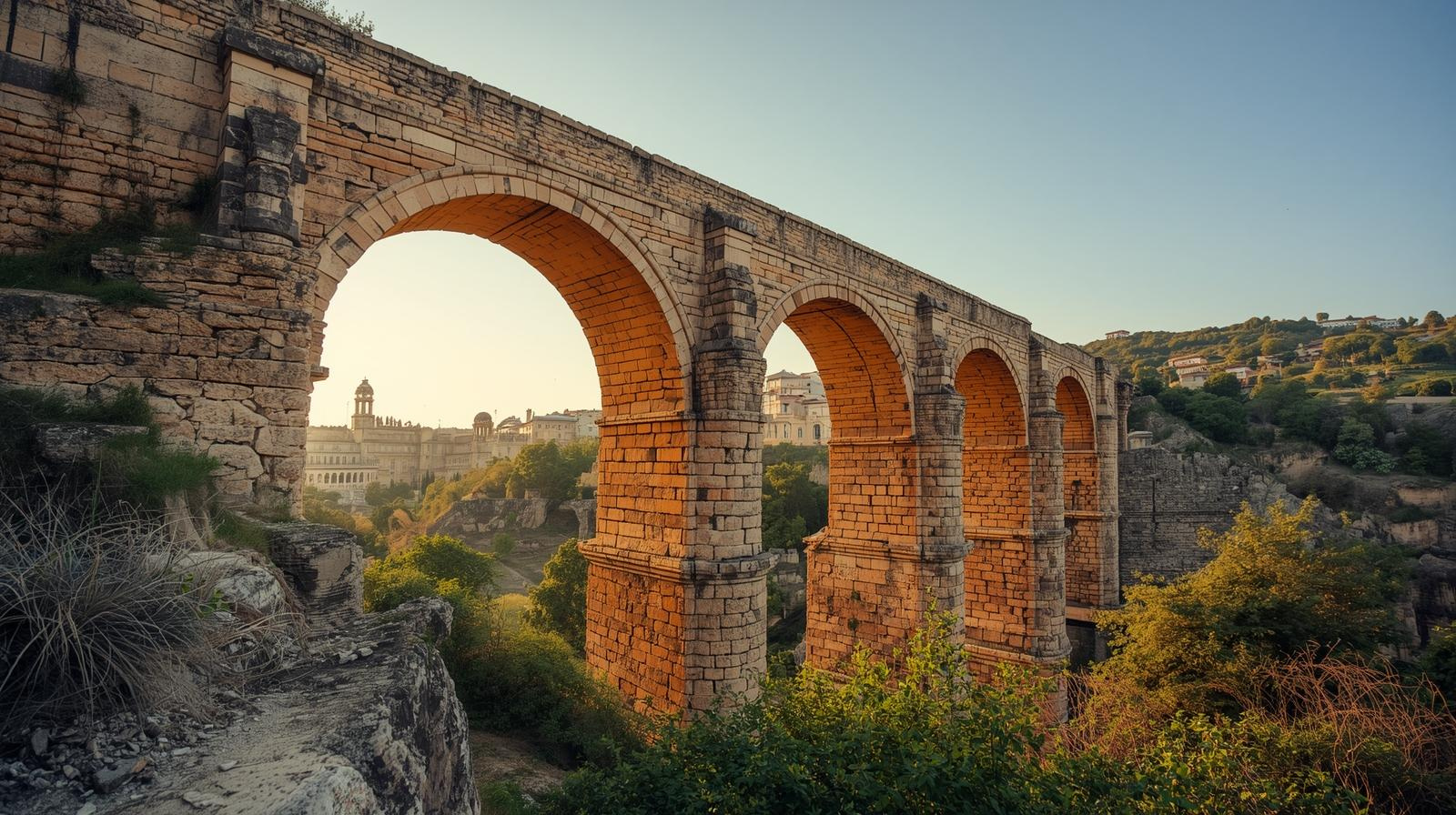
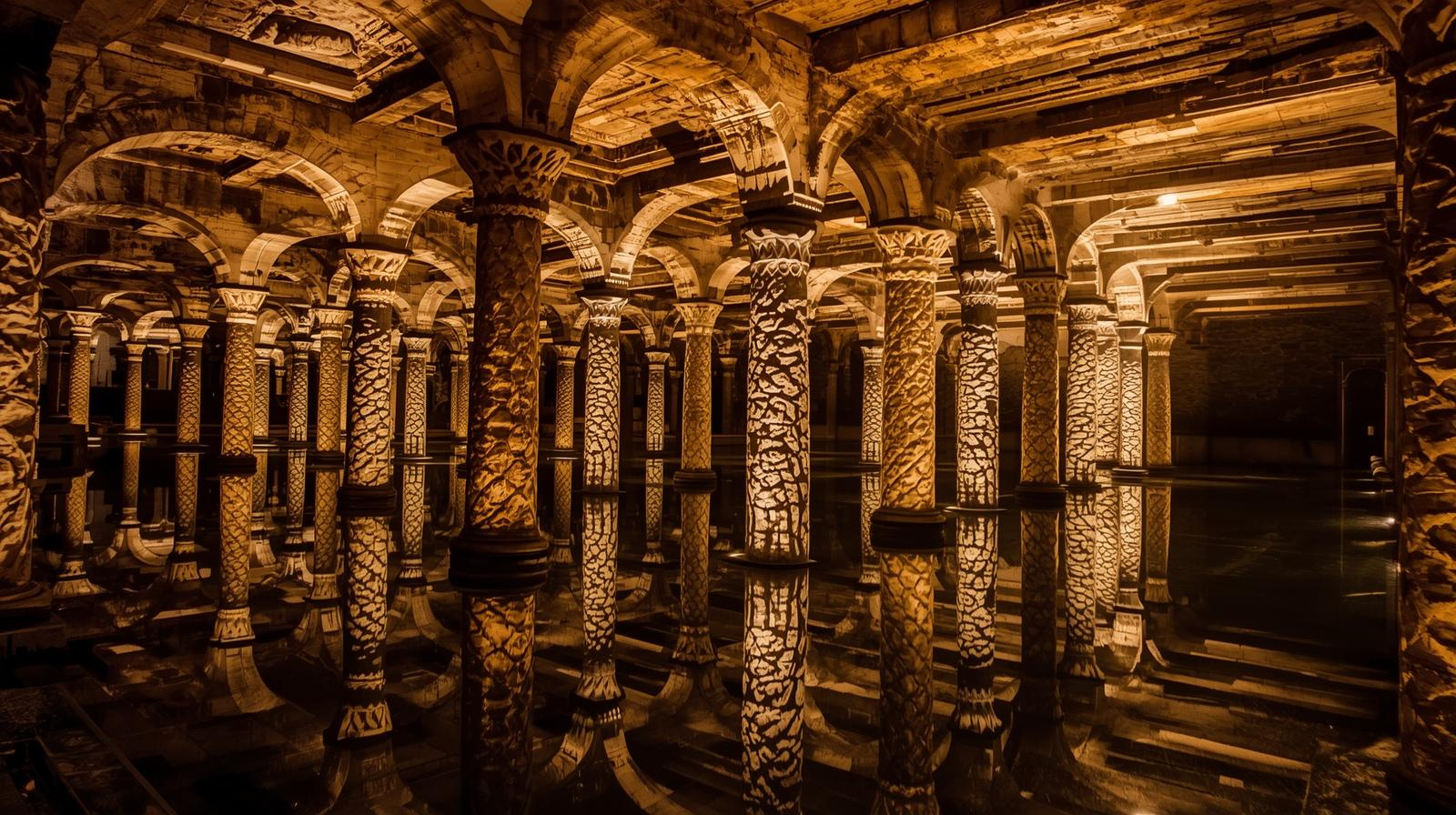
Beyond churches, Justinian built extensively throughout the empire. He constructed or restored approximately 25 fortresses along the Danube frontier to protect against barbarian invasions. He built the Sangarius Bridge in Anatolia, renovated aqueducts to improve Constantinople’s water supply, and funded the construction of cisterns, including the magnificent Basilica Cistern that still exists beneath Istanbul’s streets.
In Constantinople itself, after the Nika Riots destroyed much of the city centre, Justinian rebuilt entire districts. He restored the Senate House, expanded the Great Palace, and constructed public buildings, hospitals, and hospices.
Caesarea in Cappadocia and Countless Others
Procopius’s “Buildings” lists hundreds of construction projects: churches in Jerusalem, Antioch, and throughout Asia Minor; fortifications in North Africa after its reconquest; monasteries in Egypt and Palestine; bridges and roads across the empire. The scale of construction was so vast that it significantly strained imperial finances.
The Justinianic Plague
Tragedy struck the empire between 541 and 549 AD when a devastating pandemic, now known as the Justinianic Plague, swept through the Byzantine world. This bubonic plague, similar to the Black Death that would ravage Europe centuries later, may have killed between 25 and 50 million people, perhaps half the empire’s population.
Justinian himself contracted the plague but survived, one of the fortunate few. The demographic catastrophe undermined his military campaigns, reduced tax revenues, depopulated cities, and contributed to economic decline. Some historians argue that the plague’s impact was so severe that it permanently weakened the Byzantine Empire’s ability to resist future invasions by Persians and Arabs.
Religious Policy and Persecution
Justinian saw himself as God’s viceroy on earth, responsible for both the spiritual and temporal welfare of his subjects. He vigorously promoted orthodox Christianity and persecuted heretics, pagans, and Jews. He closed the ancient Academy of Athens in 529, ending nearly a thousand years of pagan philosophical teaching. He issued laws restricting the rights of non-Christians and those deemed heretics, including Monophysite Christians who held different views about Christ’s nature.
This religious intolerance, while typical of the age, created resentment in provinces like Egypt and Syria where Monophysite Christianity was strong. These religious divisions would make these regions more receptive to Arab Muslim conquest in the following century.
Legacy and Assessment
Justinian died on 14th November, 565 AD, at approximately 83 years old, a remarkable age for the time. He had outlived Theodora by 17 years (she died in 548) and had ruled for 38 years. His accomplishments were extraordinary: he had codified Roman law, reconquered vast territories, and built some of the world’s most magnificent buildings.
Yet his legacy is complex. The reconquests, while impressive, were temporary and costly. Italy, devastated by decades of warfare, never recovered its former prosperity. The empire he left his successors was financially exhausted and vulnerable. Within decades, the Lombards would conquer much of Italy, and within a century, Arab Muslim armies would conquer Syria, Egypt, and North Africa, Justinian’s hard-won territories.
However, Justinian’s cultural and legal achievements proved more durable than his military conquests. His legal code became the foundation for European law. His buildings, especially the Hagia Sophia, influenced architecture for centuries. He preserved and transmitted classical Roman culture to medieval Europe. The Byzantine Empire he consolidated, would survive for another 900 years until 1453, serving as a bulwark protecting Europe from invasions and preserving Greek and Roman learning.
Justinian represents the last emperor who seriously attempted to restore the unified Roman Empire. After him, the Byzantine Empire would become increasingly Greek in character, gradually abandoning the dream of universal Roman rule. In this sense, Justinian truly was “the last Roman”, the final emperor who ruled in Latin, thought of himself as a Roman emperor in the classical sense, and pursued the old Roman dream of Mediterranean unity.
His buildings stand as monuments to an age when human ambition could still reshape the landscape on a monumental scale, when emperors could command the resources to build structures that would inspire awe a millennium and a half later. When you stand beneath the dome of the Hagia Sophia or walk among the ruins of the Basilica of St. John, you encounter not just ancient stones but the physical embodiment of one man’s dream to restore a vanished world, a dream that, though ultimately unsuccessful, left an indelible mark on history.
Leave a Reply