
As Christmas approaches each year, millions of Christians around the world enter a special season of spiritual preparation called Advent. This period in the Christian church calendar serves as a time of preparation for celebrating the birth of Jesus Christ at Christmas and for preparing for the Second Coming of Christ. Far more than simply counting down to Christmas Day, Advent represents a rich theological tradition that has shaped Christian worship and devotion for over 1,500 years.
The Meaning of Advent
The word “advent” comes from the Latin word “adventus,” which means “arrival” or “coming.” This etymology captures the dual focus of the season: looking back to Christ’s first coming as a baby in Bethlehem, and looking forward with hope to His promised return. The Latin term was used in early translations of the New Testament to describe God the Son’s arrival on Earth, born as Jesus of Nazareth in the first century.
For Christians, Advent is not merely a commercial countdown to holiday festivities. Throughout Church history, Advent has traditionally referred to Jesus’ future arrival, when he comes to complete his work of restoring all creation. This season invites believers to live in the tension between what has already happened, Christ’s incarnation, and what is yet to come, His final return and the restoration of all things.
When Is Advent Celebrated?
The timing of Advent varies slightly between different Christian traditions, but follows a consistent pattern based on the liturgical calendar.
In the Anglican, Lutheran, Moravian, Presbyterian, and Methodist calendars, Advent begins on the fourth Sunday before Christmas, falling on or closest to November 30th, always between 27th November and 3rd December, and ends on Christmas Day.
In the Roman Catholic Church, Advent begins with the First Vespers of the First Sunday of Advent and ends with the Deus, in auditorium of the First Vespers of Christmas. The first day of Advent also begins a new liturgical year.
Some traditions observe a longer Advent. In the Ambrosian Rite and the Mozarabic Rite of the Catholic Church, Advent begins on the sixth Sunday before Christmas, the Sunday falling on or closest to 16th November, always between 13th and 19th November.
The History of Advent
The Advent season has ancient roots in Christian tradition. While the exact origins are difficult to pinpoint, the tradition spread and evolved over centuries, with its meaning shifting particularly in the 8th century when Advent was observed less as a formal liturgical celebration and more as a time of fasting and abstinence beginning in mid-November.
By the 13th century, strict fasting was no longer widespread, but many Christians still practiced it to honour the season. As centuries passed, the focus gradually shifted from penitential fasting to joyful anticipation and spiritual preparation.
The season has been part of the church calendar for well over a millennium, with different Christian communities developing their own distinctive ways of observing this sacred time. What has remained constant is the emphasis on waiting, watching, and preparing one’s heart for Christ’s coming.
The Four Sundays of Advent
Central to the Advent tradition is the observance of four special Sundays, each typically associated with a particular theme. While the specific themes can vary between denominations and churches, they commonly include:
First Sunday of Advent: Hope
The season begins with the theme of hope. The first candle on the Advent wreath, often called the “Prophet’s Candle” or the “Candle of Hope,” symbolises the hope of the people of Israel who waited for the Messiah and the hope of Christians today for Christ’s return. This Sunday focuses on the prophets who foretold the coming of the Messiah and the hopeful expectation of God’s promises fulfilled.
Second Sunday of Advent: Peace
The second candle, often called the “Bethlehem Candle” or the “Candle of Peace,” symbolizes the peace that Christ brings to the world, fulfilling the prophecy of peace found in the Scriptures. This week emphasises the peace that Jesus brings, peace between God and humanity, and peace that transforms human hearts and communities.
Third Sunday of Advent: Joy
The third Sunday is traditionally known as Gaudete Sunday, a day of rejoicing. The word “Gaudete” means “rejoice” in Latin, reflecting the joyful anticipation of Christmas. This Sunday represents a lightening of the Advent mood, acknowledging that Christmas is drawing near. The joy theme reminds believers of the good news of the gospel and the celebration that Christ’s coming brings.
Fourth Sunday of Advent: Love
The final Sunday before Christmas focuses on love. This candle symbolises the love that God has for humanity and the love that Christians are called to share with others, focusing on the theme of love and preparation for the birth of Jesus Christ. This week often includes readings about Mary’s role in God’s plan and the incarnation itself, God’s ultimate expression of love.
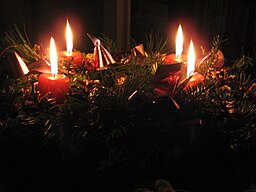
The Advent Wreath
One of the most recognizable symbols of the Advent season is the Advent wreath, a tradition that brings families and congregations together in weekly rituals of light and reflection.
Many churches and Christian homes mark the four Sundays of the season with an Advent wreath, which consists of four candles, typically three violet and one rose-coloured, surrounded by greenery or other decorations. The wreath is usually made of evergreen branches, symbolising eternal life and God’s enduring nature.
The practice of lighting the candles follows a simple but meaningful pattern. The first candle is lit on the first Sunday of Advent, often with a prayer or devotion, and the following week, the first and second candles are lit, and so on. Each week, one additional candle is lit until all four burn together on the fourth Sunday of Advent.
Then, on Christmas Eve, they light a fifth candle at the wreath’s centre, often white in colour and sometimes called the “Christ candle,” its flame symbolising God’s light entering our dark world through the birth of Jesus.
The tradition, which began in the 19th century but had roots in the 16th, originally involved a fir wreath with 24 candles (the 24 days before Christmas, starting 1st December), but the awkwardness of having so many candles on the wreath reduced the number to four. The modern four-candle version is much more practical while maintaining the symbolic richness of the tradition.
The wreath’s circular form evokes the sun and its return each year, while the green twigs are a sign of life and hope. The fir tree is a symbol of strength, and laurel a symbol of victory over sin and suffering, representing the eternity of God. The flames of candles represent the Christmas lights approaching and bringing hope and peace, as well as the symbol of the struggle against darkness.
Liturgical Colours of Advent
The visual environment of worship changes during Advent, with specific colours carrying theological meaning.
Since approximately the 13th century, the usual liturgical colour in Western Christianity for Advent has been violet, often used for antependia, the vestments of the clergy, and the tabernacle. This purple or violet represents both royalty (preparing for the coming King) and penitence (preparing one’s heart through reflection and repentance).
On the third Sunday of Advent, Gaudete Sunday, rose may be used instead, referencing the rose used on Laetare Sunday, the fourth Sunday of Lent. This lighter colour marks a shift toward joy as Christmas approaches.
There is also a growing modern trend in some Protestant denominations. There has been an increasing trend in Protestant churches to use blue during Advent as it is a hopeful season of preparation that anticipates both Bethlehem and the consummation of history in the Second Coming of Jesus Christ, arguing that purple is traditionally associated with the repentant character of Lent. Blue is seen as representing hope and anticipation rather than penitence.
Advent Calendars: Counting the Das
While the liturgical observance of Advent focuses on the four Sundays, a popular tradition helps families mark each day of December leading to Christmas: the Advent calendar.
The Advent calendar tradition dates back to the 1850s and typically includes 24 doors or boxes to open, one for every day in December leading up to Christmas Day. The calendars serve as a tangible way to build anticipation, especially for children eagerly awaiting Christmas.
The Advent calendar was first used by German Lutherans in the 19th and 20th centuries, and has since spread to other denominations. The first known handmade Advent calendar appeared in Germany in 1851, and commercial production began soon after.
Traditional Advent calendars feature the manger scene, Saint Nicholas, and winter weather, while others range in theme, from sports to technology, coming in a multitude of forms, from simple paper calendars with flaps covering each of the days to fabric pockets on a background scene to painted wooden boxes with cubby holes for small items.
Often the doors open to reveal an image, a poem, a portion of a story (such as the story of the Nativity of Jesus), or a small gift, such as a toy or a chocolate item. Often, each door has a Bible verse and Christian prayer printed on it, which Christians incorporate as part of their daily Advent devotions.
Modern Advent calendars range from simple paper versions to elaborate creations, and while many have become secularized with chocolates or toys, Christian families continue to use them as devotional tools. Some calendars include daily Scripture readings, prayers, or acts of kindness to perform, keeping the focus on spiritual preparation rather than mere gift-giving.
Advent Traditions and Practices
Beyond wreaths and calendars, Christians observe Advent through various meaningful practices:
Scripture Readings
Reading passages from the Bible that focus on the prophecy and anticipation of the Messiah is a common Advent tradition, including readings from the Old Testament, particularly from the book of Isaiah. Many churches follow lectionaries that prescribe specific readings for each Sunday of Advent, tracing the story of salvation history and God’s promises fulfilled in Christ.
Prayer and Reflection
Advent is a time for spiritual reflection and prayer. Many Christians use devotional books or guides specifically designed for the Advent season, with daily reflections helping them prepare their hearts for Christmas. Some practice increased prayer, meditation, or even fasting as ways of spiritual preparation.
Special Music and Services
Many churches hold special musical events, such as Nine Lessons and Carols and singing of Handel’s Messiah oratorio. These services combine Scripture readings with music that tells the story of salvation, creating a beautiful worship experience that has become beloved Christmas tradition in many communities.
The “Late Advent Weekdays,” 17th and 24th December, mark the singing of the Great Advent ‘O antiphons,’ the daily antiphons for the Magnificat at Vespers, Evensong, or Evening Prayer in Roman Catholic, Anglican, and Lutheran churches, marking the forthcoming birth of the Messiah.
Acts of Charity and Service
Some Advent calendars focus on spiritual renewal, encouraging families to include good deeds, prayers, or acts of kindness in their preparation, helping keep hearts centred on Jesus Christ while spreading community generosity. Many Christians see Advent as a time to increase their charitable giving, volunteer work, or acts of service, embodying the love and generosity that Christ demonstrated.
Nativity Scenes
A Nativity scene, also known as a manger scene, is a depiction of the birth of Jesus Christ, illustrating key figures from the biblical account of his birth, typically including the Holy Family, Mary, Joseph, and the baby Jesus, as well as shepherds, the Wise Men (Magi), angels, and animals present at the manger in Bethlehem. Many families set up nativity scenes during Advent, sometimes waiting until Christmas Eve to place the baby Jesus figure in the manger.
The Spiritual Purpose of Advent
At its heart, Advent calls Christians to a posture of waiting, not passive waiting, but active, hopeful anticipation. It invites reflection on several profound theological realities:
Remembrance
Looking back to God’s faithfulness in sending Jesus as the promised Messiah, fulfilling centuries of prophecy and longing.
Presence
Recognising Christ’s presence now, through the Holy Spirit, in the Church, and in the world, even as creation awaits final redemption.
Hope
Looking forward with confidence to Christ’s promised return, when he will make all things new and bring God’s kingdom in its fullness.
As Romans 8:24-25 reminds us, “For in this hope we were saved. But hope that is seen is no hope at all. Who hopes for what they already have? But if we hope for what we do not yet have, we wait for it patiently.”
Advent teaches Christians to live in the “already but not yet” reality of the kingdom of God, Christ has come, Christ is present, and Christ will come again. This season of waiting mirrors the experience of God’s people throughout history, from Abraham waiting for the promised son, to Israel waiting for the Messiah, to the Church waiting for Christ’s return.
Advent in a Hurried World
In contemporary culture, where Christmas decorations appear in shops before Halloween and the period between Thanksgiving and Christmas becomes a frenetic rush of shopping, parties, and obligations, Advent offers an alternative rhythm. It invites believers to slow down, to create space for silence and reflection, to resist the commercial pressures of the season.
Celebrating Advent also means living into it by practicing a generous way of love and care for our neighbours as we partner with Jesus to bring peace on Earth. This counter-cultural practice of intentional waiting can be a powerful witness in a world that has largely lost the art of anticipation and the discipline of delayed gratification.
For Christian families, Advent provides an opportunity to shape the holiday season around spiritual values rather than commercial ones. The traditions of lighting candles, reading Scripture, singing hymns, and performing acts of service help create a different narrative about what this time of year means and what truly matters.
Advent Across Denominations
While the basic structure of Advent is similar across Christian traditions, there are variations in how different denominations observe the season:
- Roman Catholic churches maintain traditional violet vestments and emphasize both the joyful anticipation of Christmas and the solemn preparation for Christ’s Second Coming.
- Lutheran churches often use blue paraments and emphasise the prophetic hope of Advent, with rich musical traditions including Bach chorales and Advent hymns.
- Anglican/Episcopal churches follow liturgies very similar to Catholic practices, with elaborate services of Nine Lessons and Carols becoming signature events.
- Protestant evangelical churches may observe Advent more informally, focusing on family devotions, Advent calendars, and thematic sermon series, though many have adopted traditional elements like Advent wreaths.
- Orthodox churches observe a longer Nativity Fast beginning 15th November, with different traditions and emphases, though sharing the core themes of preparation and anticipation.
Conclusion: A Season of Sacred Waiting
Advent reminds Christians that faith involves waiting, waiting for God’s timing, waiting with hope, waiting while actively preparing. In a world that demands immediate gratification and constant stimulation, this season offers permission to slow down, to sit in the darkness knowing light is coming, to trust that God’s promises are sure even when fulfilment seems distant.
The candles lit week by week in the growing darkness of winter symbolise the increasing light that Christ brings into the world. Each tradition, whether wreath, calendar, carol, or prayer, serves to attune hearts to the great mystery at the centre of Christian faith: God became human, entering into our darkness to bring light, hope, peace, joy, and love.
As Christians around the world enter Advent each year, they join in a practice that connects them to centuries of believers who have waited, hoped, and prepared for Christ’s coming. Whether through ancient liturgies or modern family traditions, Advent continues to offer a sacred space in the holiday season, a time to remember what was, to celebrate what is, and to hope for what will be when Christ comes again to make all things new.
Leave a Reply