
Engineer, Visionary, and Builder of the Modern World
9th April 1806 — 15th September 1859
Introduction
There are engineers, and then there is Isambard Kingdom Brunel. In a century that produced more great engineers than perhaps any other before or since, Brunel stands apart, not simply for the quantity or scale of his works, which were extraordinary by any measure, but for the restless, all-consuming ambition that drove them. He did not merely solve engineering problems; he reimagined what engineering could be.
In the space of a working life that lasted barely three decades, Brunel built the Great Western Railway from London to Bristol, designed three revolutionary steamships, each of which was the largest vessel afloat when launched, threw the Clifton Suspension Bridge across the Avon Gorge, drove a tunnel beneath the Thames, and designed Paddington Station. He worked across every domain of civil and structural engineering with a fluency that seemed almost reckless: railways, bridges, tunnels, docks, ships, and buildings all felt his hand, and all bore his unmistakable stamp of bold conception and total command of detail.
In 2002, a BBC public poll named him the second greatest Briton of all time, behind only Winston Churchill. The ranking says something about the hold that Brunel continues to exercise on the popular imagination; the top-hatted figure in the chain-link stovepipe hat, posed before the launching chains of the Great Eastern, remains one of the most iconic images of Victorian Britain.
“I am opposed to the laying down of rules or conditions to be observed in the construction of bridges lest the progress of improvement be retarded.” — I. K. Brunel
Early Life and Formation
A Franco-British Inheritance
Isambard Kingdom Brunel was born on 9th April 1806 in Portsea, Portsmouth, the third child and only son of Marc Isambard Brunel and Sophia Kingdom. His father was one of the most accomplished engineers of the age, a French royalist who had fled the Revolution, eventually settling in England, where he became celebrated for his block-making machinery at Portsmouth Dockyard and for his work on the Thames Tunnel. His mother, Sophia Kingdom, was the daughter of a naval contractor. The middle name ‘Kingdom’ was his mother’s maiden name; the combination of Isambard and Kingdom gave the boy a name of almost Victorian grandiosity that proved, in the event, entirely appropriate.
The family moved to London when Brunel was young, and he grew up in a household saturated with engineering. His father was his earliest and most important teacher, instilling in him not just technical knowledge but an engineer’s habit of mind: the ability to visualise complex three-dimensional structures, to work from first principles, and to refuse to be deterred by problems that had defeated others. From his earliest years, drawing was both education and pleasure; Brunel filled notebooks with sketches and calculations throughout his life, and his surviving notebooks reveal a mind of extraordinary visual and analytical power.
Education in France and England
At the age of fourteen, Brunel was sent to France for his education, first to the College of Caen in Normandy, then to the Lycee Henri-Quatre in Paris, and finally to the atelier of the celebrated clockmaker and instrument-maker Louis Breguet. The French scientific tradition, with its emphasis on rigorous mathematical analysis and systematic engineering education, left a permanent mark. Where many of his English contemporaries had learned engineering through apprenticeship and practical experience alone, Brunel had received a thorough grounding in the theoretical principles that underlay good practice.
He returned to England in 1822 at the age of sixteen and joined his father’s office as a junior assistant, working on the Thames Tunnel project that would consume the next several years of both their lives.
The Thames Tunnel
The Thames Tunnel, the first tunnel to be constructed successfully beneath a navigable river anywhere in the world, was Marc Brunel’s great project, and it gave Isambard his engineering education in the hardest possible school. Marc had invented the tunnelling shield, a cast-iron framework that supported the tunnel face while workers excavated ahead, allowing the bricklayers behind them to line the tunnel before the shield was advanced further. In theory, it was a brilliant solution to the seemingly insuperable problem of tunnelling through the waterlogged ground beneath the Thames; in practice, the ground was far more treacherous than anticipated.
The tunnel flooded several times catastrophically. In January 1828, a particularly severe inundation killed six workers and nearly killed Isambard himself, who was pulled from the water badly injured. The experience left him with permanent health effects; he spent months recovering in Bristol, but it also forged in him the qualities that would define his engineering career: physical courage, the ability to improvise under pressure, and an absolute refusal to abandon a project once begun.
The tunnel was eventually completed in 1843, sixteen years after work began. It runs beneath the Thames between Wapping and Rotherhithe and is still in use today as part of the London Overground network, making it simultaneously the oldest and most continuously used tunnel in the world.
The Great Western Railway
The Appointment
While recovering from his injuries in Bristol in 1828, Brunel fell in love with the city and its setting, the dramatic Avon Gorge, the merchant wealth, and the connection to the Atlantic trade. It was in Bristol that he submitted designs for the competition to bridge the Avon Gorge at Clifton, and it was Bristol that gave him his next great commission. In 1833, at the age of just twenty-seven, he was appointed engineer to the newly formed Great Western Railway Company.
The Great Western Railway was to connect London with Bristol, the second city of England and its principal Atlantic port. It was an ambitious project by any standard. What Brunel made of it was something more: the finest railway in the world, engineered to standards of comfort and speed that left every competing line looking shabby and compromised.
Broad Gauge and the Battle of the Gauges
Brunel’s most controversial decision about the GWR was also his most characteristically bold: he chose a track gauge of seven feet and a quarter inch, the ‘broad gauge’, rather than the four feet eight and a half inches that George Stephenson had used for earlier railways and that was becoming the de facto standard. His reasoning was impeccable on engineering grounds: a broader gauge allowed lower, more stable carriages with a lower centre of gravity, reducing rolling resistance and permitting higher speeds. Broad-gauge trains were more comfortable and faster than their narrow-gauge equivalents.
The problem was standardisation. As the railway network expanded, the GWR found itself isolated from the rest of the system by its incompatible gauge, requiring passengers and freight to change trains at junctions and imposing enormous operational costs on through traffic. The Battle of the Gauges, as it became known, was eventually resolved by a Royal Commission in 1846, which ruled in favour of the narrow gauge as the national standard. The GWR was compelled, at enormous cost and effort, to convert its entire network, a process that was not completed until 1892, thirty-three years after Brunel’s death. The broad gauge was, in the end, a magnificent dead end.
Yet within those constraints, the GWR was a triumph. The line’s ruling gradient of 1 in 1,320 between London and Bristol, compared with the far steeper gradients of competing railways, was achieved through an extraordinary act of surveying and earthwork, slicing through the Wiltshire downland and driving a long tunnel beneath Box Hill near Bath. The Box Tunnel, at the time of its opening in 1841, was the longest railway tunnel in the world at nearly two miles.
Box Tunnel and the Main Line
The Box Tunnel provoked one of the great engineering controversies of the Victorian age. Critics, and there were many, argued that no locomotive then in existence could haul a train through such a long tunnel without exhausting its steam supply, that the gradient (1 in 100 through the tunnel) was recklessly steep, and that passengers would be so terrified of plunging into a two-mile hole in the ground at speed that the tunnel would never be used. Brunel dismissed each objection in turn with the cool confidence of a man who had done the calculations. He was right on every count. The tunnel opened in June 1841, and trains passed through it without incident.
There is a tradition, possibly apocryphal but too good to abandon entirely, that Brunel aligned the tunnel so that the rising sun shines directly through it on 9th April, his birthday. Whether deliberate or coincidental, the alignment is real.
Beyond the tunnel, the GWR’s main line from London Paddington to Bristol Temple Meads demonstrated Brunel’s mastery of railway engineering at every scale. The Maidenhead Bridge, which carries the line over the Thames just west of London, was at the time of its construction the flattest brick arch ever built, its two main spans each of 128 feet with a rise of only 24 feet. Critics predicted it would fall when the wooden centring/ was removed. It stands today, still carrying high-speed railway traffic, a monument to Brunel’s structural intuition.
Paddington Station
Brunel designed the original terminus at Paddington in London in collaboration with the architect Matthew Digby Wyatt, and the current station, opened in 1854, remains substantially as he designed it. The trainshed, with its three great wrought-iron and glass spans supported on ornamental columns, was directly inspired by Paxton’s Crystal Palace of 1851, which Brunel had watched being built with admiring attention. The overall effect is of a great cathedral of transport,6 which is precisely what Brunel intended. Paddington Station is listed Grade I and remains one of the finest Victorian interiors in Britain.
“The motto of the Brunels, father and son, might well have been: attempt the impossible, then make it work.”
The Three Great Ships
If the Great Western Railway was Brunel’s masterwork on land, his three steamships were his most audacious achievements, a sequence of vessels each of which was the largest and most technically advanced ship in the world at the time of its launch, and each of which introduced innovations that transformed maritime history.
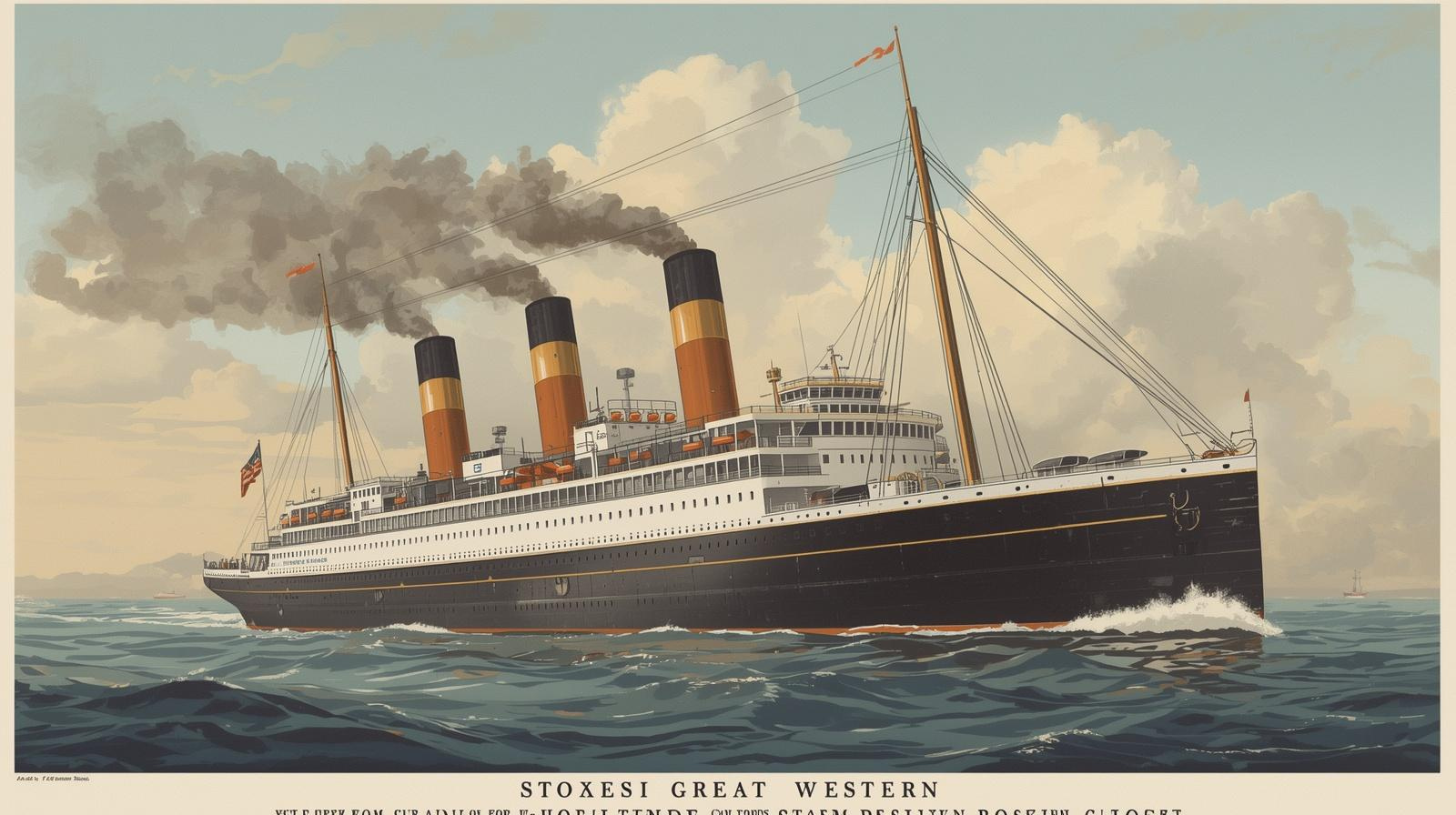
SS Great Western (1838)
The SS Great Western arose almost as an afterthought. At a Great Western Railway board meeting in 1835, when someone expressed concern about the great length of the proposed railway, Brunel suggested with characteristic confidence that they might as well make it longer still, and extend it all the way to New York by steamship. The remark was taken seriously, the Great Western Steamship Company was formed, and Brunel was appointed engineer.
The prevailing view among naval architects at the time held that a steamship large enough to carry sufficient coal for a transatlantic voyage was an impossibility: coal consumption increased with the square of the speed, while carrying capacity increased with the cube of the vessel’s dimensions, but no one had properly worked through the implications of this relationship for large ships. Brunel did the calculations and concluded that a sufficiently large steamship could not only carry enough coal for the Atlantic crossing but would arrive with coal to spare. He was correct.
The Great Western was launched in 1837 and completed her maiden voyage to New York in April 1838 in fifteen days, the fastest Atlantic crossing yet recorded. She went on to make sixty-four Atlantic crossings, establishing the commercial viability of regular transatlantic steam service. She was the first purpose-built ocean steamship and the template for every Atlantic liner that followed.
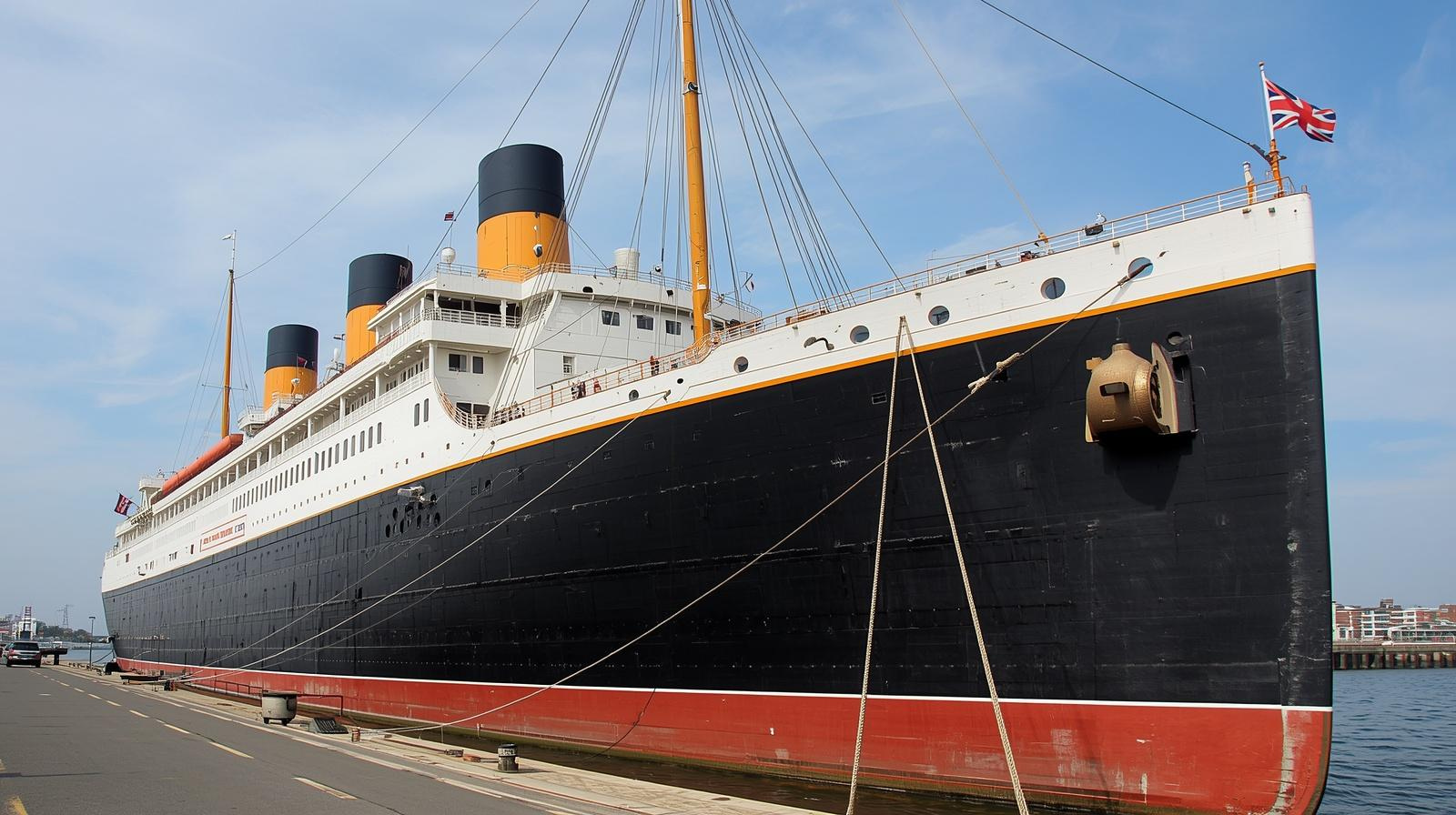
SS Great Britain (1843)
The SS Great Britain was a more radical departure still. Where the Great Western had been a conventional wooden paddle steamer, the Great Britain was built of iron and driven by a screw propeller, the first ocean-going vessel to combine both innovations. At 322 feet in length, she was by far the largest ship ever built when launched, and her screw propulsion, powered by a massive direct-acting engine of Brunel’s own design, gave her a combination of power and efficiency that paddle wheels could not match.
The decision to use a screw propeller was characteristic of Brunel’s approach: he had seen a small experimental vessel, the Archimedes, at work in 1840 and immediately grasped the superiority of the screw to the paddle for large ocean-going ships. Within weeks, he had persuaded the Great Western Steamship Company to abandon the paddle-wheel engines already ordered and redesign the ship around screw propulsion, an expensive and disruptive decision that proved entirely correct.
The Great Britain was launched in July 1843 in the presence of Prince Albert. She ran aground on the coast of Ireland in 1846 on her fifth voyage, an incident that bankrupted the Great Western Steamship Company, but survived to have a long and varied subsequent career, carrying emigrants to Australia for over two decades. In 1970, she was brought back to Bristol, where she had been built, and restored in the dry dock in which she was constructed. She is now a museum ship and a UNESCO World Heritage Site, the founding artefact of the iron steamship age.
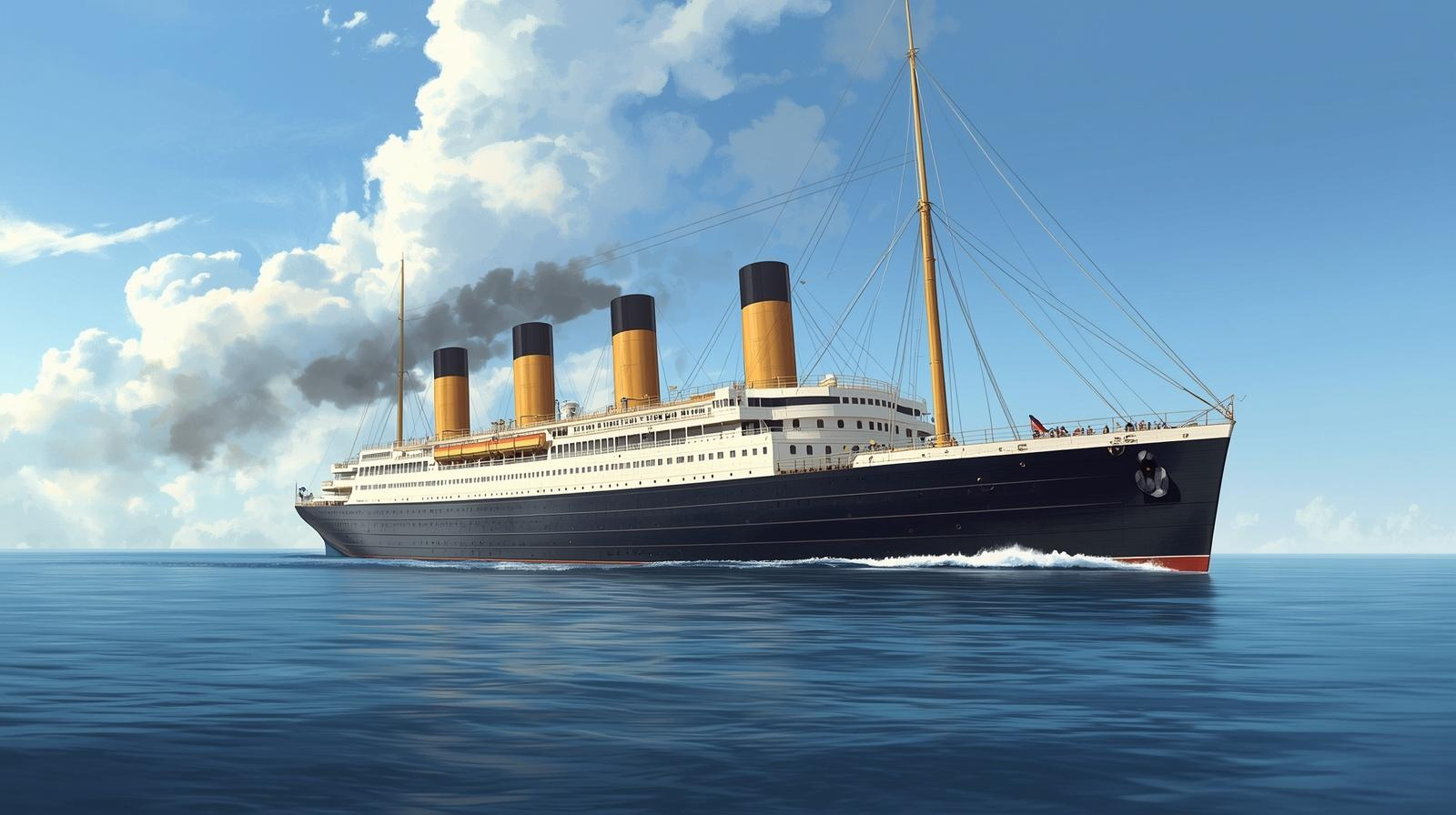
SS Great Eastern (1858)
The SS Great Eastern was Brunel’s most extraordinary and most ill-fated creation. Conceived in 1851-52 and launched in 1858 after years of technical and financial difficulty, she was enormous beyond anything previously imagined: 692 feet long, nearly 19,000 tons displacement, capable of carrying 4,000 passengers and enough coal to steam to Australia and back without refuelling. She was five times the size of any ship previously built and was not surpassed in length until the launch of the Lusitania in 1906, nearly fifty years later.
The launch itself was a nightmare. The Great Eastern was built on the Thames at Millwall, lying broadside to the river, the only orientation that could accommodate her vast length, and was intended to be launched sideways into the water. Three attempts in late 1857 failed to move her more than a few feet, and weeks of exhausting and expensive effort with hydraulic rams were required before she finally slid into the Thames in January 1858. The ordeal broke Brunel’s health, already weakened by years of overwork and the habit of smoking forty cigars a day.
Brunel suffered a stroke on the deck of the Great Eastern in September 1859, hours before her maiden voyage. He died ten days later, on 15th September 1859, at the age of fifty-three. The Great Eastern sailed without him.
The ship herself never fulfilled her commercial promise as a passenger liner. She was too large for the passenger volumes of her era, too expensive to run, and plagued with mechanical problems. But she found her true vocation as a cable-laying ship, carrying the first successful transatlantic telegraph cable in 1866, a project that connected Europe and North America for the first time and transformed global communication. In death as in life, Brunel’s greatest creation changed the world in ways he had not anticipated.
Summary of Principal Works
The following table summarises Brunel’s major achievements across the fields in which he worked.
| Category | Achievement |
| Railways | Great Western Railway, London Paddington to Bristol; 7ft broad gauge; Box Tunnel; over 1,200 miles of line engineered |
| Bridges | Clifton Suspension Bridge; Royal Albert Bridge (Saltash); Maidenhead Railway Bridge, flattest brick arch ever built |
| Steamships | SS Great Western (1838), first purpose-built transatlantic steamship; SS Great Britain (1843), first ocean-going screw-propelled iron ship; SS Great Eastern (1858), largest ship in the world for 40 years |
| Tunnels | Thames Tunnel (with Marc Brunel, 1843): first tunnel under a navigable river; Box Tunnel, the longest railway tunnel in the world at opening |
| Docks | Bristol Floating Harbour; design of Milford Haven Docks; Plymouth Dock improvements |
| Structures | Paddington Station (with Matthew Digby Wyatt); Crystal Palace precursor designs; prefabricated hospital for Crimean War |
Bridges
Clifton Suspension Bridge
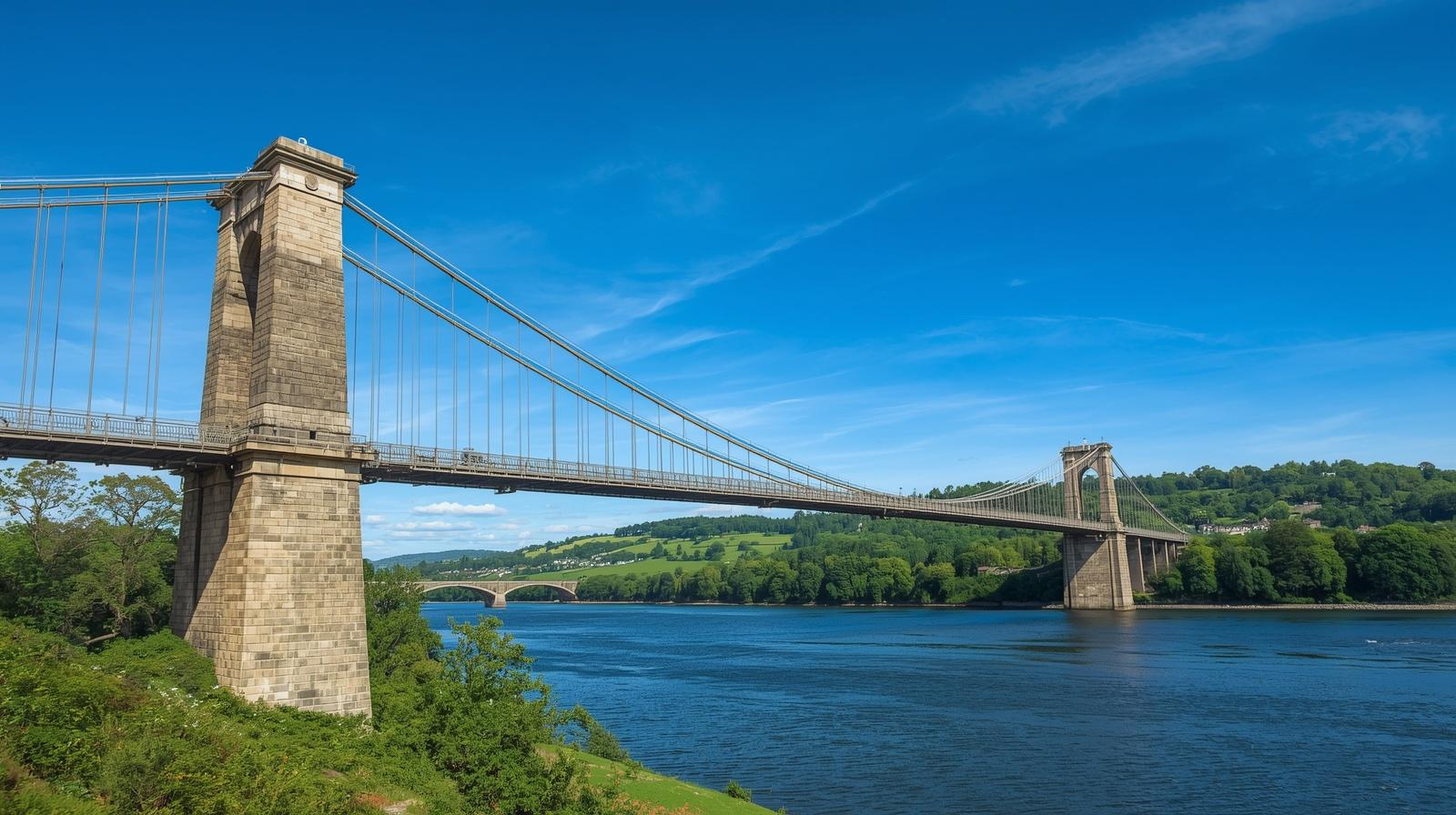
The Clifton Suspension Bridge across the Avon Gorge at Bristol is the work most immediately associated with Brunel’s name in the popular imagination, and with good reason: it is one of the most beautiful bridges in the world, its slender chains suspended between two Egyptian-Revival towers on the edge of the dramatic limestone gorge, 245 feet above the tidal Avon. The design is the product of Brunel’s first major professional triumph and his last posthumous gift.
 6
6
Brunel submitted his first designs for the competition to bridge the gorge in 1829, at the age of twenty-two. The competition assessor, Thomas Telford,the greatest living bridge engineer, rejected all the entries, including Brunel’s, and submitted his own ungainly design instead. A second competition was held, and Brunel’s revised design, with its bold 702-foot span, was selected in 1831. But the money ran out, the Bristol Riots of 1831 frightened investors, and construction never properly began in Brunel’s lifetime. He died in 1859 with the bridge still unbuilt.
The Clifton Suspension Bridge was completed after his death as a memorial to him, using chains salvaged from his Hungerford Suspension Bridge in London (which had been demolished to make way for the railway). It was opened in 1864. Brunel never saw it finished, but it stands as perhaps the purest expression of his aesthetic vision, a bridge of extraordinary elegance achieved through structural honesty and the confident exploitation of the form’s inherent beauty.
Royal Albert Bridge, Saltash
The Royal Albert Bridge at Saltash, which carries the Great Western Railway across the River Tamar between Devon and Cornwall, was Brunel’s last great completed work, opened by Prince Albert in May 1859, four months before Brunel’s death. It is perhaps his most technically innovative bridge, a unique hybrid of the suspension bridge and the tubular bridge, with two great lenticular iron trusses, every 455 feet in span, carried on a central pier founded on the bed of the river.
The problem Brunel faced was severe: the Admiralty required a headroom of 100 feet to allow naval vessels to pass beneath, and the shifting sands and powerful tidal currents of the Tamar made the founding of a mid-river pier a task of exceptional difficulty. Brunel solved the first problem with his lenticular trusses, curved both at top and bottom, they combined the strength of an arch with the economy of a suspension structure, achieving the required height without the massive abutments a conventional arch would have required. He solved the second by constructing the central pier within a vast wrought-iron cylinder, sunk through the river bed to the rock below.
Brunel was too ill to attend the opening ceremony. He was carried across the bridge on a special open truck, lying on a mattress, to see the completed structure. He died four months later. The bridge carries his name in large letters on both portals, placed there after his death. It remains in daily use, carrying modern high-speed trains with no modification to the original structure.
“He was the greatest engineer of his generation, perhaps of any generation. What he built still stands, still works, still astonishes.”
Character and Working Method
The Man Himself
Brunel was short, approximately five feet five inches, and in his famous portrait photographs appears to be compensating for his stature with a monumentally large stovepipe hat. He was intensely energetic, physically brave, and possessed of a self-confidence that contemporaries sometimes found overbearing and sometimes found inspiring. He drove himself and his staff relentlessly, sleeping little, travelling constantly, and maintaining a volume of correspondence that suggests a man who simply did not acknowledge the existence of normal human limitations.
He married Mary Horsley in 1836, and the marriage appears to have been a genuinely happy one. They had three children. His domestic life, by the standards of his professional life, was relatively quiet, the family home at Duke Street, Westminster, was a haven of normality amidst the controlled chaos of his professional existence. His notebooks, which survive in large numbers, reveal a man who drew constantly, who thought visually, and who carried the details of half a dozen major projects simultaneously in his head with apparent ease.
Engineering Philosophy
Brunel’s approach to engineering was rooted in a willingness to start from first principles that set him apart from many of his contemporaries. Where other engineers adapted existing solutions to new problems, Brunel routinely asked whether the existing solution was actually the best one, and frequently concluded that it was not. The broad gauge, the screw propeller, the iron hull, the lenticular truss: each was a case of Brunel examining conventional wisdom and finding it wanting.
He was also a perfectionist of the first order, who involved himself in every detail of his projects from the overall conception to the design of individual components. His drawings for the GWR include not only the line itself but the design of bridges, tunnels, stations, cottages for railway workers, and the decorative ironwork on the carriages. The cast-iron capitals on the columns of the GWR’s engine house at Swindon were designed by Brunel himself. This totalising approach, the engineer as complete artist, was in many ways more characteristic of the Renaissance than of the Victorian age.
Failures and Controversies
Brunel’s career was not without its failures and controversies. The atmospheric railway on the South Devon line, a system in which trains were propelled by air pressure through a tube laid between the rails, was one of the most spectacular engineering disasters of the Victorian age. Brunel championed the system against considerable scepticism, invested the South Devon Railway’s money in it, and was forced, within a year of opening to admit that it did not work. The leather valves that sealed the tube were eaten by rats, dried out by the sun, and corroded by the sea air; the maintenance costs were crippling. The atmospheric railway was abandoned in 1848 after barely a year of operation, at a cost to the company of over £400,000.
The broad gauge decision, while technically defensible, proved commercially disastrous. The Great Eastern, for all its technical magnificence, was a financial catastrophe that ruined the company that built it and contributed directly to the exhaustion that killed its creator. Brunel was not infallible, and the scale of his ambitions sometimes outran both his calculations and his clients’ resources.
Legacy
What Survives
An extraordinary proportion of what Brunel built still stands and still works. The Clifton Suspension Bridge carries 12,000 vehicles a day across the Avon Gorge. The Royal Albert Bridge at Saltash carries regular high-speed rail traffic on the main line to Penzance. The Box Tunnel is still in use on the Great Western Main Line. Paddington Station is one of the busiest railway termini in Britain. The SS Great Britain sits in her original dry dock in Bristol, restored and open to visitors. The Thames Tunnel, now part of the London Overground, carries millions of passengers a year.
This longevity is not accidental. Brunel built to the highest standards of which Victorian engineering was capable, and he was constitutionally incapable of accepting second-best. The structures he left behind were not merely adequate for their original purposes; they were designed with a robustness and a formal intelligence that has allowed them to be adapted, upgraded, and repurposed across more than a century and a half of changing needs.
Influence on Engineering
Brunel’s influence on the development of civil and structural engineering is pervasive. His demonstration that large iron ships with screw propulsion were commercially viable transformed maritime architecture; within twenty years of Great Britain’s launch, iron had replaced wood as the standard material for ocean-going vessels, and the screw had entirely replaced the paddle wheel. His work on railway engineering, in particular his demonstration of what could be achieved by setting high standards for gradients, curvature, and track quality, established benchmarks that influenced railway design for generations.
His approach to engineering design, the willingness to challenge received wisdom, the insistence on working from first principles, and the integration of aesthetic and structural considerations were less imitable but no less important. The tradition of the engineer as complete designer, responsible for both the technical performance and the visual character of a work, owes something to his example.
Cultural Legacy
In the broader culture, Brunel has become a figure of national mythology, the embodiment of Victorian confidence, ambition, and practical genius. The famous photograph by Robert Howlett, showing him standing before the launching chains of the Great Eastern with a cigar clamped between his teeth, is one of the defining images of the Victorian age: a small man dwarfed by the enormous structure he has created, entirely at ease with his own audacity.
He was voted the second greatest Briton in the BBC’s Great Britons poll of 2002, behind only Churchill. He featured prominently in the opening ceremony of the 2012 London Olympics, embodied by Kenneth Branagh in top hat and frock coat. His face appears on the reverse of the current Bank of England fifty-pound note, alongside a portrait of Matthew Murray’s steam engine, a fitting pairing of the man and his medium. Schools, universities, hospitals, and ships bear his name. The Brunel Museum in Rotherhithe occupies the engine house of the Thames Tunnel.
The continuing hold of Brunel on the public imagination speaks to something beyond mere admiration for technical achievement. His life story, the son of a refugee, trained in France, who transformed Victorian Britain with the force of his individual genius, has an almost novelistic arc. He worked at the intersection of the imaginable and the impossible, and more often than not, he found a way through. In an age when engineering has become a collaborative and corporate enterprise, there is something irreplaceable about the image of the single, driven, impossible man who simply would not be told it could not be done.
“I am always building castles in the air.” — I. K. Brunel, in a letter to a friend
Conclusion
Isambard Kingdom Brunel died on 15th September 1859, aged fifty-three, having compressed into his short career an output that would have been remarkable for a man who lived to eighty. He left behind him a railway, a series of ships, a tunnel, a suspension bridge, and a collection of other structures that between them had transformed the way Britain moved, traded, and communicated. Several of them were, at the time of their creation, the largest or most technically advanced structures of their kind in the world.
But the legacy of Brunel is not only, or even primarily, a matter of structures. It is a legacy of attitude: the conviction that received wisdom is worth questioning, that scale is not a reason for timidity, that the engineering of a building or a bridge or a ship is a matter of artistic as well as technical responsibility. In an age that tends to reduce engineering to the management of known processes and the optimisation of established solutions, Brunel’s example is a reminder of what becomes possible when an engineer of genius is given the freedom, and takes the freedom, to imagine something genuinely new.
The chains of the Clifton Suspension Bridge, glinting in the evening light above the Avon Gorge. The Royal Albert Bridge, its great trusses curving over the Tamar at Saltash, each portal bearing the name BRUNEL in iron capitals. The glass and iron arches of Paddington Station. The iron hull of the SS Great Britain in her Bristol dock. These are not merely engineering monuments. They are the material evidence of a life lived at full stretch, of an imagination that refused the merely possible, and of a talent so large that the world it left behind still bears its shape.
— ✦ —
Isambard Kingdom Brunel | 9 April 1806 — 15 September 1859
Leave a Reply