
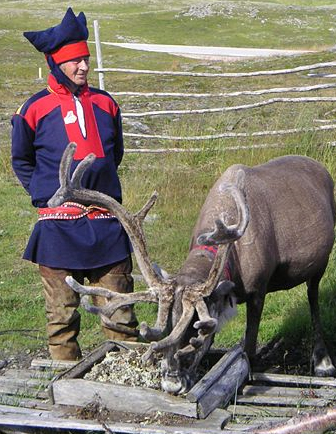
The Sámi people are the Indigenous inhabitants of northern Scandinavia and Russia, whose lifestyle, culture, and language are deeply intertwined with their nomadic traditions and their close relationship with reindeer.
Lifestyle and Nomadism
The Sami have traditionally lived across Sápmi, which is a vast region that covers northern Norway, Sweden, Finland, and Russia’s Kola Peninsula. The Arctic environment has helped to shape their nomadic lifestyle, where families migrated seasonally, following reindeer whose grazing patterns are across the tundra and forest.
They live in portable tentlike dwellings called lavvu, which can be quickly assembled and dismantled to suit their movements. The siida system, which is a community unit/s which are organized by cooperation amongst families, ensuring shared access to resources and collective decision-making.
Relationship with Reindeer
Reindeer herding is central to Sámi identity. Initially, reindeer were hunted, but by the Middle Ages, domestication transformed them into the basis of Sámi economy. The Reindeer provided meat, milk, hides and antlers, while also serving as draft animals for sleds. Herding requires a deep ecological knowledge, migratory routes, weather patterns, and grazing cycles. Around 2600 Sámi in Norway continue reindeer herding, though modern tools snowmobiles and GPS have replaced traditional sleds.
Culture and Traditions
The Sámi worldview was historically animistic, with shamans (noaidi) mediating between humans and spirits. They use a unique form of chanting called Joik, which is one of Europe’s old musical traditions often used to honour landscapes, animals or people. Other oral traditions include storytelling and have festivals that remain vital in preserving identity. They use Duodji, which are traditional crafts, including clothing, knives, tools made from nature materials like bone wood, and leather.
Language
The Sámi speak a group of Uralic languages that are related to Finnish, Hungarian, and Estonian. Linguists believe they developed from a Proto-Sámi language that diverged from Proto-Finnic about 3,000 years ago, and they believe that by the 9th century this common Sámi language had split into the modern varieties we see today.
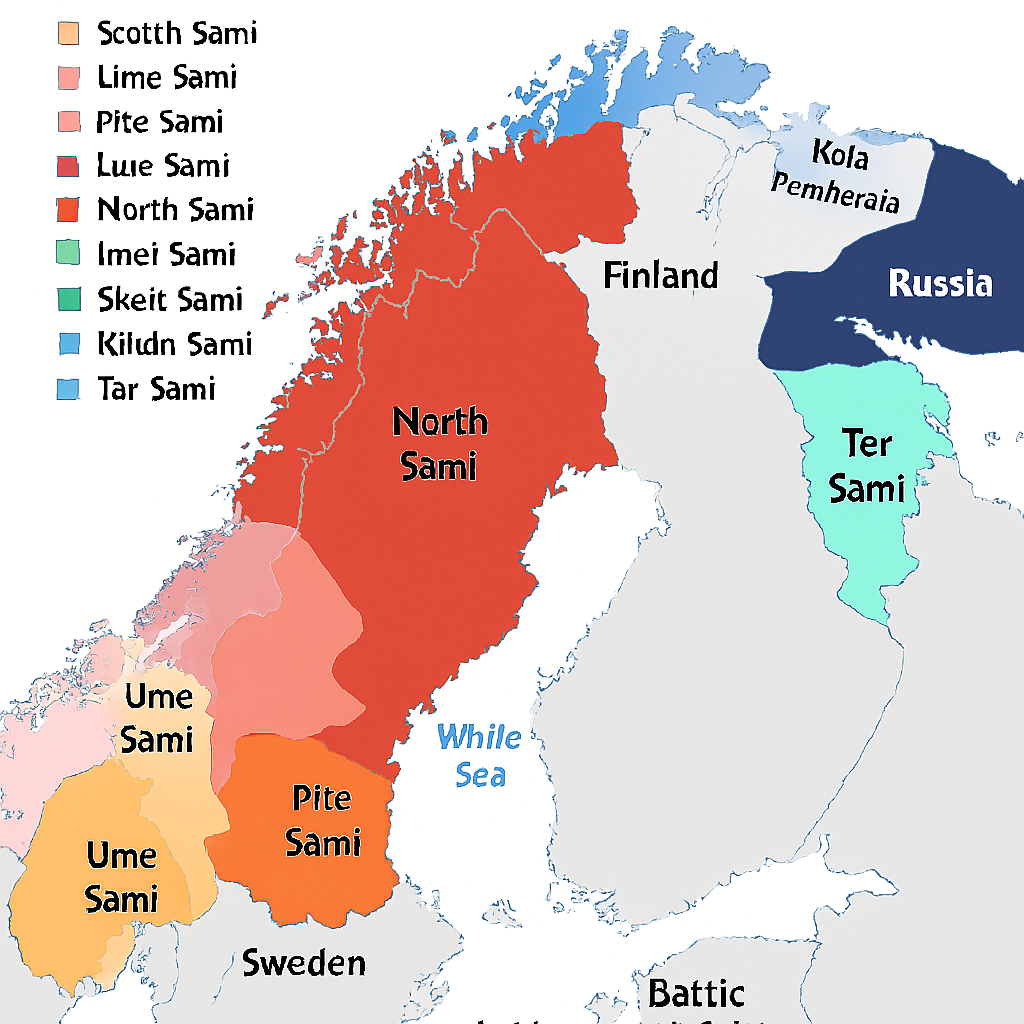
The Sámi languages are not one single language but a group of distinct, though related, tongues spoken across the region known as Sápmi (northern Scandinavia and the Kola Peninsula in Russia).
The nine recognised Sámi languages are:
Southern Sámi – spoken in parts of Norway and Sweden
Ume Sámi – northern Sweden
Pite Sámi – Sweden
Lule Sámi – Norway and Sweden
Northern Sámi – the largest, spoken in Norway, Sweden, and Finland
Inari Sámi – Finland
Skolt Sámi – Finland and Russia
Kildin Sámi – Russia (Kola Peninsula)
Ter Sámi – Russia (Kola Peninsula)
Current Status
UNESCO classifies most Sámi languages as endangered, with Northern Sámi being the strongest in terms of speakers.
Revitalisation efforts include education, media, and cultural festivals to keep them alive.
YouTube Videos on Sámi Languages
Here are some resources to explore further:
- About the Sámi languages – Explains the family structure, grammar, and history of Sámi languages.
- Introduction to the Sami Languages – A clear overview of the different Sámi tongues, their orthographies, and relationships.
- The Sámi Fight for the Right to Their Land and Tradition | Full Documentary – Includes a segment on language preservation alongside cultural struggles.
- What Language Do Sami People Speak? – The Documentary – Focuses on the daily use and preservation of Sámi languages.
- Short Documentary: I AM SAMI – Personal storytelling about Sámi identity, culture, and language.
- **“Sámi – The People, Their Culture and Languages and the …” – Discusses cultural identity and language preservation.
- Native Saami in drive to revive their disappearing culture and … – Highlights grassroots efforts to keep Sámi traditions and languages alive.
There is an area where there is Language preservation is a challenge: while Northern Sámi has tens of thousands of speakers, others like Ter Sámi have fewer than 50. Efforts in education, media, and cultural institutions are revitalizing these languages.
Myths and Deities
Sami mythology features a pantheon of gods and spirits, each associated with different aspects of nature and life. For example:
Beaivi. The sun goddess, revered for her life-giving properties.
Laib Olmai. The forest spirit, associated with animals and hunting luck.
Horagalles. A thunder god, reflecting the Smi’s respect for natural forces.
These deities often embody the Sami’s relationship with their environment, emphasising the importance of nature in their daily lives and spiritual practices.
Folktales and Legends
Sami folklore is also rich in stories that convey moral lessons, explain natural phenomena, or recount the adventures of legendary figures. These tales often feature supernatural beings and animal spirits, illustrating the Sami worldview where every element of nature is interconnected. The stories serve not only as entertainment but also as a means of preserving cultural identity and passing down knowledge through generations.
Modern Challenges and Resilience
Colonisation and assimilation policies in the 19th and 20th centuries suppressed Sámi culture, including the banning of Sámi languages in schools and the restriction of nomadic routes. Today, there are Sámi parliaments in Norway, Sweden, and Finland advocating for Indigenous rights, land use, and cultural preservation. Many Sámi balance traditional practices with modern livelihoods, working in tourism, forestry, and education while maintaining their cultural heritage.
Conclusion
The Sámi people’s nomadic lifestyle, culture, language, and reindeer herding form a unique tapestry of resilience and adaptation. Despite centuries of external pressure, they continue to preserve their traditions while embracing modernity. Their enduring bond with reindeer symbolises not only survival in the Arctic but also a profound cultural identity that thrives today.
A Selection of Books
📖 Categories of Sámi Literature
History & Ethnography
The Sámi Peoples of the North: A Social and Cultural History
Author: Neil Kent
Publisher: Hurst & Company (Publishers) Ltd
Pages: 331 pages (ix + 331 p.)
ISBN: 9781787380318 (paperback) Click Here
ISBN: 9781849042574 (hardcover) Click Here
Prices:
Paperback: varies by retailer
E-reader Availability:
Available on Kindle (Amazon)Click Here
Available on Google Play Books
Available on Barnes & Noble (NOOK)
Also available as an ebook from Oxford University Press
Audiobook: No Audible or audiobook version appears to be available
Available: Amazon and Bookshp.org
The Sámi People: Traditions in Transitions
Author: Veli-Pekka Lehtola
Publisher: University of Alaska Press
Pages: 144 pages
ISBN: 9781889963754
Price: £47.55 quoted on Amazon4
E-reader Availability:
Available on Google Books for rent
Formats & Accessibility:
Digital version (Google Books) is chargeable
Sámi Culture in a New Era: The Norwegian Sami Experience
Author: Harold Gaski
Publisher: University of Washington Press
Pages: 223 pages
Price: £49.44 (Amazon quotation)Click Here
Literature & Poetry
Nils-Aslak Valkeapää (Áillohaš) Works
The Sun, My Father (English title of Beaivi, Áhčážan)
Original Sámi publication: 1988 (won Nordic Council Literature Prize 1991)
English translation: 1997
Publisher: DAT (Guovdageaidnu, Norway), distributed in North America by University of Washington Press
Translators: Lars Nordstrom, Harald Gaski, and Ralph Salisbury
UK Availability: Very limited. These books are specialty publications from a small Sámi publisher in Norway. You may find them through specialist booksellers or second-hand markets.
Greetings from Lappland (Trveisiä Lapista)
Original publication: 1971 (in Finnish)
English publishers: Zed Books Ltd (1984, hardcover) and Prometheus Books (1983, paperback)
ISBN 10:0862321557 / ISBN 13:9780862321550
UK Availability: Listed on Amazon UK, though appears out of print. Available through second-hand book sites like AbeBooks.
Trekways of the Wind (English title of Ruoktu Váimmus)
Original publication: 1985 (in Sámi)
English translation: 1994
Publisher: DAT (Kautokeino, Norway)
ISBN: 9788290625219
UK Availability: Very rare and expensive. Currently out of stock at most retailers, though occasionally available through specialist sellers.
The Earth, My Mother (Eanni, eannážan)
Original publication: 2001 (Valkeapää’s final book)
Publisher: DAT
Translators: Harald Gaski, Lars Nordström and Ralph Salisbury
UK Availability: Extremely limited availability
Sámi Literature Anthology
In the Shadow of the Midnight Sun: Contemporary Sámi Prose and Poetry
Editor: Harald Gaski
Publisher: Davvi Girji; distributed by University of Washington Press
Publication: 1997
Content: Twenty-one authors from all four countries represented with poetry, short stories, and excerpts from novels
UK Availability: Available through AbeBooks UK and specialist book dealers
Myths, Tales and Poetry from Four Centuries of Sámi Literature
Editor: Harald Gaski
Translator: Thomas A. DuBois (and others)
Publisher: ČálliidLágádus (Forfatternes forlag / The Authors’ Publishing House) ResMusica, Karasjok, Norway
Publication Date: 1 July 2020
ISBN-13: 978-82-8263-381-9
Format: Paperback (Heftet)
Language: English
Content & Scope
The anthology covers Sámi oral and written texts from the last four hundred years, including narratives and poetry about the creation of the world, the inhabitation of Sápmi, and accounts of how the Sámi fought against colonisation and assimilation Musicfinland.
It begins with two seventeenth-century yoik poems that became renowned in Europe and inspired famous authors like Goethe, continuing to prose and poetry of recent decades Musicfinland.
The anthology includes an introduction explaining the wealth and richness of the Sámi language as a treasure trove from which to develop modern Sámi prose and poetry ResMusica.
About the Editor
Harald Gaski is a Professor in Sámi Literature at Sámi allaskuvla (Sámi University of Applied Sciences) and Professor in Sámi Culture and Literature at UiT – the Arctic University of Norway, specializing in Indigenous methodologies and aesthetics, Sámi traditional values, worldviews, culture and literature .
UK Availability
This book is available through specialist Nordic and Indigenous literature retailers. You can find it at:
Duodji Shop (Finland-based Sámi crafts shop with international shipping)
AbeBooks UK (search for ISBN 9788282633819)
Direct from the publisher ČálliidLágádus, though they primarily operate in Scandinavia
Spirituality & Worldview
What We Believe In (Expanded Edition)
There appear to be two different books with similar titles:
What We Believe In: Noaidevuohta – An Introduction to the Religion of the Northern Saami
Author: Aage Solbakk
Publisher: ČálliidLágádus (Kárášjohka, Norway)
Publication Date: 2009
ISBN: 9788292044773
Pages: 53 pages
Language: English
Translators: Linda S. Bennet and Isak Måseide
Format: Paperback (Heftet)
Content: An introduction to pre-Christian Sámi religion, focusing on what the noaidi (shamans) represented before Christianity arrived in Sápmi. The book acknowledges that some present-day individuals have come forward about their special abilities as noaidi, though the focus is on historical practices.
What We Believe In: Sámi Religious Experience and Beliefs from 1593 to the Present
Editor: Ellen Marie Jensen
Publisher: ČálliidLágádus (Authors’ Publisher)
Publication Date: 2015
ISBN: 978-82-8263-177-8
Pages: 170 pages
Language: English
Format: Paperback
Content: A collection of updated texts on religion, healing practices, and beliefs spanning from the time of the Sámi noaidi up to the present day, including chapters on pre-Christian noaidevuohta (shamanism), the violent persecution of Sámi beliefs in the 1600s-1700s, Laestadianism, and Sámi folk medicine traditions.
The book was created because ČálliidLágádus received requests from academics and tourists for a comprehensive overview of Sámi spirituality. Ellen Marie Jensen notes that the belief that the Sámi had supernatural powers probably helped save them during witch trials, as people were afraid to work against them.
About the Editor: Ellen Marie Jensen is a PhD Research Fellow in Sámi and Indigenous Studies at the University of Tromsø, Norway.
Contemporary Issues
Title: Indigenous Rights in Scandinavia: Autonomous Sami Law
Editors / Authors: Christina Allard and Susann Funderud Skogvang (editors) Routledge+1
Publisher: Routledge (first published by Ashgate, 2015) Pages: 242 pages Routledge+1
ISBN (hardback): 978-1-4724-2541-6 (also printed as 978-1472425416 / 1472425413)
E-book availability
Available as eBook on Taylor & Francis eBooks.
ISBN (ebook / e-text): 978-1-315-58835-3 (for the above)
One can buy a digital version (e.g. reflowable layout or ePub/PDF) via virtual textbook suppliers such as VitalSource (ISBN is 9781317117278)
📚 Inari Sámi Folklore: Stories from Aanaar
Editors/Translators: August V. Koskimies, Toivo I. Itkonen, edited by Lea Laitinen, translated by Tim Frandy.
Publication: University of Wisconsin Press, 2020 Amazon AbeBooks Reading Religion.
Content:
Folktales, legends, joik songs, proverbs, riddles, and other verbal art.
Material originally collected in the 1880s by linguist A. V. Forsman (later Koskimies).
First published in 1917 in Sámi and Finnish, later revised in 1978, and now available in English.
Significance:
Preserves the oral traditions of the Inari Sámi, a smaller Sámi group concentrated around Lake Inari in Finland.
Offers insight into their worldview, humour, spirituality, and everyday life.
Highlights the diversity within Sámi culture, distinct from North Sámi traditions more commonly represented.
Why It Matters
Unique identity: The Inari Sámi are one of the few Sámi groups with their own language (Inari Sámi), making this folklore collection vital for cultural preservation.
Rich oral tradition: The anthology captures not just stories but also songs and riddles, showing the breadth of Sámi verbal art.
Historical continuity: It bridges 19th-century ethnographic collection with modern translation, making ancient material accessible today.
Leave a Reply