
Each year, as winter loosens its grip on Europe, Venice transforms into a living theatre of mystery and beauty. For approximately two weeks leading up to Lent, the floating city becomes a stage for one of the world’s most spectacular celebrations, the Carnival of Venice. Behind elaborate masks and sumptuous costumes, millions of visitors and Venetians alike participate in a tradition that stretches back nearly a millennium, where social boundaries dissolve, identities are hidden, and the line between reality and fantasy blurs beneath the watchful gaze of ancient palazzos.
Medieval Origins: From Military Victory to Festival
The origins of Venice Carnival remain somewhat mysterious, with scholars unable to definitively establish its precise beginnings. However, the festival appears for the first time in a document by Doge Vitale Falier in 1094, when public entertainment was first mentioned. Some historians trace its roots even earlier to the 11th century, when Venice was emerging as a powerful maritime republic.
According to legend, the Carnival of Venice began after the military victory of the Venetian Republic over the patriarch of Aquileia, Ulrich II, in the year 1162. The story goes that after Doge Vitale Michieli recaptured the city of Grado from Ulrich, who had seized this strategic Venetian territory, Ulrich and his key vassals were brought to Venice as prisoners. The Pope intervened for peace, but as a condition of release, Ulrich was forced to pay yearly tribute to Venice of one bull, twelve pigs, and three hundred loaves of bread.
To celebrate this victory, people danced and gathered in St. Mark’s Square, creating festivities that would evolve into the annual Carnival celebration. The motto was “once a year, it is acceptable to have no brakes or restrains”.
Yet the Carnival’s roots likely run deeper than any single military victory. The Greeks had the Dionysian cults, large religious festivals with processions and theatrical performances involving masks and symbolic representations, while Rome had the Saturnalia, a festival during which the social order was overthrown, and enslaved people and free citizens flocked to the city to celebrate with music and wild dancing. These ancient celebrations of inversion and excess found new expression in Venice.
The Official Festival: From Public Entertainment to State Holiday
Carnival became “official” in 1296 when a mandate by the Senate of the Republic declared the day before the start of Lent a public holiday. This formalisation reflected the festival’s growing importance in Venetian society.
The timing was deliberate. The word “Carnival” itself likely derives from the medieval Latin phrases “carnem levare” or “carnelevarium,” referring to the removal of meat before the Lenten fast. The celebration provided a final opportunity for indulgence and revelry before forty days of religious austerity.
But in Venice, Carnival served functions beyond religious observance. Venetian Carnival took on political significance as early as the twelfth century, since it not only constituted a moment of liberation on the eve of Lent but also became an opportunity to reinforce civic cohesion between all Venetians, nobles, citizens and commoners.
The Doges who ruled Venice promoted Carnival strategically, granting the population, particularly the humbler classes, a dedicated period for revelry. In a city with one of Europe’s most rigid social hierarchies, this temporary release of social tensions served as a crucial pressure valve, allowing citizens to mock authorities and aristocracy without threatening the established order.
The Power of the Mask: Anonymity and Social Inversion
Masks became central to Venetian Carnival from its earliest days, though the first official documentation of their use comes from 1268, when the practice of masked men throwing eggs at women during Carnival was outlawed by the Venetian Council.
In 18th-century Venice, Carnival masks created a temporary feeling of equality between the ruling class and the lower classes. Behind a mask, a servant could mingle with nobility, commoners could mock their betters, and the rigid social structures that governed daily life temporarily dissolved.
In Venice Carnival, masks guaranteed total anonymity, a sort of cancellation of social divisions that allowed citizens to deride the authorities and the aristocracy publicly. This celebration represented an outlet for tensions and discontent created by the strict limits imposed by the morality and public order of the Republic of Venice.
The masks served multiple constituencies. For the lower classes, they provided freedom from social constraints and the rare opportunity to engage in behaviour normally forbidden. For nobles, merchants, and politicians, masks allowed engagement in frivolous or inappropriate activities without risk of recognition or scandal. Casanova’s writings suggest that significant emphasis was placed on appearance and that being seen, as opposed to exchanging ideas, was often the primary objective of appearing in public.
The masked traditions literally turned Venice’s emphasis on public image on its head. Participants were seen but not seen, effectively hiding in broad daylight.
The Masks: Art, Symbolism, and Practical Function
Venetian masks can be made of leather or porcelain, or using the original glass technique. While original masks were relatively simple in design and decoration, often serving symbolic and practical functions, modern Italian masks have become elaborate works of art, hand-painted with applications of gesso and gold leaf, decorated with natural feathers and gems.
Several distinct mask styles became iconic:
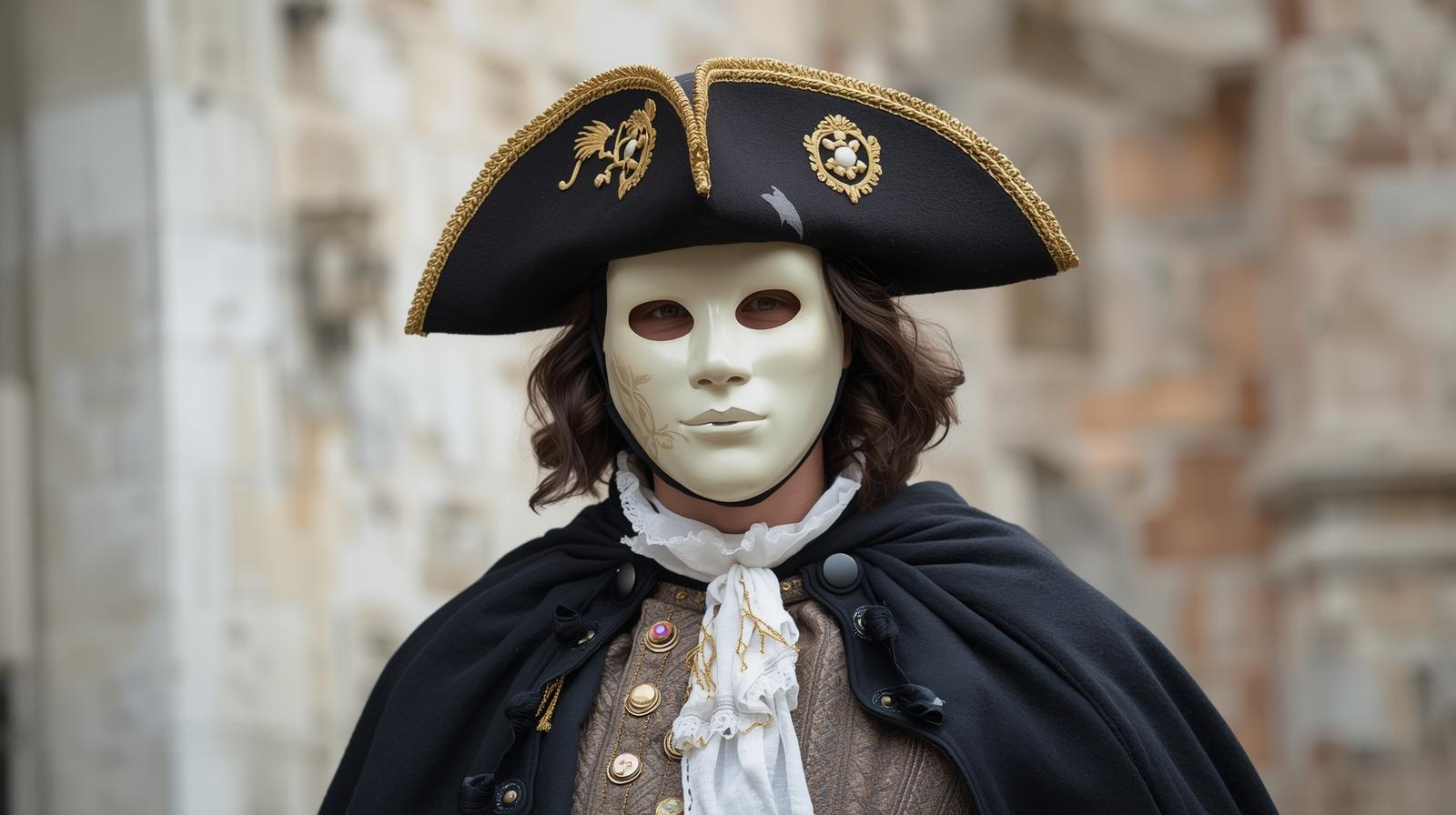
The Bauta consisted of a full mask worn with a cape covering the head and shoulders, and a tricorn hat. This was one of the most popular traditional costumes, allowing complete anonymity while permitting the wearer to eat and drink without removing the mask.
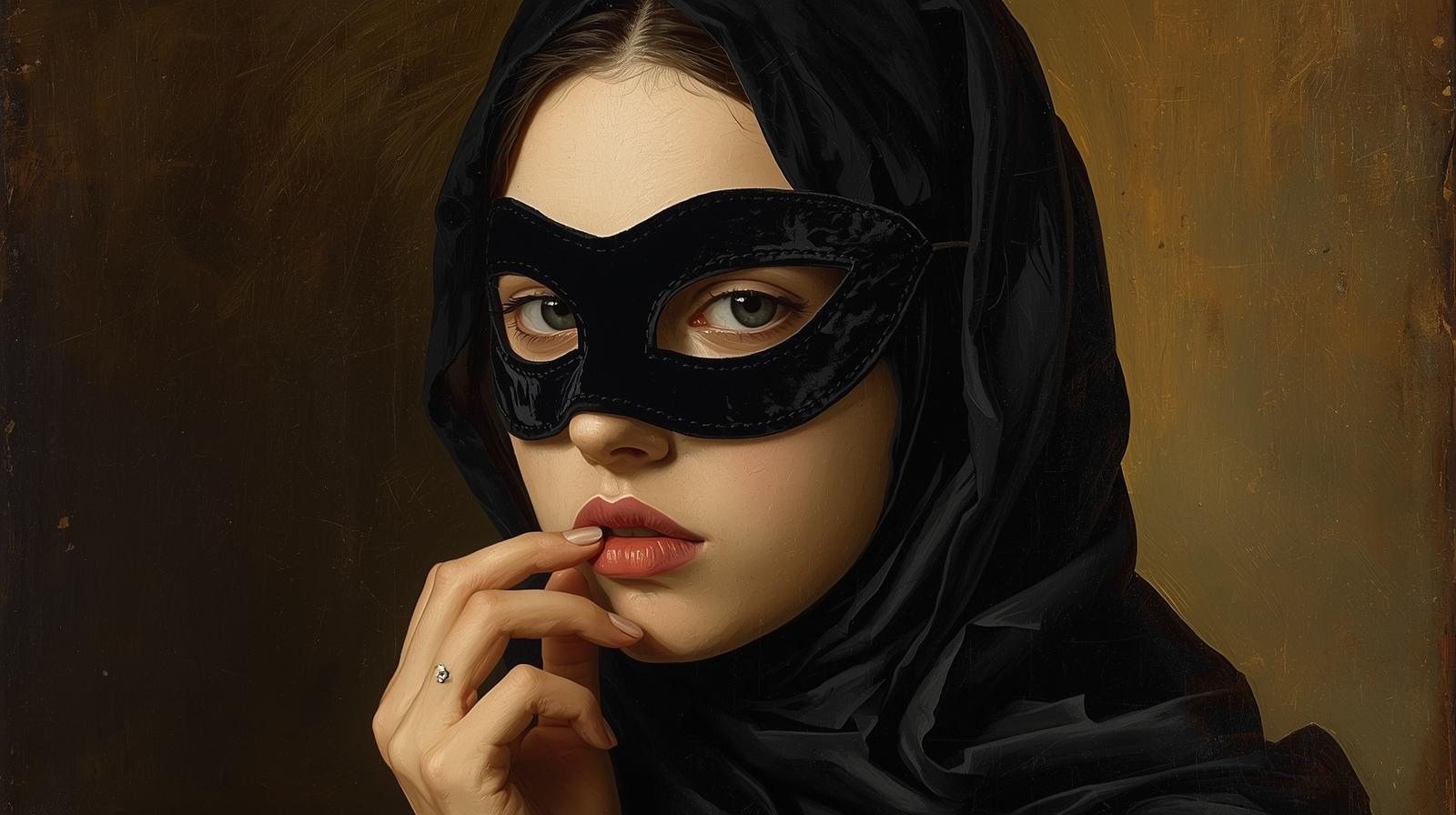
The Moretta was an oval mask of black velvet worn by women, held in place by biting on a button or bead inside the mask, rendering the wearer mute, adding to the mysterious allure.
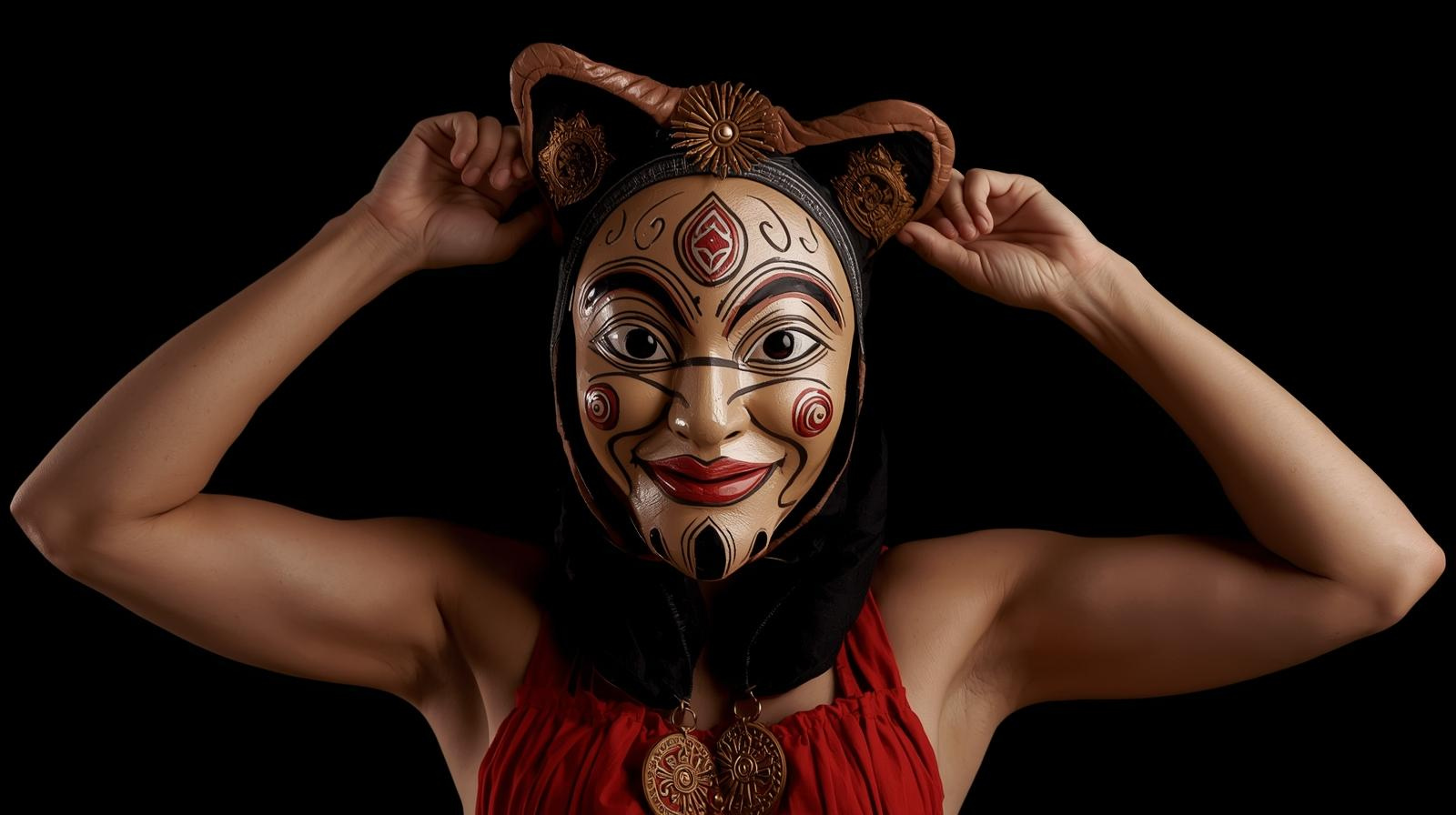
The Gnaga represented female commoners and was typically worn by men dressed as women. Wearers of the gnaga mask typically behave like female commoners, meowing mockingly at passers-by.
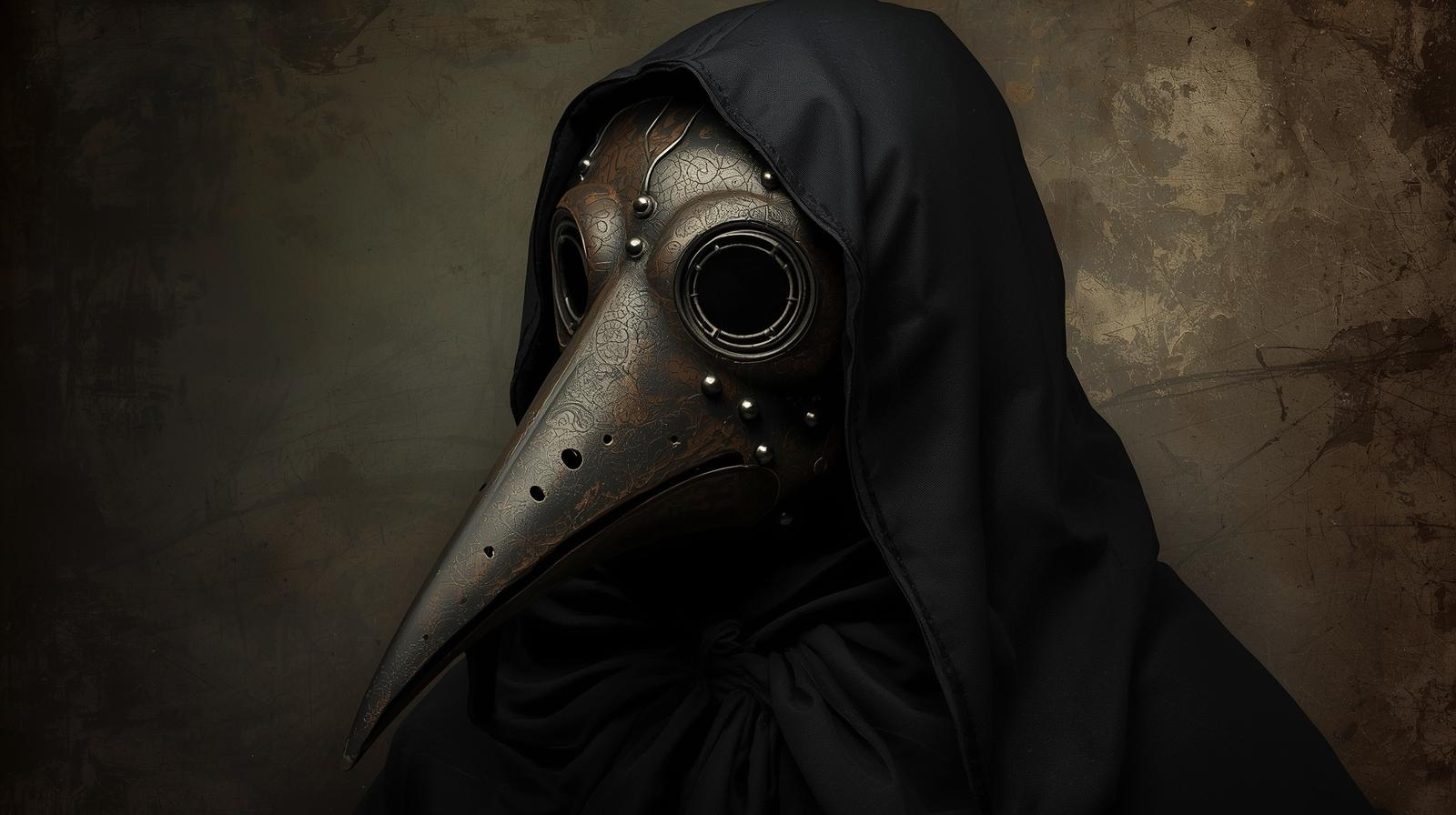
The Medico della Peste (Plague Doctor) is perhaps the most recognisable Venetian mask today, though it has an unexpected origin. The striking design originates from 17th-century French physician Charles de Lorme who adopted the mask together with other sanitary precautions while treating plague victims. The white mask with its long beak and crystal-covered eyeholes created a bespectacled effect. Its use as a Carnival mask is entirely modern, and today these masks are often highly decorative.
The Golden Age: Renaissance and Baroque Splendour
During the Renaissance and Baroque periods (16th through 18th centuries), Venice Carnival reached its zenith. The festival could last up to six weeks, transforming the entire city into a continuous celebration.
In the 17th century, the Baroque Carnival preserved the prestigious image of Venice in the world. It was very famous during the 18th century, encouraging license and pleasure, but also used to protect Venetians from present and future anguish.
As Venice’s wealth and cultural influence peaked, Carnival became an international attraction. Aristocrats, artists, merchants, and adventurers from across Europe descended on Venice to participate in the elaborate masquerade balls, theatrical performances, street celebrations, and games that filled the city.
The Festival of the Twelve Maries, attested from 2nd February 1143, became a key Carnival event. This waterborne procession featuring twelve richly adorned young women honoured a legend of Venetian brides rescued from pirates. Following Venice’s annexation of Friuli in 1420, the annual tribute of loaves and pigs was performed by the Venetian government, with St. Mark’s Square becoming the focal point of festivities.
The civilised and controlled expressions of Venetian Carnival during this period set it apart from the more exuberant and chaotic rural carnivals celebrated elsewhere in Europe. Venice created a uniquely sophisticated carnival culture that balanced revelry with restraint.
The Dark Side: Crime, Controversy, and Control
As Carnival’s popularity grew, so did concerns about its darker aspects. The anonymity provided by masks attracted those with criminal intentions, particularly under cover of darkness. Men could disguise themselves as women or religious figures to enter convents inappropriately. Casinos attracted masked gamblers who sometimes fled creditors. Masked men could easily conceal weapons under costumes and cause mayhem without being recognised.
Authorities responded with increasingly restrictive regulations. In 1339, wearing costumes and masks at night was banned. The 15th century saw prohibitions on entering holy places while masked. Later decrees forbade concealing dangerous objects and weapons under Carnival costumes.
These regulations reveal the tension inherent in Carnival; the state promoted the festival as a controlled outlet for social tensions, but the very anonymity that made it effective also made it dangerous and difficult to police.
Suppression and Silence: 1797-1979
Under the rule of Emperor Francis II, the festival was outlawed entirely in 1797 and the use of masks became strictly forbidden. When Napoleon conquered Venice and ended the Republic’s independence, he banned Carnival, fearing masked citizens might conspire against French troops.
The festival reappeared gradually in the 19th century, but only for short periods and above all for private feasts, where it became an occasion for artistic creations. For nearly two centuries, one of Europe’s most spectacular festivals existed only in memory, private gatherings, and the nostalgic recollections of older Venetians.
The Phoenix Rises: Rebirth in 1979
After a long absence, the Carnival returned in 1979. The Italian government decided to bring back the history and culture of Venice and sought to use the traditional Carnival as the centrepiece of its efforts.
The revival began with Venetian college students creating masks for the tourist trade, but quickly evolved into a full-scale cultural renaissance. The government and civic organisations worked to reconstruct historical traditions, researching medieval and Renaissance practices to create an authentic yet accessible modern festival.
The gamble paid off spectacularly. The modern event now attracts approximately 3 million visitors annually, making it one of the world’s premier cultural events.
Modern Carnival: Tradition Meets Tourism
Today’s Venice Carnival typically lasts 10-11 days, from the Saturday before Fat Thursday until Shrove Tuesday (Mardi Gras), the day before Ash Wednesday begins Lent. The 2026 Carnival runs from 31st January to 17th February, with the theme “Olympus – At the Origins of the Game,” connecting Carnival’s spirit of play and competition to the Olympic ideals.
The modern festival blends historical reconstruction with contemporary creativity:
The Feast of the Maries, reinstated in 1999, recreates the medieval procession with twelve women in period costume parading to St. Mark’s Square, accompanied by flag-wavers, musicians, and attendants.
The Flight of the Angel (or Flight of the Colombina) is a spectacular event where a performer descends on a rope from St. Mark’s Campanile to the square below, recreating a daring feat first performed in the 16th century.
Masquerade Balls range from intimate private affairs in historic palazzos to grand public events. Some are difficult to access unless you have connections, maintaining the exclusivity of Venice’s aristocratic past.
Street Theatre and performances bring Venice’s streets alive with traveling troupes performing commedia dell’arte and other traditional theatrical forms.
Costume Competitions showcase elaborate period costumes, with participants spending months and considerable sums creating historically accurate 17th and 18th-century Venetian dress.
The Tourist Experience
Most tourists don’t wear full costumes, preferring to walk the city photographing the elaborate masks and period dress of serious participants. However, many purchase masks from street vendors or workshops, adding to the festive atmosphere.
For those seeking deeper immersion, workshops teach the art of traditional mask-making, with Venetian masters explaining the origins and evolution of this distinctive craft. Costume rental services allow visitors to dress in authentic period clothing and become part of the spectacle themselves.
The atmosphere varies by location and time. St. Mark’s Square serves as the festival’s heart, crowded with elaborately costumed participants posing for photographs. Side streets and smaller campos offer more intimate experiences, where impromptu performances and chance encounters capture the carnival spirit. Masquerade balls provide glimpses into how Venice’s elite once celebrated, though modern versions cater primarily to tourists willing to pay premium prices.
Preservation and Authenticity
The revival of Venice Carnival raises questions about authenticity and commercialisation. Critics note that the modern festival, while spectacular, is fundamentally different from its medieval and Renaissance predecessors. What was once a spontaneous explosion of popular culture and social inversion has become a carefully orchestrated tourist attraction.
The original masks were rather simple in design and decoration, often had a symbolic and practical function, but nowadays most Italian masks are hand-painted using natural feathers and gems to decorate, making them rather expensive compared to widespread low-quality masks produced abroad. This competition threatens the traditional craftsmanship particular to Venice.
Yet defenders argue that cultural traditions must evolve to survive. The 1979 revival saved Carnival from extinction, and the modern festival, despite its tourist orientation, does preserve and celebrate genuine Venetian traditions while providing economic benefits to the city.
The challenge remains balancing commercial success with cultural authenticity, ensuring that Venice Carnival remains a living tradition rather than merely a historical re-enactment or themed tourist event.
A Festival for All Seasons
Venice Carnival represents more than historical pageantry or tourist spectacle. It embodies enduring human desires for transformation, for temporary escape from social constraints, for mystery and beauty, for the thrill of becoming someone else.
In our modern age of constant surveillance and digital identity, where anonymity grows increasingly rare, the masked revelry of Venice Carnival offers something precious, the freedom to be seen without being known, to participate in community while maintaining mystery, to play with identity in ways that daily life no longer permits.
The festival also preserves Venice’s distinctive cultural heritage, keeping alive artistic traditions of mask-making, costume creation, and theatrical performance that might otherwise disappear. It reminds the world that Venice is more than a museum city slowly sinking into the lagoon, but a living culture capable of creativity, celebration, and renewal.
As masks parade through ancient streets, as elaborately costumed figures pose against Renaissance palazzos, as music and laughter echo across canals, Venice Carnival connects past and present. Medieval citizens who danced in St. Mark’s Square celebrating victory over Aquileia, Renaissance aristocrats attending exclusive masquerade balls, and modern tourists donning Venetian masks all participate in the same essential human activity, the joyful suspension of everyday reality in favour of mystery, beauty, and possibility.
For approximately two weeks each year, Venice becomes what it has always claimed to be: La Serenissima, the Most Serene Republic, where behind the safety of masks, social hierarchies dissolve, identities transform, and for a brief magical moment, anything seems possible in the world’s most beautiful city.
Leave a Reply