
The Birth of an Idea
The International Red Cross was born from a single moment of horror that would transform humanitarian assistance forever. In 1859, a young Swiss businessman named Henry Dunant found himself in the town of Solferino in northern Italy, where he had travelled on business matters. What he encountered would haunt him and inspire him in equal measure: the aftermath of one of the bloodiest battles of the Italian unification wars, where Austrian and Franco-Sardinian forces had clashed, leaving approximately 40,000 wounded and dying soldiers scattered across the battlefield with virtually no medical care.
Dunant was appalled by the suffering he witnessed. Soldiers from both sides lay abandoned, crying out for water and assistance that would not come. The military medical services of the era were woefully inadequate, unable to cope with casualties on such a scale. Moved by compassion, Dunant organised local villagers to provide whatever aid they could, working under the motto “Tutti fratelli” (All are brothers), treating wounded soldiers regardless of which side they had fought for.
From Vision to Reality
Returning to Geneva, Dunant could not shake what he had seen. In 1862, he published a small book titled “A Memory of Solferino,” which vividly described the horrors of the battle and proposed two revolutionary ideas: first, that neutral relief societies should be established in every country to care for wounded soldiers in wartime; and second, that an international agreement should protect military medical personnel and facilities.
These ideas found fertile ground in Geneva, a city with a long tradition of humanitarian values and political neutrality. Dunant shared his vision with Gustave Moynier, a prominent lawyer and president of the Geneva Society for Public Welfare. Together with three other Geneva citizens, doctors Louis Appia and Théodore Maunoir, and General Henri Dufour, they formed a committee in February 1863 that would become the International Committee of the Red Cross (ICRC).
The Geneva Convention: Codifying Compassion
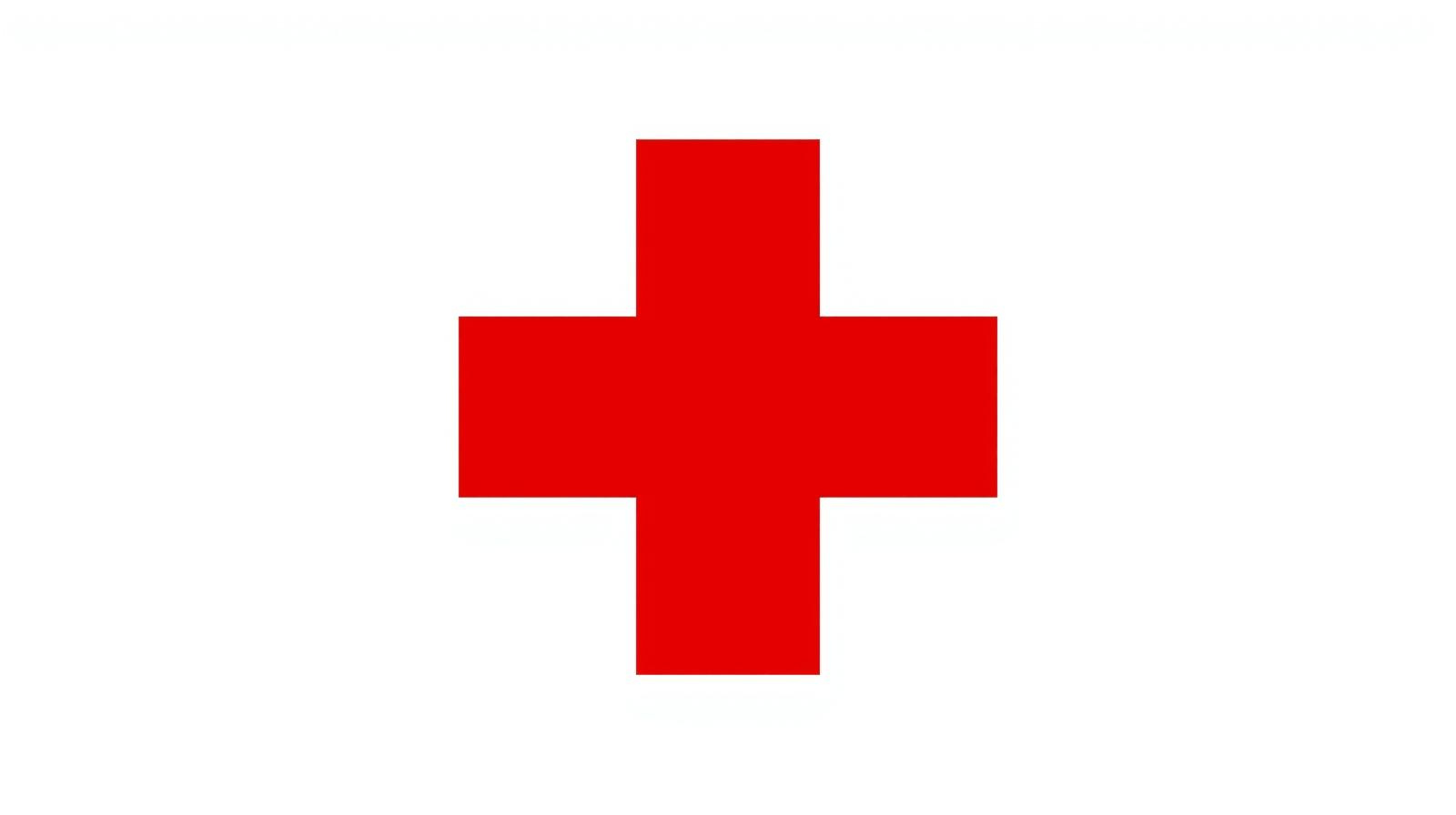
The committee moved quickly to turn vision into action. In October 1863, they convened an international conference in Geneva, attended by delegates from 16 nations. This gathering led to the adoption of ten resolutions that formed the foundation of the Red Cross movement, including the crucial decision to adopt a white armband with a red cross as the protective emblem for medical personnel.
The following year, on 22nd August 1864, saw an even more significant achievement: the signing of the first Geneva Convention. Twelve governments formally agreed to the Convention for the Amelioration of the Condition of the Wounded in Armies in the Field. This treaty established that wounded soldiers should receive care regardless of which side they fought for, that medical personnel and facilities should be recognised as neutral and protected, and that the red cross on a white background would serve as the protective emblem. Switzerland itself, though not a party to the conflicts the convention addressed, was chosen as the depositary of the treaty, a role it maintains to this day.
Growth and Evolution
The Red Cross movement expanded rapidly. National Red Cross societies were established across Europe and beyond, each adapting the humanitarian principles to their own contexts while maintaining the core mission. The Ottoman Empire adopted the Red Crescent in 1876, recognising that the cross symbol might be seen as sectarian in Muslim countries. Later, Israel would adopt the Red Crystal, creating a truly universal emblem of humanitarian protection.
The Geneva Conventions themselves evolved and expanded. The original 1864 treaty was followed by revisions and additions in 1906, 1929, and most significantly in 1949, when four comprehensive conventions were adopted in the wake of World War II. These 1949 Geneva Conventions, along with their Additional Protocols adopted in 1977 and 2005, form the core of modern international humanitarian law, protecting wounded soldiers, prisoners of war, civilians in wartime, and establishing the fundamental rules of armed conflict.
Throughout this evolution, the ICRC remained headquartered in Geneva, maintaining its unique position as an impartial, neutral, and independent organisation. Composed exclusively of Swiss citizens as a matter of tradition (though this has been debated in recent years), the ICRC serves as the guardian of international humanitarian law and the promoter of humanitarian principles worldwide.
Legacy and Principles
The Red Cross movement rests on seven fundamental principles, formalised in 1965: humanity, impartiality, neutrality, independence, voluntary service, unity, and universality. These principles have guided the movement through more than 150 years of conflicts, disasters, and humanitarian crises.
The legacy of that committee of five Genevans is staggering. The International Red Cross and Red Crescent Movement is now the world’s largest humanitarian network, with more than 192 National Societies, approximately 17 million volunteers worldwide, and a presence in virtually every country. The movement has been awarded the Nobel Peace Prize three times, in 1917, 1944, and 1963, while Henry Dunant himself was co-recipient of the very first Nobel Peace Prize in 1901.
The Geneva Conventions have achieved near-universal ratification, with 196 states party to the treaties, making international humanitarian law one of the most widely accepted bodies of international law. The principles of distinction between combatants and civilians, proportionality, and humanity in warfare, all traceable to those early Swiss reformers, are now considered fundamental to civilised conduct even in the chaos of armed conflict.
The Red Cross Today
Today, the ICRC continues to operate from Geneva, maintaining its role as guardian and promoter of international humanitarian law. The organisation works in conflict zones worldwide, visiting prisoners of war, reuniting families separated by conflict, providing medical care, ensuring access to clean water, and advocating for respect for the laws of war. In 2024, the ICRC operated in over 100 countries with a budget of approximately 2.4 billion Swiss francs.
The Swiss connection remains vital. Switzerland’s permanent neutrality provides the ideal environment for the ICRC’s impartial operations. The Swiss government supports the ICRC both financially and diplomatically, while Swiss humanitarian tradition continues to influence the organisation’s culture and values. Geneva itself has become the humanitarian capital of the world, hosting not only the ICRC but also numerous other international organisations and NGOs working on humanitarian issues.
3
National Red Cross societies, including the Swiss Red Cross (founded in 1866), focus on domestic humanitarian work and disaster relief while supporting international operations. They provide first aid training, blood donation services, support for vulnerable populations, and disaster response capabilities. During the COVID-19 pandemic, Red Cross and Red Crescent societies worldwide mobilised millions of volunteers to support healthcare systems, deliver essential supplies, and combat misinformation.
The movement faces contemporary challenges that Dunant could never have imagined: cyber warfare, climate change-induced disasters, unprecedented displacement of populations, and humanitarian crises in urban environments. Yet the fundamental questions remain the same: How do we protect human dignity in times of crisis? How do we ensure that even in war, certain lines are not crossed? How do we reach those most in need, regardless of political boundaries or allegiances?
A Living Testament
The International Red Cross stands as perhaps the most enduring achievement of Swiss humanitarian tradition. Born from one man’s refusal to accept suffering as inevitable, nurtured by a committee of dedicated Genevans, and formalised through Switzerland’s diplomatic efforts, it has become a global movement that has saved countless millions of lives.
The red cross emblem, a reversal of the Swiss flag, chosen to honour the country of the movement’s birth, is now recognised worldwide as a symbol of hope and protection. In an increasingly complex and interconnected world, the principles established in 19th-century Geneva remain as relevant as ever, a testament to the power of compassion, the importance of neutral humanitarian action, and the possibility that even in humanity’s darkest moments, we can choose to care for one another.
Switzerland’s role in founding and continuing to support the Red Cross movement represents one of the most significant contributions any neutral nation has made to /global humanitarian efforts. From the battlefields of Solferino to modern conflict zones, from a committee of five to a movement of millions, the Red Cross endures as a living reminder that humanity, even in its most difficult moments, can aspire to something better.
Leave a Reply