
Every year on 7th November, Sweden celebrates National Mud Cake Day, known in Swedish as Kladdkakans dag. Dedicated to one of the nation’s most beloved desserts, the day honours the rich, gooey chocolate cake known as kladdkaka, a simple yet irresistible treat that has become a staple of Swedish homes, cafés, and fika culture. The word kladdig means “sticky” or “messy,” an apt description for a cake whose appeal lies in its slightly underbaked centre and dense, fudgy texture.
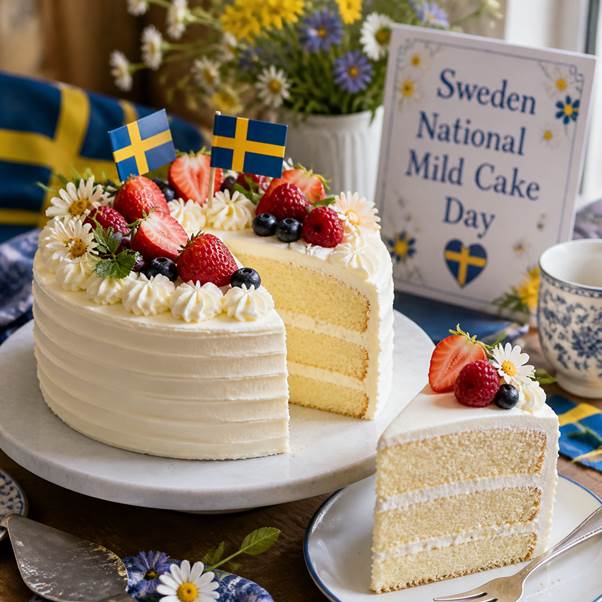
While many countries celebrate elaborate pastries or festive tortes, Sweden’s affection for the humble kladdkaka reflects the country’s appreciation for uncomplicated yet comforting baking traditions. National Mud Cake Day is both a celebration of a favourite dessert and a reminder of the social importance of sharing coffee and cake with family and friends.
What Is Kladdkaka?
Kladdkaka is a rich chocolate cake with a crisp outer crust and a soft, gooey interior. It shares certain characteristics with brownies and molten chocolate cakes, though it remains distinctly Swedish. Traditional recipes typically contain only a few ingredients:
- Butter
- Sugar
- Eggs
- Flour
- Cocoa powder
- Vanilla flavouring
Notably, kladdkaka is usually made without baking powder, which contributes to its dense texture and slightly sunken centre. It is often served with whipped cream, vanilla ice cream, fresh berries, or raspberry coulis.
The cake’s simplicity has helped make it one of Sweden’s most popular homemade desserts. Easy to prepare and requiring few ingredients, it remains a favourite for both experienced bakers and beginners.
Origins of the Swedish Chocolate Favourite
The precise origins of kladdkaka remain the subject of debate. One popular theory suggests that it emerged during the twentieth century when baking powder was difficult to obtain, leading Swedish bakers to adapt chocolate cake recipes by omitting the raising agent. Another account traces the modern recipe to chocolate cakes introduced from continental Europe and adapted for Swedish tastes.
Regardless of its exact beginnings, kladdkaka became increasingly popular during the latter half of the twentieth century and eventually achieved iconic status within Swedish cuisine. Today it is regarded as one of the country’s most recognisable desserts.
The Creation of Kladdkakans Dag
Although kladdkaka had been enjoyed for decades, its official day of recognition is relatively recent. National Mud Cake Day was established in 2008, reflecting Sweden’s fondness for assigning special days to beloved foods and pastries.
Sweden is renowned for its culinary celebration days, including:
- Kanelbullens dag (Cinnamon Bun Day)
- Semmeldagen (Semla Day)
- Våffeldagen (Waffle Day)
- Kladdkakans dag (Mud Cake Day)
These observances help preserve traditional baking culture while encouraging people to gather and enjoy classic Swedish treats.
Kladdkaka and the Swedish Fika Tradition
No discussion of kladdkaka would be complete without mentioning fika, the cherished Swedish custom of taking a break to enjoy coffee and something sweet in good company.
More than a simple coffee break, fika is a social institution that encourages relaxation, conversation, and community. Kladdkaka has become one of the desserts most commonly associated with this tradition, appearing in cafés, workplaces, schools, and homes throughout the country.
Its rich chocolate flavour pairs perfectly with strong Swedish coffee, making it a natural choice for afternoon gatherings.
How National Mud Cake Day Is Celebrated
Across Sweden, bakeries, cafés, and households celebrate 7 November in a variety of ways:
- Baking homemade kladdkaka
- Enjoying fika with friends and family
- Sampling different versions of the cake
- Visiting cafés offering special mud cake promotions
- Sharing recipes and photographs on social media
Many Swedish bakers experiment with modern variations, adding ingredients such as caramel, mint, coffee, orange, nuts, or white chocolate while preserving the dessert’s signature gooey centre.
A National Favourite
The appeal of kladdkaka lies in its accessibility. Unlike elaborate pastries requiring advanced skills, it can be created quickly with ingredients commonly found in most kitchens. The cake embodies the Swedish approach to baking: simple, practical, comforting, and delicious.
Its popularity has spread beyond Sweden’s borders, and today kladdkaka can be found on menus throughout Scandinavia and in many international cafés specialising in Nordic cuisine. Nevertheless, it remains deeply associated with Swedish culinary identity.
An Enduring Swedish Tradition
Sweden’s National Mud Cake Day demonstrates how a seemingly simple dessert can become a cultural icon. From its humble ingredients to its role in fika and family gatherings, kladdkaka represents the warmth and sociability at the heart of Swedish life.
Each year on 7th November, Swedes celebrate not merely a chocolate cake but a cherished tradition of hospitality, togetherness, and everyday enjoyment. For anyone wishing to experience a taste of Swedish culture, few treats offer a sweeter introduction than a slice of freshly baked kladdkaka.
Leave a Reply