
World Postcard Day: History, Culture, and the Enduring Charm of Global Correspondence
World Postcard Day, celebrated every year on 1st October, is an international observance dedicated to honouring the postcard as one of the most enduring and beloved forms of personal communication. Established in 2020 to coincide with the 150th anniversary of the world’s first official postcard, the day highlights the cultural, historical, and artistic significance of postcards, as well as their role in connecting people across borders. In an age dominated by digital communication, World Postcard Day encourages individuals to rediscover the tactile pleasure of handwritten messages and the visual storytelling power of postcard imagery.
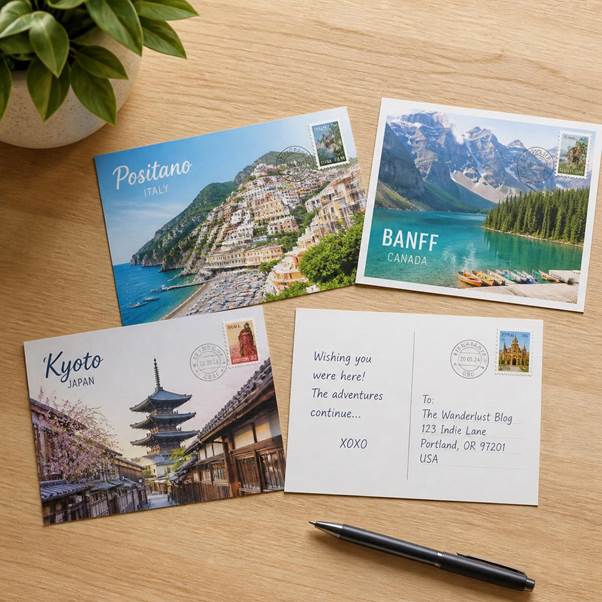
The origins of the postcard date back to the mid‑nineteenth century, when postal reforms across Europe made communication more accessible and affordable. Austria‑Hungary issued the first official postcard in 1869, introducing a simple, lightweight card that allowed people to send short messages without envelopes. The innovation quickly spread across the world, with countries adopting their own designs, regulations, and artistic styles. By the early twentieth century, postcards had become a global phenomenon, used for travel souvenirs, holiday greetings, artistic prints, and everyday correspondence. World Postcard Day commemorates this long history, celebrating the postcard as both a practical communication tool and a cultural artefact.
Culturally, postcards have played a significant role in documenting social history. Their images capture landscapes, architecture, festivals, and everyday life, offering visual snapshots of different eras and places. Many postcards feature artwork, photography, or graphic design that reflects local identity and artistic trends. Collectors, known as deltiologists, have preserved millions of postcards, creating archives that provide valuable insights into historical travel, communication, and cultural exchange. World Postcard Day encourages appreciation of this cultural heritage, highlighting how postcards serve as miniature records of human experience.
In contemporary society, the observance promotes the joy of sending and receiving physical mail. Writing a postcard requires intention, creativity, and personal expression, making it a meaningful alternative to instant digital messages. Schools, libraries, museums, and postal organisations often participate in World Postcard Day by hosting workshops, exhibitions, and writing events. These activities encourage people of all ages to engage with traditional correspondence, learn about postal history, and explore the artistic possibilities of postcard design. Many participants join global postcard‑exchange projects, sending cards to recipients around the world and fostering international friendship.
World Postcard Day also highlights the role of postal services in connecting communities. Postal workers, mail carriers, and postal institutions are recognised for their contributions to communication, logistics, and cultural preservation. The day underscores the importance of maintaining accessible and reliable postal networks, especially in rural or underserved regions where physical mail remains essential. By celebrating postcards, the observance also acknowledges the broader social value of postal infrastructure.
Artistically, postcards continue to inspire creativity. Contemporary designers, illustrators, and photographers produce postcards that blend traditional aesthetics with modern styles. Independent artists often use postcards as affordable, portable formats for sharing their work. World Postcard Day encourages artistic experimentation, inviting creators to design commemorative cards, reinterpret historical styles, or explore themes related to travel, identity, and memory. This artistic dimension ensures that postcards remain relevant and dynamic in the modern cultural landscape.
Ultimately, World Postcard Day celebrates the postcard as a symbol of human connection, artistic expression, and cultural memory. It invites people to slow down, reflect, and share meaningful messages with others, whether across the street or across the world. Each year on 1st October, the observance reaffirms the enduring charm of postcards and their ability to bring joy, preserve history, and strengthen global bonds.
Leave a Reply