
Colombia’s Flag Day, observed each year on 7th August, is a national celebration that honours the history, symbolism, and evolution of the Colombian tricolour. The date is inseparable from one of the most defining moments in the nation’s past, the Battle of Boyacá in 1819. This victory, led by Simón Bolívar and the patriot army, secured Colombia’s independence from Spanish rule and marked the beginning of a new republican identity. By linking Flag Day to this historic triumph, Colombians commemorate not only the flag itself but also the sacrifices, ideals, and unity that shaped the birth of the nation.
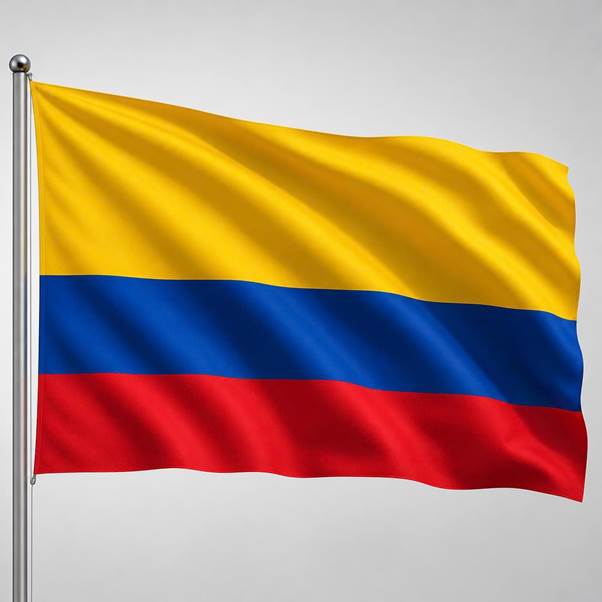
The origins of Colombia’s flag reach back to the revolutionary vision of Francisco de Miranda, whose ideas about a unified, liberated Spanish America inspired several national flags across the region. Miranda’s tricolour, yellow, blue, and red, was first raised in 1806 and later adopted by independence movements throughout northern South America. When Colombia became part of Gran Colombia after the victory at Boyacá, the tricolour became the emblem of a new republic built on Enlightenment principles, sovereignty, and collective identity. Over the 19th century, as Colombia transitioned through political reorganisations, from Gran Colombia to New Granada and eventually the Republic of Colombia, the flag evolved but retained Miranda’s foundational colours.
The modern Colombian flag was standardised in the early 20th century, featuring a wide yellow band above narrower blue and red stripes. Each colour carries deep symbolic meaning: yellow represents the richness of the land and the nation’s sovereignty; blue symbolises the seas and rivers that connect Colombia’s diverse regions; and red honours the blood shed during the struggle for independence. These interpretations are taught widely in schools and reinforced through civic ceremonies, making the flag a central part of national identity.
Flag Day grew in prominence as Colombia sought to strengthen historical awareness and patriotic unity. Schools, government institutions, and military organisations mark the day with flag‑raising ceremonies, historical reenactments, and lessons on the independence movement. Communities honour national heroes such as Simón Bolívar, Antonio Nariño, and Policarpa Salavarrieta, whose leadership and sacrifice shaped the early republic. The holiday also encourages reflection on Colombia’s cultural diversity, reminding citizens that the tricolour represents Indigenous nations, Afro‑Colombian communities, rural villages, and modern cities alike.
Today, Colombia’s Flag Day stands as a powerful expression of national pride. It connects modern Colombians to the struggles and victories of the past, celebrates the symbolism of the tricolour, and reinforces the values of independence, unity, and resilience that continue to guide the nation. The flag remains a living emblem, one that carries centuries of history while inspiring future generations.
Leave a Reply