
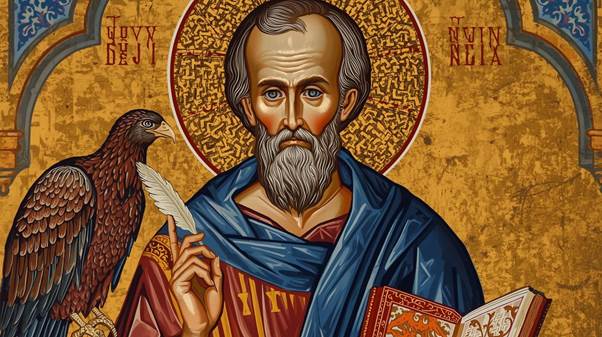
Every year on 26th September, the Eastern Orthodox Church celebrates one of its most beloved feast days: the commemoration of St. John the Theologian, also known as St. John the Apostle and Evangelist. This celebration honours the “disciple whom Jesus loved,” whose profound theological insights earned him the unique title of “Theologian”, a designation shared by only two other saints in Orthodox tradition: St. Gregory of Nazianzus and St. Symeon the New Theologian.
Historical Origins of the 26th September Feast
The 26th September feast day has deep historical roots in the Eastern Christian tradition, though its origins are somewhat distinct from the December 27th commemoration observed in the Western Church. The dating and nature of Orthodox feast days often reflect local traditions where the saint lived, taught, or was buried, and in John’s case, his profound connection to Ephesus and the broader Eastern Christian world shaped the celebration.
The 26th September date specifically commemorates St. John the Theologian’s repose (death) and his unique spiritual legacy. According to Church tradition preserved in the writings of early fathers such as St. Irenaeus of Lyons and Eusebius of Caesarea, John lived to an extremely advanced age in Ephesus, possibly into his nineties or beyond, making him the longest-lived of the apostles and the only one to die a natural death rather than suffering martyrdom.
The feast was well-established by the Byzantine period, appearing in early liturgical calendars and menologia (liturgical books listing saints’ commemorations). The 10th-century Menologion of Basil II, an illuminated manuscript created for the Byzantine Emperor, includes the 26th September feast, indicating its importance in imperial and ecclesial observance by that time.
The designation of John as “Theologian” reflects the Eastern Church’s recognition of his unparalleled contribution to Christian understanding of the divine nature. His Gospel prologue, “In the beginning was the Word, and the Word was with God, and the Word was God”, provided the theological foundation for understanding Christ’s divinity and the mystery of the Incarnation. His emphasis on divine love and light shaped Orthodox spirituality for centuries.
The Theological Significance of St. John in Orthodox Tradition
In Orthodox Christianity, St. John holds a position of extraordinary reverence. He is honoured not merely as one of the Twelve Apostles, but as the intimate friend of Christ who reclined on the Lord’s breast at the Last Supper, stood faithfully at the foot of the Cross when others fled, and received from Christ the care of His mother, Mary.
Orthodox theology particularly treasures John’s Gospel, which is read during Pascha (Easter), at ordinations, and at numerous liturgical occasions throughout the year. The opening verses of John’s Gospel are recited at the conclusion of every Divine Liturgy in many Orthodox traditions, underscoring its centrality to Orthodox worship and thought.
The Orthodox Church venerates John as the visionary who received the Apocalypse (Book of Revelation) on the island of Patmos, where he was exiled during the persecution under Emperor Domitian. This mystical experience of divine revelation further established John’s role as a bridge between heaven and earth, one who was granted glimpses of eternal realities and communicated them to the Church.
Eastern Christian art and iconography reflect John’s special status. He is typically depicted as an elderly man with a long beard, often shown dictating his Gospel to his disciple Prochorus, or holding a scroll or book. Frequently, an eagle, the traditional symbol of John, representing the soaring heights of his theological vision, appears near him. Some icons show him receiving divine inspiration directly from Christ or the Theotokos (Mary, the Mother of God).
Liturgical Celebration: Services and Hymns
The Orthodox celebration of St. John the Theologian on September 26th follows the rich liturgical patterns that characterize feast days in the Eastern Church. The observance actually begins the evening before, on September 25th, with Great Vespers, as Orthodox feast days are calculated from sunset to sunset following the ancient Jewish reckoning of time.
Vespers and Matins
Great Vespers includes special hymns (troparia and kontakia) composed specifically for St. John’s feast. These hymns praise John’s theological wisdom, his intimate relationship with Christ, and his role as the beloved disciple. The verses often reference his Gospel’s imagery of light and love:
“O Apostle John, beloved of Christ, hasten to deliver a defenceless people. He who allowed you to recline on His breast receives you as you bow before Him. Implore Him to dispel the persistent cloud of nations, asking for our peace and great mercy.”
At Matins (Orthros), celebrated early on the morning of September 26th, additional hymns and psalms honour the saint. The Canon—a complex poetic composition of nine odes, recounts John’s life, his witness to Christ’s ministry, his authorship of sacred texts, and his influence on Christian theology. The Polyeleos (“Many Mercies”), a festive portion of Matins featuring Psalms 134 and 135, is sung, indicating the feast’s elevated status.
The Matins Gospel reading typically comes from John 21:15-25, the passage describing Jesus’s post-resurrection conversation with Peter about John’s future, which concludes with the mysterious statement: “If I want him to remain until I come, what is that to you?” This passage gave rise to the early tradition that John would not die but remain alive until Christ’s second coming, a tradition John himself later corrected, though it speaks to the special regard in which he was held.
The Divine Liturgy
The Divine Liturgy celebrated on 26th September features special scripture readings. The Epistle reading is typically from 1 John 4:12-19, which contains some of the most beautiful passages on divine love in all of Scripture: “God is love, and whoever abides in love abides in God, and God abides in him.” This reading encapsulates John’s central message and his mature theological reflection on the nature of God.
The Gospel reading usually comes from John 19:25-27 and 21:24-25, passages describing John’s presence at the Crucifixion when Jesus entrusted Mary to his care, and the attestation of John’s authorship of his Gospel. These readings emphasise John’s unique role as witness, guardian, and evangelist.
Throughout the liturgy, special hymns replace the usual variable hymns. The Troparion (a short hymn summarising the feast) and Kontakion (a longer poetic meditation) for St. John are sung multiple times. Priests vest in white or gold vestments, colours associated with the apostles and great feasts in Orthodox tradition.
In monasteries and parishes with full liturgical services, the celebration includes the reading of the Synaxarion, a liturgical account of the saint’s life read during Matins, which recounts John’s biography, his ministry in Ephesus, the writing of his Gospel and epistles, his exile to Patmos, and the traditions surrounding his repose.
Traditional Customs and Practices
Beyond the formal liturgical services, the feast of St. John the Theologian is marked by various customs and traditions that have developed across different Orthodox cultures over the centuries.
Fasting and Feasting
In the Orthodox Church, feast days are typically occasions for both spiritual intensification and communal celebration. If 26th September falls on a Wednesday or Friday (traditional fasting days), the usual strict fast is relaxed in honour of the feast, and fish, wine, and oil are permitted.
After the Divine Liturgy, parishes and families typically gather for a festive meal. In Greek communities, this might include special dishes associated with celebration: lamb, fish, various mezes (appetizers), and sweets such as baklava or kourabiedes. In Russian and Slavic traditions, the festive table might feature pirozhki (stuffed pastries), fish dishes, and celebration cakes.
The communal meal serves not only as a celebration but as an embodiment of the very love and fellowship that St. John preached. His repeated injunction to “love one another” finds practical expression in the gathering of the faithful around a common table.
Pilgrimages
In regions with strong historical connections to St. John, pilgrimage traditions have developed around his feast day. The most significant of these is in Ephesus (modern-day Turkey), where pilgrims visit the Basilica of St. John built by Emperor Justinian over the apostle’s traditional burial site.
Orthodox Christians, particularly from Greece, make pilgrimages to Ephesus for the feast, participating in special services at the basilica ruins. In recent years, the Ecumenical Patriarchate of Constantinople has occasionally celebrated the Divine Liturgy at the site on or near September 26th, drawing Orthodox faithful from across the world.
The nearby island of Patmos, where John received the Revelation, also attracts pilgrims. The Cave of the Apocalypse, where tradition holds that John lived and received his visions, becomes a particular focus of devotion. The Monastery of St. John the Theologian, perched on a hill overlooking the island’s main town, celebrates with special solemnity, as the monastery houses important relics and manuscripts associated with the saint.
In Greece itself, numerous churches dedicated to St. John celebrate their patronal feast with particular grandeur. These celebrations often include processions with icons, special services extending over multiple days, and community festivals that blend religious observance with cultural celebration.
Icons and Veneration
A central practice on the feast day is the veneration of icons of St. John. In Orthodox churches, a special icon of the saint is placed in a prominent position, often in the centre of the nave, where worshippers can approach to kiss the icon and light candles before it.
Many Orthodox Christians have icons of St. John in their homes, and the feast day is an occasion to honour these icons with prayer and the lighting of oil lamps or candles. Families might gather before the icon to pray the Troparion and Kontakion of the feast, read passages from John’s Gospel or epistles, and ask the saint’s intercession.
Some parishes and monasteries possess relics of St. John, fragments of his remains, or items associated with him, which are brought out for special veneration on his feast day. The presence of relics is considered a particular blessing, as Orthodox theology views them as channels of grace and tangible connections to the saints.
Monastic Observances
In Orthodox monasteries, the celebration of St. John’s feast takes on additional dimensions. Monastic communities often observe an all-night vigil (Agrypnia) from the evening of September 25th through the early morning of September 26th, combining Vespers, Matins, and the Divine Liturgy in one continuous service lasting many hours.
Monks and nuns particularly honour St. John as a model of contemplative life and theological depth. His later years in Ephesus, when, according to tradition, he was carried into the assembly of believers and repeatedly proclaimed “Little children, love one another,” serve as an inspiration for monastic communities seeking to embody simplicity, love, and devotion.
–
Some monasteries maintain the tradition of reading John’s Gospel in its entirety on the feast day, either during services or in the refectory during meals. This practice connects the community directly with the saint’s primary written legacy.
Educational and Catechetical Focus
Many Orthodox parishes use the feast of St. John as an educational opportunity, particularly for children and catechumens (those preparing for baptism). The day might include special classes or presentations on John’s life, his Gospel, and his epistles.
Sunday schools and youth groups often create projects related to St. John—perhaps studying the Gospel’s unique characteristics compared to the Synoptic Gospels, examining the symbols associated with John (the eagle, the cup, the book), or learning about Ephesus and Patmos.
In theological schools and seminaries, the feast day might be marked by special lectures or symposia on Johannine theology, examining topics such as the Logos doctrine, John’s presentation of Christ’s divinity, his ecclesiology, or his eschatology.
Regional Variations in Celebration
While the liturgical core of the feast remains consistent across Orthodox jurisdictions, various regional and cultural traditions add distinctive elements to the celebration.
Greek Orthodox Traditions
In Greece and Greek Orthodox communities worldwide, St. John the Theologian is particularly beloved, reflecting the strong connection between Greek Christianity and Ephesus, where John spent his final years. Churches named Agios Ioannis Theologos are found throughout Greece, and these celebrate their patronal feast with special magnificence.
In some Greek villages, the feast day includes a panegyri, a traditional festival combining religious observance with community celebration. After the liturgy, the festivities might include traditional music, dancing, and shared meals extending late into the evening.
The island of Patmos, part of Greece, celebrates with special intensity. The Monastery of St. John the Theologian hosts pilgrims from across the Orthodox world, and the island’s churches coordinate services and processions. The celebration often extends beyond September 26th, with special events continuing for several days.
Russian Orthodox Traditions
In the Russian Orthodox tradition, St. John is venerated as Ioann Bogoslov (John the Theologian). Russian iconography often depicts him in the distinctive style of the Novgorod or Moscow schools, sometimes showing him in silence with his fingers to his lips, symbolising the mystical, ineffable nature of his theological insights.
Russian monasteries and churches often incorporate traditional choral music specific to the feast, with elaborate polyphonic settings of the liturgical hymns. The Russian tradition of bell-ringing adds another dimension, with special peals (zvons) marking the feast.
In some Russian communities, the feast day is associated with blessing books and manuscripts, reflecting John’s role as author of sacred texts. Students and scholars sometimes seek St. John’s intercession for wisdom and understanding in their studies.
Middle Eastern Orthodox Traditions
In the ancient patriarchates of Jerusalem, Antioch, and Alexandria, where Orthodox Christianity has been practiced continuously since apostolic times, the feast of St. John carries profound historical resonance. These communities celebrate with awareness of their direct connection to the apostolic age.
In Syria and Lebanon (under the Patriarchate of Antioch), Arabic-language liturgies feature traditional Byzantine melodies adapted to Arabic text. The celebration often includes traditional Middle Eastern foods and sweets shared in fellowship after the liturgy.
The Patriarchate of Jerusalem sometimes celebrates the feast with particular solemnity, given Jerusalem’s significance in John’s life, it was from Jerusalem that he witnessed the Ascension, received the Holy Spirit at Pentecost, and later departed for his mission in Asia Minor.
Contemporary Observance and Modern Adaptations
In the 21st century, the celebration of St. John’s feast day continues to evolve while maintaining its traditional core. Modern technology has enabled new forms of participation and dissemination of the feast’s meaning.
Digital Participation
Many Orthodox churches now livestream their services, allowing Orthodox Christians who cannot physically attend to participate in the liturgical celebration. Major churches in Greece, Russia, the United States, and other countries broadcast their 26th September services, making the feast accessible to a global audience.
Social media has become a platform for Orthodox Christians to share icons, hymns, and reflections on St. John. Hashtags like #StJohnTheTheologian and #FeastDay bring together a virtual community of believers celebrating across time zones and geographical boundaries.
Orthodox websites and apps provide the liturgical texts, hymns, and readings for the feast in multiple languages, helping worshippers prepare for and participate more fully in the services. Audio recordings of the feast’s hymns in various liturgical languages allow people to learn and internalize these beautiful compositions.
Ecumenical Dimensions
While 26th September is specifically an Orthodox feast day (Western churches typically commemorate St. John on 27th December), there has been growing ecumenical interest in the person and theology of St. John. Some Catholic and Protestant scholars and theologians have attended Orthodox celebrations of the feast, seeking to understand Eastern perspectives on this foundational Christian figure.
Ecumenical dialogues sometimes reference St. John’s repeated emphasis on love and unity, “that they may all be one”, as inspiration for Christian reconciliation efforts. The feast can serve as an occasion for ecumenical prayer and reflection on shared apostolic heritage.
Academic and Scholarly Observance
Universities and theological institutions with Orthodox connections may mark the feast with academic conferences or lectures on Johannine literature, theology, or the historical St. John. These scholarly observances complement the liturgical celebration, providing deeper understanding of the saint’s intellectual and spiritual contributions.
The Spiritual Message of the Feast
Beyond the liturgical forms and cultural customs, the feast of St. John the Theologian carries profound spiritual messages for contemporary Orthodox Christians.
The Call to Theological Depth
St. John’s title “Theologian” challenges believers to engage seriously with the intellectual dimensions of faith. In an age of religious superficiality and anti-intellectualism, John’s example reminds Orthodox Christians that loving God includes loving God with one’s mind. The feast encourages study, reflection, and the pursuit of a deeper understanding of divine mysteries.
The Primacy of Love
John’s repeated emphasis on love, “Beloved, let us love one another, for love is from God”, stands at the heart of his legacy. The feast day calls Orthodox Christians to examine their practice of love: love of God, love of neighbour, love even of enemies. In Orthodox understanding, theology divorced from love becomes barren scholasticism; John’s life and teaching integrate profound theological insight with practical love.
Intimacy with Christ
John’s relationship with Jesus, reclining on His breast, remaining faithful at the Cross, receiving the care of His mother, models the intimate, personal relationship with Christ that Orthodox spirituality seeks to cultivate. The feast reminds believers that Christianity is not merely adherence to doctrines or rules, but a living relationship with the Person of Christ.
Witness and Evangelism
As one who “bore witness” to what he had seen and heard, John exemplifies the call to evangelism that every Orthodox Christian shares. The feast day can inspire renewed commitment to sharing the Gospel, not merely through words, but through the transformed life that authentic encounter with Christ produces.
Hope in Eternal Life
The tradition that John did not truly die but fell into a deep sleep, and that his grave breathed forth a mysterious dust or manna, points to Christian hope in resurrection and eternal life. While the Orthodox Church has never definitively endorsed the most extreme versions of these traditions, they express the conviction that death has been conquered and that the saints live eternally in Christ.
Conclusion: A Timeless Celebration
The Orthodox celebration of St. John the Theologian on September 26th represents a living continuity with the apostolic age. Through centuries of liturgical development, cultural adaptation, and historical change, the essential elements of the feast have been preserved: the gathering of the faithful for worship, the proclamation of scripture, the singing of hymns, the veneration of icons, and the communal meal.
For Orthodox Christians today, whether in ancient churches in Greece or Russia, or in newly established parishes in Africa, Asia, or the Americas, the feast of St. John the Theologian remains a moment to pause, reflect, and reconnect with foundational Christian truths. It is a day to contemplate the mystery of the Incarnation, “the Word became flesh and dwelt among us”, and to renew commitment to the way of love that John so powerfully proclaimed.
In a fragmented and often loveless world, the annual celebration of St. John’s feast offers a vision of unity, love, and divine light that remains as relevant and transformative as when the aged apostle first proclaimed it in Ephesus nearly two thousand years ago. The liturgical poetry, the gathered community, the ancient prayers, and the timeless Gospel all conspire to lift hearts and minds toward the eternal realities that John witnessed, proclaimed, and embodied, realities that continue to transform lives and shape communities wherever the feast is faithfully celebrated.
Leave a Reply