
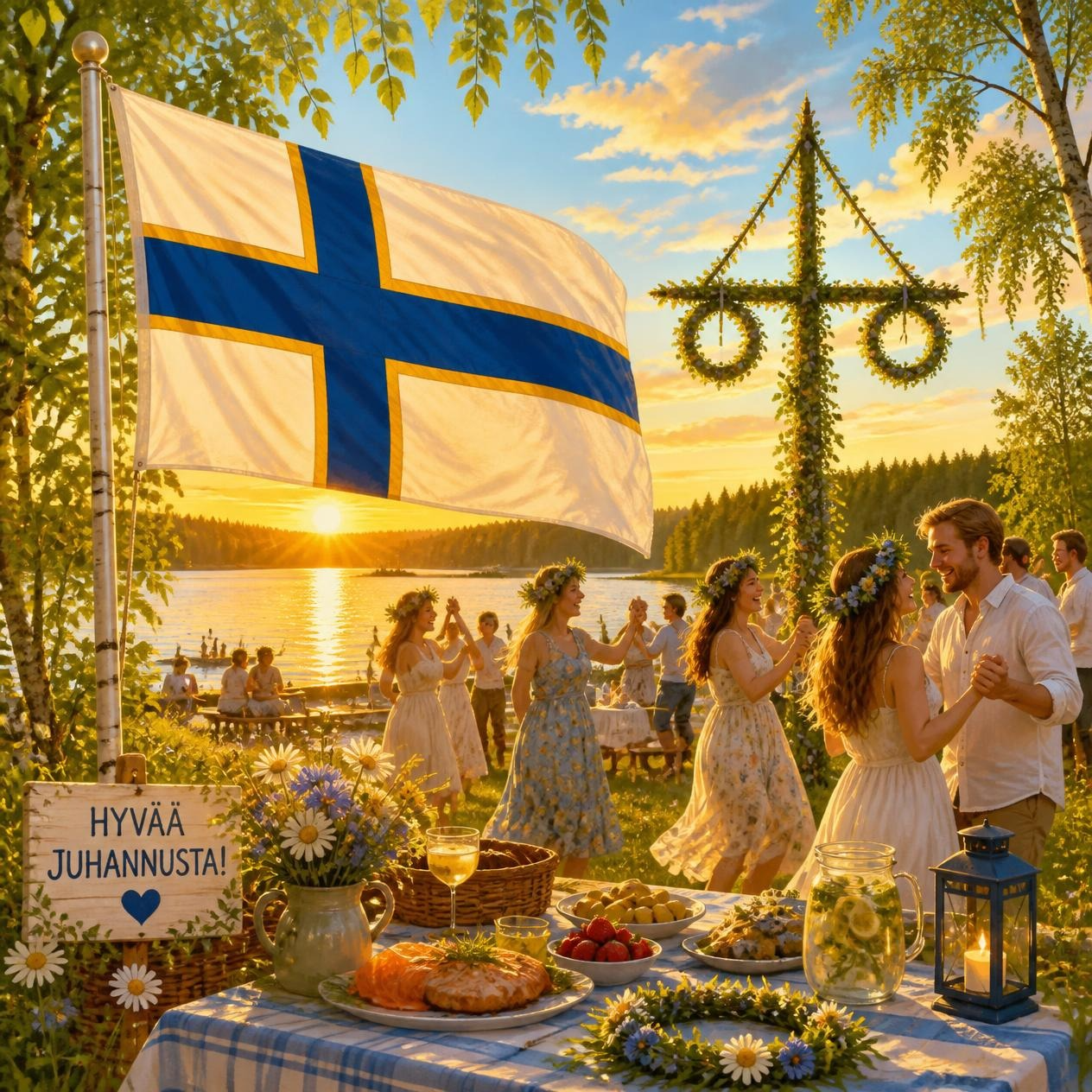
Finland’s Midsummer Flag Day, celebrated on the Saturday between 20th and 26th June, is one of the country’s most cherished national observances. Known locally as Juhannus, Midsummer marks the height of summer, the triumph of light over darkness, and the deep cultural traditions that define Finnish identity. It is also one of the few days in the year when the Finnish flag is flown around the clock, symbolising the midnight sun and the spirit of the nation.
What Midsummer Flag Day Represents
Midsummer Flag Day is both a national holiday and a celebration of Finnish culture, honouring:
- Finnish national identity
- The symbolism of the Finnish flag
- The traditions of Juhannus
- The power of nature and the midnight sun
The day reflects Finland’s deep connection to its landscape, lakes, forests, and endless summer light.
The Midnight Sun and the Flag
One of the most unique aspects of Midsummer Flag Day is that the Finnish flag is flown from 6 pm on Midsummer Eve until 9 pm on Midsummer Day, effectively flying overnight. This is symbolic of:
- The midnight sun, which keeps the sky bright through the night
- The endurance and resilience of the Finnish people
- The unity of the nation during its most celebrated season
It is the only time of year when the flag is officially allowed to remain raised through the night.
How Finland Celebrates Midsummer
Midsummer is one of Finland’s biggest holidays, often considered even more important than Christmas. Celebrations include:
- Lighting bonfires (kokko)** along lakeshores
- Sauna traditions shared with family and friends
- Midsummer dances and music in villages and towns
- Boating and cottage life
- Flower wreaths and folk customs
Cities often become quiet as people travel to the countryside to celebrate.
The History Behind the Flag Day
Finland officially designated Midsummer as Flag Day in 1934. The decision reflected:
- The importance of Midsummer in Finnish culture
- The desire to honour national unity
- The symbolism of light during the country’s brightest season
It also commemorates Johan Vilhelm Snellman, a key figure in Finnish nationalism, whose contributions helped shape the Finnish language and identity.
Why Midsummer Flag Day Matters
The day carries deep meaning for Finns because it celebrates:
- Nature, which is central to Finnish life
- Light, after long, dark winters
- Community, as families gather at cottages
- Tradition, passed down through generations
- National pride, symbolised by the blue‑and‑white flag
It is a moment when the entire country pauses to appreciate its heritage and the beauty of summer.
Conclusion
Finland’s Midsummer Flag Day is a powerful blend of national pride, cultural tradition, and natural wonder. With bonfires glowing, saunas steaming, and the flag flying through the bright northern night, the day captures the essence of Finnish identity, resilient, peaceful, and deeply connected to the land.
Leave a Reply