
Who Are These Saints?
On 15th June, the Orthodox Church commemorates three faithful servants of the Apostle Paul, Saints Fortunatus, Achaicus, and Stephanas, along with St. Stephen the Protomartyr. These men are numbered among the Seventy Apostles, that group of disciples chosen and sent out by Christ to spread the Gospel.
Saints Fortunatus, Achaicus, and Stephanas
These three men are known primarily through St. Paul’s first letter to the Corinthians, where he writes with gratitude and affection about their service. Paul mentions them specifically in 1 Corinthians 16:17-18: “Now I rejoice in the presence of Stephanas, Fortunatus, and Achaicus, because they have supplied what was lacking from you; for they refreshed my spirit as well as yours. Therefore, give recognition to such men.”
Stephanas stands out as the leader among the three. His household was among the first converts in the province of Achaia, and Paul himself baptised them, making them what he called the “firstfruits” of that region. Paul describes how Stephanas and his household “devoted themselves to the service of the saints,” indicating they took it upon themselves to serve the Christian community without being formally appointed.
Fortunatus bears a Latin name meaning “blessed” or “fortunate,” which was commonly given to Roman slaves or freedmen. Some scholars suggest he may be the same person as Tychicus, mentioned in Acts and Paul’s epistles, though this remains uncertain. Tradition holds that Fortunatus delivered Paul’s epistles to the Ephesians and Colossians.
Achaicus also has a Latin name, meaning “one from Achaia,” suggesting he too may have been a slave or former slave, possibly named after the province itself. The three men likely travelled together from Corinth to Ephesus, carrying a letter from the Corinthian church to Paul.
Their Ministry and Martyrdom
These three men were coworkers of Paul who wholeheartedly helped spread the Gospel among the nations. They made the arduous journey, either by foot (roughly 900 miles) or by ship across the Aegean Sea—to visit Paul in Ephesus while he was ministering there. Their visit was not merely social; they brought material support, carried correspondence between Paul and the Corinthian church, and provided the apostle with much-needed companionship and encouragement during his absence from Corinth.
Paul’s words reveal the depth of their service: “They refreshed my spirit and yours also.” This refreshment went beyond physical assistance to include spiritual encouragement and fellowship that sustained both Paul and the believers back in Corinth. Paul explicitly urged the Corinthian church to “submit to such people and to everyone who joins in the work and labour’s at it” and to “acknowledge such men.”
According to Orthodox tradition, all three eventually received the crown of martyrdom, dying for their witness to Christ, though the specific circumstances of their deaths are not preserved in historical records.
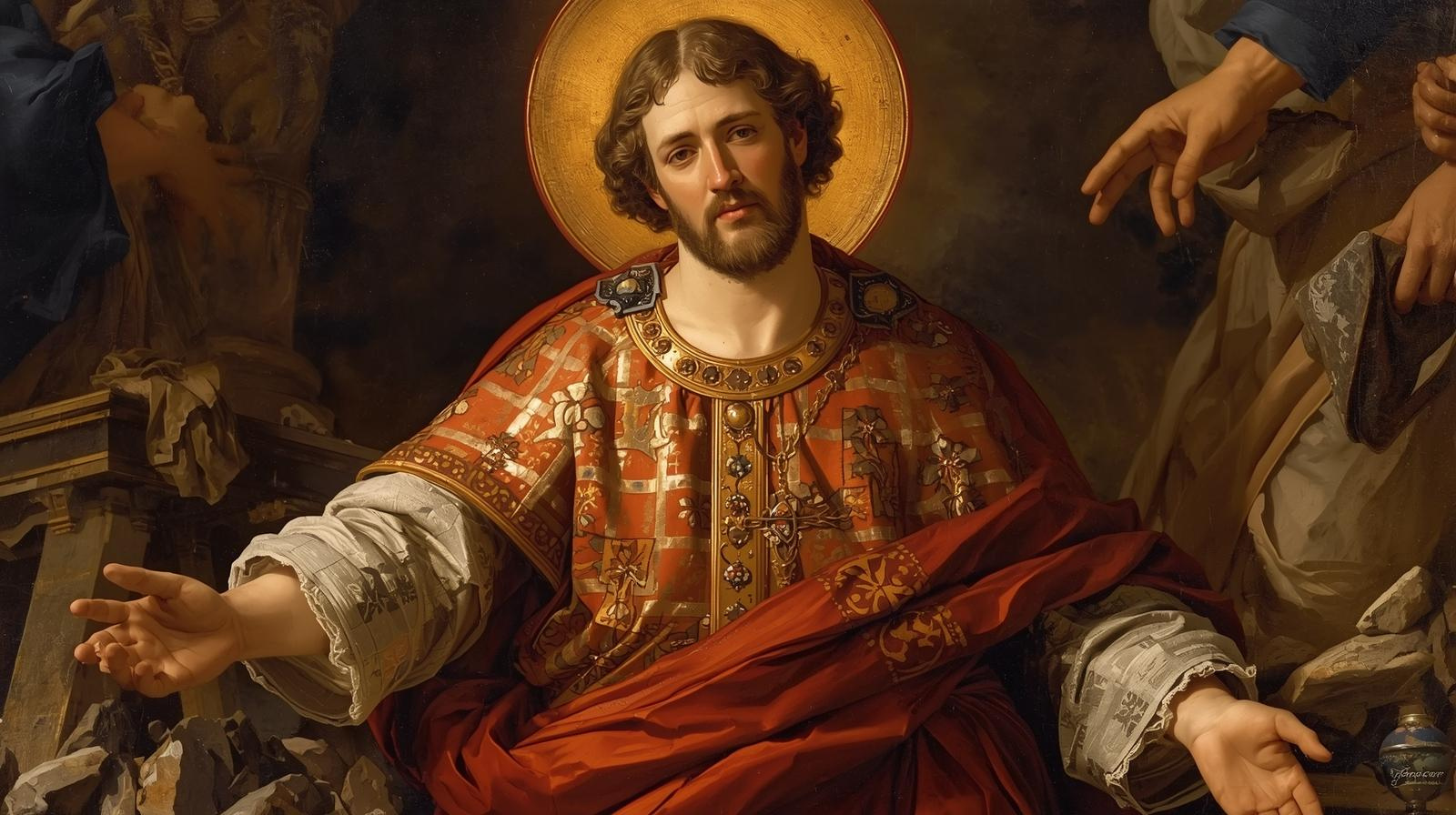
St. Stephen the Protomartyr
St. Stephen is commemorated on this date along with Fortunatus, Achaicus, and Stephanas, though his primary feast day is 26th December. As the first Christian martyr and one of the original seven deacons ordained by the Apostles, Stephen holds a special place in the communion of saints. His inclusion in the 15th June commemoration connects him with the other apostolic workers who served the early Church and ultimately gave their lives for Christ.
Who Celebrates This Feast?
This feast is primarily celebrated in the Orthodox Church, including:
- The Greek Orthodox Church
- The Russian Orthodox Church
- The Orthodox Church in America
- The Antiochian Orthodox Church
- Other Eastern Orthodox jurisdictions
Some Eastern Catholic Churches that follow the Byzantine Rite may also observe this commemoration. The feast is part of the liturgical calendar but is considered a minor feast compared to major celebrations like Pascha or the Theotokos feasts.
When and Where Is It Celebrated?
Date: 15th June according to the Julian or Revised Julian calendar (depending on the jurisdiction)
Location: The feast is celebrated wherever Orthodox Christianity is practiced:
- Orthodox churches and monasteries worldwide
- Parish churches in Greece, Russia, Romania, Serbia, and other traditionally Orthodox countries
- Orthodox communities in North America, Western Europe, Australia, and throughout the diaspora
- Monasteries and parishes dedicated to any of these saints
The celebration is not tied to a specific geographical location but is observed universally throughout the Orthodox Church, though it may receive special attention in churches dedicated to any of these saints or in regions with particular devotion to the Seventy Apostles.
What Happens During the Celebration?
Liturgical Services
Orthodox churches commemorate this feast with the standard cycle of daily services, which may include:
Great Vespers (the evening before, June 14th): This service includes special hymns (stichera) sung during “Lord, I Call,” commemorating the three apostles and their service to Christ and His Church.
Matins (morning of 15th June): The service includes readings from the Psalms, canons with troparia honouring the saints, and the Gospel reading. The hymnography focuses on the apostles’ faithfulness, their service to St. Paul, and their witness to Christ.
Divine Liturgy (15th June): The central celebration of the Eucharist includes:
- Special troparia and kontakia for the feast
- Epistle reading from 1 Corinthians (often the passage mentioning these three men)
- Gospel reading appropriate to the commemoration of apostles
- Prayers and hymns honouring the saints
The Hymns (Troparia and Kontakia)
The Church sings special hymns composed for this feast. While the exact texts vary by tradition, they typically include:
Troparion: A short thematic hymn that summarises the significance of the saints. One version calls the faithful to “praise with hymns the choir of the seventy disciples of Christ.”
Kontakion: A hymn with theological content that explores the meaning of the saints’ witness and their role in the early Church.
These hymns emphasise several themes:
- The apostles’ faithful service to St. Paul and the early Church
- Their role as coworkers in spreading the Gospel
- The spiritual refreshment they provided to fellow believers
- Their ultimate sacrifice through martyrdom
- Their example of humble, devoted service
The Spiritual Focus
During the services, the Church holds up these three men as models of Christian service. The hymns and readings emphasise:
- Devoted Service: How they voluntarily devoted themselves to serving God’s people without seeking recognition or reward
- Spiritual Refreshment: Their ability to encourage and strengthen others in the faith
- Faithful Companionship: Their willingness to undertake difficult journeys to support apostolic ministry
- Humble Labour: Their example of working behind the scenes to enable the greater mission
- Martyric Witness: Their ultimate sacrifice for Christ
The priest may deliver a homily reflecting on the apostles’ example and how contemporary Christians can emulate their spirit of service, especially in supporting pastoral ministry and serving the Church community with devotion.
Historical Significance
The commemoration on 15th June serves several important purposes in Orthodox spirituality:
Honouring Unsung Heroes
Stephanas, Fortunatus, and Achaicus represent the countless faithful Christians who served the early Church in vital but less visible ways. While they were not among the Twelve Apostles and did not write epistles or perform spectacular miracles recorded in Scripture, their faithful service was essential to the Church’s growth and Paul’s ministry.
Connection to the Seventy Apostles
By commemorating them as part of the Seventy Apostles (also called Seventy Disciples), the Church connects them to the broader mission of evangelisation that Christ initiated when He sent out seventy disciples to prepare the way before Him (Luke 10:1). These saints are also commemorated collectively on January 4th, the Synaxis of the Seventy Apostles.
A Model for All Christians
Their story teaches that every Christian is called to service in the Church. Not everyone will be a bishop, priest, or deacon, but everyone can serve “the saints” (fellow Christians) with devotion. Paul’s instruction to the Corinthians to “acknowledge such men” reminds the Church in every age to honour and appreciate those who labour faithfully in often unrecognised ways.
Modern Observance
In Parish Life
Today, 15th June is observed in Orthodox parishes with the prescribed liturgical services. In churches using the Old Calendar (Julian), the feast falls thirteen days later by the civil calendar. Depending on the day of the week and other liturgical considerations, the celebration may be more or less elaborate.
Many parishes may not have a vigil or extended services unless 15th June falls on a Sunday or the church has a particular devotion to these saints. However, the troparion and kontakion for the feast will be incorporated into the daily services, and the saints will be commemorated in the litanies and prayers.
Personal Devotion
Orthodox Christians may honour these saints through:
- Attending the Divine Liturgy on 15th June
- Reading the Epistle and Gospel passages associated with the feast
- Praying to the saints for intercession
- Reflecting on the example of humble, devoted service
- Supporting their local parish and clergy as these saints supported Paul
- Learning about the lives of lesser-known saints and apostles
Lessons for Contemporary Christians
The commemoration of Stephanas, Fortunatus, and Achaicus on June 15th offers timeless lessons:
The Value of Support Ministry: Not everyone can be on the front lines of evangelisation, but everyone can support those who are. These saints remind us that carrying letters, providing material support, offering encouragement, and making sacrifices to help ministry leaders are themselves forms of apostolic service.
Refreshing Others’ Spirits: In an age of burnout and ministry fatigue, the example of those who “refreshed the spirit” of Paul and the Corinthians reminds us of the importance of encouragement, companionship, and genuine care for fellow believers.
Recognition and Gratitude: Paul’s instruction to “acknowledge such men” challenges contemporary Christians to notice and appreciate those who serve faithfully without seeking attention. The Church commemorates these saints to remind us that no faithful service goes unnoticed by God.
Voluntary Devotion: Stephanas and his companions were not commanded to serve; they “devoted themselves” to it. True Christian service flows from love, not obligation.
Conclusion
The 15th June commemoration of Saints Fortunatus, Achaicus, and Stephanas with St. Stephen the Protomartyr celebrates the often-overlooked servants of the early Church whose faithful labour enabled the spread of the Gospel. Through liturgical services, hymns, and prayers, Orthodox Christians honour these members of the Seventy Apostles and seek to imitate their example of devoted, self-sacrificing service.
In a Church that celebrates great hierarchs, eloquent theologians, and powerful miracle-workers, this feast reminds us that the quiet servants who refresh spirits, carry messages, provide support, and labour faithfully in the background are equally precious in God’s sight and worthy of our recognition and gratitude. As Paul wrote, “Such men deserve recognition”, and on 15th June, the Church ensures they receive it.
Leave a Reply