
Understanding the Name
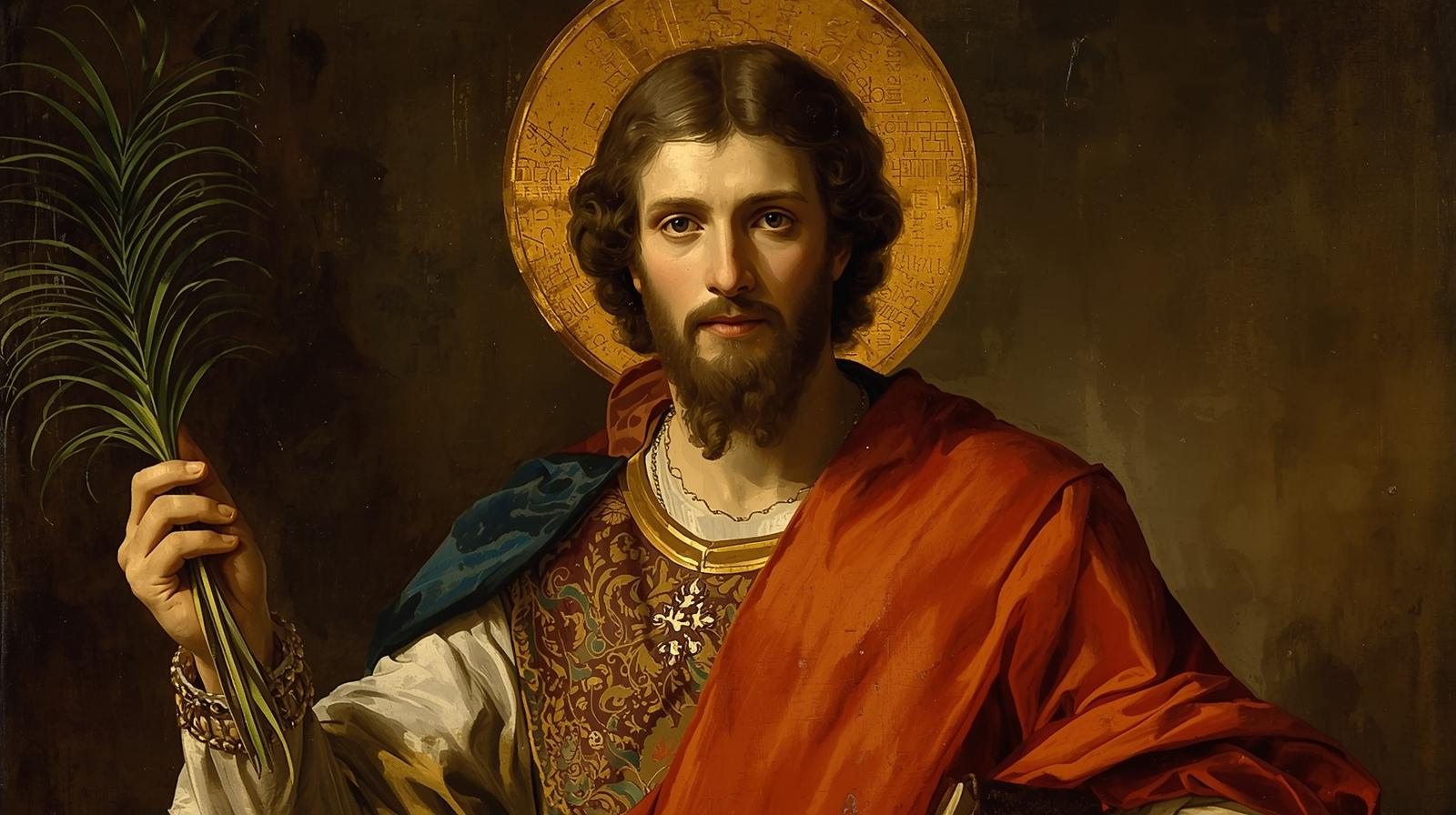
The name “Fortunatus” appears throughout Christian history, attached to numerous saints and martyrs. The word itself is Latin, meaning “blessed,” “fortunate,” “lucky,” or “rich.” This popular name was commonly given to Roman slaves and freedmen, which helps us understand the likely social background of many who bore this name in the early Church.
When discussing “Saint Fortunatus,” it’s important to recognise that there are actually several saints by this name commemorated in the Christian calendar. The most prominent is Fortunatus the Apostle, one of the Seventy Disciples of Jesus Christ, who is the focus of this article.
Fortunatus the Apostle: One of the Seventy Disciples
Biblical Foundation
Fortunatus the Apostle is known primarily through the writings of St. Paul in the New Testament. He is mentioned specifically in 1 Corinthians 16:17-18, where Paul writes from Ephesus:
“Now I rejoice in the presence of Stephanas, Fortunatus, and Achaicus, because they have supplied what was lacking from you; for they refreshed my spirit as well as yours. Therefore, give recognition to such men.”
This brief but significant mention reveals several important aspects of Fortunatus’s character and ministry. He was part of a three-member delegation from Corinth that travelled to visit Paul in Ephesus, demonstrating his commitment to apostolic ministry and his willingness to undertake difficult journeys for the sake of the Gospel.
His Background and Identity
Fortunatus and Achaicus both bear Latin names, and scholars suggest this means they were likely slaves or former slaves. Fortunatus’s name, commonly given to a Roman slave, has at its Latin root meanings of blessed, fortune, or good luck. In the social context of first-century Corinth, a Roman colony with a significant Latin-speaking population, these men may have been part of the household of Stephanas, either as slaves or as freedmen who had gained their liberty.
Fortunatus was a disciple from Corinth, of Roman birth or origin, as his name indicates, who visited Paul at Ephesus. His Roman heritage placed him among the Gentile converts to Christianity, part of the broader movement of the Gospel beyond its Jewish origins into the wider Mediterranean world.
Some Orthodox tradition suggests that Fortunatus may have been the same person as Tychicus, mentioned in the Acts of the Apostles and Paul’s epistles. Fortunatus is perhaps the Latin name of Tychicus, mentioned in Acts which states he came from Asia and accompanied Paul. However, this identification remains uncertain and is not universally accepted by scholars.
His Ministry with the Apostle Paul
Fortunatus’s ministry is best understood in the context of his relationship with Paul and the church at Corinth. The three men, Stephanas, Fortunatus, and Achaicus, undertook a significant journey to reach Paul in Ephesus. This journey would have covered approximately 900 miles by foot or required more than a week by ship across the Aegean Sea.
Their visit to Paul served multiple purposes. They brought material support to the apostle, carried correspondence between Paul and the Corinthian church, and provided personal companionship during Paul’s ministry in Ephesus. Paul’s words reveal the depth of their service: they “supplied what was lacking” and “refreshed my spirit and yours also.”
The phrase “refreshed my spirit” is particularly significant. In Greek, the word used conveys the idea of giving rest, providing relief, or bringing renewal. Fortunatus and his companions didn’t merely deliver supplies; they brought encouragement, fellowship, and spiritual renewal to Paul during a challenging period of ministry.
Fortunatus visited Paul at Ephesus, most probably with contributions, and returned along with Stephanas and Achaicus in charge of the apostle’s first Epistle to the Corinthian Church. This means they likely carried 1 Corinthians back to their home church, making them vital links in preserving and transmitting Paul’s theological teaching to the early Church.
Inclusion Among the Seventy Apostles
In Orthodox tradition, Fortunatus is numbered among the Seventy Apostles (also called Seventy Disciples). This group refers to the disciples whom Jesus sent out two by two to prepare the way before Him, as recorded in Luke 10:1. While the Gospels don’t name all seventy, the Church’s tradition identifies various early Christian leaders, including Fortunatus, as members of this group.
Being counted among the Seventy Apostles places Fortunatus in a broader apostolic mission that extended beyond the Twelve Apostles. These were men and women who were disciples of Christ, who witnessed His ministry, and who played crucial roles in establishing and supporting the early Church.
His Martyrdom
According to Orthodox tradition, Fortunatus ultimately received the crown of martyrdom, dying for his witness to Christ. While the specific circumstances of his death are not preserved in detailed historical records, the Church commemorates him as a martyr who gave his life for the faith.
The iambic verses used in Orthodox liturgy affirm that all three men, Stephanas, Fortunatus, and Achaicus, gained the crown of martyrdom. This means that after their faithful service to Paul and the Corinthian church, they ultimately faced persecution and death rather than renounce their faith in Christ.
Who Celebrates Saint Fortunatus?
Orthodox Church
Saint Fortunatus the Apostle is primarily celebrated in the Eastern Orthodox Church, including:
- The Greek Orthodox Church
- The Russian Orthodox Church
- The Orthodox Church in America
- The Antiochian Orthodox Church
- Serbian, Romanian, Bulgarian, and other Orthodox jurisdictions
The Orthodox Church commemorates Fortunatus, along with Stephanas and Achaicus, on 15th June according to the liturgical calendar. He is also commemorated on 4th January, the Synaxis (collective feast) of the Seventy Apostles.
Catholic Church
In the Roman Catholic tradition, while Fortunatus the Apostle is recognised as a biblical figure and early Christian, he does not have a prominent feast day in the universal calendar. However, he may be venerated locally in some regions or included in commemorations of early apostolic figures.
Other Christian Traditions
Protestant Christians recognise Fortunatus as a biblical figure mentioned by Paul, and his example of service and devotion is studied and appreciated, though he is not formally “celebrated” with feast days as in liturgical traditions.
Feast Days and Liturgical Celebrations
15th June: Primary Commemoration
Date: 15th June (Revised Julian or Old Calendar, depending on jurisdiction)
Liturgical Rank: Minor feast
On this day, Orthodox churches celebrate Fortunatus together with Saints Stephanas and Achaicus. The celebration includes:
Great Vespers (evening of June 14th): Special hymns (stichera) are sung during the service, commemorating the three apostles’ faithful service to Christ and St. Paul.
Matins (morning of June 15th): The service includes canons with troparia honouring the saints, readings from the Psalms, and appropriate Gospel passages.
Divine Liturgy (June 15th): The central Eucharistic celebration includes:
- Troparion and Kontakion specific to these three apostles
- Epistle reading from 1 Corinthians 16, which mentions these saints
- Gospel reading appropriate to apostolic ministry
- Homily reflecting on their example of service
4th January: Synaxis of the Seventy Apostles
Fortunatus is also commemorated collectively with all the Seventy Apostles on January 4th. This feast honours the entire group of disciples who assisted in Christ’s earthly ministry and the apostolic mission of the early Church.
Liturgical Texts
The hymns composed for Fortunatus and his companions emphasise several themes:
Their Devoted Service: The hymns praise their voluntary dedication to serving God’s people without seeking recognition or personal gain.
Their Spiritual Refreshment: Special attention is given to how they encouraged and strengthened Paul and the Corinthian believers.
Their Apostolic Mission: The hymns connect them to the broader evangelistic work of spreading the Gospel.
Their Martyrdom: The liturgical texts honour their ultimate sacrifice for Christ.
One troparion calls the faithful to “praise with hymns the choir of the seventy disciples of Christ,” celebrating Fortunatus as part of this apostolic company.
The Life and Legacy of Fortunatus
A Model of Christian Service
Fortunatus represents the countless faithful Christians who served the early Church in vital but less visible ways. He was not among the Twelve Apostles, he did not write epistles that were preserved in Scripture, and no spectacular miracles performed by him are recorded. Yet his service was essential to the Church’s growth and Paul’s ministry.
His life teaches several enduring lessons:
The Value of Support Ministry: Not everyone is called to be on the front lines of evangelisation, but everyone can support those who are. Fortunatus reminds us that carrying letters, providing material support, offering encouragement, and making sacrifices to help ministry leaders are themselves forms of apostolic service.
The Power of Refreshment: In an age characterised by burnout and ministry fatigue, Fortunatus’s example of “refreshing the spirit” reminds us of the importance of encouragement, companionship, and genuine care for fellow believers, especially those in leadership.
Faithful Companionship: Fortunatus was willing to undertake difficult journeys, 900 miles on foot or weeks at sea, simply to support apostolic ministry. His example challenges modern Christians to consider what sacrifices they’re willing to make to support the Church’s mission.
Humble Labour: Fortunatus and his companions were not commanded to serve; they chose to do so. Their service flowed from love, not obligation, demonstrating that true Christian ministry is voluntary and heartfelt.
Recognition and Gratitude
Paul’s instruction to the Corinthians to “acknowledge such men” is significant. The apostle wanted the church to recognise and appreciate those who served faithfully without seeking attention. The Church’s decision to commemorate Fortunatus, Stephanas, and Achaicus on June 15th fulfils this apostolic directive, ensuring that their faithful service is not forgotten.
In a Church that celebrates great hierarchs, eloquent theologians, and powerful miracle-workers, the feast of Fortunatus reminds us that quiet servants who support ministry behind the scenes are equally precious in God’s sight and worthy of recognition.
Contemporary Relevance
For modern Christians, Fortunatus’s example is particularly relevant:
Supporting Pastoral Ministry: Like Fortunatus who supported Paul, contemporary Christians are called to encourage and support their pastors, priests, and ministry leaders through prayer, material support, and personal encouragement.
Connecting Communities: Fortunatus served as a vital link between Paul and the Corinthian church. Today, Christians can serve as bridges between different communities, carrying news, facilitating communication, and maintaining unity in the body of Christ.
Faithful Presence: Sometimes the most important ministry is simply showing up, being present with those who are serving, offering companionship, and providing the gift of human fellowship.
Delivering the Message: Fortunatus helped preserve and transmit Paul’s teaching by carrying his letters. Modern Christians continue this work by sharing the Gospel, teaching Scripture, and ensuring that God’s Word reaches others.
Other Saints Named Fortunatus
While Fortunatus the Apostle is the most prominent, Christian tradition includes several other saints by this name:
Venantius Fortunatus (c. 530-609)
A Latin poet and bishop of Poitiers, France, Venantius Fortunatus is celebrated as a saint primarily for his literary contributions to the Church. He wrote the famous hymns “Pange Lingua” and “Vexilla Regis,” which are still sung in Catholic liturgy during Holy Week. His feast day is December 14th in the Roman Martyrology.
Fortunatus of Spoleto (died c. 400)
A priest near Montefalco, Italy, who is venerated as a local saint.
Fortunatus of Vienne (3rd century)
A deacon sent by St. Irenaeus of Lyons to evangelise Vienne, France, who was martyred around 212 AD. His feast day is April 23rd.
Fortunatus of Hadrumetum (died c. 434)
Part of a group of 26 martyrs killed by the Arian Vandals in North Africa for refusing to renounce their Catholic faith.
Each of these saints demonstrates the courage and faith that characterised early Christianity, though their stories and feast days differ from Fortunatus the Apostle.
Conclusion
Saint Fortunatus the Apostle stands as a testament to the power of faithful, humble service in the Kingdom of God. Though his name appears only briefly in Scripture and few details of his life are preserved, his impact on the early Church was significant. He supported the Apostle Paul, encouraged the Corinthian believers, helped preserve and transmit apostolic teaching, and ultimately gave his life as a martyr for Christ.
The Orthodox Church’s commemoration of Fortunatus on 15th June and 4th January ensures that his example continues to inspire Christians today. In celebrating this saint, the Church honours not just one man but all the unsung heroes who have served faithfully throughout history, those who refresh spirits, carry messages, provide support, and labour quietly in the background while others receive recognition.
As Paul wrote nearly two thousand years ago, “Such men deserve recognition.” Through liturgical celebration, prayer, and reflection on his life, Christians continue to give Saint Fortunatus the recognition he deserves, while seeking grace to imitate his example of devoted, self-sacrificing service to Christ and His Church.
Leave a Reply